Calcium Carbonate Knowledge Hub
Dust Collection for Calcium Carbonate Grinding
2026-09-04 16:32:49
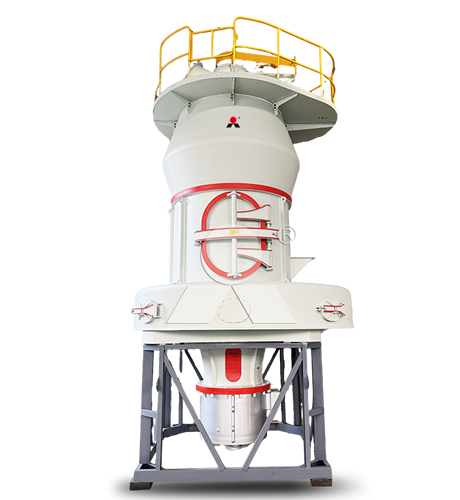
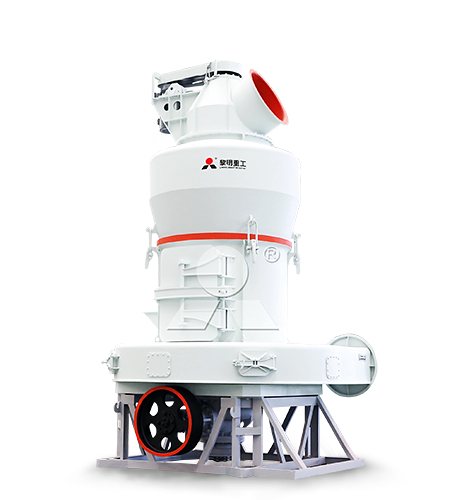
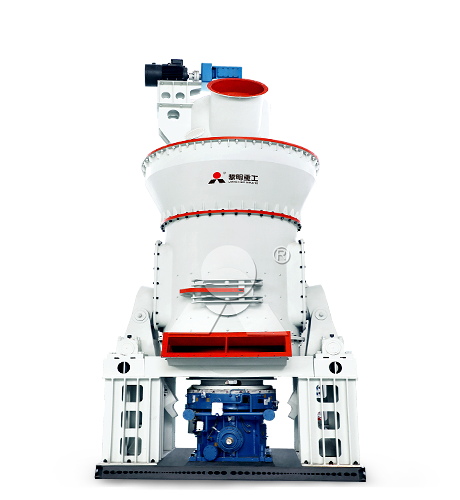
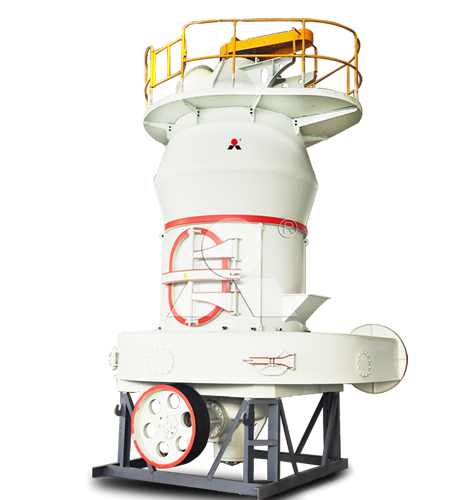
We are Liming Heavy Industry, a manufacturer of various types of industrial crushers, such as Raymond Mill, Trapezoidal Mill, Vertical Mill, Ultrafine Mill, Ball Mill, etc.
Our mills can process the following minerals:
limestone, quicklime, kaolin, talc, barite, bentonite, calcium carbonate, dolomite, coal, gypsum, clay, carbon black, slag, cement raw materials, cement clinker, etc.
If you need a mill to process stone or minerals into powder, please feel free to contact me (WhatsApp: +8615333807511). Thank you.
Dust collection for calcium carbonate grinding captures airborne powder at crushers, screens, mills, classifiers, transfer points, silos, and packing stations before it escapes into the workplace or atmosphere. A properly designed system usually combines local exhaust hoods, correctly sized ductwork, a fan, a cyclone where appropriate, a baghouse or cartridge dust collector, and controlled return of recovered calcium carbonate to the process.
For GCC plants, dust control protects worker health, improves product recovery, keeps equipment clean, stabilizes air-classifier performance, and supports compliance. Although clean calcium carbonate is generally treated as a nuisance dust, raw carbonate feed can contain respirable crystalline silica from quartz, chert, flint, sand, or other impurities. OSHA lists calcium carbonate exposure limits of 15 mg/m³ for total dust and 5 mg/m³ for the respirable fraction as time-weighted averages; crystalline silica has much stricter occupational limits.
Where Dust Is Generated
Calcium carbonate dust is created whenever rock is broken, dropped, conveyed, milled, classified, discharged, or packed. The highest dust load usually occurs where material is transferred from one piece of equipment to another or where process air carries fine particles under pressure.
| Plant area | Main dust source | Primary dust-control approach |
|---|---|---|
| Primary crushing | Rock dumping, crusher inlet, crusher discharge, vibrating feeder | Enclosure, local exhaust hood, controlled feed drop, baghouse connection |
| Secondary crushing and screening | Crusher discharge, screen decks, oversize return, belt transfers | Enclosed chutes, sealed covers, capture hoods, local extraction |
| Conveyor transfer points | Falling material, belt speed, air displacement, open chutes | Transfer-point enclosure, skirt sealing, low-drop chutes, extraction duct |
| Dryer and mill feed | Feed hoppers, rotary valves, mill inlet, hot-gas movement | Negative-pressure design, sealed feeders, temperature-rated filter system |
| Grinding mill | Mill discharge, sweep air, internal pressure fluctuations | Closed grinding circuit, process fan, cyclone and bag-filter collection |
| Air classifier | Fine product stream, coarse reject, leakage, classifier ventilation | Balanced process air, sealed connections, high-efficiency fine-particle collector |
| Finished-product silos | Silo filling, displaced air, venting, bin aeration | Silo-top bin vent or dedicated filter, level control, sealed loading points |
| Bagging and bulk loading | Bag spouts, valve bags, open-mouth filling, big-bag filling, tanker loading | Enclosed filling heads, aspiration hoods, bag filters, operator-protection controls |
Dust-control design should begin with a plant dust survey. Map every material transfer, identify which points generate coarse dust and which release respirable fines, then design capture at the source. Trying to clean dust after it spreads through the building is less effective than preventing its release.
Why GCC Grinding Needs Strong Dust Control
Calcium carbonate grinding produces fine and ultrafine particles that remain suspended in air. As product fineness increases, dust becomes easier to entrain in process air and harder to contain through simple covers alone. Fine GCC systems also depend on stable air balance: uncontrolled leakage can affect classifier cut point, product yield, fan power, and powder recovery.
Worker health and exposure
OSHA’s occupational exposure information for calcium carbonate lists a permissible exposure limit of 15 mg/m³ for total dust and 5 mg/m³ for the respirable fraction, measured as a time-weighted average. Local requirements can differ by jurisdiction and process, so every plant should verify the rules that apply at its operating location.
More importantly, a calcium carbonate plant must assess the mineralogy of its feed. Calcite itself is not crystalline silica, but limestone, marble, chalk, or calcite ore may contain quartz, chert, flint, sand, feldspar, or silica-rich gangue. NIOSH lists a recommended exposure limit of 0.05 mg/m³ for respirable crystalline silica, while OSHA lists a 50 µg/m³ time-weighted permissible exposure limit.
This means dust monitoring should not rely only on total dust. If the raw feed or waste stream contains silica, evaluate respirable crystalline silica exposure separately and design controls around the actual hazard profile.
Product recovery and housekeeping
Every kilogram of calcium carbonate captured by the dust collector is material that does not become a housekeeping loss, product-contamination risk, or airborne emission. In a high-throughput GCC plant, recovered dust can be returned to the appropriate product stream when its particle size and quality are compatible with the grade being produced.
However, recovered dust should not be automatically returned to premium products. Dust from mixed-grade systems, maintenance areas, contaminated transfer points, or collector hoppers with tramp material may need separate handling. The return path must preserve product traceability and prevent cross-contamination.
Process stability
In dry grinding and air classification, airflow is part of the separation process. Excess air leakage can reduce effective classifier performance, increase fan load, change pressure balance, and cause product-size variation. Insufficient extraction can allow dust to escape from transfer points or create positive-pressure conditions that push powder through gaps and seals.
Dust collection should therefore be designed as part of the grinding circuit, not as an afterthought. The mill, classifier, cyclone, baghouse, fan, ductwork, rotary valves, and discharge equipment must operate as a balanced system.
Dust Collection System Components
A calcium carbonate dust-collection system typically has five functional stages: source capture, transport, pre-separation where needed, final filtration, and powder discharge or recovery.
| Component | Function | Key design consideration |
|---|---|---|
| Capture hood or enclosure | Contains and draws dust from the generation point | Must be close to the emission source and allow maintenance without leaving large open gaps |
| Ductwork | Transports dust-laden air to the collector | Correct air velocity, smooth routing, leak control, wear protection, and cleanout access |
| Pre-separator or cyclone | Removes coarse particles before final filtration | Useful for high dust loading; does not normally replace fine-filtration equipment |
| Baghouse or cartridge collector | Captures fine calcium carbonate particles from air | Filter media, air-to-cloth ratio, cleaning method, temperature rating, pressure drop, and maintenance access |
| Induced-draft fan | Creates the negative pressure that moves air through the system | Must overcome system resistance while maintaining required capture airflow |
| Rotary valve or screw conveyor | Discharges collected powder while maintaining pressure control | Must prevent air leakage and avoid powder buildup or contamination |
| Stack or clean-air outlet | Discharges filtered air or returns it where permitted | Must meet applicable emissions, monitoring, and siting requirements |
Source capture and enclosure
Source capture is the first priority. Use full or partial enclosures around crushers, screens, transfer points, bagging spouts, and other high-emission zones. The enclosure should contain the dust cloud while still allowing safe access for inspection, maintenance, and material flow.
Effective enclosure design reduces the airflow required for capture. A fully open crusher building needs far more exhaust volume than a well-enclosed crusher discharge and transfer chute. Lower required airflow can reduce fan energy, duct size, filter area, and operating cost.
For conveyors, use sealed transfer chutes, skirtboards, dust curtains, and controlled material drop paths. Avoid high free-fall distances because falling material entrains air and pushes dust outward. Material should transfer in the same direction as the receiving belt whenever possible to reduce turbulence.
Ductwork and air velocity
Ductwork must carry calcium carbonate dust without allowing excessive settling, buildup, or abrasion. Duct sizing balances two competing needs: air velocity must be high enough to keep dust suspended, but not so high that it creates unnecessary pressure drop, fan energy use, and erosion at bends.
Keep ducts as short and direct as practical. Use gradual bends rather than abrupt elbows in abrasive zones. Avoid dead legs, horizontal pockets, and poorly designed branches where powder can settle. Provide inspection doors and cleanout access where accumulation is possible.
Leaks are a major hidden problem. Air entering through damaged duct joints, loose inspection doors, worn expansion joints, or failed rotary valves can reduce capture at hoods and disrupt mill-classifier pressure balance. Regular inspection and pressure monitoring are essential.
Baghouse vs Cartridge Collectors
Baghouses and cartridge collectors are both used to capture calcium carbonate dust. The better option depends on air volume, dust loading, particle size, temperature, moisture, available footprint, maintenance method, and whether the collector is part of the main grinding circuit or a local packaging system.
| Factor | Baghouse collector | Cartridge collector |
|---|---|---|
| Typical role | Large-volume central systems, mill circuits, dryers, crushers, and process exhaust | Compact local systems, bagging stations, silo vents, and lower-to-medium airflow applications |
| Filter geometry | Long fabric filter bags | Pleated filter cartridges with high media area in a compact housing |
| Dust loading tolerance | Well suited to high dust loads, often with cyclone pre-separation | Can be effective for fine dust but may need protection from heavy or abrasive loading |
| Maintenance access | Requires bag inspection and replacement; layout should allow safe access | Often compact and easier to service in smaller systems, depending on design |
| Temperature capability | Can be configured with temperature-rated fabrics for dryer or hot process air | Must be selected carefully for temperature and moisture conditions |
| Typical calcium carbonate application | Main mill filter, classifier filter, dryer exhaust, central crushing collection | Packaging aspirator, silo vent, small transfer point, local dedusting |
Baghouse filtration works by passing dust-laden gas through textile filter cloth or felt; particles are retained on the filter medium while cleaned air passes through. For fine GCC, pulse-jet cleaning is common because it periodically dislodges accumulated dust cake and maintains airflow.
Filter-media selection matters. Calcium carbonate powder itself is not usually chemically aggressive, but the process may involve hot dryer gas, humidity, steam, stearic-acid coating, fine ultrafine powder, abrasive silica contamination, or variable dust loading. Select filter media and surface treatment based on actual temperature, moisture, dust characteristics, cleaning energy, required emissions performance, and expected service life.
Design Dust Collection by Plant Area
Crushing and screening
Crushing and screening create intermittent but high-volume dust clouds. The main priorities are enclosure, controlled material flow, local exhaust at the crusher inlet and discharge, and sealed conveyor transfer points. Water suppression can reduce dust at some quarry and coarse-crushing stages, but it should be used cautiously when the downstream plant depends on dry grinding.
Adding water to carbonate feed can increase dryer load, reduce mill capacity, interfere with air classification, and create buildup. In an integrated dry GCC plant, mechanical enclosure and dry collection are often preferable inside the processing plant, while wet suppression may be more suitable for outdoor quarry roads or primary crushing where moisture can be managed.
Grinding and classification
The grinding circuit is normally designed under negative pressure. Process air carries powder from the mill to the classifier and then to cyclones and filters. The final baghouse captures fine particles that bypass the cyclone or are intentionally carried in the process air.
Maintain stable negative pressure at the mill inlet and other leakage-prone locations. Positive pressure can force ultrafine powder through flanges, inspection doors, seals, bearings, and duct joints. Too much negative pressure, however, can draw in false air and increase fan load or alter the classifier’s separation performance.
Coating and modification
Coated GCC lines require dust control around powder transfer, heated mixers, coating-agent addition, cooling, and final classification. Stearic acid or other organic modifiers can change dust behavior and may create deposits on ducts or filter media if powder temperature, coating dosage, or collection conditions are poorly controlled.
Keep the coating section segregated from uncoated product lines. Recovered coating dust should only return to the same grade where quality, coating level, and contamination controls permit it.
Silos and packaging
Silo filling displaces air. If that air is not vented through a correctly sized bin vent or dust collector, it will release powder from vents, inspection hatches, or loading points. Use level sensors and interlocks to prevent overfilling, which can overload filters or create product loss.
At bagging and bulk-loading stations, place capture hoods close to the filling nozzle and use enclosed spouts or inflatable seals where appropriate. Packaging systems need enough airflow to capture dust without pulling product out of bags or destabilizing filling weights.
Collector Sizing Principles
Dust collectors should be sized from measured or engineered airflow demand at every connected pickup point—not from mill capacity alone. The design airflow must provide sufficient capture velocity at each hood while accounting for simultaneous operation, diversity between sources, duct losses, cyclone pressure drop, filter pressure drop, fan margin, and future expansion.
A practical sizing workflow is:
Identify every dust source and decide whether it needs enclosure, local exhaust, process ventilation, or both.
Define the required capture airflow for each hood based on opening size, dust release energy, material drop distance, enclosure quality, and operating practice.
Determine which points operate simultaneously and calculate total system airflow.
Lay out duct branches, calculate transport velocities, and estimate pressure losses through ducts, hoods, dampers, cyclones, filters, valves, and stack.
Select a fan that can deliver the required flow at total static pressure with reasonable control margin.
Select filter area and cleaning system based on dust loading, particle size, filter media, air-to-cloth ratio, temperature, humidity, and emission target.
Design dust discharge and return handling so recovered material does not bridge, leak air, contaminate product, or overload conveying equipment.
Commission the system with airflow, pressure, emission, and worker-exposure measurements—not only visual observation.
Do not oversimplify collector selection by choosing a unit based only on airflow. Two 30,000 m³/h systems can require very different filter areas and fan pressures depending on dust concentration, fine-particle fraction, temperature, moisture, duct layout, and required capture performance.
Safety and Compliance Considerations
Calcium carbonate dust control should be part of a broader occupational-health and process-safety program. Assess exposure by job task, not only by area. Crusher operators, maintenance personnel, bagging operators, forklift drivers working near bulk loading, and laboratory staff may experience different dust conditions.
Respirable silica assessment
Test the raw material for quartz, chert, flint, or other crystalline silica-bearing phases. If respirable crystalline silica may be present, conduct exposure assessment and apply the applicable occupational standard. OSHA’s respirable crystalline silica standard addresses occupational exposure and requires exposure-control measures in covered work.
Dust hazard analysis
Do not assume that a mineral dust is non-combustible without testing. Calcium carbonate itself is generally noncombustible, but a facility may also handle combustible coating agents, packaging dust, organic additives, lubricants, mixed contaminants, or hybrid dusts. Evaluate the actual materials and process conditions through a dust hazard analysis where required.
Dust-collection compliance guidance recommends identifying applicable regulations, conducting a dust hazard analysis, identifying ignition sources, and designing maintenance access into the collection system. Site-specific regulatory requirements, local fire codes, electrical classification, and insurer requirements should be reviewed by qualified safety and engineering professionals.
Maintenance practices
Inspect filter differential pressure, fan amperage, airflow, and static pressure routinely.
Check hoods, flexible connections, rotary valves, duct joints, access doors, and conveyor covers for leaks.
Replace damaged bags or cartridges before emissions, airflow, or pressure-drop problems become severe.
Inspect filter cleaning systems, including compressed-air pressure, pulse valves, solenoids, and cleaning sequence.
Remove dust deposits using suitable vacuum equipment; avoid dry sweeping or compressed-air blowdown that re-suspends fine powder.
Verify product-return paths to prevent grade mixing and contamination.
Monitor raw-material silica content and worker exposure when quarry feed, source material, or production conditions change.
Common Dust Collection Problems
| Problem | Likely cause | Corrective action |
|---|---|---|
| Dust escaping from crusher or transfer point | Open enclosure, insufficient capture airflow, high drop height, poor skirt sealing, duct blockage | Improve enclosure, reduce material fall distance, repair skirts, verify hood airflow and duct condition |
| High baghouse pressure drop | Blinded filter media, poor pulse cleaning, moisture, coating deposits, excessive air-to-cloth ratio | Inspect cleaning system, control moisture and temperature, review filter media, clean or replace filters |
| Low capture at distant hoods | Unbalanced duct system, leakage, undersized fan, excessive pressure loss in other branches | Conduct airflow balancing, repair leaks, adjust dampers, review fan capacity and duct sizing |
| Powder discharge from silo vents | Undersized bin vent, filter blockage, overfilling, high filling rate | Size vent filter correctly, maintain cleaning, install level interlocks, control filling rate |
| Powder buildup in ducts | Low transport velocity, horizontal dead zones, moisture, poor duct routing | Correct air velocity, redesign problematic sections, improve drying, add cleanout access |
| Unstable air classifier performance | False air, changing filter pressure drop, fan instability, duct leakage, poor mill pressure control | Restore air balance, monitor static pressure, maintain filters, inspect seals and fan controls |
| Dark specks or contamination in powder | Filter-media failure, collector corrosion, tramp metal, cross-grade dust return | Inspect collector internals, repair filter leaks, improve magnets and segregation, control return streams |
| High worker dust exposure despite collector operation | Capture hood too far from source, open handling, poor work practices, leaks, maintenance activity | Redesign source capture, improve enclosure, repair leaks, use task-specific monitoring and safe cleaning procedures |
Key Takeaway
Dust collection for calcium carbonate grinding should capture powder at its source, maintain negative pressure through the process, recover valuable product, and prevent worker exposure to calcium carbonate and any silica-bearing contaminants in the feed. The central equipment is usually a combination of enclosures, hoods, ductwork, cyclone pre-separation where appropriate, baghouse or cartridge filtration, an induced-draft fan, and sealed dust discharge.
For a GCC plant, design the dust system together with the crushing, grinding, classification, coating, silo, and bagging systems. A well-balanced collection system improves safety, housekeeping, product recovery, classifier stability, and long-term plant reliability. The critical engineering inputs are the actual dust sources, material mineralogy, product fineness, moisture, airflow demand, pressure losses, filter-media suitability, exposure requirements, and maintenance access.