Calcium Carbonate Knowledge Hub
GCC for Paint
2026-09-04 16:55:57
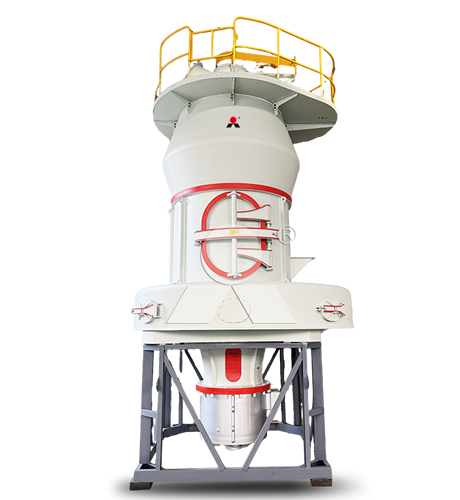
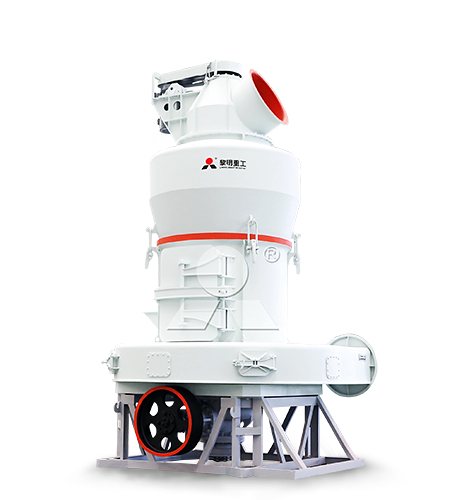
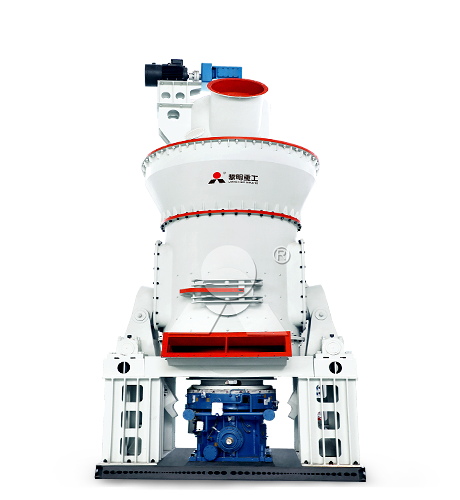
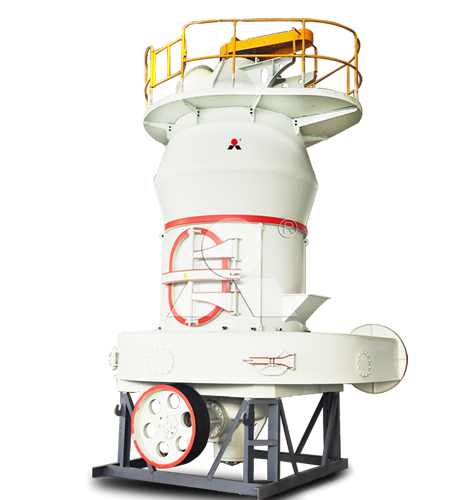
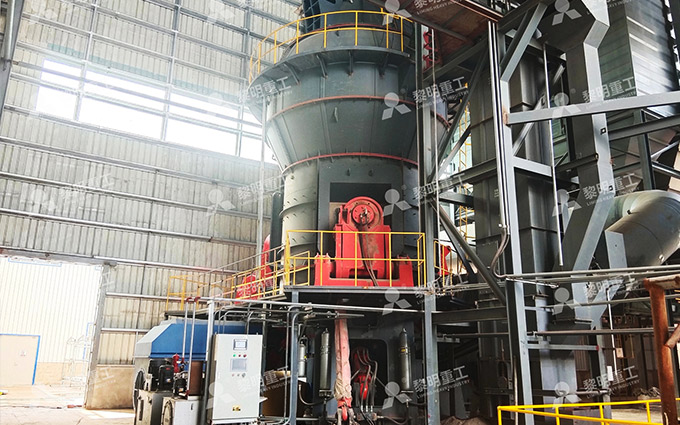
We are Liming Heavy Industry, a manufacturer of various types of industrial crushers, such as Raymond Mill, Trapezoidal Mill, Vertical Mill, Ultrafine Mill, Ball Mill, etc.
Our mills can process the following minerals:
limestone, quicklime, kaolin, talc, barite, bentonite, calcium carbonate, dolomite, coal, gypsum, clay, carbon black, slag, cement raw materials, cement clinker, etc.
If you need a mill to process stone or minerals into powder, please feel free to contact me (WhatsApp: +8615333807511). Thank you.
Ground calcium carbonate (GCC) is the main calcium carbonate extender used in paint formulations. Paint producers use GCC to control cost, build solids volume, adjust rheology and gloss, support titanium dioxide efficiency, and tailor the dry-film surface from textured and matte to smooth and semi-gloss.
The correct GCC for paint is selected primarily by particle-size distribution, not by the label “GCC” or a nominal mesh value. Fine GCC may support smoothness and opacity optimization, while coarser GCC provides body, matting, texture, and lower-cost extension. Whiteness, coarse-particle control, oil absorption, moisture, purity, and dispersion behavior are equally important in commercial paint production.
What is GCC for paint?
GCC for paint is natural calcium carbonate mechanically ground from high-quality limestone, marble, or calcite and then classified into a controlled particle-size range. It is normally supplied as a dry powder, although slurry GCC grades may also be used in integrated or high-volume coating operations.
Unlike precipitated calcium carbonate, which is chemically synthesized, GCC retains the natural mineral structure of its source material. This gives paint formulators a broad range of economical grades, from relatively coarse products for putty and textured coatings to fine and ultrafine products for decorative paints, primers, industrial coatings, and selected powder-coating systems.
In most paint formulas, GCC acts as an extender pigment and functional mineral filler. It is not intended to replace the primary hiding function of titanium dioxide completely. Instead, GCC helps the formulator control the spacing, packing, and total solids structure of the pigment-filler system.
Why GCC is used in paint
Cost-effective formulation extension
GCC provides dry-film volume at a much lower cost than titanium dioxide and many specialty pigments. It is therefore widely used in decorative paints, primers, undercoats, putties, textured finishes, industrial coatings, and selected powder coatings.
Its economic benefit is most effective when the paint still meets required hiding, scrub resistance, gloss, adhesion, water resistance, and durability targets. Adding GCC only to lower cost can weaken the paint if it displaces too much TiO2 or leaves insufficient binder to properly bind the pigment and filler volume.
Titanium dioxide optimization
In white paint, titanium dioxide is the main pigment responsible for opacity because its high refractive index scatters visible light efficiently. GCC has a lower refractive index and does not offer the same intrinsic hiding power, but a carefully selected GCC particle size can improve TiO2 particle spacing and help use the white pigment more efficiently.
Particle-size-controlled natural GCC has been investigated for coating compositions containing titanium dioxide. One patent example specifies GCC with a volume median particle size from more than 0.4 µm to 0.9 µm, alongside TiO2:GCC dry-weight ratios ranging from 90:10 to 20:80, illustrating that performance depends on controlled particle size and the total pigment blend—not on a universal replacement ratio.
The practical rule is simple: GCC can support TiO2 efficiency, but excessive extension can reduce opacity and increase the number of coats needed to cover a substrate. Each paint system needs its own optimization through drawdowns and hiding-power tests.
Rheology and application properties
GCC affects viscosity, flow, leveling, sag resistance, brushability, roller feel, spray behavior, and storage stability. Its influence comes from particle size, particle-size distribution, specific surface area, particle shape, and the way it interacts with dispersants, thickeners, binders, water, or solvents.
Coarser GCC grades generally create more body and are useful where structured rheology, texture, or economical film build is needed. Fine GCC grades can help produce smoother films, although their higher surface area may increase dispersant and binder demand. In a coating study, increasing GCC particle size lowered gloss, while the larger particle grades produced the greater gloss reduction.
Gloss and surface control
GCC is an effective mineral for controlling sheen. Fine, narrow-distribution GCC is more suitable for smooth paints and selected semi-gloss or satin formulations. Coarser GCC increases micro-roughness at the coating surface and is therefore commonly used to reduce gloss in matte, flat, textured, and primer systems.
For high-gloss coatings, GCC must be evaluated carefully. Coarse particles, broad particle-size distributions, agglomerates, or poor dispersion can visibly lower gloss, create roughness, and reduce surface uniformity. A study on coating color found that calcium carbonate reduced gloss compared with a clay-only control and that the gloss reduction became stronger as calcium carbonate particle size increased.
GCC particle size for paint
Paint-grade GCC is often discussed using mesh, but mesh alone is not an adequate technical specification for modern coatings. Fine and ultrafine GCC should be described using laser-diffraction values such as D10, D50, D90, D97, or D98, together with residue-on-sieve data where relevant.
| GCC grade direction | Typical paint effect | Typical applications |
|---|---|---|
| Coarse GCC | Builds body, texture, matting, dry-film volume, and economical extension. | Wall putty, skim coat, textured paint, low-cost primers, undercoats, flat coatings. |
| Medium-fine GCC | Balances rheology, film build, cost, coverage support, and surface quality. | Standard interior emulsion paint, exterior wall paint, primers, general decorative coatings. |
| Fine GCC | Supports smoother surfaces, controlled sheen, improved pigment packing, and better coating uniformity. | Higher-quality decorative paints, smooth primers, selected industrial coatings, wood coatings. |
| Ultrafine GCC | Can improve TiO2 spacing, film smoothness, and coating appearance, but increases surface-area-related formulation demand. | Premium paints, satin and semi-gloss coatings, industrial topcoats, specialty and powder coatings. |
The narrowness of the particle-size distribution also matters. Two GCC grades with the same D50 may behave differently if one contains more oversized particles, broader fines, or hard agglomerates. These differences can affect viscosity, settling, gloss, scrub resistance, sprayability, and visible surface defects.
GCC for water-based paint
Water-based architectural coatings are among the largest uses for GCC. Interior emulsion paints, exterior wall coatings, ceiling paint, primers, textured finishes, and wall putties use GCC to manage pigment volume concentration, application behavior, surface appearance, and cost.
In waterborne systems, untreated GCC is commonly used because it can be dispersed with appropriate wetting agents and dispersants. The performance of the mineral depends on the entire formulation, including acrylic, styrene-acrylic, vinyl-acrylic, or other polymer emulsion binders; cellulose ethers or associative thickeners; dispersants; defoamers; coalescents; and the TiO2 package.
Interior emulsion paint
Interior paint usually requires a balance of whiteness, hiding, smoothness, roller application, low spatter, scrub resistance, and controlled sheen. Medium-fine and fine GCC are frequently selected because they provide a good balance between cost and finish quality. High whiteness and stable color are important, especially for white bases and pastel tinting systems.
Exterior paint
Exterior coatings must withstand moisture, temperature change, ultraviolet exposure, dirt pickup, and repeated wet-dry cycles. GCC can be used effectively, but filler loading should be coordinated with a durable binder and pigment package. Overextending exterior paint with GCC can lower water resistance, increase porosity, reduce adhesion, and compromise long-term weatherability.
Ceiling paint and flat paint
Ceiling and flat coatings often use GCC to produce low sheen, body, and economical coverage. Coarser or broader-distribution GCC may be appropriate where gloss suppression is desirable. The formulation must still maintain adequate opacity and avoid excessive powdering or poor scrub resistance.
GCC for solvent-based paint
GCC is used in solvent-based alkyd, epoxy, polyurethane, acrylic, and maintenance-coating systems, particularly in primers, undercoats, fillers, and selected low-to-medium-gloss finishes. The mineral helps build film volume and can improve sanding behavior, rheology, and formulation economics.
For solvent-based systems, the choice between untreated and surface-treated GCC depends on resin polarity, solvent package, moisture tolerance, dispersion method, and performance target. A treated GCC may improve wetting or compatibility in some systems, but treatment should be selected for the actual resin chemistry rather than assumed to be beneficial in every solvent-borne coating.
High-gloss solvent-based topcoats need particularly fine, low-residue GCC if calcium carbonate is used at all. In these systems, the formulator should measure gloss, haze, leveling, distinctness of image, and long-term settling before finalizing the mineral grade.
GCC for powder coatings
In powder coatings, GCC can be used as an extender to reduce formulation cost and, in selected systems, optimize TiO2 usage. Powder-coating production requires the mineral to be dry, clean, consistent, and tightly controlled for particle size because it is premixed with resin and additives, melt-extruded, cooled, ground, and electrostatically applied.
Fine or ultrafine GCC is generally more suitable than coarse material for powder coatings because coarse particles can create rough film surfaces, poor leveling, inconsistent gloss, and visual defects. The final coating must be evaluated for powder flow, melt flow, chargeability, film thickness, gloss, impact resistance, adhesion, and corrosion resistance where applicable.
GCC specifications for paint manufacturers
A robust GCC specification should be tied to the coating application. Requesting only “paint-grade calcium carbonate” leaves too much room for variation.
| Specification | Why it matters |
|---|---|
| D10, D50, D90/D97/D98 | Controls smoothness, rheology, pigment packing, opacity contribution, and risk of coarse-particle defects. |
| Residue on sieve | Helps prevent grit, roughness, spray-tip blockage, and visible defects in smooth coatings. |
| Whiteness and brightness | Supports color consistency, tinting performance, white-paint appearance, and TiO2 efficiency. |
| CaCO3 content and insolubles | Helps minimize colored impurities and variation in chemical or optical behavior. |
| Oil absorption | Indicates likely binder demand and affects the practical pigment-volume concentration range. |
| Moisture content | Important for storage, powder coating, solvent-based systems, flowability, and batch consistency. |
| pH and surface chemistry | Can influence waterborne dispersion, thickener response, storage stability, and additive compatibility. |
| Bulk density and flowability | Influence weighing, conveying, dosing accuracy, and production efficiency. |
Common GCC selection mistakes
Buying by mesh only: Mesh does not adequately describe fine-particle distribution, top cut, agglomerates, surface area, or coating performance.
Assuming finer is always better: Fine GCC can improve smoothness, but it may raise viscosity and dispersant demand.
Using coarse GCC in gloss coatings: Oversized particles and broad PSD can lower gloss and create a rough coating surface.
Replacing too much TiO2: Cost savings can be lost if hiding declines and additional paint coats are required.
Ignoring binder demand: High filler volume without enough binder can cause weak films, low scrub resistance, chalking, or poor water resistance.
Skipping plant-scale validation: GCC should be tested in the actual dispersion process, resin system, and application method before approval.
FAQ
Is GCC better than PCC for paint?
GCC is usually the preferred choice for high-volume paint production because it is economical and available in many controlled particle-size grades. PCC may be selected for specialty systems requiring controlled morphology or narrower particle characteristics. The best option depends on the coating formula and performance target.
What GCC particle size is best for interior paint?
Medium-fine to fine GCC is commonly suitable for interior emulsion paint because it balances cost, smoothness, whiteness, rheology, and coverage. The exact particle-size distribution should be optimized through drawdowns, viscosity measurement, scrub testing, and hiding-power evaluation.
Can GCC improve paint opacity?
GCC can support TiO2 efficiency by helping optimize pigment spacing, particularly when fine or ultrafine grades are correctly dispersed. It does not provide the same hiding power as titanium dioxide, so the result depends on the full pigment-filler-binder design.
Why does GCC reduce paint gloss?
GCC can reduce gloss by increasing microscopic surface roughness, especially when particles are coarse, broad in distribution, poorly dispersed, or used at high loading. Fine GCC with low coarse residue is more appropriate when a smoother, higher-gloss surface is needed.
Key takeaway
GCC for paint is a versatile natural mineral filler that helps coating producers balance cost, rheology, opacity efficiency, film build, and surface appearance. Select GCC by its complete technical profile—especially particle-size distribution, coarse-particle control, whiteness, oil absorption, moisture, purity, and lot consistency—then validate it in the intended paint formulation. The best grade is the one that meets the required coating performance at the lowest practical total formulation cost.