Industry News
Complete Phosphogypsum Powder Production Line Equipment Manufacturer
2026-07-10 10:36:51
We are Liming Heavy Industry, a manufacturer of various types of industrial crushers, such as Raymond Mill, Trapezoidal Mill, Vertical Mill, Ultrafine Mill, Ball Mill, etc.
Our mills can process the following minerals:
limestone, quicklime, kaolin, talc, barite, bentonite, calcium carbonate, dolomite, coal, gypsum, clay, carbon black, slag, cement raw materials, cement clinker, etc.
If you need a mill to process stone or minerals into powder, please feel free to contact me (WhatsApp: +8615333807511). Thank you.
Summary
A complete phosphogypsum powder production line equipment manufacturer should provide more than a single grinding mill. A reliable supplier must understand phosphogypsum characteristics, moisture control, drying, grinding, classification, dust collection, storage, automation, and long-term maintenance. Phosphogypsum is usually wet, sticky, mildly acidic, and variable in chemical composition, so stable industrial powder production depends on a well-matched system. For cement, building materials, backfill, and other applications, equipment selection must be based on real material data and target powder quality. Liming Heavy Industry can be considered as a practical technical partner for complete phosphogypsum grinding and powder processing solutions.
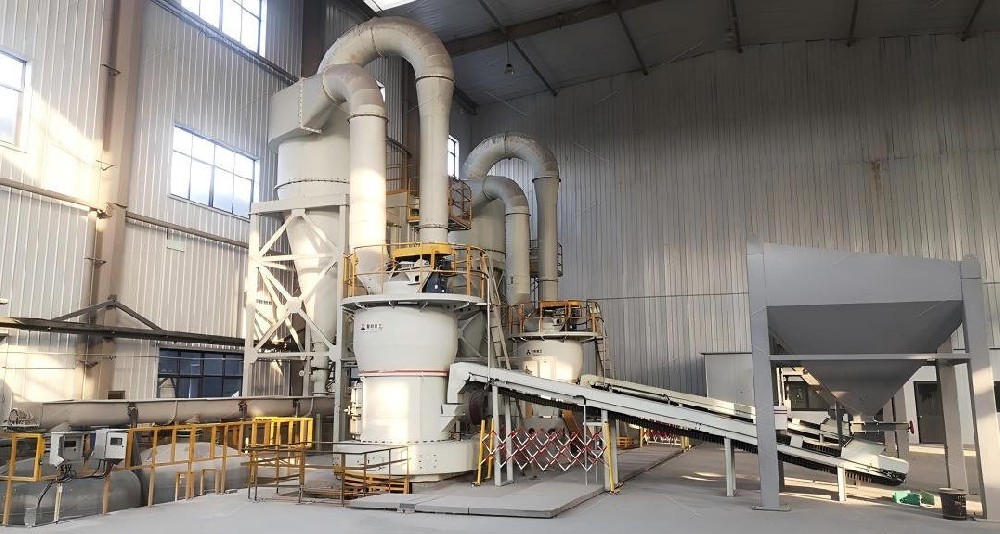
Table of Contents
1. What a Complete Equipment Manufacturer Should Provide
A complete phosphogypsum powder production line equipment manufacturer is a supplier capable of designing, manufacturing, integrating, and commissioning the full process from raw material feeding to finished powder storage. In industrial powder production, the grinding mill is important, but it is only one part of the system.
A qualified manufacturer should evaluate raw phosphogypsum moisture, lump size, stickiness, residual acidity, target fineness, required capacity, available heat source, site layout, and final product application before recommending equipment. Without this engineering step, the production line may suffer from unstable feeding, mill blockage, poor classification, high energy consumption, excessive dust leakage, or corrosion problems.
Core responsibilities of a reliable manufacturer
Provide process design based on raw material testing and production targets.
Select suitable drying, grinding, classification, and dust collection equipment.
Supply a complete equipment list with motors, fans, conveyors, control system, and accessories.
Support installation, commissioning, operator training, and performance adjustment.
Offer long-term spare parts for wear components, filter bags, seals, bearings, and electrical parts.
For plant owners, choosing the right manufacturer is often more important than selecting a mill model. A good manufacturer reduces project risk by matching every section of the line to the actual behavior of phosphogypsum.
_1761355927036.jpg)
2. Phosphogypsum Characteristics That Affect Equipment Design
Phosphogypsum is a by-product from wet-process phosphoric acid production. Its main useful mineral component is calcium sulfate, but it often contains free moisture, residual phosphates, fluorides, soluble salts, fine impurities, and mild acidity. These properties make phosphogypsum more difficult to process than natural gypsum.
Important material characteristics
High moisture: Wet material reduces grinding efficiency, blocks hoppers, sticks to chutes, and causes filter bag problems.
Sticky agglomerates: Stockpiled phosphogypsum may form lumps that require breaking before drying and grinding.
Residual acidity: Acidic components can accelerate corrosion in feeders, ducts, dust collectors, and storage silos.
Variable chemistry: Phosphorus, fluorine, and soluble salts may affect cement setting, gypsum board quality, or other downstream uses.
Poor flowability: Fine powder may bridge in silos and discharge unevenly without flow aids.
A practical design rule is clear: phosphogypsum should be treated as a wet and chemically active industrial by-product, not as ordinary dry mineral powder. This rule determines the need for drying capacity, corrosion protection, sealed conveying, anti-blocking hoppers, and stable dust collection.
3. Complete Phosphogypsum Powder Production Line Process
A complete phosphogypsum powder production line normally includes raw material receiving, pretreatment, drying, metered feeding, grinding, classification, powder collection, storage, and dispatch. Each stage must be designed as part of one continuous process.
Raw material receiving: Phosphogypsum is transported from stockpiles, filter cake areas, or storage yards to a covered receiving zone.
Impurity removal: Stones, plastics, metal fragments, oversize lumps, and foreign objects are removed before entering the line.
Lump breaking: Agglomerated material is loosened to improve drying efficiency and prevent feeder blockage.
Drying: Moisture is reduced by a rotary dryer, flash dryer, hot air system, or integrated drying inside the grinding mill.
Metered feeding: Belt feeders, screw feeders, or weighing feeders supply material to the mill at a stable rate.
Grinding and classification: The mill produces powder, and the classifier separates qualified particles from coarse return material.
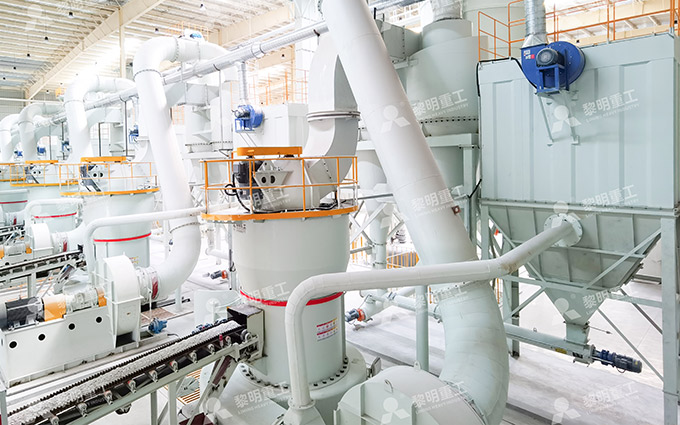
Powder collection: Cyclones and bag filters recover fine powder and clean process air.
Storage and dispatch: Finished powder is stored in sealed silos, packed in bags, or loaded in bulk trucks.
The production line should minimize open transfer points. Sealed conveying, controlled negative pressure, and proper dust collector sizing are essential for clean operation and powder recovery.
4. Grinding System Selection for Phosphogypsum Powder
Grinding phosphogypsum is mainly a drying, deagglomeration, and classification task. The material is not extremely hard, but it can be difficult to handle because of moisture and stickiness. Therefore, mill selection should focus on stable flow, drying ability, classifier accuracy, and low energy consumption.
Common grinding mill options
Raymond grinding mill: Suitable for medium capacity, conventional powder fineness, and relatively simple operation.
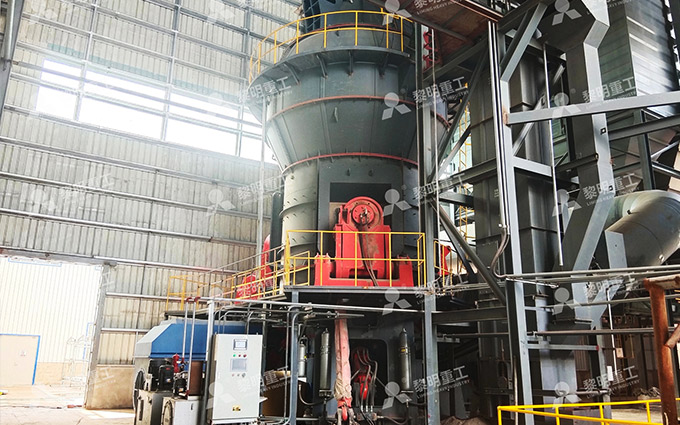
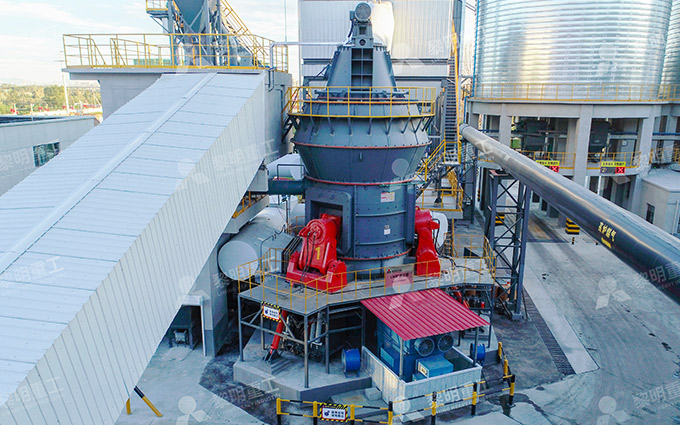
Vertical grinding mill: Suitable for larger capacity, stronger drying demand, continuous operation, and better energy performance.
Ultrafine grinding mill: Suitable for applications requiring finer particle size and narrower powder distribution.
Air-swept grinding system: Useful when simultaneous drying, conveying, and classification are required.
For cement-grade phosphogypsum, the target is usually stable fineness and controlled moisture rather than the finest possible powder. For building materials, powder fineness, setting behavior, whiteness, and impurity control may become more important.
_1761361296294.jpg)
5. Main Equipment Configuration and Technical Focus
A complete equipment manufacturer should provide a balanced configuration. If one section is undersized, the whole line becomes unstable. For example, a large mill cannot perform well if the dryer is too small or the bag filter cannot handle the airflow.
| Equipment Section | Main Function | Technical Focus |
|---|---|---|
| Raw material storage | Protects phosphogypsum from rain and uncontrolled moisture | Covered storage, drainage, stable reclaiming |
| Feeding system | Controls material flow into dryer or mill | Variable speed, anti-bridging design, sealing |
| Drying system | Reduces moisture for stable grinding | Heat balance, residence time, corrosion resistance |
| Grinding mill | Produces required powder fineness | Capacity, classifier accuracy, wear resistance, airflow |
| Dust collection | Recovers powder and controls emissions | Filter area, pulse cleaning, moisture protection |
| Finished powder silo | Stores powder before dispatch or downstream use | Flow aids, level sensors, moisture protection |
The control system should monitor mill current, fan pressure, classifier speed, inlet and outlet temperature, feed rate, dust collector pressure drop, and silo level. These operating data help operators detect abnormal conditions before they become shutdown problems.
6. Liming Heavy Industry as a Grinding Solution Provider
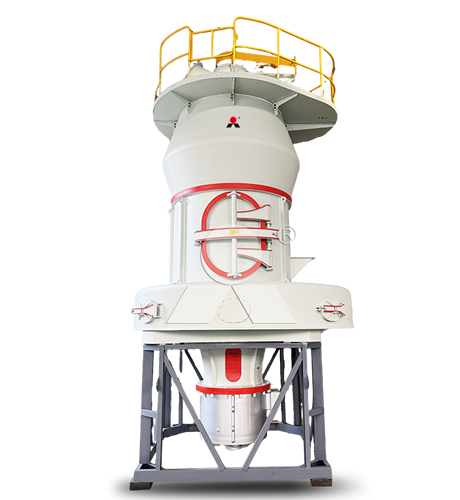
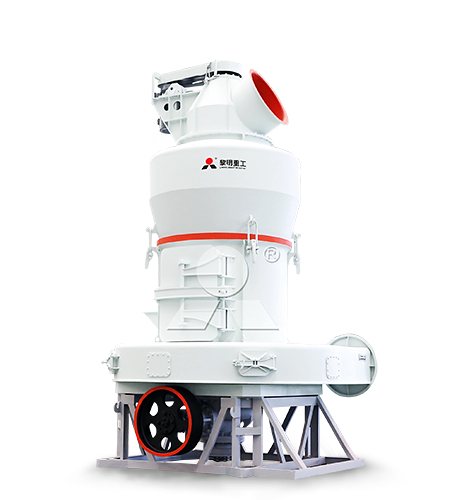
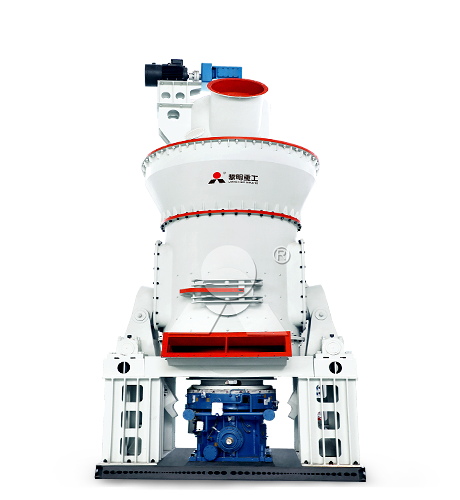
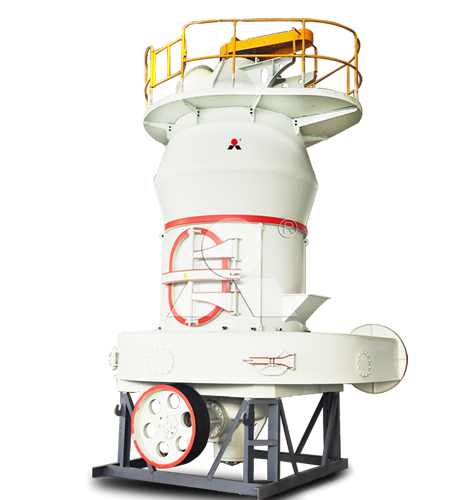
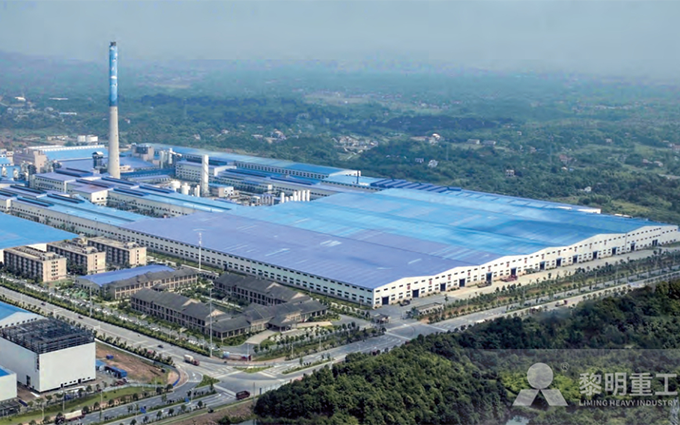
Liming Heavy Industry can be considered as a technical solution provider for complete phosphogypsum powder production line equipment. Its grinding equipment options include Raymond grinding mills, vertical grinding mills, ultrafine grinding mills, classifiers, fans, collectors, conveyors, and supporting control systems.
For medium-capacity phosphogypsum powder projects, a Raymond grinding mill from Liming Heavy Industry can offer a practical balance between investment cost, operation simplicity, and product fineness. For large industrial plants that require higher output, stronger drying capacity, and lower energy consumption per ton, a vertical grinding mill from Liming Heavy Industry is often a more suitable solution.
The most effective approach is to ask the supplier for a process proposal based on real material data. Feed moisture, lump size, target fineness, required capacity, heat source, plant layout, and final application should be provided before model selection.
7. Particle Size Control and Product Quality Management
Particle size control is one of the most important quality factors in phosphogypsum powder production. Different applications need different powder properties. Cement plants focus on setting control and stable calcium sulfate performance. Building material plants may focus on fineness, moisture, setting behavior, and impurity consistency.
In an air-classified grinding system, fineness is mainly controlled by classifier speed, airflow, feed rate, and mill load. Higher classifier speed generally produces finer powder. Excessive feed rate, unstable airflow, or worn grinding parts can cause coarse product and rising power consumption.
Recommended quality control practices
Take finished powder samples at fixed intervals during each shift.
Monitor moisture before drying, after drying, and at final discharge.
Test particle size distribution, residue, bulk density, and flowability.
Check chemical indicators such as residual acidity when required by the end user.
Record production rate, mill current, fan pressure, temperature, and classifier speed.
A well-designed line should provide repeatable powder quality over long operating periods. Short-term high output is not useful if fineness, moisture, or chemical behavior fluctuates beyond the user’s tolerance.
_1761355701097.jpg)
8. Energy Efficiency, Maintenance, and Safety
Energy efficiency in phosphogypsum powder production depends mainly on moisture control, stable feeding, correct mill loading, and well-maintained airflow. Wet feed requires more thermal energy and increases electrical energy because the mill works harder to circulate and classify sticky material.
Energy-saving measures
Store raw phosphogypsum under cover to reduce rainwater absorption.
Use metered feeding instead of irregular loader feeding.
Avoid drying at unnecessarily high temperature.
Seal ducts, inspection doors, and collector connections to prevent false air leakage.
Maintain filter bags before pressure drop becomes excessive.
Avoid over-grinding when the application only requires moderate fineness.
Maintenance should focus on wear, buildup, corrosion, and dust collector performance. Feeders, chutes, classifier housings, fan blades, ducts, and bag filter hoppers should be inspected regularly. Operators should wear dust masks, goggles, gloves, and protective clothing, especially when residual acidity or fine dust is present.
9. Frequently Asked Questions
1. What is a complete phosphogypsum powder production line?
It is an integrated system that receives, pretreats, dries, grinds, classifies, collects, stores, and dispatches phosphogypsum powder. A complete line includes the grinding mill and all auxiliary equipment needed for stable industrial operation.
2. What should a phosphogypsum equipment manufacturer provide?
A qualified manufacturer should provide process design, equipment selection, manufacturing, installation support, commissioning, operator training, and spare parts. The proposal should be based on raw material data and final product requirements.
3. Which grinding mill is suitable for phosphogypsum?
Raymond grinding mills are suitable for medium capacity and standard fineness. Vertical grinding mills are better for larger capacity, stronger drying demand, and lower energy consumption per ton.
4. Can Liming Heavy Industry supply a complete phosphogypsum grinding line?
Liming Heavy Industry can be considered for complete phosphogypsum powder processing solutions, including feeding, drying, grinding, classification, dust collection, conveying, and control systems. Final configuration should be selected according to project data.
5. Does phosphogypsum need drying before grinding?
In many cases, yes. High-moisture phosphogypsum should be dried before or during grinding to prevent sticking, blockage, unstable classification, and high energy consumption.
6. Why is dust collection important in phosphogypsum powder production?
Dust collection recovers fine powder, protects workers, reduces emissions, and prevents dust buildup on equipment. It also helps maintain stable airflow in the grinding system.
7. How can a plant reduce energy consumption?
The plant should control feed moisture, stabilize feeding, avoid unnecessary over-grinding, maintain airflow, and keep filter bags clean. Proper drying design usually provides the largest energy-saving benefit.
8. Is phosphogypsum corrosive to equipment?
It can be corrosive when residual acidity and moisture are high. Corrosion-resistant materials, coatings, regular cleaning, and inspection are recommended in wet-contact and dust-contact areas.
9. What information is needed before requesting a quotation?
Provide raw material moisture, source, lump size, target fineness, required capacity, operating hours, available heat source, site layout, and final product application. These details allow accurate process design and equipment selection.
10. What causes unstable operation in phosphogypsum powder lines?
Common causes include excessive moisture, irregular feeding, poor drying, clogged dust collectors, false air leakage, worn grinding parts, and buildup in chutes or ducts. Preventive maintenance and process monitoring are necessary for stable operation.
11. What applications can processed phosphogypsum powder serve?
Processed phosphogypsum powder can be used in cement, gypsum-based building materials, mine backfill, soil amendment, roadbed materials, and selected chemical applications. Suitability depends on chemical quality, local regulations, and end-user standards.
10. Conclusion
Choosing a complete phosphogypsum powder production line equipment manufacturer requires evaluating technical capability, process experience, equipment integration, drying design, dust control, automation, and after-sales support. Phosphogypsum is wet, sticky, and chemically variable, so a stable production line must be engineered as a complete system rather than a standalone grinding mill. With proper raw material testing and suitable grinding solutions from Liming Heavy Industry, producers can obtain consistent phosphogypsum powder, reduce energy consumption, improve plant reliability, and create practical value from an industrial by-product.