Industry News
Cement Clinker Grinding Mill Selection for Large-Scale Cement Plants in Vietnam
2026-08-28 10:41:41
We are Liming Heavy Industry, a manufacturer of various types of industrial crushers, such as Raymond Mill, Trapezoidal Mill, Vertical Mill, Ultrafine Mill, Ball Mill, etc.
Our mills can process the following minerals:
limestone, quicklime, kaolin, talc, barite, bentonite, calcium carbonate, dolomite, coal, gypsum, clay, carbon black, slag, cement raw materials, cement clinker, etc.
If you need a mill to process stone or minerals into powder, please feel free to contact me (WhatsApp: +8615333807511). Thank you.
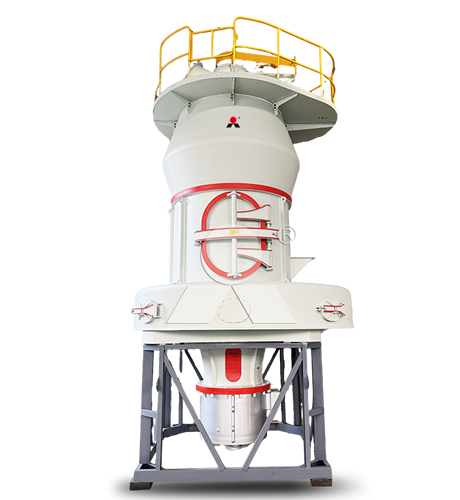
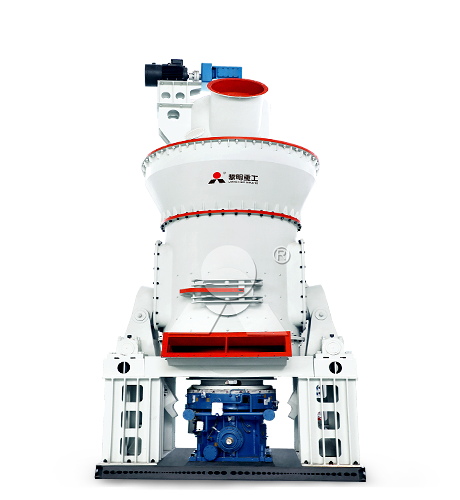
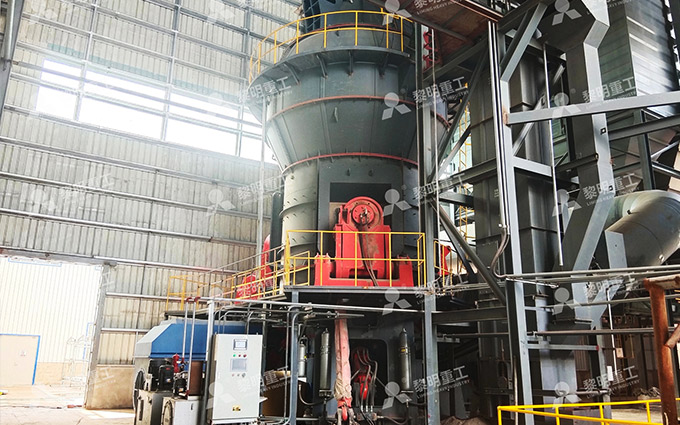
For a large-scale cement plant in Vietnam, the most suitable clinker grinding solution is generally a vertical roller mill or a roller press combined with a high-efficiency separator and ball mill, depending on the existing plant configuration, required cement types, feed variability, electrical-power conditions, and expansion strategy. For a new high-capacity grinding line, an LM Vertical Roller Mill may be evaluated because it can integrate grinding, drying, classification, and conveying within one process system.
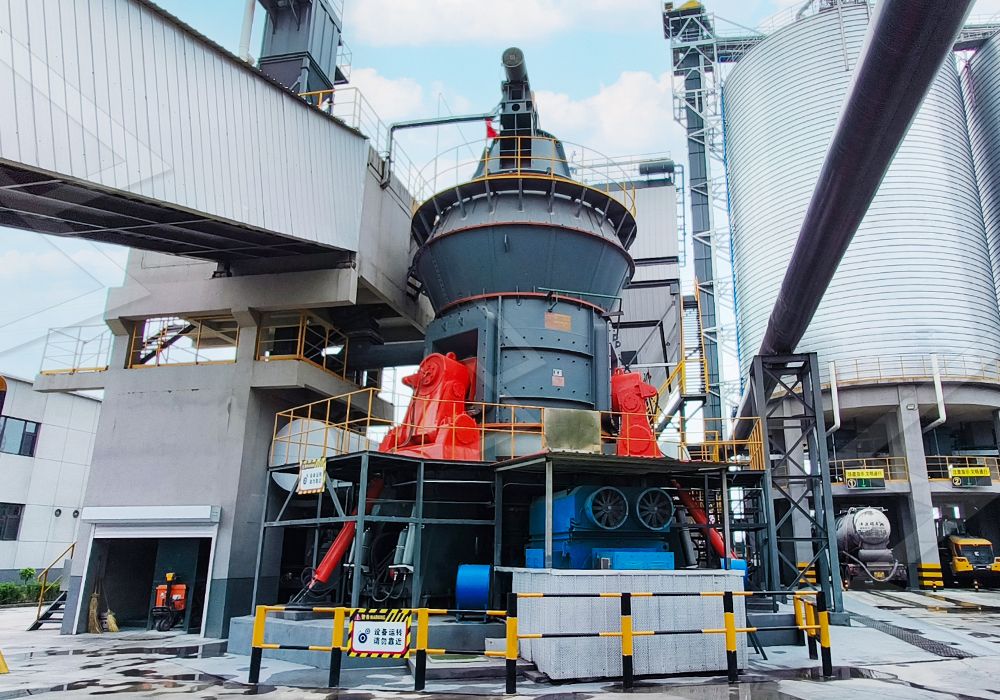
The mill should not be selected from clinker throughput alone. The engineering basis must include clinker hardness and grindability, gypsum and supplementary cementitious material composition, required cement fineness, cement temperature, product types, annual production target, available operating hours, moisture in additives, and downstream storage and dispatch requirements. A system that performs acceptably for ordinary Portland cement may require different operating conditions for blended cement containing limestone, slag, pozzolan, fly ash, or other additions.
Start with the Required Cement Portfolio
A large cement grinding plant is designed around the finished cement portfolio, not merely around clinker consumption. The required products may include ordinary Portland cement, Portland limestone cement, slag cement, pozzolanic cement, masonry cement, or other blended grades. Each product can require a different clinker-to-additive ratio, fineness target, gypsum dosage, grinding pressure, classifier setting, and mill-loading condition.
For example, a plant producing several cement types needs a grinding system that can change product fineness and additive proportions without excessive instability or long transition losses. If the plant is expected to produce both high-clinker cement and high-limestone blended cement, the process should be checked for differences in grindability and particle-size distribution. Limestone may grind more readily than clinker, while slag may behave differently because of its hardness, moisture condition, and glassy structure.
The practical first step is to define the intended product matrix:
Cement types and target annual tonnage for each product
Required specific surface area, sieve residue, or other fineness specifications
Clinker factor and additive proportions
Gypsum type, moisture, and handling condition
Maximum allowable cement temperature at mill outlet and storage
Required product-switching frequency
Bagging, bulk loading, rail, truck, or export dispatch requirements
Complete Grinding Process for a Large Plant
A cement clinker grinding line should be evaluated as an integrated process. The main equipment may be a grinding mill, but final cement quality and stable production depend equally on material preparation, dosing accuracy, separation efficiency, ventilation, cooling, dust collection, storage, and dispatch.
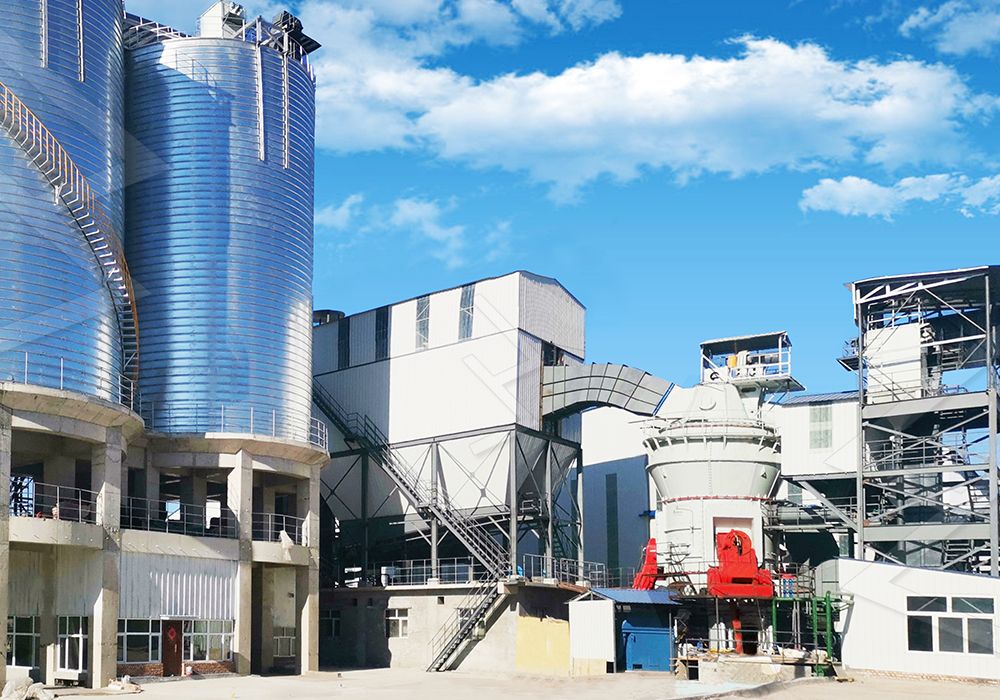
A typical dry cement grinding process may include:
Clinker receiving, conveying, and covered storage
Gypsum, limestone, slag, or other additive storage and proportioning
Crushing of oversized clinker or hard gypsum when required
Accurate weigh-feeding of clinker and additives
Grinding and drying where additive moisture makes drying necessary
Dynamic classification of finished cement
Mill-circuit ventilation and temperature control
Bag-filter dust collection
Finished-cement conveying and silo storage
Quality sampling, packaging, bulk loading, and dispatch
For large plants, feed preparation and dosing are particularly important. Poor clinker size distribution, fluctuating moisture in additives, or inaccurate weigh-feeder calibration can cause mill instability and variable cement quality. The grinding mill cannot fully correct inconsistent feed composition after the material has entered the circuit.
Why Clinker Grindability Matters
Clinker is not a uniform material. Its grindability can vary according to kiln operation, mineral composition, cooling conditions, free lime level, burning temperature, crystal size, and storage conditions. Two clinkers with the same nominal chemical composition may still show different grinding resistance.
Harder clinker generally requires more grinding energy and can reduce practical throughput at a given cement fineness. A change in clinker source or kiln operation can therefore affect mill output even if the grinding mill settings remain unchanged. This is why equipment sizing should use representative clinker samples and, for major investments, should be supported by laboratory grindability testing or pilot evaluation.
Grinding additives also affect the circuit. Moist gypsum may create handling and feeding problems. Granulated slag can introduce a drying requirement. Fine limestone can alter separator loading. Materials with high moisture may require a hot-gas source, especially when a vertical roller mill is used for simultaneous drying and grinding.
_1767929649021.jpg)
Vertical Roller Mill or Ball Mill Circuit?
| Engineering factor | Vertical roller mill system | Ball mill with high-efficiency separator | Roller press with ball mill or finish-grinding circuit |
|---|---|---|---|
| Suitable plant scale | Often considered for large continuous cement-grinding lines | Applicable across many capacities, especially for upgrades or established plant layouts | Often considered where existing ball-mill capacity must be improved or high-pressure grinding is appropriate |
| Drying integration | Can combine drying and grinding when suitable hot gas is available | May require separate drying arrangements for wet additives | Depends on circuit arrangement and moisture condition |
| Product fineness control | Controlled through grinding pressure, table speed, airflow, and classifier settings | Controlled through mill operation, separator performance, ventilation, and circulating load | Dependent on roller press operation, separator performance, and downstream grinding arrangement |
| Process layout | Can reduce the number of separate major process stages through integrated operation | Usually uses a more conventional multi-equipment circuit | Can be integrated into new or upgraded grinding circuits |
| Feed-moisture sensitivity | Can handle some moisture when drying capacity is correctly engineered | Requires attention when wet feed affects mill operation or product temperature | Moisture must be assessed because it can affect material flow and compaction behavior |
| Maintenance focus | Grinding rollers, grinding table, hydraulic system, classifier, and wear protection | Grinding media, liners, separator, mill drive, and material transport equipment | Roll surfaces, hydraulic system, deagglomeration, separator, and downstream circuit equipment |
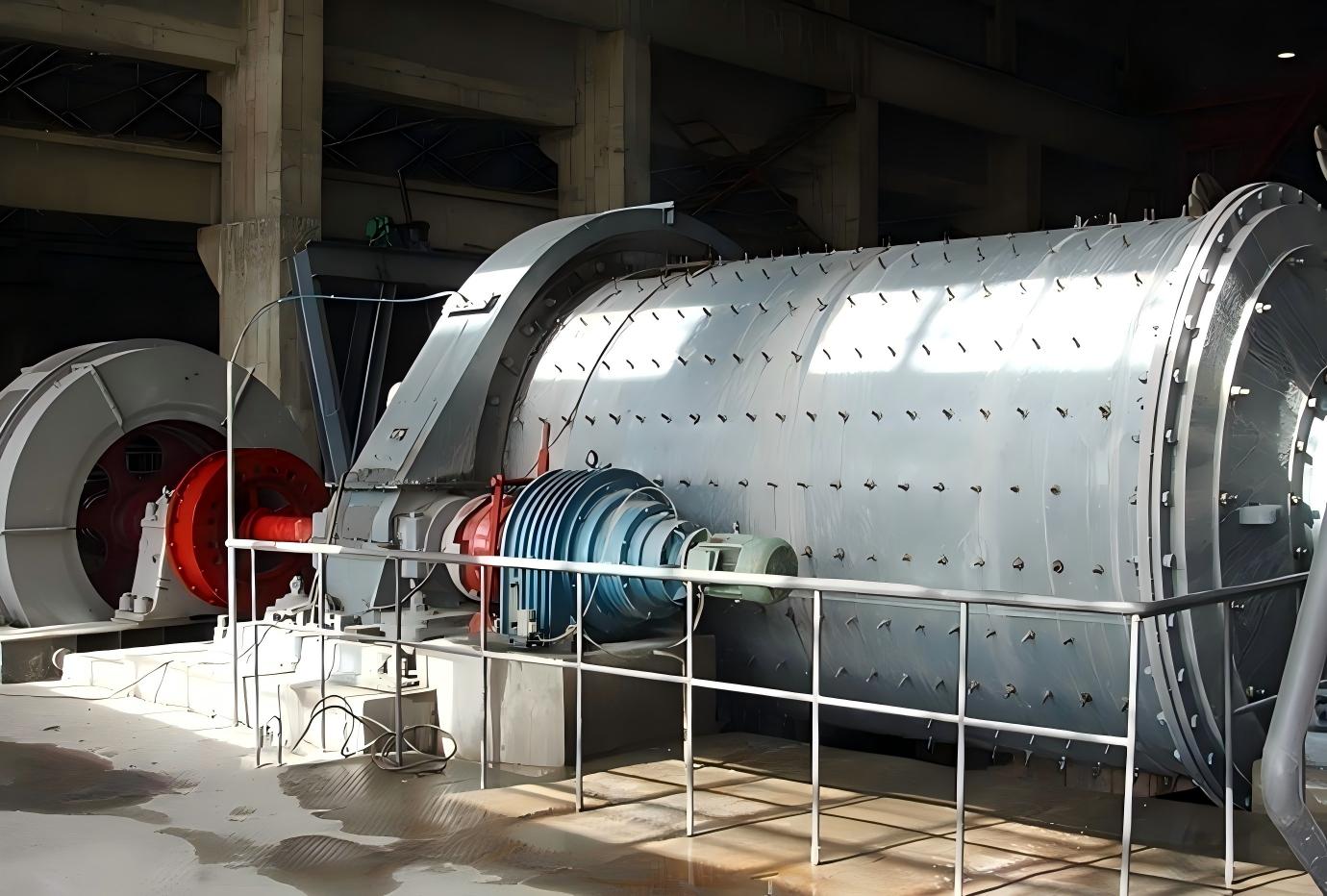
No single arrangement is automatically correct for every cement project. A vertical roller mill is often attractive for a new large-scale plant because grinding, classification, drying, and conveying can be integrated. A ball mill circuit can remain appropriate where existing infrastructure, cement product requirements, maintenance capability, or operational familiarity favor that arrangement. A roller press may be attractive for capacity expansion or energy-focused modernization of an existing grinding system.
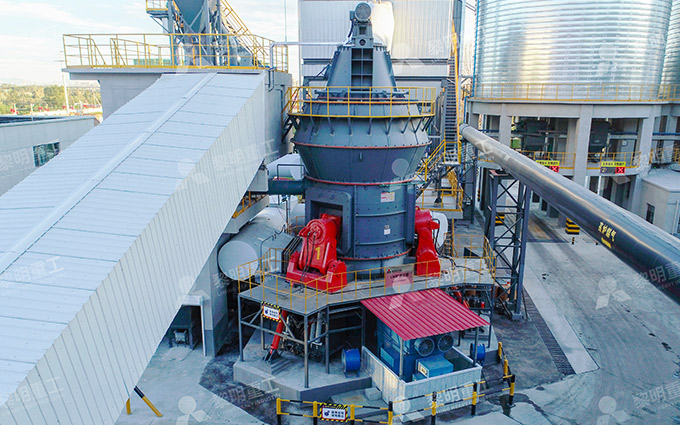
For a preliminary large-scale new-build assessment, an LM Vertical Roller Mill from Liming Heavy Industry may be considered alongside other technically suitable suppliers. The decision should be based on confirmed process data, expected product mix, availability requirements, local maintenance capability, and the complete balance-of-plant scope.
Capacity Is Linked to Fineness and Product Mix
A large grinding plant is commonly specified in annual tonnes, but mill sizing requires an hourly design basis. The preliminary calculation must account for effective operating hours rather than assuming continuous full-capacity operation throughout the year.
Consider a hypothetical cement plant with a production target of 1,800,000 tonnes per year and 7,500 effective grinding hours per year:
_1761355927036.jpg)
Preliminary required average output = 1,800,000 tonnes per year ÷ 7,500 operating hours per year = 240 tph
This value is only a preliminary production basis. The final design capacity should account for the product mix, clinker grindability, cement fineness, additive moisture, expected mill availability, start-up and shutdown time, silo changeover, maintenance strategy, and planned capacity reserve.
A mill producing 240 tph of one blended cement may not produce the same output when switched to a finer, higher-clinker cement. Finer cement increases the grinding work required and often increases the circulating load in the separator circuit. Consequently, a reliable project proposal should provide separate guaranteed operating points for each defined cement product, rather than one maximum capacity claim for all products.
Fineness, Separator Performance, and Cement Quality
Grinding fineness affects cement strength development, water demand, setting behavior, and energy consumption. However, specific surface area or residue alone does not describe the complete cement particle-size distribution. Two cements with a similar average fineness can behave differently if one contains more coarse particles or excessive ultrafine material.
The classifier or separator is therefore a critical part of the grinding plant. Its function is to return insufficiently ground particles to the grinding zone while allowing suitable finished cement to leave the circuit. Poor separator efficiency can create excessive internal circulation, reduce throughput, increase electrical consumption, and make product quality harder to control.
During commissioning, the plant should establish product-specific operating windows for feed rate, grinding pressure or mill loading, separator speed, airflow, temperature, and additive dosage. Product sampling should be performed at stable operating conditions and evaluated against the required fineness and quality criteria.
Temperature and Moisture Control
Cement temperature must be controlled throughout grinding, conveying, and storage. Excessive temperature may affect gypsum dehydration and can influence cement setting behavior. It can also create difficulties in storage, especially if hot cement enters silos without adequate cooling or ventilation.
Conversely, moisture is not only a feed-handling issue. Wet limestone, slag, pozzolan, or gypsum can reduce grinding efficiency, increase material buildup, affect separator performance, and raise pressure loss in ducts and filters. The required hot-gas flow and temperature should be calculated from actual material moisture, feed rate, desired outlet moisture, and site conditions.
For coastal or humid areas, storage design deserves additional attention. Covered clinker storage, protected gypsum handling, enclosed conveyors, and appropriate silo design help limit moisture pickup and reduce variation in mill feed.
Dust Collection and Plant Reliability
Large cement grinding systems operate under controlled negative pressure to contain dust and maintain stable gas flow. Bag filters, ducts, fans, airlocks, and conveying systems must be sized as part of the process, not treated as secondary accessories.
High pressure drop across a dust collector can restrict airflow and disturb the grinding circuit. Air leakage can change gas balance and reduce drying performance. Poorly sealed transfer points can cause dust loss, housekeeping problems, and material-accounting discrepancies. The plant should monitor differential pressure, fan load, filter condition, gas temperature, and oxygen level where hot gases are used.
Reliable operation also depends on spare-parts planning. Critical wear parts, hydraulic seals, classifier components, instrumentation spares, and essential drive-system parts should be evaluated before commissioning. A large cement plant can lose significant production from a short outage if a critical component has a long replacement lead time.
_1761355927035.jpg)
Common Design Errors to Avoid
Selecting mill capacity from annual tonnage without calculating effective operating hours and product-specific hourly demand
Using average clinker properties while ignoring possible changes in kiln operation, clinker source, or additive quality
Assuming one grinding setting will suit all cement grades
Underestimating moisture in gypsum, slag, limestone, or pozzolanic additions
Designing only the mill while overlooking weigh-feeding accuracy, separator performance, ventilation, and finished-cement storage
Specifying a high fineness target without evaluating its effect on output, circulating load, and energy consumption
Delaying laboratory testing until after equipment selection
Failing to provide sufficient maintenance access, lifting provisions, and critical spare-parts inventory
Data Required Before Final Mill Selection
Before selecting a clinker grinding mill for a large-scale cement plant in Vietnam, the engineering team should provide representative clinker and additive samples, expected chemical and physical variation, feed-size distribution, moisture data, target cement grades, fineness requirements, production schedule, design capacity, utilities, available hot-gas source, and site-layout constraints.
The preferred solution should then be validated through grindability testing, process simulation where appropriate, and a complete plant balance covering grinding, classification, gas handling, dust collection, cement storage, and dispatch. This approach helps ensure that the selected mill is sized for the actual cement portfolio and operating conditions rather than for an isolated nominal capacity.