Calcium Carbonate Knowledge Hub
What Is 1000 Mesh Calcium Carbonate?
2026-09-04 16:39:46
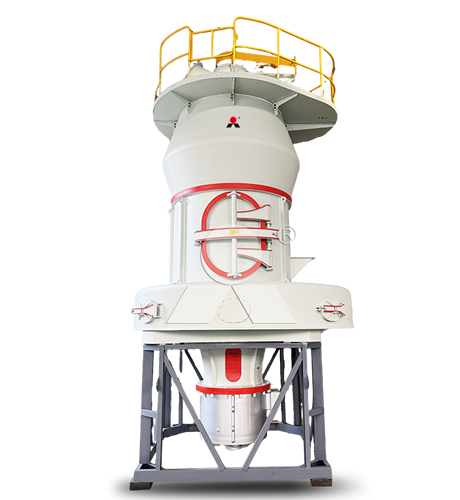
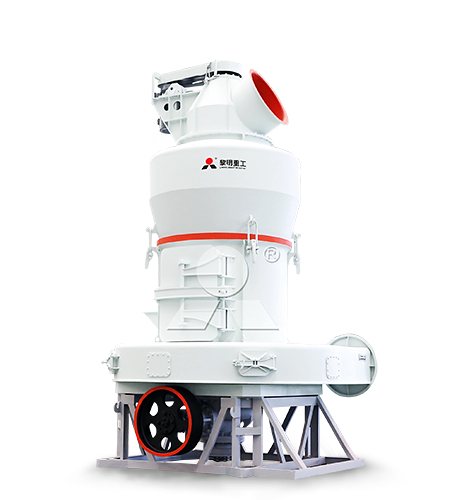
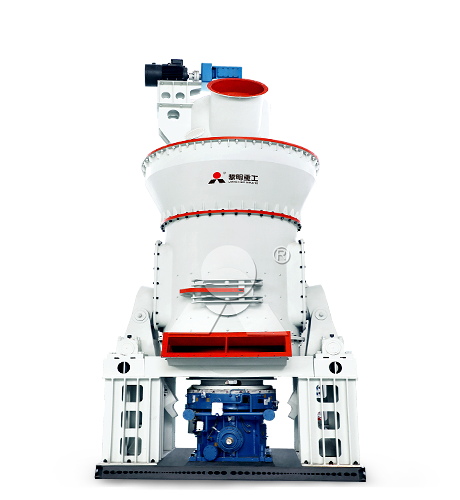
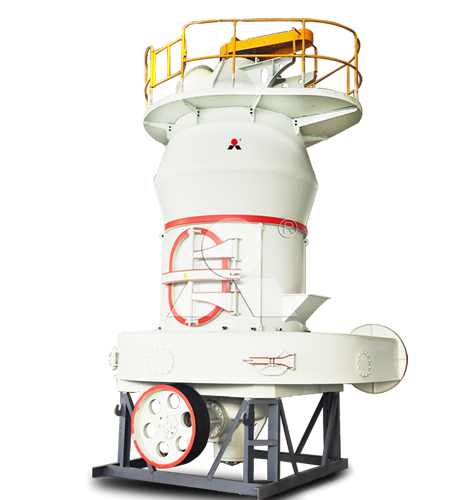
We are Liming Heavy Industry, a manufacturer of various types of industrial crushers, such as Raymond Mill, Trapezoidal Mill, Vertical Mill, Ultrafine Mill, Ball Mill, etc.
Our mills can process the following minerals:
limestone, quicklime, kaolin, talc, barite, bentonite, calcium carbonate, dolomite, coal, gypsum, clay, carbon black, slag, cement raw materials, cement clinker, etc.
If you need a mill to process stone or minerals into powder, please feel free to contact me (WhatsApp: +8615333807511). Thank you.
1000 mesh calcium carbonate is a commercial fine or ultrafine ground calcium carbonate (GCC) grade used in paints, coatings, plastics, PVC, rubber, paper, adhesives, sealants, and other applications that need smoother powder and lower coarse residue than 800 mesh material. In commercial calcium carbonate terminology, it is often associated with a particle size around 10 µm, but the label is not a universal ASTM sieve specification.
For a meaningful specification, “1000 mesh” must be supported by measured particle-size data. Buyers should request D10, D50, D97, coarse residue, surface area, moisture, whiteness, purity, and surface-treatment information. Two suppliers can sell “1000 mesh calcium carbonate” with different actual particle-size distributions and different performance in the same formulation.
What Does 1000 Mesh Mean?
Mesh originally refers to the number of openings per linear inch in a screen. At conventional sieve sizes, this can be linked directly to standard apertures. At very fine GCC levels, however, labels such as 800 mesh, 1,000 mesh, and 1,250 mesh are often commercial classifications rather than complete sieve-test specifications.
In calcium carbonate markets, 1000 mesh commonly refers to a fine product in the approximate low-micron range. One commercial mesh-selection guide gives a practical particle-size reference of about 10 µm for 1000 mesh calcium carbonate, while noting that nominal mesh and actual product size are not identical concepts.
| Term | Practical interpretation | Why it should be clarified |
|---|---|---|
| 1000 mesh calcium carbonate | Commercial fine GCC grade | Supplier definitions and actual PSD targets can vary |
| Typical market reference | Often around 10 µm for practical particle-size comparison | May describe an approximate top cut, D50, or marketing grade rather than one fixed number |
| D50 | Median particle diameter | Defines the central size of the powder population |
| D97 | Size below which 97% of measured particle volume lies | Controls coarse particles that can affect gloss, smoothness, and dispersion |
| Specific surface area | Particle surface per unit mass | Influences oil absorption, coating-agent demand, viscosity, and polymer interaction |
At this fineness, laser diffraction is generally more useful than sieve testing. Fine GCC may form soft agglomerates, and a nominal mesh reference alone cannot show whether the product has a narrow distribution, an excessive coarse tail, or too many ultrafine particles.
1000 Mesh vs Other Grades
| Commercial grade | General size relationship | Typical product direction |
|---|---|---|
| 600 mesh | Usually coarser; often marketed around 15–25 µm | General paints, plastics, rubber, sealants, adhesives, fine construction fillers |
| 800 mesh | Fine commercial GCC, often in the low- to mid-micron range depending on supplier definition | PVC, rubber, paints, paper, adhesives, sealants, general plastics |
| 1000 mesh | Commonly marketed near about 10 µm | Finer paints, coatings, PVC, plastics, rubber, paper, adhesives, and sealants |
| 1250 mesh | Usually finer than 1000 mesh | Higher-value polymer, coating, paper, rubber, sealant, and specialty filler applications |
| Ultrafine GCC | Defined by low-micron D50 and closely controlled D97 | Premium coatings, masterbatch, paper coating, high-performance PVC, and specialty compounds |
The best grade is application-specific. Finer calcium carbonate can improve smoothness and reduce visible coarse particles, but it also has greater surface area. That can increase oil absorption, coating dosage, powder cohesion, mix viscosity, and grinding cost. A 1000 mesh grade is therefore not automatically better than an 800 mesh grade; it must fit the formulation.
How 1000 Mesh Calcium Carbonate Is Produced
1000 mesh calcium carbonate is made from selected calcite-rich limestone, marble, chalk, or calcite ore. The material is crushed, dried if needed, ground in a fine or ultrafine milling system, and air-classified to control the particle-size distribution.
Selected carbonate feed → crushing → moisture control → fine grinding → high-efficiency air classification → powder collection → optional coating → quality control → packing or bulk delivery
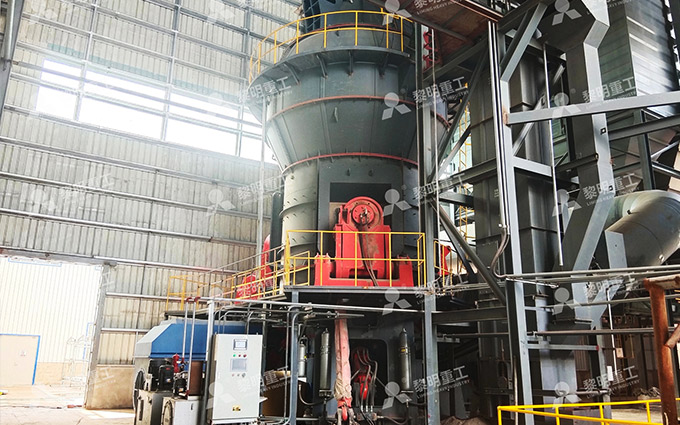
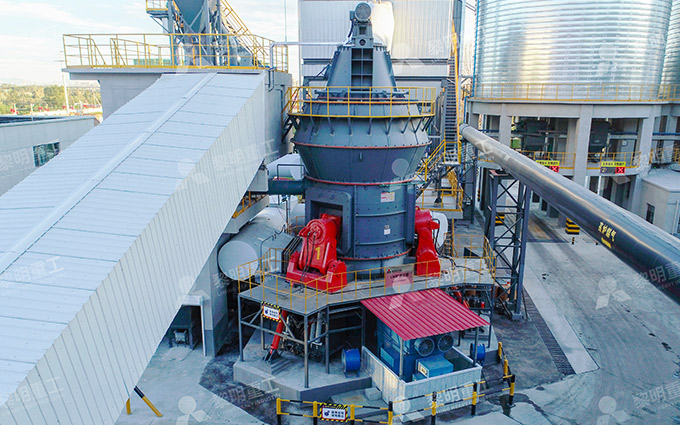
At approximately this commercial fineness level, a closed-circuit grinding system is normally needed. A ball mill with air classifier, vertical mill, ring roller mill, or other ultrafine system can be used. The classifier separates qualified fine product from coarse particles, which return to the mill for additional grinding.
Production controls that matter
Raw material: High CaCO3, low silica, low iron, controlled MgO, and high whiteness are important for premium fine GCC.
Moisture: Fine powder must remain dry enough to avoid buildup, agglomeration, poor classification, and bag caking.
Mill operation: Grinding energy, feed rate, airflow, temperature, and wear condition influence final PSD.
Air classification: Controls D50, D97, coarse residue, product yield, and the balance of fine versus ultrafine particles.
Dust collection: Maintains air balance and recovers fine product without contaminating it.
Clean handling: Magnets, enclosed conveying, and grade separation reduce iron, dark specks, and cross-contamination.
Coated vs Uncoated 1000 Mesh GCC
1000 mesh calcium carbonate may be supplied as uncoated GCC or as stearic-acid-coated GCC. The decision depends on the target binder or polymer system.
| Product type | Typical use direction | Why it is selected |
|---|---|---|
| Uncoated 1000 mesh GCC | Water-based paints, paper-related uses, wall coatings, construction chemicals, selected rubber products | Natural mineral surface may be suitable for aqueous or mineral-based systems |
| Stearic-acid-coated 1000 mesh GCC | PVC, PE, PP, masterbatch, cable compounds, rubber, sealants, and adhesives | Hydrophobic treatment can improve compatibility and dispersion in non-polar polymer systems |
Because 1000 mesh GCC has relatively high surface area, coating control becomes more important. The treatment level must be matched to the actual surface area and polymer system. A fixed stearic-acid dosage cannot be applied blindly across different particle sizes or raw-material sources.
Common Applications
1000 mesh calcium carbonate is selected when a formulation needs fine particle size, low grit, and a smoother filler than coarse GCC grades. The actual performance still depends on purity, whiteness, particle distribution, moisture, surface treatment, and the complete formulation.
| Application | Role of 1000 mesh calcium carbonate | Key selection controls |
|---|---|---|
| Paints and latex coatings | Fine extender filler that can influence film structure, viscosity, smoothness, and cost | Whiteness, PSD, low grit, oil absorption, dispersion, viscosity, and gloss response |
| Rigid PVC and selected PVC compounds | Fine filler, often coated, for controlled dispersion and surface quality | D50, D97, moisture, whiteness, coating performance, extrusion behavior |
| PE and PP masterbatch | Fine filler used to manage cost and compound properties | Fine PSD, hydrophobicity, surface area, bulk density, dispersion, melt-flow behavior |
| Rubber | Fine mineral filler for volume extension and compound-property control | Particle size, moisture, surface treatment, dispersion, and cure-system compatibility |
| Sealants and adhesives | Fine filler affecting density, rheology, extrusion, and formulation economics | PSD, oil absorption, moisture, coating, flowability, and storage stability |
| Paper and paperboard | Potential filler or coating component for qualified grades | Brightness, low grit, fine PSD, slurry properties, optical performance, and retention behavior |
| Fine construction coatings and putty | Fine mineral filler for smooth finish and formulation consistency | Whiteness, fineness, moisture, powder flow, and compatibility with binders and additives |
Commercial guidance identifies 800–1000 mesh calcium carbonate with approximately 95% whiteness and 96% calcium content as a common range for paints and latex paints, where it can support dispersion, gloss, and non-settling behavior in suitable formulations. This should be treated as an application example, not a universal paint-grade specification.
How to Specify a 1000 Mesh Grade
Do not specify this grade only as “1000 mesh.” Define what the product must achieve in measurable terms.
| Specification item | Why it matters |
|---|---|
| D10, D50, and D97 | Defines the complete PSD, including fine fraction and coarse tail |
| Particle-size test method | Ensures supplier and customer use comparable laser-diffraction and dispersion procedures |
| Specific surface area | Helps assess coating demand, oil absorption, viscosity, and binder interaction |
| CaCO3, CaO, and MgO | Confirms purity and calcitic versus dolomitic material character |
| SiO2, Fe2O3, and acid-insoluble residue | Controls grit, abrasion, color, and contamination risk |
| Whiteness, brightness, and Lab* values | Important for paints, paper, white PVC, masterbatch, and light-colored sealants |
| Moisture and bulk density | Control storage, flow, packaging, dosing, and polymer processing |
| Oil absorption | Important for coatings, rubber, adhesives, and sealants |
| Coating condition and activation rate | Required for stearic-acid-coated grades used in polymer applications |
| End-use trial requirement | Confirms actual behavior in the customer’s paint, PVC, rubber, adhesive, sealant, or paper system |
Key Takeaway
1000 mesh calcium carbonate is a commercial fine GCC grade often associated with approximately 10 µm particle size. It is used in paints, coatings, plastics, PVC, rubber, paper, adhesives, sealants, and fine construction products where smoother powder and lower coarse residue are needed.
The mesh label alone is not enough for technical selection. Define the actual D50, D97, surface area, purity, whiteness, moisture, coating condition, and application results. This ensures that a 1000 mesh calcium carbonate grade delivers the intended performance rather than only carrying a familiar commercial name.