Calcium Carbonate Knowledge Hub
What Is 800 Mesh Calcium Carbonate?
2026-09-04 16:39:01
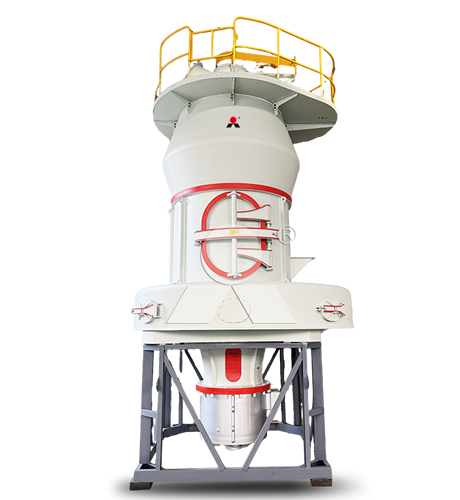
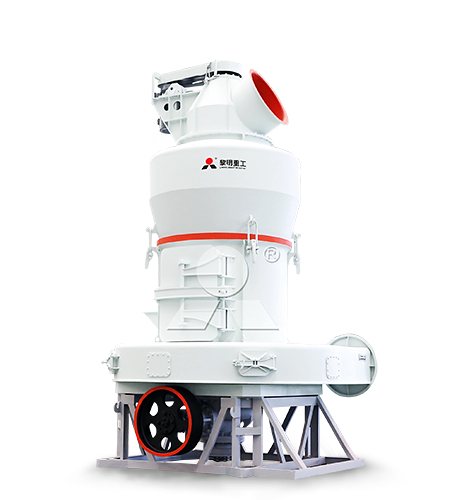
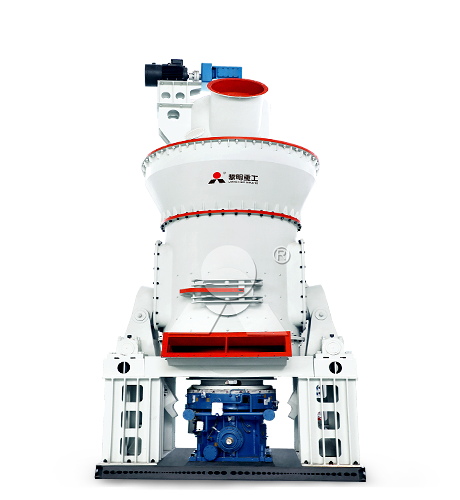
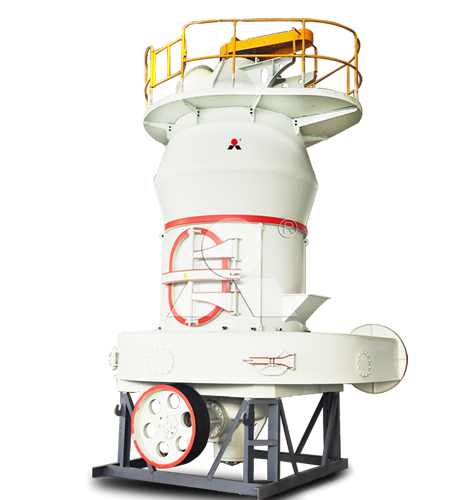
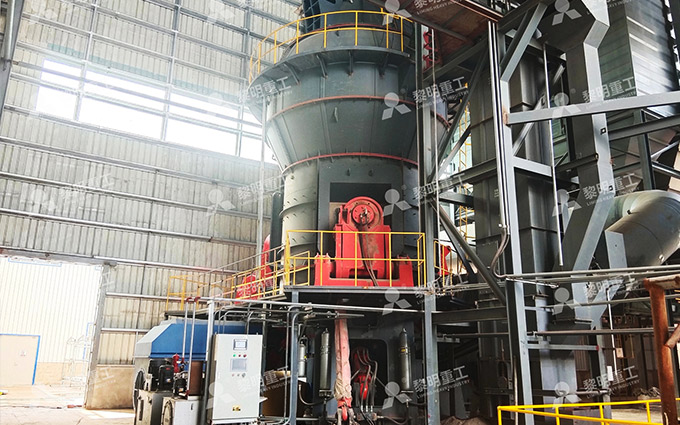
We are Liming Heavy Industry, a manufacturer of various types of industrial crushers, such as Raymond Mill, Trapezoidal Mill, Vertical Mill, Ultrafine Mill, Ball Mill, etc.
Our mills can process the following minerals:
limestone, quicklime, kaolin, talc, barite, bentonite, calcium carbonate, dolomite, coal, gypsum, clay, carbon black, slag, cement raw materials, cement clinker, etc.
If you need a mill to process stone or minerals into powder, please feel free to contact me (WhatsApp: +8615333807511). Thank you.
800 mesh calcium carbonate is a commercial fine ground calcium carbonate (GCC) grade commonly used in plastics, PVC, rubber, paints, sealants, adhesives, paper, and construction chemicals. In many markets, it is associated with a powder in the roughly 10–20 µm range, but “800 mesh” is not a complete or universal particle-size specification.
For industrial purchasing, 800 mesh should be treated as a grade label. The meaningful specification is the actual particle-size distribution—especially D50, D97, and coarse residue—together with CaCO3 purity, whiteness, moisture, surface treatment, and performance in the end-use formulation. Commercial calcium carbonate grades commonly span from tens of micrometres down toward around 10 µm as the mesh designation rises.
What Does 800 Mesh Mean?
Mesh originally describes the number of openings per linear inch in a screen. At coarse sizes, it can be linked directly to a standard sieve aperture. At fine calcium carbonate grades, however, labels such as 600 mesh, 800 mesh, 1,000 mesh, and 1,250 mesh are often used commercially and do not always represent a single standardized sieve test.
In practice, 800 mesh calcium carbonate generally refers to a fine GCC powder with most particles well below the coarse construction-filler range. Depending on the producer, raw material, grinding circuit, and classification target, an 800 mesh product may have a different median particle size and coarse tail from another supplier’s 800 mesh material.
| Term | Practical meaning | Why it needs clarification |
|---|---|---|
| 800 mesh calcium carbonate | Commercial fine GCC grade | Different suppliers may use the same label for different PSD targets |
| Typical commercial range | Often around 10–20 µm, depending on the market definition | May refer to D50, top cut, screen equivalent, or a general fineness category |
| D50 | Median particle diameter | Defines the central size of the particle population |
| D97 | Size below which 97% of particles fall by measured volume | Controls the coarse tail, grit risk, and surface quality |
| Specific surface area | Surface area per unit mass of powder | Influences coating demand, oil absorption, rheology, and polymer interaction |
As a practical rule, do not convert 800 mesh directly into one micron value. Instead, request the supplier’s laser diffraction curve, D10, D50, D97, measurement method, and dispersion procedure. This is especially important for coated GCC because soft agglomerates can make a powder appear coarser in a customer’s process than its nominal grade suggests.
800 Mesh vs Other GCC Grades
| Commercial grade | General fineness relationship | Typical product direction |
|---|---|---|
| 400 mesh | Coarser; associated with a 38 µm No. 400 sieve opening | Putty, tiles, rubber, artificial stone, general construction filler |
| 600 mesh | Fine commercial GCC, often marketed around 15–25 µm | Paints, general plastics, rubber, sealants, adhesives, fine construction materials |
| 800 mesh | Finer commercial GCC, commonly in the low- to mid-micron range depending on supplier definition | PVC, plastics, rubber, paint, sealants, adhesives, paper-related and general industrial uses |
| 1,000–1,250 mesh | Typically marketed as finer than 800 mesh | Higher-value plastics, PVC, coatings, paper, rubber, sealants, and specialty filler applications |
| Ultrafine GCC | Defined by low-micron D50 and tightly controlled D97 | Premium coatings, high-filler masterbatch, paper coating, specialty polymers, and demanding sealants |
Increasing fineness increases surface area. This can improve filler interaction with a polymer or binder, but it may also increase oil absorption, viscosity, coating-agent demand, powder cohesion, and milling cost. The best grade is therefore not always the finest grade; it is the grade that delivers the desired balance in the customer’s formulation.
How 800 Mesh Calcium Carbonate Is Produced
800 mesh calcium carbonate is manufactured from selected limestone, marble, chalk, or calcite. The natural carbonate is crushed, dried when required, finely ground, and air-classified. Coarse particles are returned to the mill until the product reaches the intended distribution.
Qualified carbonate feed → crushing → moisture control → fine grinding → dynamic air classification → powder collection → optional surface treatment → quality control → packing or bulk delivery
At this fineness, air classification is more important than simple screening. Fine GCC can agglomerate and blind fine screens, while a dynamic classifier can control the coarse tail and recirculate oversized particles to the mill. The final quality depends on feed purity, mill performance, classifier settings, airflow balance, dust collection, and handling conditions.
Key production controls
Raw material: High CaCO3, low silica, low iron, controlled MgO, and stable whiteness support quality fine GCC.
Moisture: Fine powder must remain dry enough for efficient grinding, classification, storage, and packaging.
Grinding circuit: The mill must produce fine material without excessive energy use or unwanted ultrafines.
Air classifier: Controls D50, D97, coarse residue, product yield, and consistency.
Dust collection: Maintains stable air balance and recovers fine calcium carbonate powder.
Contamination control: Magnets, clean conveying, and grade segregation reduce iron, dark specks, and cross-product mixing.
Coated vs Uncoated 800 Mesh GCC
800 mesh calcium carbonate is available as uncoated GCC or stearic-acid-coated GCC. The selection depends primarily on whether the application uses a water-based/mineral system or a hydrophobic polymer or organic binder.
| Type | Common applications | Selection reason |
|---|---|---|
| Uncoated 800 mesh GCC | Water-based paints, paper-related products, construction chemicals, selected rubber and general fillers | Natural calcium carbonate surface may suit aqueous or mineral-based systems |
| Stearic-acid-coated 800 mesh GCC | PVC, PE, PP, masterbatch, cable compounds, rubber, sealants, adhesives | Hydrophobic surface can improve compatibility and dispersion in non-polar polymer matrices |
In coated products, particle fineness and surface treatment must be evaluated together. A fine 800 mesh powder has more surface area than a coarse grade, so its coating level and activation performance must be controlled carefully. Under-coating can reduce polymer compatibility; over-coating can increase free fatty acid, alter flow, and add unnecessary cost.
Common Applications
800 mesh calcium carbonate is widely used as a fine industrial filler. Its suitability in each sector depends on the specific powder properties and formulation requirements.
| Application | Role of 800 mesh calcium carbonate | Priority controls |
|---|---|---|
| Rigid PVC pipe and profile | Fine filler for selected formulations, often as coated GCC | PSD, whiteness, low moisture, coating quality, low dark specks, extrusion performance |
| PE and PP masterbatch | Filler used to manage formulation cost and material properties | Fine PSD, hydrophobicity, bulk density, low moisture, dispersion, melt-flow behavior |
| Rubber | Fine mineral filler for volume extension and compound-property adjustment | Particle size, surface area, moisture, surface treatment, dispersion, cure compatibility |
| Paints and coatings | Extender filler in suitable formulations | Whiteness, low grit, PSD, oil absorption, dispersion, viscosity, gloss response |
| Sealants and adhesives | Fine filler affecting density, viscosity, extrusion, and cost | Particle size, oil absorption, moisture, surface treatment, flow, storage stability |
| Paper and paperboard | Potential filler or coating component where the product meets paper-grade requirements | Brightness, low grit, fine PSD, slurry behavior, optical performance, retention compatibility |
| Construction chemicals | Fine filler for selected premium putty, joint-compound, and coating formulations | Whiteness, fineness, moisture, flow, and formulation consistency |
Commercial suppliers commonly list 800 mesh calcium carbonate for plastics, PVC, rubber, paints, paper, adhesives, sealants, detergents, and construction chemicals. These are application categories rather than proof that every 800 mesh product qualifies for every formulation; customers should confirm performance through trials.
How to Specify an 800 Mesh Grade
For a useful purchase specification, replace the vague question “Is it 800 mesh?” with measurable technical requirements. This avoids confusion between suppliers and makes product qualification faster.
| Specification item | Why it matters |
|---|---|
| D10, D50, and D97 | Defines the full particle-size distribution and coarse tail |
| Laser-diffraction method and dispersion procedure | Ensures supplier and customer particle-size data are comparable |
| Coarse residue or top-cut limit | Controls particles that can cause roughness, grit, or poor dispersion |
| CaCO3, CaO, and MgO | Confirms purity and calcitic versus dolomitic character |
| SiO2, Fe2O3, and acid-insoluble residue | Controls abrasive contamination, whiteness, and product cleanliness |
| Whiteness, brightness, and Lab* values | Important for white PVC, coatings, paper, masterbatch, and sealants |
| Moisture | Affects handling, storage, compounding, coating effectiveness, and extrusion |
| Specific surface area and oil absorption | Useful for paint, rubber, adhesive, sealant, and coating-dose calculations |
| Coating condition and activation rate | Required for stearic-acid-coated polymer grades |
| Bulk density and packaging | Important for transport, silo capacity, dosing, bagging, and customer handling |
Key Takeaway
800 mesh calcium carbonate is a commercial fine GCC grade typically used in PVC, plastics, rubber, paints, paper, adhesives, sealants, and construction chemicals. It is generally finer than 600 mesh material, but it does not represent one fixed micron size across all suppliers.
Specify 800 mesh calcium carbonate by its measured particle-size distribution, not its mesh label alone. Confirm D50, D97, coarse residue, CaCO3 purity, whiteness, moisture, surface treatment, and real formulation performance to ensure the selected grade fits the customer’s production process.