Calcium Carbonate Knowledge Hub
What Is 600 Mesh Calcium Carbonate?
2026-09-04 16:38:17
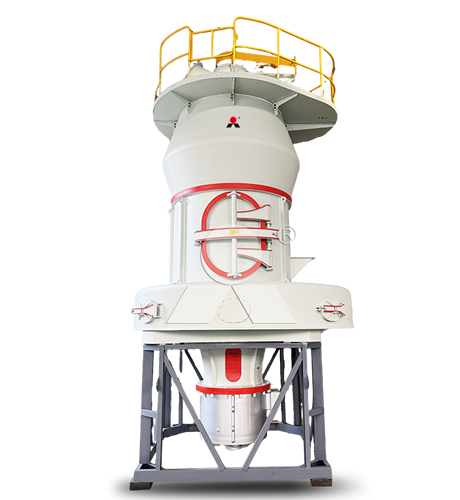
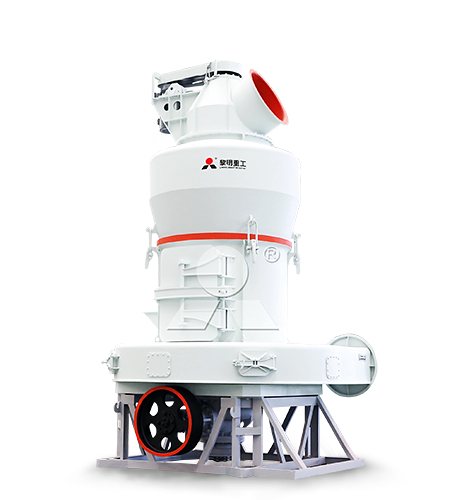
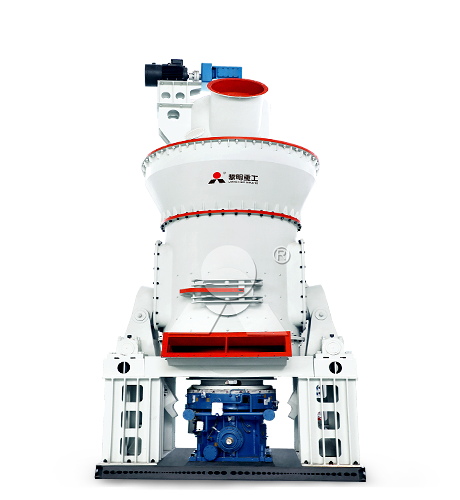
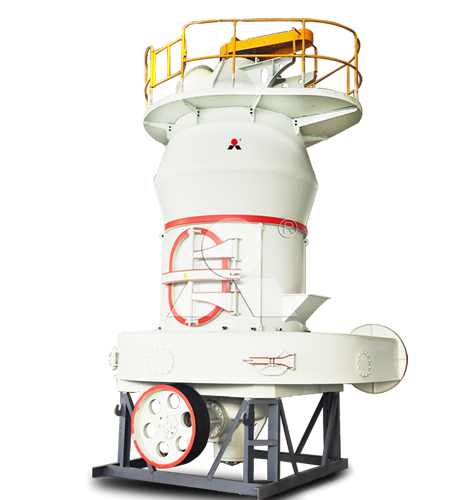
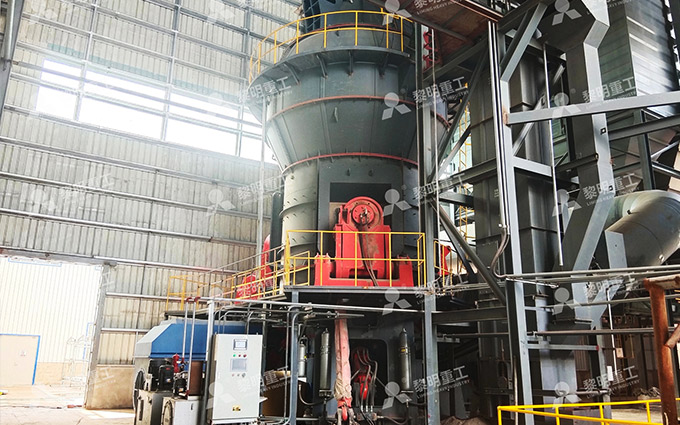
We are Liming Heavy Industry, a manufacturer of various types of industrial crushers, such as Raymond Mill, Trapezoidal Mill, Vertical Mill, Ultrafine Mill, Ball Mill, etc.
Our mills can process the following minerals:
limestone, quicklime, kaolin, talc, barite, bentonite, calcium carbonate, dolomite, coal, gypsum, clay, carbon black, slag, cement raw materials, cement clinker, etc.
If you need a mill to process stone or minerals into powder, please feel free to contact me (WhatsApp: +8615333807511). Thank you.
600 mesh calcium carbonate is a fine ground calcium carbonate (GCC) powder commonly marketed for applications that need a smoother, lower-grit filler than 400 mesh material. In commercial calcium carbonate markets, “600 mesh” is often associated with a particle-size range around 15–25 µm, with approximately 23 µm commonly used as a reference top-cut value. However, it is not a universal ASTM sieve specification.
Because 600 mesh is often a commercial grade name rather than a complete standardized sieve result, it should not be purchased on mesh alone. Specify the full particle-size distribution—especially D50, D97, and coarse residue—alongside CaCO3 purity, whiteness, moisture, surface treatment, and application performance.
What Does 600 Mesh Mean?
Mesh traditionally refers to the number of screen openings per linear inch. At coarse sizes, mesh can be directly linked to standardized sieve openings. At finer levels, however, many calcium carbonate suppliers use labels such as 600 mesh, 800 mesh, 1,000 mesh, or 1,250 mesh as commercial fineness grades rather than strict sieve designations.
For 600 mesh calcium carbonate, the market commonly uses an approximate size range of 15–25 µm. One commercial mesh-to-micron guide lists 600 mesh at roughly 23 µm and describes it as a paper, coating, and general-plastics filler range. Another GCC supplier groups 400–600 mesh calcium carbonate in the approximate 15–25 µm range for standard industrial, paint, and plastic applications.
| Term | Practical interpretation | Important limitation |
|---|---|---|
| 600 mesh calcium carbonate | Commercial fine GCC grade, often around 15–25 µm depending on supplier and market | Not a complete particle-size specification |
| Approximate 600 mesh reference | About 23 µm in many commercial conversion charts | May refer to a top cut, a nominal grade, or supplier-specific PSD target |
| D50 | Median particle size measured by laser diffraction or another agreed method | More useful than mesh for defining the main particle population |
| D97 | Size below which 97% of measured particle volume lies | Controls the coarse tail, grit risk, and surface smoothness |
| Coarse residue | Oversized material retained on a specified screen or measured by another method | Important for coatings, plastics, rubber, and sealants |
600 Mesh vs 400, 800, and Fine GCC
600 mesh calcium carbonate is finer than 400 mesh material but generally coarser than the commercial grades often called 800 mesh or 1,250 mesh. The comparison is useful for initial product selection, but it should always be confirmed with measured particle-size data.
| Commercial grade reference | Typical size interpretation | Relative fineness | Typical application direction |
|---|---|---|---|
| 400 mesh | Associated with a 38 µm No. 400 sieve opening | Fine powder | Putty, rubber, artificial stone, tiles, selected plastics and construction products |
| 600 mesh | Commonly marketed around 15–25 µm | Finer industrial powder | Paints, general plastics, rubber, sealants, adhesives, fine construction fillers |
| 800 mesh | Often marketed around 15–18 µm, depending on the supplier definition | Fine to very fine commercial grade | PVC pipe and profile, plastics, masterbatch, rubber, selected coatings |
| 1,250 mesh | Often marketed as a finer micron-level GCC grade | Very fine | Higher-value PVC, coatings, paper, rubber, sealants, and specialty applications |
| Ultrafine GCC | Defined by low-micron D50 and controlled D97 | Ultrafine | Premium coatings, masterbatch, paper, high-quality polymers, specialty compounds |
There is an important overlap between commercial mesh labels. For example, one supplier may call a grade “600 mesh” based on a coarse cut or typical range, while another may use the term for a powder with a different median size. Always compare the supplier’s technical data sheet rather than assuming all 600 mesh products are interchangeable.
How It Is Produced
600 mesh calcium carbonate is usually produced from calcite-rich limestone, marble, chalk, or calcite ore. The raw material is crushed, dried when necessary, finely ground, and classified to remove oversized particles.
Selected carbonate feed → crushing → moisture control → fine grinding → air classification → powder collection → optional surface treatment → quality testing → packing or bulk delivery
At this fineness, air classification is usually more useful than ordinary screening. Fine powder can blind small sieve openings or form soft agglomerates, making simple mesh screening less reliable. A dynamic air classifier separates fine product from coarse particles, which return to the mill for additional grinding.
Key production controls
Raw-material quality: High CaCO3, low silica, low iron, controlled MgO, and stable whiteness support consistent fine GCC.
Feed moisture: Low, stable moisture prevents buildup, poor mill output, agglomeration, and powder caking.
Grinding circuit: The mill must deliver the required fineness without generating too many unnecessary ultrafines.
Air classification: Controls the coarse tail, D50, D97, and product yield.
Dust collection: Captures fine powder and maintains stable airflow through the grinding and classification system.
Contamination control: Magnets, clean conveying, and equipment maintenance reduce iron, dark specks, and foreign material.
Common Applications
600 mesh calcium carbonate is generally chosen where a fine, smooth filler is required but a low-micron ultrafine grade is unnecessary. The suitable application depends on the complete powder specification and formulation test results.
| Application | Role of 600 mesh calcium carbonate | Important selection controls |
|---|---|---|
| Paints and coatings | Fine extender filler that can influence viscosity, film structure, and formulation cost | Whiteness, low grit, PSD, oil absorption, dispersion, and binder compatibility |
| General plastics and PVC | Fine mineral filler for selected compounds | PSD, low moisture, purity, whiteness, coating condition, and extrusion performance |
| Rubber | Fine filler for volume extension and processing-property adjustment | Particle size, moisture, surface area, dispersion, and cure-system compatibility |
| Sealants and adhesives | Filler that can control rheology, density, extrusion, and formulation economics | Particle size, oil absorption, moisture, surface treatment, flowability, and storage stability |
| Wall putty and fine construction chemicals | Finer mineral filler for smoother formulation texture | Whiteness, fineness, moisture, flow, and compatibility with other dry-mix ingredients |
| Paper-related applications | Potential filler or coating component where the grade meets optical and slurry requirements | Brightness, low grit, PSD, slurry behavior, and application-specific qualification |
| Artificial stone and resin composites | Fine mineral filler for packing, color, and formulation-cost control | Whiteness, low moisture, residue, resin compatibility, and particle distribution |
For paint and coating applications, calcium carbonate often needs tighter particle-size control than coarse filler grades; coating-grade calcium carbonate is commonly processed in a 1–10 µm range when demanding surface performance is required. This means a standard 600 mesh grade may be suitable for some coating formulations but not for premium high-gloss or very smooth systems.
Coated vs Uncoated 600 Mesh GCC
600 mesh calcium carbonate can be sold uncoated or surface-treated. The right choice depends on the binder system.
| Product type | Often used in | Why it is selected |
|---|---|---|
| Uncoated 600 mesh GCC | Water-based paints, wall putty, cementitious products, selected paper and rubber applications | Natural mineral surface can be suitable for aqueous or mineral-based systems |
| Stearic-acid-coated 600 mesh GCC | PVC, PE, PP, masterbatch, rubber, sealants, adhesives, and other organic systems | More hydrophobic surface can improve compatibility and dispersion in non-polar polymers |
Coating does not replace fine particle control. A coated 600 mesh product may disperse more effectively in a polymer than an uncoated grade, but it will not perform like a much finer ultrafine GCC where surface finish, low coarse residue, or optical performance require a lower-micron particle-size distribution.
How to Specify 600 Mesh Calcium Carbonate
Because “600 mesh” can be supplier-specific, the most reliable way to buy or sell this grade is to define measurable requirements in the technical specification.
Recommended data-sheet items
Particle-size distribution: D10, D50, D97, plus the laser-diffraction method and dispersion procedure.
Coarse residue: Maximum permitted oversize fraction using an agreed sieve or particle-size method.
CaCO3 and CaO: Confirms carbonate content.
MgO: Identifies magnesium-bearing carbonate or dolomite content.
SiO2, Fe2O3, and acid-insoluble residue: Controls grit, abrasion, color, and impurity level.
Whiteness and brightness: Important for white PVC, paints, putty, paper, sealants, and artificial stone.
Moisture: Controls flow, storage stability, coating quality, and polymer processing.
Specific surface area and oil absorption: Useful for coatings, rubber, adhesives, sealants, and coating-dose control.
Surface treatment: Confirm whether the grade is uncoated or coated, and identify the modifier and activation target if relevant.
Bulk density and packaging: Important for packing, transport, silo capacity, dosing, and handling.
Key Takeaway
600 mesh calcium carbonate is a commercial fine GCC grade, commonly associated with particles in the approximate 15–25 µm range and often referenced near 23 µm. It is used in paints, coatings, general plastics, PVC, rubber, sealants, adhesives, fine construction products, and selected paper or resin-composite applications.
Do not rely on the mesh label alone. For consistent results, specify the actual D50, D97, coarse residue, CaCO3 purity, whiteness, moisture, surface treatment, and end-use performance. That is the practical way to ensure a “600 mesh” calcium carbonate product is suitable for the buyer’s formulation and processing equipment.