Calcium Carbonate Knowledge Hub
What Is 200 Mesh Calcium Carbonate?
2026-09-04 16:36:24
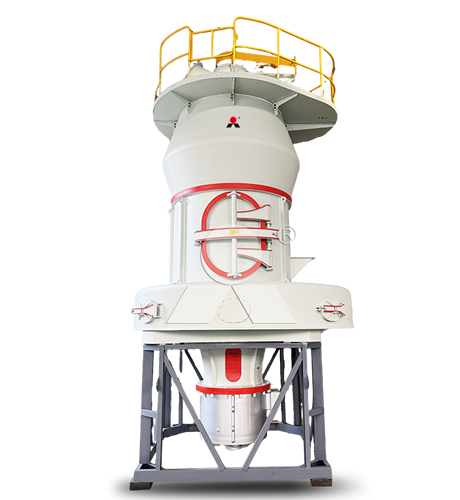
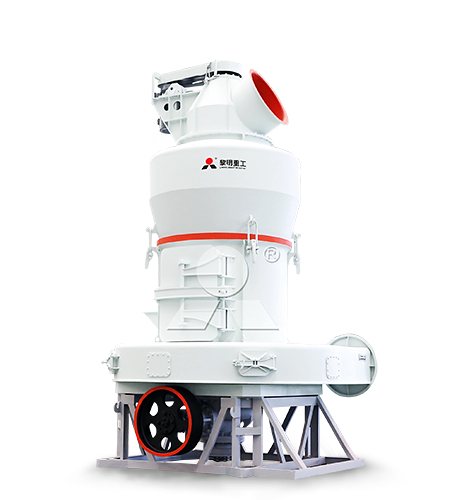
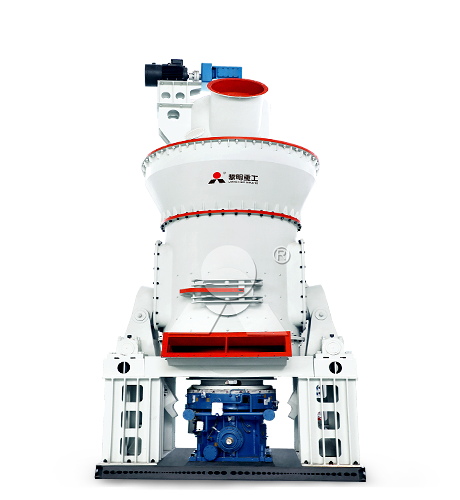
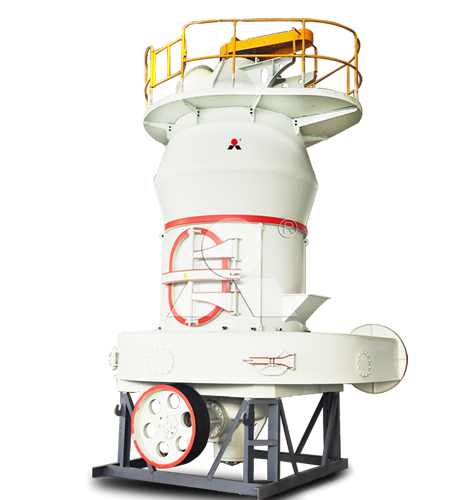
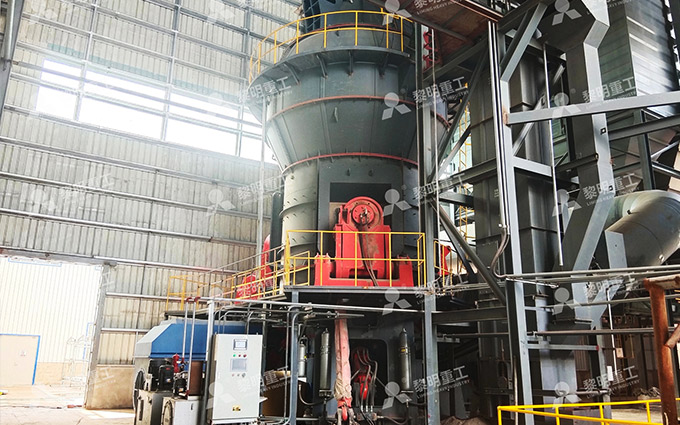
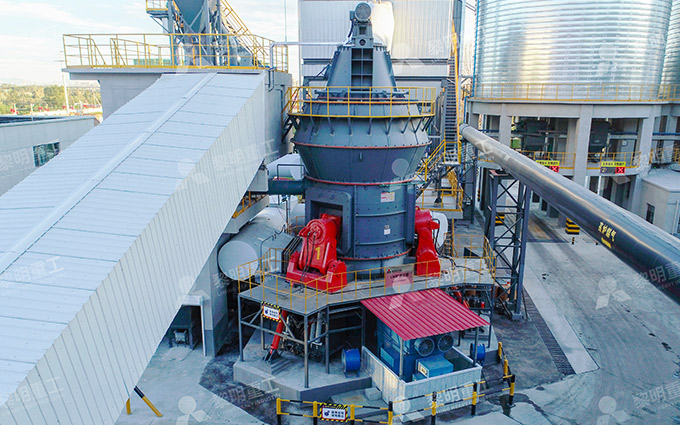
We are Liming Heavy Industry, a manufacturer of various types of industrial crushers, such as Raymond Mill, Trapezoidal Mill, Vertical Mill, Ultrafine Mill, Ball Mill, etc.
Our mills can process the following minerals:
limestone, quicklime, kaolin, talc, barite, bentonite, calcium carbonate, dolomite, coal, gypsum, clay, carbon black, slag, cement raw materials, cement clinker, etc.
If you need a mill to process stone or minerals into powder, please feel free to contact me (WhatsApp: +8615333807511). Thank you.
200 mesh calcium carbonate is a relatively coarse ground calcium carbonate (GCC) grade designed so that most or all of the powder passes through a No. 200 sieve. Under ASTM E11 sieve conventions, a No. 200 sieve has nominal openings of 75 µm, or 0.075 mm. It is therefore typically used where economical mineral filling, flow, and bulk volume matter more than ultrafine particle control.
In industrial practice, “200 mesh” should be treated as a screening requirement—not as a complete particle-size specification. Two 200 mesh calcium carbonate powders can have different median size, oversize content, moisture, whiteness, bulk density, and chemical purity. Buyers should specify the required passing percentage or residue on the No. 200 sieve together with the other properties relevant to the end use.
What Does 200 Mesh Mean?
Mesh refers to the number of openings per linear inch in a sieve cloth. A higher mesh number generally corresponds to a smaller sieve opening and a finer screened material. For ASTM E11 test sieves, No. 200 corresponds to a nominal aperture of 75 µm.
| Particle-size term | Equivalent value | What it means |
|---|---|---|
| 200 mesh | No. 200 ASTM sieve | A sieve designation with 200 openings per linear inch |
| Sieve opening | 75 µm | Nominal opening size of the No. 200 sieve |
| Metric equivalent | 0.075 mm | The same nominal opening expressed in millimetres |
| Particle-size implication | Most particles are expected to pass the specified sieve | Does not mean every particle has a diameter of exactly 75 µm |
Particles are irregular rather than perfectly spherical, so sieve results depend on particle shape, agglomeration, moisture, test method, and sampling. A long, thin particle may pass through an opening even if one of its dimensions is larger than the nominal aperture. For this reason, mesh is a practical coarse-powder specification, not a full substitute for laser particle-size analysis.
Typical Characteristics
200 mesh calcium carbonate is usually produced from limestone, marble, chalk, or calcite through crushing, grinding, and screening or classification. It may be sold as uncoated powder for construction and general industrial uses, although coated grades can be produced when a customer requires better compatibility with a polymer or organic binder.
| Property | Typical expectation | Why it matters |
|---|---|---|
| Particle-size control | Specified primarily by passing percentage or residue on No. 200 sieve | Controls roughness, flow, mixing, and suitability for the intended application |
| CaCO3 content | Depends on the raw limestone, marble, chalk, or calcite source | Defines purity and affects customer acceptance |
| Whiteness | Varies by deposit and impurity profile | Important for white putty, coatings, PVC, and light-colored products |
| Moisture | Should be controlled for stable storage and handling | High moisture can cause caking, poor flow, and inaccurate dosing |
| Bulk density | Depends on mineral source, grinding method, and particle shape | Affects bag filling, silo capacity, mixing ratios, and transport cost |
| Surface treatment | Usually uncoated for mineral or cementitious applications; optional for polymer use | Controls compatibility with hydrophobic resins and organic binders |
Compared with fine and ultrafine GCC, 200 mesh powder normally has lower specific surface area and lower coating demand. It may also provide easier handling and lower grinding energy per tonne. However, it is not suitable for applications that require a low-micron D50, low coarse tail, high gloss, very smooth surface finish, or premium dispersion in polymers and coatings.
Common Uses of 200 Mesh Calcium Carbonate
200 mesh calcium carbonate is generally used in applications that can accept a coarser mineral filler. Its value comes from controlled particle size, calcium carbonate content, availability, and cost efficiency.
| Application | Role of 200 mesh CaCO3 | Key specification focus |
|---|---|---|
| Wall putty and skim coat | Mineral filler that contributes bulk and controls formulation cost | Fineness, whiteness, moisture, flow, and consistent supply |
| Mortar and cementitious products | Fine mineral filler for texture, packing, and workability adjustment | Particle size, moisture, color, chemistry, and compatibility with formulation additives |
| Tile adhesive and grout | Filler and particle-packing component | Controlled residue, moisture, flowability, and batch consistency |
| Asphalt and concrete mixes | Mineral filler for selected formulations | Fineness, moisture, source chemistry, and compliance with applicable local standards |
| Soil amendment and agriculture | Calcium-bearing carbonate source where approved for the use | Neutralizing value, particle size, contaminant limits, and regulatory compliance |
| Fire suppression rock dust | Fine carbonate dust for mining safety applications where specified | Applicable safety standards, fineness, dispersibility, and chemical quality |
| General industrial filler | Cost-effective mineral extender in products that do not require fine GCC | CaCO3, moisture, bulk density, consistency, and delivered cost |
A commercial 200 mesh GCC grade is described as having most material finer than 75 µm and is used in applications including fire suppression rock dust, animal-feed supplements, asphalt and concrete mixes, sealants, waterproofing membranes, and soil amendment. End-use suitability must still be checked against local standards, regulatory requirements, and the buyer’s formulation.
How It Is Produced
200 mesh calcium carbonate is made through conventional dry mineral processing. Because the target is relatively coarse compared with ultrafine GCC, the system may use crushing plus a standard pulverizing or milling stage followed by screening or air classification.
Selected limestone, marble, chalk, or calcite → crushing → moisture control → milling → screening or classification → collection → quality testing → packing or bulk loading
The process begins with a calcite-rich carbonate source. Producers remove or avoid clay-rich, siliceous, iron-stained, dolomitic, or otherwise unsuitable material where the product specification requires it. The feed is crushed to mill size, then ground until it meets the required No. 200 passing percentage.
For dry products, moisture must remain controlled. Wet powder can bridge in hoppers, build up in mills, blind screens, produce inaccurate sieve results, and cake in bags or silos. Magnets and metal detectors may be installed to prevent tramp iron from entering the mill or finished product.
200 Mesh vs Finer Calcium Carbonate
200 mesh calcium carbonate is significantly coarser than the fine and ultrafine GCC grades commonly used in premium PVC, high-gloss coatings, paper coating, and high-filler masterbatch. Higher mesh grades generally refer to smaller sieve openings, although fine GCC should be specified by laser particle-size distribution rather than mesh alone.
| Grade reference | Approximate sieve opening | Relative fineness | Typical use direction |
|---|---|---|---|
| 200 mesh | 75 µm | Coarse industrial powder | Construction products, mineral filler, agriculture, asphalt, selected general uses |
| 325 mesh | 45 µm | Finer powder | Finer construction fillers, selected coatings, rubber, and industrial formulations |
| 400 mesh | 38 µm | Fine powder | Paint, rubber, sealants, plastics, and more refined filler applications |
| 800 mesh and above | Fine to ultrafine range, depending on supplier terminology and test method | Much finer than 200 mesh | PVC, masterbatch, coatings, paper, rubber, sealants, and specialty applications |
ASTM sieve references place 325 mesh at 45 µm and 400 mesh at 38 µm, compared with 75 µm for No. 200. At higher fineness, air classification and laser diffraction become more useful than simple screening because fine particles can agglomerate and blind sieve openings.
How to Specify a 200 Mesh Grade
A purchase specification should define more than “200 mesh calcium carbonate.” The supplier and buyer should agree on the test method, passing percentage, sampling plan, and additional chemical and physical requirements.
Recommended specification items
Particle size: Percentage passing a No. 200 sieve, maximum retained residue, and test method.
Chemistry: CaCO3, CaO, MgO, SiO2, Fe2O3, and acid-insoluble residue where relevant.
Color: Whiteness, brightness, or Lab* values for white or light-colored products.
Moisture: Maximum moisture content at shipment and storage requirements.
Bulk density: Important for dosing, package weight, transport, and formulation calculations.
Surface condition: Confirm whether the material is uncoated or coated, and identify the treatment agent if coated.
Packaging: 25 kg bags, FIBC bags, or bulk delivery, with liner and moisture-barrier requirements where needed.
Application test: Validate the powder in the intended putty, mortar, sealant, asphalt, agricultural, or industrial formulation.
For a 200 mesh product, sieve analysis is usually the primary particle-size control. If performance is sensitive to the fine fraction or particle packing, add laser particle-size analysis to define the distribution below 75 µm.
Key Takeaway
200 mesh calcium carbonate is a relatively coarse GCC grade associated with a No. 200 sieve opening of 75 µm. It is commonly used in wall putty, mortar, tile adhesive, asphalt and concrete filler systems, soil amendment, selected sealants, and other cost-sensitive industrial applications where ultrafine calcium carbonate is unnecessary.
For reliable purchasing and production, do not define the material by mesh alone. Specify the required No. 200 passing percentage, chemical purity, moisture, whiteness, bulk density, coating condition, packaging, and application performance. That approach ensures the 200 mesh calcium carbonate grade fits the customer’s process rather than simply meeting a nominal screen designation.