Calcium Carbonate Knowledge Hub
What Is 325 Mesh Calcium Carbonate?
2026-09-04 16:37:09
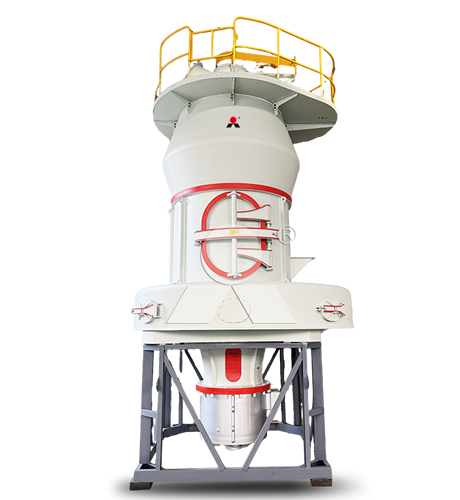
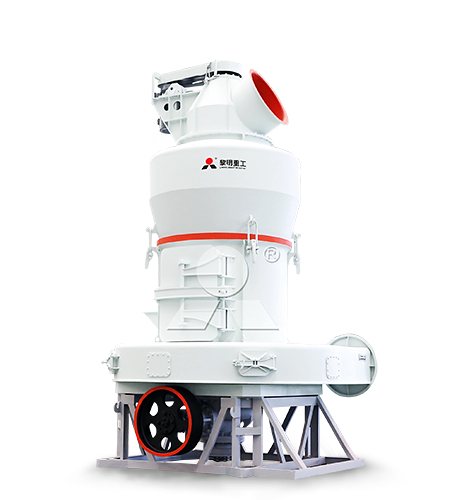
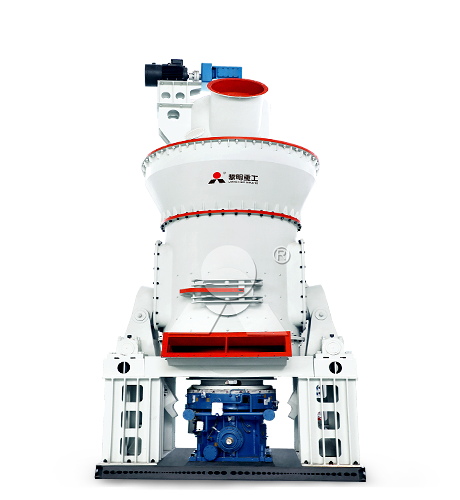
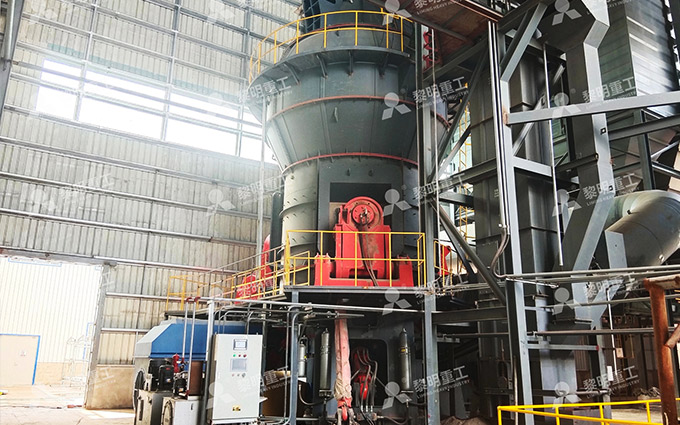
We are Liming Heavy Industry, a manufacturer of various types of industrial crushers, such as Raymond Mill, Trapezoidal Mill, Vertical Mill, Ultrafine Mill, Ball Mill, etc.
Our mills can process the following minerals:
limestone, quicklime, kaolin, talc, barite, bentonite, calcium carbonate, dolomite, coal, gypsum, clay, carbon black, slag, cement raw materials, cement clinker, etc.
If you need a mill to process stone or minerals into powder, please feel free to contact me (WhatsApp: +8615333807511). Thank you.
325 mesh calcium carbonate is a fine ground calcium carbonate (GCC) grade in which most or all particles are specified to pass through a No. 325 test sieve. A No. 325 sieve has a nominal opening of about 44–45 µm, or 0.044–0.045 mm.
It is finer than 200 mesh calcium carbonate and is commonly used as an economical filler in construction compounds, selected plastics, rubber, sealants, adhesives, coatings, agricultural products, and other applications that need a finer powder but do not require ultrafine low-micron GCC. “325 mesh” is a sieve designation, not a complete product specification, so buyers should also confirm purity, moisture, whiteness, residue, and the full particle-size distribution.
What Does 325 Mesh Mean?
Mesh is the number of openings per linear inch in a test sieve. As the mesh number increases, the sieve opening becomes smaller. A No. 325 sieve has 325 openings per inch and a nominal aperture of approximately 44–45 µm.
| Term | Value | Meaning |
|---|---|---|
| 325 mesh | No. 325 test sieve | 325 openings per linear inch |
| Nominal sieve opening | 44–45 µm | About 0.044–0.045 mm |
| Passing requirement | Usually expressed as a percentage | Defines how much product passes the No. 325 sieve |
| Residue or grit | Material retained on the sieve | Indicates the oversized fraction that remains above the opening size |
A 325 mesh designation does not mean every calcium carbonate particle measures exactly 45 µm. Calcium carbonate particles are irregularly shaped, and fine powder normally contains a distribution of particle sizes below the sieve opening. The correct commercial requirement is therefore usually written as a passing percentage or maximum retained residue, such as “minimum 95% passing 325 mesh,” together with a defined test method.
325 Mesh vs Other Grades
325 mesh calcium carbonate sits between relatively coarse construction-grade powders and the much finer GCC grades often used in premium PVC, masterbatch, paper coating, and high-gloss paint applications.
| Grade reference | Nominal sieve opening | Relative fineness | Typical product direction |
|---|---|---|---|
| 200 mesh | 75 µm | Coarse powder | Construction fillers, mortar, asphalt, agriculture, general industrial use |
| 325 mesh | 44–45 µm | Fine powder | Fine construction materials, selected coatings, rubber, sealants, and general fillers |
| 400 mesh | About 38 µm | Finer powder | Paints, rubber, plastics, adhesives, sealants, and more refined fillers |
| 800 mesh | Commonly used commercial terminology; not a direct ASTM sieve equivalent for full fine-powder specification | Fine to ultrafine range | PVC, masterbatch, coatings, paper, rubber, and specialty products |
| Low-micron GCC | Specified by D50 and D97, not mesh alone | Ultrafine | High-performance polymer, paper, coating, and specialty applications |
Standard sieve references list No. 325 at 0.044 mm, compared with 0.075 mm for No. 200. Because 325 mesh is near the practical limit of routine dry sieve analysis for many powders, laser diffraction is often added when customers need better control of the fine fraction or the full particle-size distribution.
How 325 Mesh Calcium Carbonate Is Made
325 mesh calcium carbonate is usually made from limestone, marble, chalk, or calcite through dry mineral processing. The plant reduces natural carbonate rock to a controlled fine powder using crushing, milling, and screening or air classification.
Selected carbonate feed → crushing → moisture control → fine grinding → 325 mesh screening or air classification → powder collection → quality testing → packing or bulk loading
The starting feed should be selected according to the final application. High CaCO3 content, low silica, controlled MgO, low iron, appropriate whiteness, and stable moisture improve the plant’s ability to produce consistent 325 mesh powder. At this fineness, hard contaminants such as quartz, chert, or flint can increase mill wear and contribute to unwanted grit.
Typical production controls
Feed size: Crushed material should enter the mill in a stable size range.
Moisture: Excess moisture can blind screens, reduce mill capacity, create agglomerates, and cause bag caking.
Grinding: The mill must deliver sufficient fine material without producing excessive ultrafines.
Classification: Screens or air classifiers remove oversized particles and control the No. 325 residue.
Contamination: Magnets and clean handling help prevent tramp iron, dark specks, and product contamination.
Quality testing: Sieve residue, moisture, chemistry, whiteness, and bulk density should be monitored before dispatch.
Common Applications
325 mesh calcium carbonate is a versatile fine filler, but its use depends on more than particle size. A grade may be suitable for one industry and unsuitable for another because of differences in purity, whiteness, surface treatment, moisture, or grit requirements.
| Application | Role of 325 mesh calcium carbonate | Important product controls |
|---|---|---|
| Wall putty and skim coat | Fine mineral filler that contributes smoothness, bulk, and formulation-cost control | Fineness, whiteness, moisture, flowability, and batch consistency |
| Mortar, plaster, and tile adhesive | Filler that supports particle packing and workability | Residue, moisture, chemistry, powder flow, and compatibility with admixtures |
| Paints and coatings | Economical extender in selected formulations | Whiteness, low grit, particle distribution, oil absorption, and dispersion |
| Rubber products | Mineral filler for cost management and compound-property adjustment | Particle size, moisture, purity, dispersion, and formulation compatibility |
| Sealants and adhesives | Filler that can influence density, rheology, extrusion, and cost | Fineness, moisture, oil absorption, flow, surface treatment, and low grit |
| Selected plastics and PVC compounds | Cost-effective filler where a relatively coarse grade is acceptable | Purity, whiteness, moisture, residue, coating condition, and actual compound performance |
| Agricultural and soil products | Calcium carbonate source or acidity-neutralizing material where approved | Neutralizing value, fineness, contaminant limits, and applicable regulations |
| General industrial filler | Mineral extender for applications without low-micron requirements | CaCO3, moisture, bulk density, reliable supply, and delivered cost |
Commercial 325 mesh GCC products are used as fillers in applications such as sealants, waterproofing membranes, soil amendment, liquid livestock feed, fire-suppression rock dust, and other industrial products. Suitability for food, feed, pharmaceutical, or regulated applications requires separate grade-specific compliance; industrial 325 mesh calcium carbonate should never be assumed suitable for those uses without appropriate documentation.
325 Mesh for Plastics and PVC
325 mesh calcium carbonate can be used in selected plastics and PVC compounds, particularly where cost-efficient volume filling is more important than a very smooth surface or extremely fine dispersion. However, it is generally coarser than the grades preferred for many premium PVC profile, film, cable, masterbatch, and high-gloss applications.
Before using a 325 mesh grade in a polymer compound, evaluate it in the real formulation. Important checks include extruder torque, melt pressure, dispersion, surface roughness, impact strength, tensile properties, elongation, color, and filler-loading limit.
For hydrophobic polymers or high-filler formulations, a stearic-acid-coated product may improve compatibility and dispersion. But coating does not make a coarse powder perform like a finer ultrafine GCC. Particle-size distribution and coarse residue remain critical.
How to Specify 325 Mesh Calcium Carbonate
A specification should clearly state what “325 mesh” means for the contract. Do not rely on a product name alone, because different suppliers can use different passing requirements, sieve methods, and feedstocks.
| Specification item | Why it matters |
|---|---|
| Passing percentage at No. 325 sieve | Defines the amount of powder finer than the nominal 44–45 µm opening |
| Maximum residue on No. 325 | Controls the oversized fraction or grit |
| Test method and sampling plan | Ensures results are comparable between supplier and customer laboratories |
| CaCO3, CaO, and MgO | Confirms carbonate purity and high-calcium or dolomitic character |
| SiO2, Fe2O3, and acid-insoluble residue | Controls abrasion, grit, whiteness, and impurity level |
| Whiteness or brightness | Important for putty, coatings, PVC, and light-colored formulations |
| Moisture content | Controls storage stability, flowability, screen performance, and customer processing |
| Bulk density | Important for bag weight, silo capacity, feeder settings, and formulation dosing |
| Coating condition | Clarifies whether the powder is uncoated or surface-treated for polymer compatibility |
If the application is sensitive to fine-particle content, slurry viscosity, oil absorption, or particle packing, add laser-diffraction data such as D10, D50, and D97. This provides information that a No. 325 sieve cannot show.
Key Takeaway
325 mesh calcium carbonate is a fine GCC grade associated with a No. 325 sieve opening of about 44–45 µm. It is finer than 200 mesh powder and is used in wall putty, mortars, adhesives, sealants, rubber, selected plastics, coatings, agricultural products, and general industrial filler applications.
For purchasing or production, specify more than “325 mesh.” Define the required passing percentage and residue on the No. 325 sieve, then confirm CaCO3 purity, MgO, silica, whiteness, moisture, bulk density, surface treatment, packaging, and end-use performance. This ensures the powder delivers the required result in the customer’s actual process and formulation.