Calcium Carbonate Knowledge Hub
What Is 3250 Mesh Calcium Carbonate?
2026-09-04 16:42:28
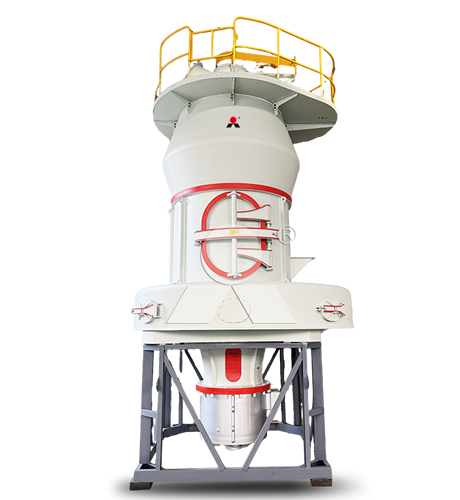
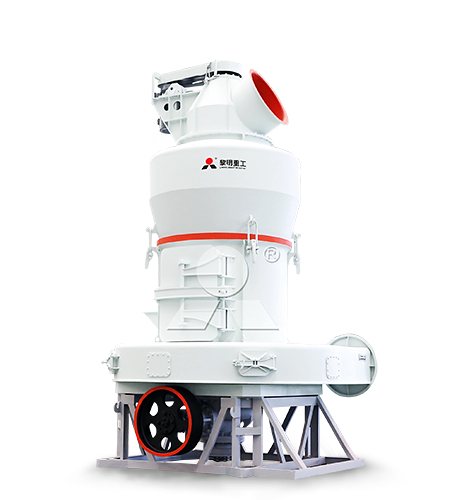
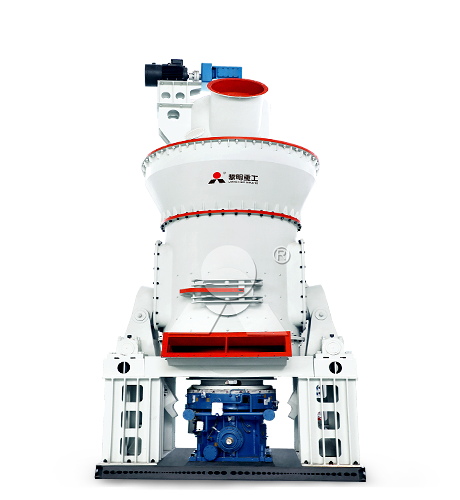
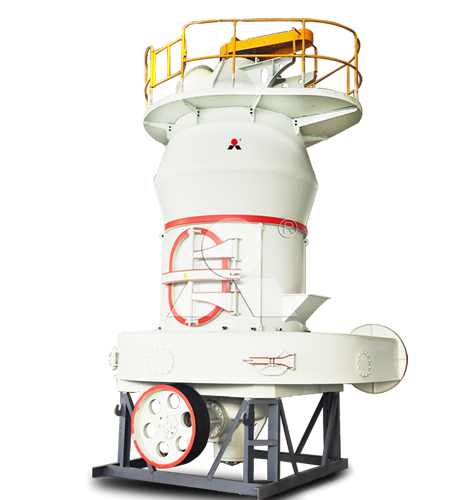
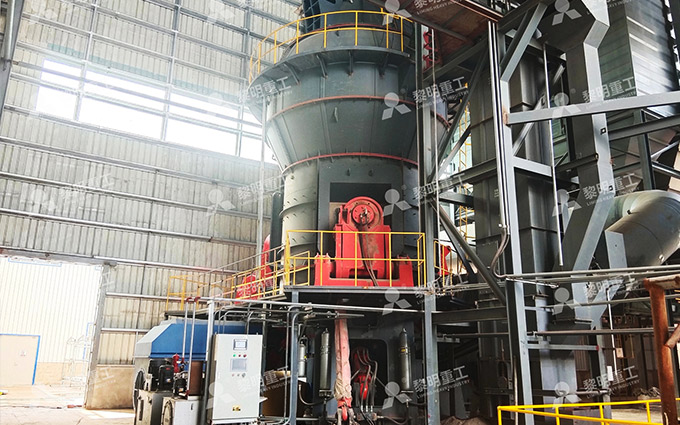
We are Liming Heavy Industry, a manufacturer of various types of industrial crushers, such as Raymond Mill, Trapezoidal Mill, Vertical Mill, Ultrafine Mill, Ball Mill, etc.
Our mills can process the following minerals:
limestone, quicklime, kaolin, talc, barite, bentonite, calcium carbonate, dolomite, coal, gypsum, clay, carbon black, slag, cement raw materials, cement clinker, etc.
If you need a mill to process stone or minerals into powder, please feel free to contact me (WhatsApp: +8615333807511). Thank you.
3250 mesh calcium carbonate is an ultra-fine commercial ground calcium carbonate (GCC) grade intended for demanding applications such as high-quality coatings, PVC compounds, masterbatch, rubber, sealants, adhesives, and specialty polymer fillers. The label indicates a fineness level beyond common 1250–2500 mesh grades, but it does not represent one universal sieve opening or one guaranteed micron value.
At this level, calcium carbonate must be specified by laser particle-size distribution—not by mesh alone. The critical parameters are D50, D97, specific surface area, coarse residue, whiteness, moisture, purity, surface treatment, and end-use performance. Suppliers may market products from 800 to 3500 mesh, but the same mesh label can cover materially different PSDs.
What Does 3250 Mesh Mean?
Mesh originally refers to openings per linear inch in a screen. That concept works for coarse powder, but it becomes less useful for ultra-fine calcium carbonate. A 3250 mesh GCC product is normally made through ultrafine grinding and air classification, then measured with laser diffraction or another fine-particle method.
In practice, 3250 mesh is a supplier-specific commercial designation for a very fine calcium carbonate grade. It should be understood as a request for low-micron powder with a closely controlled coarse tail—not as a direct instruction to use a 3250-opening sieve.
| Parameter | Meaning | Why it matters for 3250 mesh GCC |
|---|---|---|
| 3250 mesh | Commercial ultra-fine calcium carbonate grade label | Indicates general fineness but does not define a universal micron value |
| D10 | Particle size below which 10% of measured volume occurs | Shows the fine fraction and helps indicate surface-area-related behavior |
| D50 | Median particle diameter | Defines the central size of the product distribution |
| D90 or D97 | Particle size below which 90% or 97% of measured volume occurs | Controls the coarse tail, grit risk, gloss, and dispersion quality |
| Specific surface area | Total particle surface per unit mass | Influences coating demand, oil absorption, rheology, and polymer interaction |
| Coarse agglomerates | Clusters of fine particles that can behave as oversize | Can cause defects even when the nominal D50 is very low |
D50 is the size at which 50% of the measured particle volume is finer, while D97 indicates the size below which 97% of particles fall. These values are more useful than a mesh label when selecting ultra-fine GCC.
3250 Mesh vs Other Grades
| Commercial grade | General fineness relationship | Typical application direction |
|---|---|---|
| 1000 mesh | Fine to ultrafine commercial GCC | Paints, PVC, plastics, rubber, paper, adhesives, and sealants |
| 1250 mesh | Ultrafine grade often specified in the low-micron range | Masterbatch, PVC, film, sheet, coatings, sealants, and specialty fillers |
| 1500 mesh | Typically marketed as finer than 1250 mesh | PVC, cable compounds, coatings, rubber, adhesives, and sealants |
| 2500 mesh | Very fine commercial GCC, commonly low-micron D50 | High-quality coatings, fine PVC, masterbatch, rubber, sealants, and adhesives |
| 3250 mesh | Very fine supplier-specific ultrafine GCC grade | Specialty coatings, high-fineness polymer fillers, advanced masterbatch, fine sealants and adhesives |
| Nano calcium carbonate | Separate submicron or nanoscale category | Functional fillers, reinforcement, specialty coatings, and engineered polymers |
3250 mesh GCC should not be confused with nano calcium carbonate. GCC is typically mechanically ground natural mineral, while nano-CaCO3 is generally produced through a controlled precipitation route or specialized processing. A very high mesh label alone does not establish nanoscale particle size, engineered morphology, or the performance associated with nano grades.
How 3250 Mesh GCC Is Produced
Producing 3250 mesh calcium carbonate requires a clean, calcite-rich feed and a tightly controlled ultrafine grinding circuit. The plant must achieve low-micron fineness while limiting oversize particles, reducing contamination, controlling temperature, and avoiding hard agglomeration.
High-purity limestone, marble, chalk, or calcite → crushing → drying and moisture control → ultrafine grinding → high-efficiency air classification → powder collection → optional surface modification → cooling and deagglomeration → detailed quality control → packaging or bulk delivery
Dry production can use a ball mill with high-efficiency air classifier, ring roller mill, ultrafine vertical mill, or jet mill. Wet stirred-media milling may be selected for slurry products or where wet processing offers better control of fine particles. The technology choice depends on the required D50, D97, capacity, product form, energy cost, and final application.
Critical process controls
Raw-material quality: High CaCO3, low MgO, low silica, low iron, and high whiteness are essential because ultra-fine grinding exposes impurities more strongly.
Moisture control: Fine powder must remain dry enough to avoid agglomeration, unstable classification, caking, and poor surface treatment.
Grinding balance: The plant must generate the required fine fraction without excessive energy use or an uncontrolled ultrafine fraction.
Classifier precision: A controlled D97 prevents coarse particles from damaging surface quality in coatings, films, PVC, and sealants.
Wear management: Hard impurities and metal wear can create grit or dark specks; magnets and appropriate wear materials are important.
Powder cooling: Hot ultrafine powder can compact in silos and bags, increasing agglomeration and reducing flow.
Coated vs Uncoated 3250 Mesh
3250 mesh calcium carbonate may be supplied uncoated or surface-treated. The selection should follow the chemistry of the customer’s binder system.
| Product type | Typical applications | Why it is selected |
|---|---|---|
| Uncoated 3250 mesh GCC | Water-based coatings, specialty paper systems, aqueous slurries, mineral-binder products | Natural calcium carbonate surface can be appropriate for aqueous or mineral formulations |
| Stearic-acid-coated 3250 mesh GCC | PVC, PE, PP, high-filler masterbatch, rubber, sealants, adhesives, solvent-based coatings | Hydrophobic surface treatment can improve compatibility, dispersion, moisture resistance, and handling in organic systems |
Because 3250 mesh material has high specific surface area, coating control is especially sensitive. The dosage must be matched to the actual surface area and resin system. If the powder is under-coated, dispersion may be poor; if it is over-coated, excess fatty acid can affect flow, viscosity, odor, or compound performance.
Common Applications
| Application | Role of 3250 mesh calcium carbonate | Key selection controls |
|---|---|---|
| High-quality paints and coatings | Fine extender for smooth film formation, rheology control, and formulation-cost management | Whiteness, D50, D97, low grit, oil absorption, gloss, dispersion, binder compatibility |
| PE and PP masterbatch | High-fineness coated filler for uniform dispersion and controlled processing | Hydrophobicity, PSD, surface area, moisture, bulk density, melt-flow behavior, agglomerate control |
| Rigid PVC and specialty PVC compounds | Fine filler for selected profile, sheet, film, cable, and molded-product formulations | Whiteness, low moisture, fine PSD, coating, extrusion performance, mechanical-property validation |
| Rubber compounds | Fine mineral filler influencing rheology, processing, and compound properties | Particle size, surface area, coating, moisture, dispersion, cure-system compatibility |
| Sealants and adhesives | Fine filler for viscosity, extrusion, density, and formulation economics | Oil absorption, PSD, moisture, surface treatment, flowability, storage stability |
| Specialty paper and coating slurries | Potential fine mineral component where optical and slurry requirements are met | Brightness, low grit, fine PSD, viscosity, solids, pH, and sedimentation behavior |
Fine calcium carbonate powders are widely used in plastics, rubber, paint, and waterborne coating industries, but each application has different requirements for particle size, surface treatment, color, and rheology.
How to Specify 3250 Mesh Calcium Carbonate
For a 3250 mesh product, the technical specification should be based on measurable characteristics. This avoids purchasing a nominally “ultrafine” product that has an unsuitable coarse tail, low whiteness, poor coating activation, or incompatible rheology.
| Specification item | Why it matters |
|---|---|
| D10, D50, D90, and D97 | Defines full PSD and verifies control of the coarse tail |
| Particle-size method and dispersion protocol | Ensures the supplier’s and customer’s laser-diffraction data are comparable |
| Specific surface area | Helps predict oil absorption, coating demand, viscosity, and polymer interaction |
| CaCO3, CaO, MgO, and acid-insoluble residue | Confirms high-calcium purity and low non-carbonate contamination |
| SiO2 and Fe2O3 | Controls grit, abrasion, color, and dark-speck risk |
| Whiteness, brightness, and Lab* data | Important for white coatings, PVC, masterbatch, paper, and sealants |
| Moisture, bulk density, and flowability | Controls storage, packaging, silo discharge, dosing, and compounding |
| Oil absorption | Important for coating, rubber, adhesive, and sealant formulation |
| Surface-treatment type, dosage, and activation rate | Essential for polymer-grade coated calcium carbonate |
| End-use trial results | Confirms actual performance in the target paint, PVC, masterbatch, rubber, adhesive, or sealant formula |
Key Takeaway
3250 mesh calcium carbonate is a supplier-specific ultra-fine GCC grade intended for applications that demand low-micron fineness, low coarse residue, and controlled dispersion. It can be used in high-quality coatings, PVC, masterbatch, rubber, sealants, adhesives, and specialty filler systems.
Do not buy it solely by mesh designation. Confirm the complete particle-size distribution, specific surface area, purity, whiteness, moisture, coating condition, and application performance. At this fineness, D50 and D97 matter far more than the number printed before “mesh.”