Calcium Carbonate Knowledge Hub
38 Micron Calcium Carbonate
2026-09-04 16:43:03
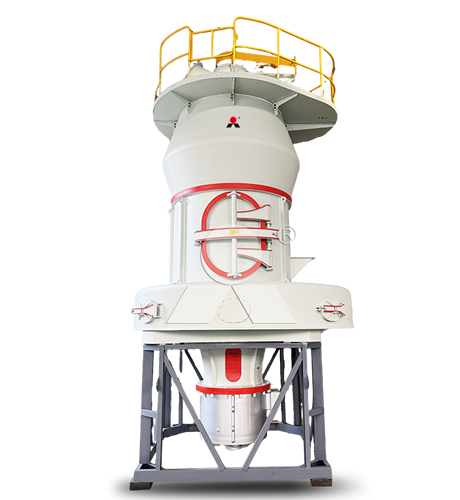
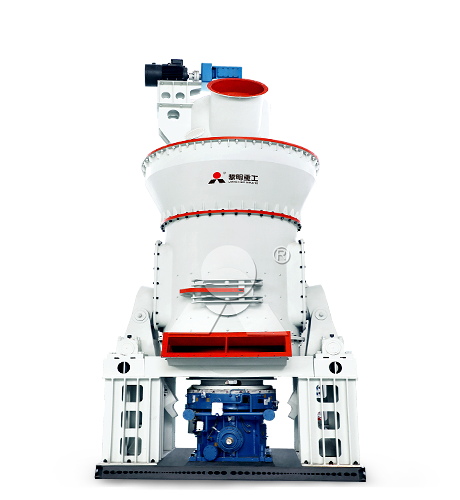
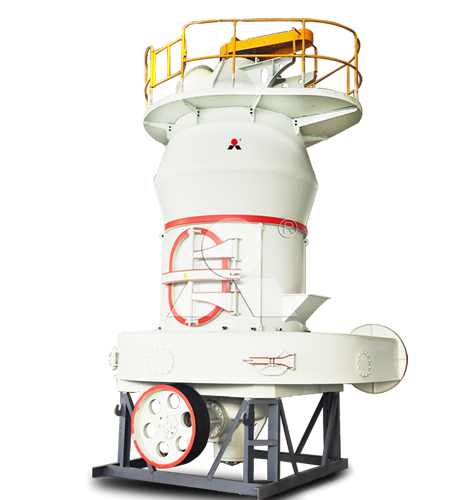
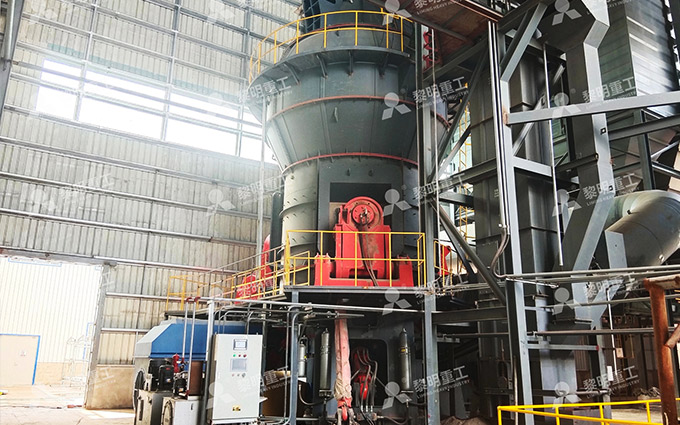
We are Liming Heavy Industry, a manufacturer of various types of industrial crushers, such as Raymond Mill, Trapezoidal Mill, Vertical Mill, Ultrafine Mill, Ball Mill, etc.
Our mills can process the following minerals:
limestone, quicklime, kaolin, talc, barite, bentonite, calcium carbonate, dolomite, coal, gypsum, clay, carbon black, slag, cement raw materials, cement clinker, etc.
If you need a mill to process stone or minerals into powder, please feel free to contact me (WhatsApp: +8615333807511). Thank you.
38 micron calcium carbonate is a fine ground calcium carbonate (GCC) grade controlled around a 38 µm upper sieve opening. It is commonly described as 400 mesh calcium carbonate because an ASTM E11 No. 400 sieve has nominal 38 µm openings.
This grade is finer than 325 mesh calcium carbonate and is used where a smoother mineral filler and lower coarse residue are needed, including wall putty, rubber, artificial stone, tile-related products, selected paints, sealants, adhesives, plastics, and construction chemicals. A 38 µm sieve opening does not mean every particle is 38 µm: the powder normally includes a range of smaller particles.
What 38 Micron Means
A 38 micron specification usually refers to the upper particle-size control point: material is required to pass through a screen with 38 µm openings, or the product must meet a defined maximum residue above that size. Under ASTM E11, the No. 400 test sieve has 38 µm woven-wire openings.
| Term | Equivalent | Meaning |
|---|---|---|
| 38 micron | 0.038 mm | Nominal particle-size or sieve-opening reference |
| No. 400 sieve | 400 mesh | ASTM E11 sieve with 38 µm openings |
| Passing percentage | Buyer–supplier agreement | Amount of powder required to pass the No. 400 sieve |
| Residue | Retained oversize material | Controls coarse particles, grit, and surface defects |
| Particle-size distribution | D10, D50, D97 | Shows the full powder size range below and above the 38 µm reference |
For example, a product can have 95% or 99% passing through a 38 µm sieve while its D50 is much smaller, perhaps in the 10–20 µm range. The sieve tells the buyer about the upper-size limit; it does not fully describe the median size, fine fraction, surface area, or particle packing behavior.
38 Micron vs Other Calcium Carbonate Sizes
| Size reference | Equivalent | Relative fineness | Typical use direction |
|---|---|---|---|
| 75 µm | No. 200 sieve / 200 mesh | Coarse industrial powder | Mortar, asphalt, agriculture, general construction filler |
| 44–45 µm | No. 325 sieve / 325 mesh | Fine powder | Putty, mortar, rubber, sealants, selected coatings |
| 38 µm | No. 400 sieve / 400 mesh | Finer sieve-grade powder | Rubber, artificial stone, tiles, putty, selected paints and plastics |
| 25 µm | Often associated with No. 500 sieve references | Very fine sieve-grade powder | Finer fillers where lower residue and smoother texture are needed |
| Low-micron GCC | Defined by laser PSD, not mesh alone | Ultrafine | Premium PVC, masterbatch, coatings, paper, sealants, and specialty applications |
As calcium carbonate becomes finer, it generally produces smoother surfaces and lower grit, but its surface area and oil absorption may increase. This can affect coating demand, paint viscosity, polymer dispersion, sealant rheology, and production cost.
How 38 Micron GCC Is Produced
38 micron calcium carbonate is manufactured from limestone, marble, chalk, or calcite by crushing, drying when necessary, fine grinding, and screening or air classification.
Selected carbonate rock → crushing → moisture control → fine grinding → No. 400 sieve control or air classification → powder collection → quality testing → bagging, FIBC, or bulk delivery
For a standard 38 µm top-cut product, screening may be sufficient in some plants. However, air classification often provides better control and higher throughput, especially when the powder is fine, dry, or prone to agglomeration. The classifier sends oversized particles back to the mill and directs qualified fine product to collection.
Key manufacturing controls
Feed purity: High CaCO3, low silica, controlled MgO, low iron, and appropriate whiteness support product quality.
Moisture: Wet feed can reduce milling efficiency, blind screens, form agglomerates, and cause powder caking.
Grinding: The mill must reduce the feed enough to meet the 38 µm residue requirement without excessive over-grinding.
Classification: Controls the oversized fraction and improves consistency between batches.
Contamination control: Magnets and clean process equipment reduce tramp iron and dark-speck risk.
Dust collection: Captures fine GCC and maintains safe, stable airflow through the grinding circuit.
Common Applications
38 micron calcium carbonate is used as a fine filler in formulations that need smoother texture than 200 or 325 mesh material but do not require ultrafine low-micron GCC.
| Application | Role of 38 micron calcium carbonate | Key selection controls |
|---|---|---|
| Wall putty and skim coat | Fine filler for smoother application and formulation economy | Whiteness, residue, moisture, powder flow, and consistency |
| Rubber compounds | Mineral filler for volume extension and compound-property adjustment | Particle size, moisture, purity, dispersion, and cure-system compatibility |
| Artificial stone and engineered marble | Filler supporting particle packing, color, and resin-formulation cost control | Whiteness, low moisture, low grit, particle distribution, and resin compatibility |
| Floor tiles and ceramic-related products | Fine mineral component in selected formulations | Purity, whiteness, residue, chemistry, and firing or processing compatibility |
| Paints and coatings | Extender filler in suitable systems | Whiteness, low grit, oil absorption, PSD, dispersion, and viscosity response |
| Sealants and adhesives | Fine filler affecting density, rheology, extrusion, and cost | Particle size, oil absorption, moisture, surface treatment, and flowability |
| Selected plastics and PVC | Cost-effective filler where medium-fine particle size is acceptable | Whiteness, low moisture, PSD, coating condition, and compound performance |
GCC is used broadly as a filler, extender, and functional additive in industrial products. For 38 micron calcium carbonate, the specific suitability depends on the full grade specification rather than the particle-size reference alone.
38 Micron for Plastics and Coatings
In plastics and PVC, 38 micron GCC can be used in cost-sensitive products where a medium-fine filler is acceptable. It may be suitable for some rigid PVC, rubber, extrusion, and construction-product applications, but it is usually coarser than the low-micron grades used for high-gloss coatings, thin films, premium masterbatch, and high-surface-quality PVC products.
For PE, PP, PVC, rubber, sealants, and adhesives, confirm whether the product is uncoated or stearic-acid-coated. A surface-treated grade may disperse more effectively in hydrophobic polymer systems, but coating does not make a 38 µm product equivalent to a 2–5 µm ultrafine GCC.
In paints and coatings, 38 micron calcium carbonate may be appropriate for textured, matte, or cost-sensitive formulations. For smooth, high-gloss, or premium coatings, customers commonly require a finer PSD, lower coarse tail, and tighter control of oil absorption and dispersion.
How to Specify 38 Micron Calcium Carbonate
A proper specification should state the measurement basis clearly. “38 micron calcium carbonate” can mean different things if one supplier interprets it as maximum particle size and another as a passing-sieve requirement.
| Specification item | Why it matters |
|---|---|
| Passing percentage through No. 400 sieve | Defines how much material must pass the 38 µm opening |
| Maximum retained residue | Controls oversize particles and grit |
| ASTM E11 or agreed sieve-test method | Ensures the sieve opening and test conditions are consistent |
| Laser PSD, if needed | Defines D10, D50, and D97 when the full size distribution affects performance |
| CaCO3, CaO, MgO | Confirms mineral purity and calcitic versus dolomitic character |
| SiO2, Fe2O3, acid-insoluble residue | Controls hardness, grit, color, and contamination |
| Whiteness and brightness | Important for white putty, artificial stone, coatings, PVC, and tile products |
| Moisture and bulk density | Affect storage, powder flow, packaging, and customer dosing |
| Surface treatment | Clarifies whether the material is uncoated or coated for polymer compatibility |
Key Takeaway
38 micron calcium carbonate is a fine GCC powder commonly associated with No. 400 or 400 mesh sieve control. The 38 µm value usually describes the sieve opening or upper-size reference, not the size of every particle in the product.
It is suitable for wall putty, rubber, artificial stone, selected tile products, paints, sealants, adhesives, plastics, and construction chemicals where a medium-fine filler is required. For reliable product selection, specify passing percentage or residue at 38 µm together with particle-size distribution, purity, whiteness, moisture, coating condition, and end-use performance.