Calcium Carbonate Knowledge Hub
4 Micron Calcium Carbonate
2026-09-04 16:45:52
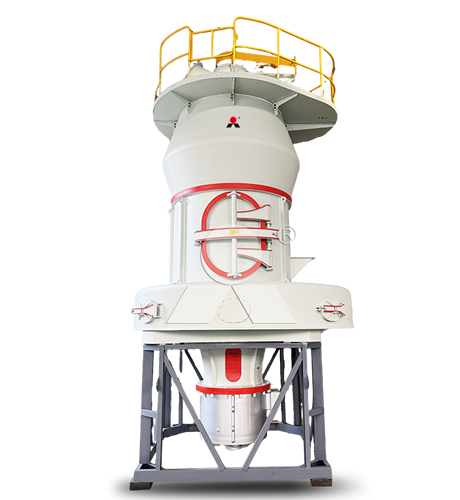
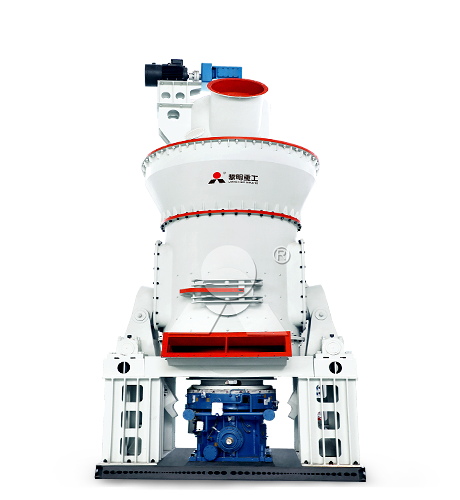
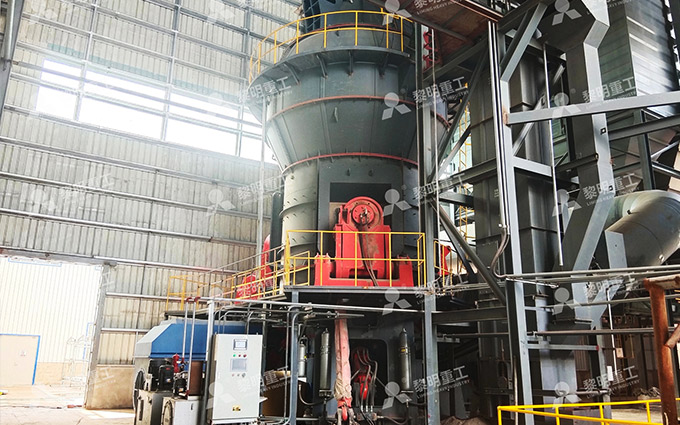
We are Liming Heavy Industry, a manufacturer of various types of industrial crushers, such as Raymond Mill, Trapezoidal Mill, Vertical Mill, Ultrafine Mill, Ball Mill, etc.
Our mills can process the following minerals:
limestone, quicklime, kaolin, talc, barite, bentonite, calcium carbonate, dolomite, coal, gypsum, clay, carbon black, slag, cement raw materials, cement clinker, etc.
If you need a mill to process stone or minerals into powder, please feel free to contact me (WhatsApp: +8615333807511). Thank you.
4 micron calcium carbonate is an ultrafine calcium carbonate grade controlled near 4 µm, usually as a D97, D98, or top-cut limit rather than a D50. It is used when coatings, PVC, masterbatch, rubber, sealants, adhesives, paper, or specialty compounds require low grit, smoother surfaces, and tighter particle-size control than conventional 5–10 µm GCC.
The label must be defined precisely. A product with D98 = 4 µm can have a median size near 1 µm, while a product with D50 = 4 µm can still include substantially coarser particles. For example, one ultrafine calcium carbonate grade reports D50 of 0.9 µm and D98 of 4 µm.
What Does 4 Micron Mean?
Four microns equals 0.004 mm. At this size, calcium carbonate is an ultrafine powder measured by laser diffraction or another agreed fine-particle method. It is not defined by conventional mesh screening.
| Specification form | Meaning | Product implication |
|---|---|---|
| D50 = 4 µm | 50% of measured particle volume is finer than 4 µm | Can still have a significant coarse tail unless D97 is also controlled |
| D97 or D98 = 4 µm | 97% or 98% of the measured volume is finer than 4 µm | Represents a much finer, tighter grade; D50 is usually well below 4 µm |
| 4 µm top cut | Upper particle-size limit defined by an agreed method | Useful for low-grit coatings, films, paper, and fine polymer products |
| “4 micron” commercial grade | Supplier grade name for ultrafine calcium carbonate | Requires a full data sheet before comparison or purchase |
For technical selection, specify D10, D50, D90, D97, and D98, along with the test method and dispersion procedure. These values show both the central particle size and the coarse tail that can influence product quality.
4 Micron vs Other Grades
| Size reference | Relative fineness | Typical use direction |
|---|---|---|
| 20 µm | Fine GCC | General paint, PVC, plastics, rubber, sealants, construction products |
| 10 µm | Very fine GCC | PVC, masterbatch, paints, rubber, cable compounds, paper-related applications |
| 5 µm | Fine to ultrafine GCC | Finer coatings, PVC, masterbatch, paper, rubber, adhesives, sealants |
| 4 µm | Ultrafine calcium carbonate | High-quality coatings, paper, PVC, masterbatch, fine sealants, adhesives, specialty fillers |
| 1–2 µm | Very fine ultrafine GCC or PCC | Premium paper coating, high-performance coatings, advanced polymer and specialty applications |
| Below 1 µm | Submicron or nano-oriented material | Functional fillers, engineered polymers, high-performance coatings, specialty PCC products |
Compared with a 5 or 10 µm grade, 4 micron calcium carbonate normally has higher specific surface area and lower coarse residue. This can improve smoothness and dispersion, but it can also increase oil absorption, viscosity, coating-agent demand, powder cohesion, and cost.
How 4 Micron Calcium Carbonate Is Produced
4 micron GCC requires high-purity calcite-rich raw material and a closely controlled ultrafine grinding circuit. The source may be selected limestone, marble, chalk, or calcite ore with low silica, low iron, low MgO, high whiteness, and stable composition.
Qualified carbonate feed → crushing → drying and moisture control → ultrafine grinding → high-efficiency air classification → powder collection → optional surface treatment → cooling and deagglomeration → detailed quality control → packing or bulk delivery
Dry routes may use ball mills with high-efficiency air classifiers, ultrafine roller mills, ring roller mills, vertical mills, or jet mills. Wet stirred-media milling can be used for fine slurry products, particularly when paper coating, water-based paint, or wet beneficiation is required.
Critical process controls
Raw-material purity: Fine grinding exposes impurities, so low silica, iron, clay, and dolomite are important.
Moisture: Low, stable moisture prevents agglomeration, classification problems, caking, and poor coating response.
Grinding energy: The system must reach the target fineness without creating excessive fines or excessive energy cost.
Classification: Precise control of D97 or D98 keeps coarse particles from reducing gloss, smoothness, and dispersion.
Contamination control: Magnets, clean equipment, and suitable wear materials reduce metal particles, dark specks, and grit.
Cooling: Hot ultrafine powder can compact in silos or bags, so cooling before storage is important.
Coated vs Uncoated 4 Micron GCC
4 micron calcium carbonate may be supplied uncoated or surface-treated. The best choice depends on whether the formulation is water-based, mineral-based, or hydrophobic and polymer-based.
| Type | Typical applications | Why it is selected |
|---|---|---|
| Uncoated 4 micron GCC | Water-based coatings, paper coating and filler systems, selected paints, mineral and aqueous products | Natural polar surface can be suitable for aqueous formulations |
| Stearic-acid-coated 4 micron GCC | PVC, PE, PP, high-filler masterbatch, rubber, sealants, adhesives, solvent-based coatings | Hydrophobic treatment can improve compatibility and dispersion in non-polar polymer and organic-binder systems |
Because 4 micron powder has high surface area, surface treatment is especially sensitive. The coating level should be based on actual surface area and validated by hydrophobicity or activation testing, moisture measurement, dispersion testing, and the customer’s real formulation.
Common Applications
| Application | Role of 4 micron calcium carbonate | Key selection controls |
|---|---|---|
| High-quality paints and coatings | Fine extender for smooth films, rheology control, opacity-related performance, and cost management | Whiteness, D50, D97, low grit, oil absorption, gloss, dispersion, binder compatibility |
| Paper and paperboard | Fine filler or coating pigment where paper-process requirements are met | Brightness, low grit, fine PSD, slurry viscosity, solids, retention, optical properties |
| PE and PP masterbatch | Fine coated filler for uniform dispersion and controlled filler loading | Hydrophobicity, PSD, surface area, moisture, bulk density, melt-flow behavior |
| Rigid PVC and specialty PVC | Fine filler for profile, film, sheet, cable, and selected molding applications | Whiteness, low moisture, D97, coating, extrusion stability, mechanical properties |
| Rubber compounds | Fine filler for processing and property adjustment | Particle size, surface area, moisture, coating, dispersion, cure-system compatibility |
| Sealants and adhesives | Fine filler affecting viscosity, extrusion, density, and formulation economics | Oil absorption, PSD, moisture, surface treatment, flowability, storage stability |
An ultrafine calcium carbonate example with D50 0.9 µm and D98 4 µm is marketed for plastics, coatings, adhesives, and paper applications, where fine PSD supports smooth dispersion, opacity, and surface quality. The required grade depends on the actual binder, processing conditions, and customer performance targets.
How to Specify 4 Micron Calcium Carbonate
For a 4 micron product, a full technical specification is essential. Avoid ordering only by particle-size name because the difference between D50 = 4 µm and D98 = 4 µm is substantial.
| Specification item | Why it matters |
|---|---|
| 4 µm definition | Clarifies whether it is D50, D97, D98, or a top-cut limit |
| D10, D50, D90, D97, and D98 | Defines the complete PSD, fine fraction, and coarse tail |
| Particle-size method and dispersion protocol | Ensures supplier and customer laboratory results are comparable |
| Specific surface area | Helps predict coating requirement, oil absorption, viscosity, and formulation behavior |
| CaCO3, CaO, MgO, SiO2, Fe2O3, and acid-insoluble residue | Confirms purity, color potential, and low abrasive contamination |
| Whiteness, brightness, and Lab* values | Critical for white coatings, paper, PVC, masterbatch, and sealants |
| Moisture, bulk density, and flowability | Controls handling, storage, packing, feeding, and compounding |
| Oil absorption | Important for coating, rubber, adhesive, and sealant formulation |
| Coating type, dosage, and activation rate | Required for hydrophobic polymer-grade calcium carbonate |
| End-use test data | Confirms real performance in the customer’s coating, paper, PVC, masterbatch, rubber, adhesive, or sealant system |
Key Takeaway
4 micron calcium carbonate is an ultrafine GCC grade used in high-quality coatings, paper, PVC, masterbatch, rubber, sealants, adhesives, and specialty polymer applications. Its fine size can improve smoothness and lower grit, but it also raises surface area, oil absorption, coating demand, and formulation sensitivity.
For reliable sourcing, define whether “4 micron” means D50, D97, D98, or top cut. Then confirm the full PSD, specific surface area, purity, whiteness, moisture, coating condition, and real application performance. These details determine whether the ultrafine calcium carbonate fits the intended process and finished product.