Calcium Carbonate Knowledge Hub
5 Micron Calcium Carbonate
2026-09-04 16:45:11
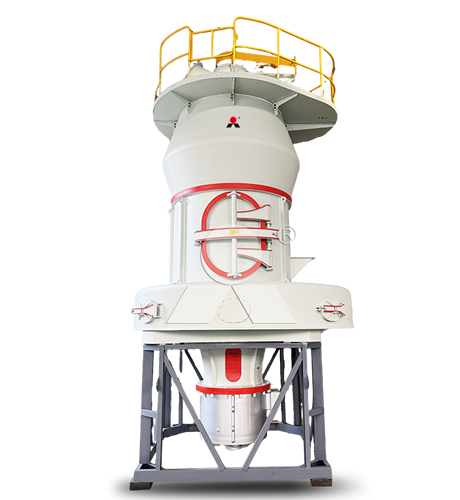
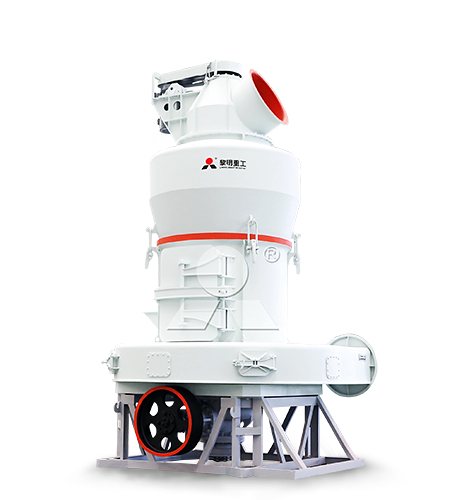
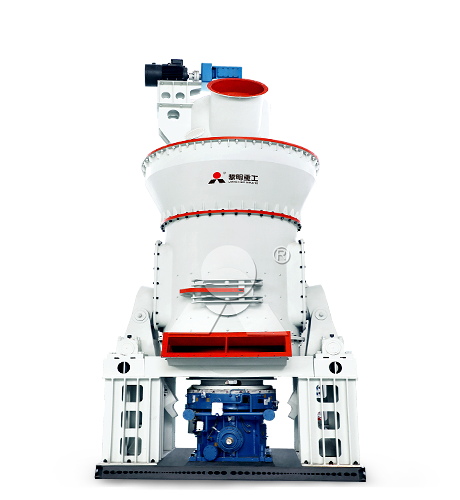
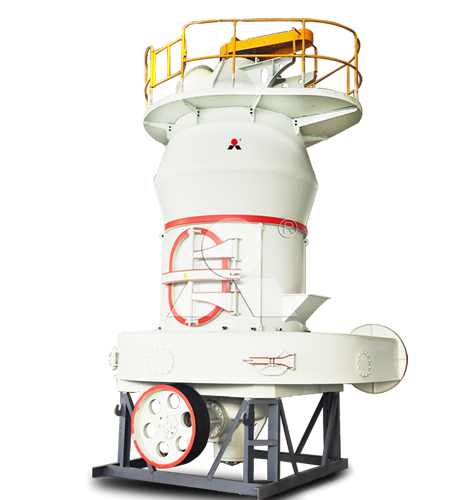
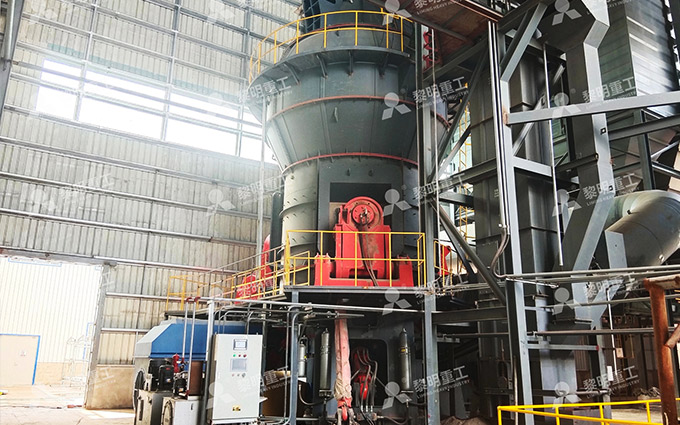
We are Liming Heavy Industry, a manufacturer of various types of industrial crushers, such as Raymond Mill, Trapezoidal Mill, Vertical Mill, Ultrafine Mill, Ball Mill, etc.
Our mills can process the following minerals:
limestone, quicklime, kaolin, talc, barite, bentonite, calcium carbonate, dolomite, coal, gypsum, clay, carbon black, slag, cement raw materials, cement clinker, etc.
If you need a mill to process stone or minerals into powder, please feel free to contact me (WhatsApp: +8615333807511). Thank you.
5 micron calcium carbonate is a fine ground calcium carbonate (GCC) grade typically specified with a median particle size, D50, near 5 µm. It is used when a formulation needs smoother particle packing, lower grit, and more controlled dispersion than 10–20 µm GCC—especially in PVC, polyolefin masterbatch, coatings, paper, rubber, sealants, adhesives, and selected construction products.
The “5 micron” label must be defined carefully. It may mean D50 ≈ 5 µm, a D97 or D98 limit near 5 µm, or simply a supplier’s grade name. These are very different products. One commercial GCC example marketed as “5 micron” has D50 of 5.5 µm and D98 of 30 µm, illustrating why the complete distribution matters.
What Does 5 Micron Mean?
Five microns equals 0.005 mm. At this size, calcium carbonate is normally measured by laser diffraction, not by standard sieve analysis. The material is a distribution of particles, so its median size alone cannot predict coating, polymer, paint, or paper performance.
| Possible specification | Meaning | Why it changes product performance |
|---|---|---|
| D50 = 5 µm | 50% of the measured particle volume is finer than 5 µm | Does not control the coarse tail or the amount of ultrafine material |
| D97 = 5 µm | 97% of the particle volume is finer than 5 µm | Represents a much finer and tighter product than D50 = 5 µm |
| “5 micron” commercial grade | A supplier’s fine-GCC grade name | Can have different D50, D97, surface area, and application behavior |
| D98 | Particle size below which 98% of measured particle volume lies | Useful for controlling coarse particles that can create grit or surface defects |
| Specific surface area | Total particle surface per unit mass | Influences oil absorption, coating demand, rheology, and polymer interaction |
A material with D50 near 5 µm may still have a broad coarse fraction. For example, the cited 5 micron commercial GCC has D50 5.5 µm and D98 30 µm. It may suit general plastics, coatings, construction, and adhesives, but a high-gloss coating or thin film may require a much tighter D97 limit.
5 Micron vs Other GCC Grades
| Size reference | Relative fineness | Typical use direction |
|---|---|---|
| 25 µm | Fine filler | Putty, paint, rubber, sealants, adhesives, selected PVC and construction products |
| 20 µm | Fine GCC | General paint, PVC, plastics, rubber, sealants, wall coatings |
| 10 µm | Very fine GCC | PVC, masterbatch, paint, rubber, cable compounds, sealants, paper-related products |
| 5 µm | Fine to ultrafine GCC | Finer PVC, masterbatch, coatings, paper, rubber, adhesives, sealants, specialty fillers |
| 2–3 µm | Ultrafine GCC | Premium coatings, high-quality paper, advanced polymer compounds, fine masterbatch |
| Below 1 µm | Very fine PCC or nano-oriented material | Specialty functional fillers, high-performance coatings, and engineered polymers |
Compared with 10 µm GCC, a 5 µm grade generally gives higher surface area and can improve smoothness, opacity-related performance, and dispersion when the product is well classified and surface-treated. It can also raise oil absorption, coating dosage, powder cohesion, viscosity, and cost. The grade should therefore be selected by formulation testing rather than fineness alone.
How 5 Micron Calcium Carbonate Is Produced
5 micron GCC is made from selected calcite-rich limestone, marble, chalk, or calcite ore. The material is crushed, dried, ground in a fine or ultrafine circuit, and classified precisely to control the median size and coarse tail.
High-purity carbonate feed → crushing → moisture control → fine or ultrafine grinding → high-efficiency air classification → powder collection → optional surface treatment → cooling and deagglomeration → detailed quality testing → packaging or bulk delivery
Dry production commonly uses a ball mill with a high-efficiency air classifier, an ultrafine roller mill, ring roller mill, or vertical mill. Wet stirred-media grinding may be selected for slurry products, paper applications, or cases where wet processing provides better fine-particle control.
Critical production controls
Raw material: High CaCO3, low MgO, low silica, low iron, and high whiteness are important because fine grinding exposes impurities.
Moisture: Low, stable moisture reduces agglomeration, classifier instability, caking, and storage problems.
Grinding balance: The circuit must create the target D50 without excessive energy use or too many unnecessary ultrafines.
Classification: D90, D97, or D98 control is essential for low grit and smooth final products.
Contamination control: Clean equipment, magnets, and suitable wear materials reduce dark specks, metal particles, and grit.
Cooling: Fine powder should be cooled before storage or packing to reduce compaction and preserve flowability.
Coated vs Uncoated 5 Micron GCC
5 micron calcium carbonate can be supplied uncoated or stearic-acid-coated. The correct option depends on the binder system and desired filler interaction.
| Type | Typical applications | Why it is selected |
|---|---|---|
| Uncoated 5 micron GCC | Water-based coatings, paper and paperboard, selected paints, construction products, aqueous slurry systems | Natural mineral surface can suit water-based and mineral-binder formulations |
| Stearic-acid-coated 5 micron GCC | PE, PP, PVC, masterbatch, cable compounds, rubber, sealants, adhesives, solvent-based systems | Hydrophobic surface treatment can improve compatibility and dispersion in non-polar organic matrices |
Because 5 micron GCC has significant surface area, treatment dosage must be matched to the actual powder—not copied from a 10 or 20 µm grade. The finished coated product should be tested for activation rate, moisture, particle-size distribution, flowability, and dispersion in the customer’s compound.
Common Applications
| Application | Role of 5 micron calcium carbonate | Key selection controls |
|---|---|---|
| PE and PP filler masterbatch | Fine coated filler for improved dispersion and controlled filler loading | D50, D97, hydrophobicity, moisture, bulk density, melt-flow behavior |
| Rigid PVC compounds | Fine filler for profile, pipe, fittings, sheet, and selected film applications | Whiteness, low moisture, coating quality, PSD, extrusion performance, mechanical properties |
| Paints and coatings | Fine extender that affects smoothness, rheology, hiding power, film structure, and cost | Whiteness, low grit, PSD, oil absorption, dispersion, gloss, and binder compatibility |
| Paper and paperboard | Potential filler or coating component in qualified systems | Brightness, fine PSD, low grit, slurry viscosity, retention, optical properties |
| Rubber | Fine mineral filler for compound-property adjustment and processing control | Particle size, surface area, moisture, coating, dispersion, cure-system compatibility |
| Sealants and adhesives | Fine filler influencing viscosity, extrusion, density, and formulation economics | Oil absorption, PSD, moisture, surface treatment, flowability, storage stability |
| Construction products | Fine mineral filler in selected wall coatings, putty, and specialty dry-mix formulations | Whiteness, fineness, moisture, flow, and compatibility with formulation additives |
Commercial 5 micron GCC products are positioned for plastics, coatings, construction materials, adhesives, and paper or packaging formulations because their fine distribution can balance mechanical reinforcement, opacity, and processing efficiency. Actual results vary with the complete formulation.
How to Specify 5 Micron Calcium Carbonate
A purchase specification should make clear whether the 5 µm reference is a D50, D97, maximum size, or a commercial grade name.
| Specification item | Why it matters |
|---|---|
| 5 µm definition | Clarifies whether it refers to D50, D97, D98, or a maximum size |
| D10, D50, D90, D97, and D98 | Defines the full PSD, fine fraction, and coarse tail |
| Particle-size test and dispersion protocol | Ensures supplier and customer laboratories report comparable results |
| Specific surface area | Helps predict oil absorption, coating requirement, viscosity, and polymer interaction |
| CaCO3, CaO, MgO, SiO2, Fe2O3 | Confirms purity, high-calcium character, whiteness potential, and low abrasive contamination |
| Acid-insoluble residue | Controls non-carbonate grit and hard impurities |
| Whiteness, brightness, and Lab* values | Important for coatings, PVC, paper, masterbatch, and light-colored sealants |
| Moisture, bulk density, and flowability | Control packing, silo discharge, dosing, storage, and compounding |
| Coating type, dosage, and activation rate | Required for polymer-grade coated GCC |
| Application trial result | Confirms performance in the actual masterbatch, PVC, paint, rubber, adhesive, or sealant system |
Key Takeaway
5 micron calcium carbonate is a fine to ultrafine GCC grade commonly specified with D50 near 5 µm. It is used in masterbatch, PVC, coatings, paper, rubber, sealants, adhesives, and other products that require smoother filler dispersion and lower grit than 10–20 µm grades.
Do not rely on the “5 micron” label by itself. Confirm whether it is D50 or another parameter, then evaluate D97 or D98, surface area, purity, whiteness, moisture, coating condition, and end-use performance. These data determine whether the grade will deliver the required surface quality, rheology, filler loading, and processing stability.