Calcium Carbonate Knowledge Hub
Calcium Carbonate for Paint
2026-09-04 16:54:30
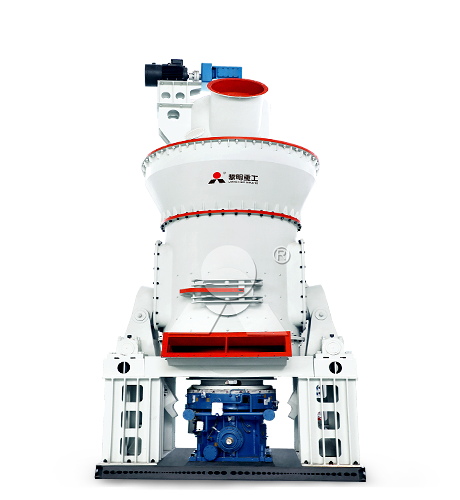
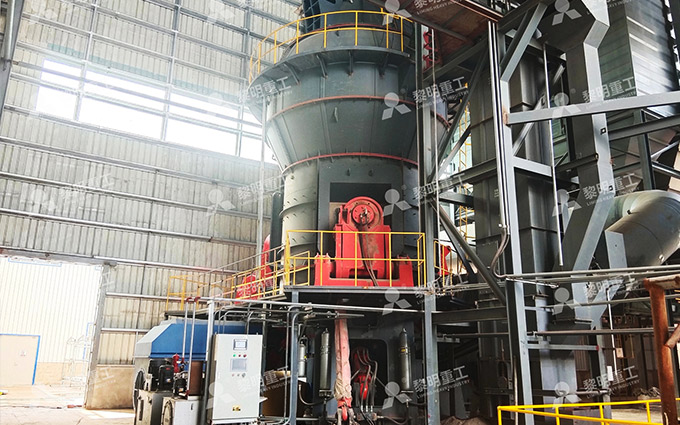
We are Liming Heavy Industry, a manufacturer of various types of industrial crushers, such as Raymond Mill, Trapezoidal Mill, Vertical Mill, Ultrafine Mill, Ball Mill, etc.
Our mills can process the following minerals:
limestone, quicklime, kaolin, talc, barite, bentonite, calcium carbonate, dolomite, coal, gypsum, clay, carbon black, slag, cement raw materials, cement clinker, etc.
If you need a mill to process stone or minerals into powder, please feel free to contact me (WhatsApp: +8615333807511). Thank you.
Calcium carbonate is one of the most widely used mineral extenders in paint because it helps formulators control cost, viscosity, opacity efficiency, gloss, film structure, and application behavior. In decorative coatings, primers, industrial coatings, textured paints, and some powder-coating systems, the correct calcium carbonate grade can improve the balance between performance and formulation economics.
For paint manufacturers, calcium carbonate should not be selected only by mesh or price. Particle-size distribution, whiteness, particle shape, oil absorption, purity, moisture, surface treatment, and compatibility with the binder system determine whether the material improves the coating or causes problems such as poor gloss, sedimentation, excessive viscosity, weak scrub resistance, or inadequate hiding.
What calcium carbonate does in paint
In paint and coatings, calcium carbonate is generally used as an extender pigment or functional mineral filler. It occupies volume in the dry film, modifies rheology and film properties, and can help optimize the use of more expensive functional ingredients, especially titanium dioxide (TiO2).
Calcium carbonate is commonly described as a main extender in paint and coating formulations, although fine and modified grades can provide functional effects beyond simple volume extension. Ultrafine ground calcium carbonate and modified calcium carbonate may help optimize TiO2 use and tune decorative-coating performance.
The material can be used in water-based, solvent-based, and powder coating systems, but the grade and treatment must match the resin system and required film properties.
Why paint formulators use calcium carbonate
Cost-efficient volume extension
Calcium carbonate is generally less expensive than titanium dioxide and many specialty pigments. It can replace part of the formulation volume while helping the manufacturer meet target solids content, density, viscosity, and dry-film thickness.
This does not mean calcium carbonate is a direct one-for-one replacement for TiO2. Titanium dioxide remains the principal white hiding pigment in most high-opacity coatings because of its much higher refractive index. Calcium carbonate instead works as an extender that can improve pigment spacing and support more efficient use of TiO2 in a properly designed formulation. Mineral fillers can boost decorative-paint opacity by helping distribute pigment particles more evenly.
Rheology and application control
Paint must have the right balance of viscosity, flow, leveling, sag resistance, brushability, roller application, spray behavior, and storage stability. Calcium carbonate contributes to this balance because particle size, particle-size distribution, and particle geometry affect how solids interact in the liquid coating.
Coarser grades may provide body and help build a more structured coating. Fine grades can contribute to smoother films and more controlled rheology. The effect depends on pigment volume concentration, binder level, dispersant selection, thickener package, solvent or water balance, and total filler blend.
Gloss control
Particle size has a major influence on surface smoothness and gloss. Fine, well-dispersed calcium carbonate is more suitable for smooth coatings and can be used in some formulations requiring moderate to high gloss. Coarser or broader particle-size distributions increase surface micro-roughness and are more useful when lower sheen, matte appearance, or texture is desired.
Calcium carbonate is used in primers and can also be formulated into selected topcoats where high gloss and gloss retention are required; it can additionally help adjust gloss in applications such as powder coatings.
Film build and mechanical balance
In the dry paint film, calcium carbonate contributes volume and can influence hardness, porosity, permeability, abrasion response, flexibility, and crack resistance. The outcome is not universal. Higher filler loading may improve economics and body, but excessive loading relative to binder can weaken the film and reduce water resistance, adhesion, scrub resistance, or durability.
Paint formulators therefore control the pigment volume concentration (PVC) and, more importantly, avoid exceeding the critical pigment volume concentration (CPVC) unless a porous or highly matte coating is intentionally required.
GCC and PCC for paint
Both ground calcium carbonate (GCC) and precipitated calcium carbonate (PCC) can be used in coatings, but GCC is generally the larger-volume option for conventional paint extension because it is widely available in multiple particle-size grades and is cost-effective. PCC is more likely to be considered when a formulation requires a tightly controlled particle morphology, narrow particle-size distribution, or a specific functional performance.
| Characteristic | GCC for paint | PCC for paint |
|---|---|---|
| Source and production | Mechanically ground natural calcium carbonate from limestone, marble, or calcite. | Chemically produced calcium carbonate with controlled particle formation. |
| Typical role | General extender, rheology modifier, cost-control mineral, and film-building filler. | Specialty extender or functional filler where controlled particle attributes are needed. |
| Grade availability | Broad selection from coarse through ultrafine grades. | Often selected for specific morphology and narrow particle characteristics. |
| Cost position | Usually preferred for economical, high-volume paint formulations. | Often evaluated for higher-value or technically demanding formulations. |
| Common coating uses | Decorative paints, primers, putties, textured coatings, industrial coatings, and fillers. | Selected premium coatings, specialty formulations, and controlled-property systems. |
The practical selection is based on coating performance rather than the GCC or PCC label alone. A high-quality fine GCC can outperform a poorly selected PCC in a specific coating, while PCC may be justified where its controlled morphology provides a measurable formulation advantage.
Particle size for paint-grade calcium carbonate
Particle size is one of the most important technical variables in calcium carbonate for paint. It affects optical properties, gloss, viscosity, packing behavior, dispersion demand, sedimentation, dry-film smoothness, and interaction with TiO2.
| Grade direction | Typical paint effect | Common uses |
|---|---|---|
| Coarse calcium carbonate | Builds body, contributes texture, lowers gloss, and provides economical volume. | Wall putty, textured paint, primers, undercoats, low-cost architectural coatings. |
| Medium-fine calcium carbonate | Balances cost, rheology, film build, and surface quality. | Interior and exterior emulsion paints, primers, general decorative coatings. |
| Fine calcium carbonate | Supports smoother surfaces, better pigment packing, and more refined coating appearance. | Higher-quality architectural paints, smooth primers, industrial coatings. |
| Ultrafine calcium carbonate | Can support TiO2 efficiency, film smoothness, and functional coating design, but may increase dispersion and viscosity demands. | Premium decorative paints, selected industrial coatings, specialty and powder coatings. |
A fine grade is not automatically the best grade. Very fine particles have higher surface area, which can raise dispersant demand, increase viscosity, and require tighter process control. Coarser grades may be more appropriate in low-sheen, textured, primer, or economy coatings where extreme smoothness is unnecessary.
Calcium carbonate in water-based paint
Water-based architectural paint is one of the largest application areas for calcium carbonate. The mineral is used in interior emulsion paint, exterior wall coatings, primers, ceiling paint, textured coatings, putty, and related waterborne systems.
In these formulations, the calcium carbonate must disperse efficiently in water with the selected dispersant and remain stable during storage. Key requirements often include high whiteness, controlled particle-size distribution, low coarse residue, low moisture, consistent pH behavior, and low levels of contaminants that could affect color, viscosity, or microbial stability.
Paint formulators also need to evaluate the interaction between calcium carbonate and associative thickeners, cellulose ethers, acrylic binders, styrene-acrylic binders, vinyl-acrylic emulsions, defoamers, wetting agents, and coalescents. A mineral grade that works well in one binder system may behave differently in another.
Interior emulsion paint
For interior wall paint, calcium carbonate is often used to balance hiding, smoothness, scrub resistance, matting, and cost. Medium-fine and fine GCC grades are common choices. Whiteness and color consistency matter because even slight variation can affect tinting accuracy in white and pastel paints.
Exterior wall coatings
Exterior coatings require more attention to water resistance, alkali resistance, weathering, dirt pickup, adhesion, and cracking. Calcium carbonate can still be used effectively, but the filler level and particle-size distribution must be coordinated with a durable exterior-grade binder system. Overextending the paint with mineral filler can reduce long-term weatherability.
Wall putty and skim coat
Wall putty uses higher filler loading than finish paint and often incorporates calcium carbonate as a principal mineral component. Coarser and medium-fine grades may provide bulk, workability, sanding characteristics, and cost efficiency. The required grade depends on whether the product is a dry powder putty, ready-mix putty, interior formulation, or exterior formulation.
Calcium carbonate in solvent-based and industrial coatings
In solvent-based coatings, calcium carbonate can be used in alkyd, epoxy, polyurethane, and other resin systems, especially in primers, undercoats, maintenance coatings, sealers, and selected topcoats. The filler grade must be compatible with the solvent system, resin chemistry, pigment package, and required corrosion-protection or appearance properties.
For industrial coatings, calcium carbonate is frequently used in primers because primers can tolerate higher filler levels and benefit from film build and cost control. In higher-gloss topcoats, fine and carefully controlled grades are necessary because coarse particles or poor dispersion can lower gloss, reduce distinctness of image, and create surface defects.
Surface-treated calcium carbonate may be useful in selected solvent-based or low-polarity resin systems when improved wetting, lower moisture sensitivity, or better filler compatibility is required. The treatment should be chosen specifically for the resin system rather than assumed to benefit every coating formulation.
Calcium carbonate in powder coatings
Powder coatings require tight control of particle size, moisture, purity, and dispersion because the coating is processed as a dry blend, melt-mixed, extruded, cooled, ground, and electrostatically applied. Ultrafine calcium carbonate can be used as an extender to help reduce TiO2 consumption and formulation cost in selected powder coatings.
The filler must not compromise powder flow, electrostatic charging, melt flow, leveling, gloss, impact resistance, or corrosion protection. Coarser particles and agglomerates can cause roughness, poor surface appearance, inconsistent film thickness, and reduced coating quality.
How to choose calcium carbonate for paint
Paint producers should begin with the coating’s performance target and processing method, then select a calcium carbonate grade that supports that target.
Particle size: Choose according to gloss, smoothness, texture, viscosity, and dry-film requirements.
Particle-size distribution: Check D50 together with coarse-particle control, top cut, and sieve residue.
Whiteness and brightness: Important for white, pastel, and TiO2-optimized coatings.
Purity: High CaCO3 content and low colored impurities help maintain color consistency and formulation reliability.
Oil absorption: Influences binder demand, viscosity, and the practical filler loading window.
Moisture: Low and stable moisture supports storage, weighing, dispersion, and quality consistency.
Surface treatment: Consider treated grades for resin systems where hydrophobicity or improved compatibility is needed.
Batch consistency: Evaluate whiteness, PSD, moisture, and rheology performance across multiple supply lots.
Common formulation problems
Poor hiding power
Low hiding can result from insufficient TiO2, poor pigment dispersion, unsuitable particle-size distribution, excessive filler loading, or an unfavorable pigment-volume concentration. Adding more calcium carbonate will not necessarily improve hiding and can make the problem worse if it displaces too much TiO2 or binder.
High viscosity or poor flow
Fine calcium carbonate grades can increase viscosity because of their higher surface area. Poor wetting, insufficient dispersant, excessive thickener, broad PSD, or inadequate mixing can also create high-viscosity problems. The solution may involve adjusting dispersant dosage, filler blend, grind process, water balance, or thickener package rather than simply switching to a coarser mineral.
Low gloss
Low gloss may be caused by overly coarse calcium carbonate, poor particle dispersion, broad particle-size distribution, high filler loading, insufficient binder, or inadequate leveling. High-gloss coatings generally require finer, cleaner, well-dispersed mineral grades and careful control of the complete formula.
Weak scrub resistance or powdering
These defects often indicate insufficient binder relative to total pigment and filler volume, poor film formation, or excessive extension beyond the formulation’s critical pigment volume concentration. Calcium carbonate can be part of the cause, but the correct diagnosis must consider binder quality, coalescence, curing conditions, pigment loading, and total solids balance.
FAQ
Can calcium carbonate replace titanium dioxide in paint?
It can replace part of the formulation volume and may improve TiO2 efficiency in a well-designed system, but it cannot fully replace titanium dioxide in coatings that need strong white hiding power. TiO2 is the primary opacifying pigment, while calcium carbonate is mainly an extender and functional filler.
What calcium carbonate size is best for paint?
There is no single best size. Coarse grades are often used for putty, texture, low-gloss coatings, and economical primers. Fine and ultrafine grades are generally preferred for smoother decorative paints, refined primers, and selected industrial or powder coatings. The required particle-size distribution depends on the specific coating target.
Is coated calcium carbonate necessary for water-based paint?
Usually not as a default. Many water-based architectural coatings use untreated GCC because it disperses effectively with suitable wetting agents and dispersants. Surface-treated grades may be considered for particular resin systems or performance requirements, but compatibility testing is essential.
Does higher whiteness always produce better paint?
High whiteness is valuable for white and light-colored coatings, but it is only one requirement. A paint-grade calcium carbonate must also have suitable particle size, purity, dispersibility, moisture, and consistency. A very white grade with poor PSD control or poor dispersion may still perform poorly in production.
Key takeaway
Calcium carbonate for paint is more than a low-cost extender. When the grade is properly matched to the coating system, it can help optimize TiO2, control rheology and gloss, build film volume, support application properties, and improve formulation economics. Successful selection depends on particle-size distribution, whiteness, purity, oil absorption, moisture, surface treatment, and validation in the actual paint formula—not on mesh size or price alone.