Calcium Carbonate Knowledge Hub
Coated Calcium Carbonate for Plastics
2026-09-04 16:53:19
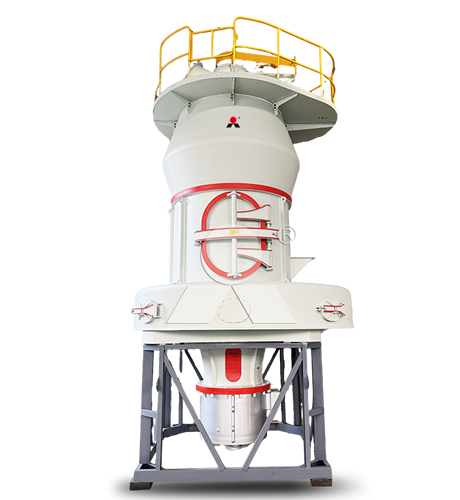
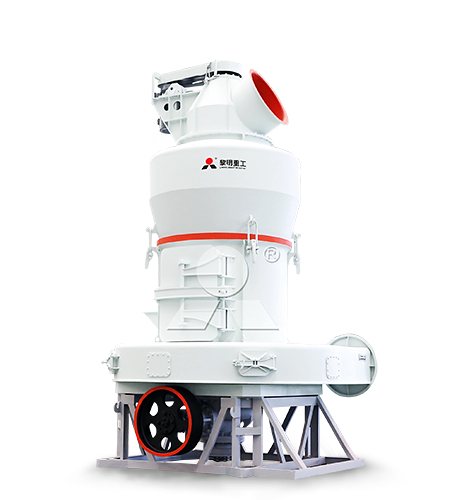
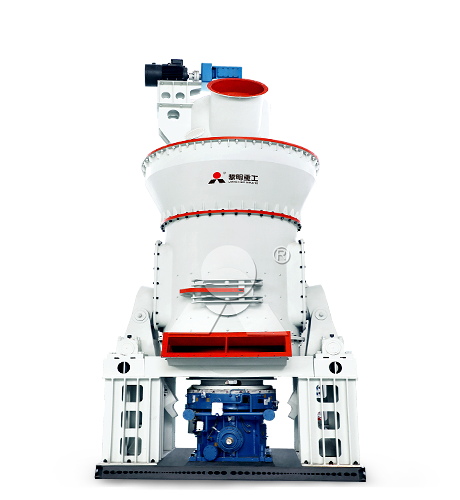
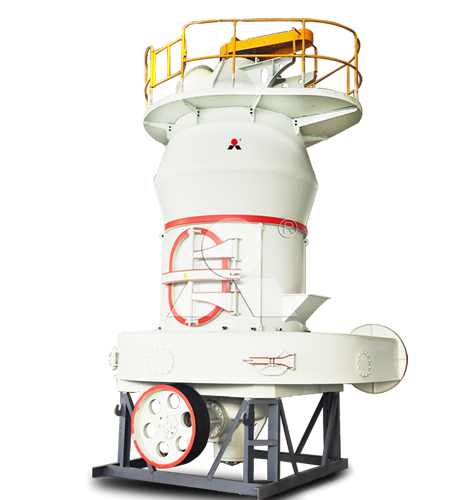
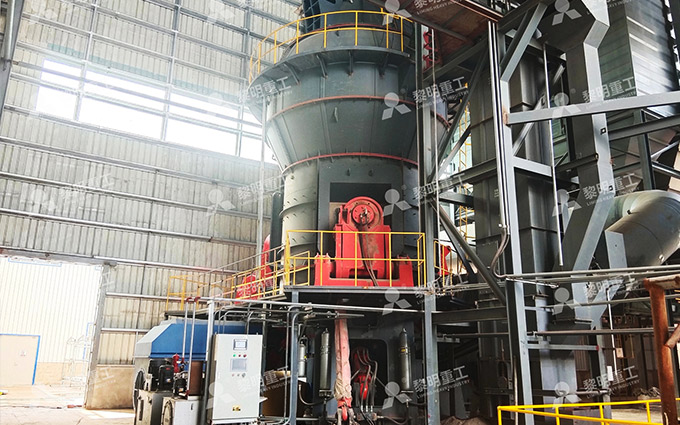
We are Liming Heavy Industry, a manufacturer of various types of industrial crushers, such as Raymond Mill, Trapezoidal Mill, Vertical Mill, Ultrafine Mill, Ball Mill, etc.
Our mills can process the following minerals:
limestone, quicklime, kaolin, talc, barite, bentonite, calcium carbonate, dolomite, coal, gypsum, clay, carbon black, slag, cement raw materials, cement clinker, etc.
If you need a mill to process stone or minerals into powder, please feel free to contact me (WhatsApp: +8615333807511). Thank you.
Coated calcium carbonate for plastics is a calcium carbonate filler whose particle surface has been treated—most commonly with stearic acid—to improve compatibility with hydrophobic polymer melts. In PVC, polypropylene (PP), polyethylene (PE), and many compound formulations, the treatment helps the mineral disperse more uniformly, reduces filler-filler attraction, and can improve extrusion, mixing, and surface consistency compared with an equivalent untreated grade.
The coating does not automatically make calcium carbonate a reinforcing filler or guarantee higher strength. Its main value is better interfacial behavior and processing efficiency. The correct grade depends on polymer type, target loading, particle-size distribution, surface-treatment level, moisture, purity, and the properties the finished plastic must retain.
What “coated” means in plastic-grade calcium carbonate
Natural ground calcium carbonate (GCC), typically processed from high-purity limestone, marble, or calcite, has a polar and relatively hydrophilic mineral surface. Most commodity thermoplastics are nonpolar or comparatively hydrophobic. This mismatch can make untreated mineral particles harder to wet and distribute throughout the polymer melt.
For many plastic compounds, producers apply a hydrophobic surface treatment after grinding and classification. Stearic acid is the most established treatment for standard plastic-grade GCC. Its carboxylic acid group interacts with the calcium-containing mineral surface, while its long hydrocarbon chain faces outward. The resulting surface is more organophilic and better suited to a polymer-rich environment. Research on stearic-acid-coated calcium carbonate reports a substantial reduction in particle surface tension, which helps explain its improved compatibility with nonpolar systems.
In commercial practice, treated GCC may be described as:
Stearic-acid-coated calcium carbonate
Surface-treated calcium carbonate
Hydrophobic calcium carbonate
Activated calcium carbonate
Coated calcite powder
Plastic-grade coated GCC
These names are useful starting points, but they are not complete specifications. A buyer still needs the actual particle size, top-cut control, surface-treatment level, moisture, whiteness, CaCO3 content, and application data.
Why plastics use coated calcium carbonate
In a well-designed formulation, coated calcium carbonate can serve as an economical functional extender while helping the compounder maintain stable processing. The treatment primarily changes how the filler behaves during handling and incorporation, rather than changing the bulk mineral chemistry.
Improved dispersion in polymer melts
Fine calcium carbonate has high surface area and particles naturally tend to attract one another. If particles remain agglomerated in a plastic compound, they can create visible specks, uneven mechanical performance, rough surfaces, inconsistent color, and processing instability.
A suitable coating lowers particle surface energy and reduces the tendency of mineral particles to form hard agglomerates. Stearic-acid-coated calcium carbonate has been reported to interact more favorably with hydrophobic polymer matrices because the treatment improves compatibility between the mineral filler and the polymer. In practical compounding, this can support more uniform filler distribution when the compound also has adequate mixing energy, residence time, temperature control, and feeding accuracy.
Better processing and flow
Coated grades can reduce friction between particles and improve filler wetting by the polymer melt. Depending on formulation and processing equipment, this may contribute to:
More stable feeding and easier dry blending
Lower torque or more consistent torque during compounding
Improved melt flow and extrusion consistency
Reduced risk of filler clumping
More uniform output in film, sheet, pipe, profile, injection-molded, or masterbatch production
These are formulation-dependent benefits, not universal guarantees. An excessive treatment level, poor coating uniformity, unsuitable particle size, poor dispersion equipment, or an incompatible additive package can reduce or eliminate the expected advantage.
Higher practical filler loading
Many plastic producers use calcium carbonate to manage formulation cost, stiffness, dimensional stability, opacity, or compound density. A coated grade often makes it easier to introduce mineral filler at commercially useful loading levels without the same degree of viscosity increase or surface-quality loss associated with poorly dispersed untreated filler.
However, “higher loading” should not be treated as the sole purchasing criterion. As calcium carbonate loading rises, a compound may lose elongation, impact resistance, weld-line strength, or transparency. The acceptable loading window is determined by the resin, particle size, particle morphology, surface treatment, coupling strategy, processing route, and end-use performance requirements.
Coated calcium carbonate by plastic application
| Plastic application | Why coated GCC is used | Key grade considerations |
|---|---|---|
| PVC pipe and fittings | Supports high mineral loading, processing consistency, stiffness, and formulation economics. | Particle size, surface treatment, moisture, purity, impact balance, extrusion behavior. |
| PVC cable compounds | Helps achieve uniform filler distribution in flexible or semi-rigid formulations. | Electrical requirements, plasticizer system, fine-particle control, moisture, dispersion. |
| Rigid PVC profiles and sheet | Can support surface quality, dimensional stability, and consistent extrusion. | Whiteness, dispersion, particle-size distribution, weathering package compatibility. |
| PP compounds | Improves filler compatibility and handling in a nonpolar matrix. | Median size, narrow PSD, impact/stiffness target, coupling-agent strategy. |
| PE film and molded products | Used in selected filler masterbatches and compounds to improve dispersion and processability. | Fine-particle content, contamination control, film-surface needs, elongation retention. |
| Filler masterbatch | Enables concentrated mineral loading for later dilution in PE, PP, or related resins. | Coating uniformity, moisture, bulk density, feeding behavior, carrier-resin compatibility. |
| Injection molding | Can provide stiffness, cost control, and dimensional stability in selected parts. | Flow, impact requirement, surface appearance, gate and weld-line performance. |
Coated calcium carbonate for PVC
PVC is one of the most important markets for coated calcium carbonate. In rigid PVC products such as pipes, profiles, fittings, sheet, and boards, GCC can be used to control cost and modify stiffness, processing, and dimensional behavior. Surface treatment is commonly selected because it helps the particles mix more effectively with PVC resin, plasticizers where used, stabilizers, lubricants, processing aids, and impact modifiers.
For PVC, the right particle size is closely tied to the product. A coarser treated grade may suit applications where economics and stiffness are the main priorities, while a finer grade may be needed when smoother surface finish, better particle distribution, or more controlled mechanical performance is required. The optimum is a compound-design decision—not simply a choice of the finest available powder.
Coated calcium carbonate for PP
Polypropylene is relatively nonpolar, so untreated mineral particles can show weak compatibility unless the formulation uses appropriate surface treatment and, in many cases, a compatibilizer such as maleic-anhydride-grafted polypropylene. Coated calcium carbonate can improve filler wetting and reduce aggregation, helping compounders balance stiffness, shrinkage control, cost, and impact performance.
For PP injection molding, appliance components, household goods, automotive-related compounds, and woven or nonwoven products, the compounder should test the complete formulation. Coating alone does not replace a coupling agent when the application requires improved interfacial adhesion and mechanical-property retention at higher filler levels.
Coated calcium carbonate for PE
In PE applications, treated GCC is frequently used in filler masterbatch and in selected film, blow-molding, extrusion, and molded-product compounds. Good dispersion matters especially in thin films because oversized particles and agglomerates can create defects, reduce elongation, worsen surface appearance, or contribute to film breakage.
For film-grade use, buyers should pay particular attention to coarse-particle control, residue on sieve, moisture, dispersibility, and consistency from batch to batch. A nominal median particle size alone is not enough to predict film performance.
How to specify coated calcium carbonate
A practical purchase specification should identify the grade by application rather than requesting only “coated calcium carbonate.” The following parameters are commonly important.
| Specification item | Why it matters in plastics |
|---|---|
| Median particle size | Influences surface finish, dispersion, mechanical-property balance, and processing behavior. |
| Particle-size distribution and top cut | Critical for avoiding coarse particles, surface defects, and film or extrusion problems. |
| Surface-treatment type | Determines whether the filler is designed for hydrophobic polymer systems. |
| Surface-treatment level | Must match particle surface area and application needs; under- or over-treatment can hurt performance. |
| Moisture content | Low moisture supports storage, feeding, dispersion, and stable processing. |
| CaCO3 content and insolubles | Helps control contamination, color, processing consistency, and end-product quality. |
| Whiteness and color values | Important in white PVC, light-colored compounds, masterbatch, and surface-sensitive products. |
| Bulk density and flowability | Affects conveying, dosing, storage, and automated compounding operations. |
Request a technical data sheet and a representative production sample. Then evaluate it in the actual resin and additive package under normal plant conditions. Lab dispersion results are useful, but they should be verified on the intended twin-screw extruder, internal mixer, single-screw extrusion line, injection machine, or film line.
Coated versus uncoated calcium carbonate
Uncoated calcium carbonate is not inherently inferior. It can be the correct choice for water-based systems, some rubber formulations, certain low-cost plastic applications, or formulations that rely on different compatibilization methods. The decision should depend on the interface between the mineral and the matrix.
For hydrophobic thermoplastics, coated material is usually favored when dispersion, processability, and appearance are important. Industry descriptions of stearic-acid treatment consistently emphasize that it changes the filler surface from more hydrophilic toward hydrophobic and supports its distribution in polymer matrices.
Still, coating should be evaluated alongside resin selection, mixing equipment, screw design, temperature profile, lubricant package, stabilizer package, plasticizer system, and compatibilizer use. A surface-treated filler cannot correct every compounding problem.
Common buying mistakes
Choosing only by mesh or D50 while ignoring top-cut control and particle-size distribution.
Assuming every stearic-acid-coated grade has the same coating quality or treatment level.
Using a very fine grade where a coarser grade would meet the property target at lower cost.
Increasing filler loading without rechecking impact strength, elongation, weld-line strength, and process stability.
Ignoring moisture, poor packaging, or storage conditions that can undermine feeding and dispersion.
Expecting coating alone to replace compatibilizers in demanding PP or engineering-polymer compounds.
Qualifying a supplier only on a small sample without verifying lot-to-lot consistency and plant-scale performance.
FAQ
Is stearic acid the only coating used for calcium carbonate in plastics?
No. Stearic acid is the most common and established surface treatment for many standard GCC plastic applications, but other fatty acids, titanates, aluminates, silanes, polymeric treatments, and proprietary surface modifications may be used for specific resins or higher-performance applications. For example, specialized surface-modified natural calcium carbonates are marketed for compatibility with engineering polymers such as polyamide and polycarbonate.
Does coated calcium carbonate improve plastic strength?
Not necessarily. It can improve dispersion and reduce defects associated with poor filler distribution, but adding mineral filler often changes tensile strength, elongation, and impact resistance. The result depends on filler size, loading, coating, polymer, compatibilizer, and processing conditions. Test the final compound rather than assuming a general improvement.
How much coating should coated calcium carbonate contain?
There is no universal percentage. The appropriate treatment level depends heavily on the filler’s specific surface area: finer grades generally require more treatment than coarser grades to achieve adequate surface coverage. A supplier should define the treatment for the specific grade and provide performance data for the intended polymer application.
Can coated calcium carbonate be used in filler masterbatch?
Yes. It is widely used in PE and PP filler masterbatch because its hydrophobic surface can support higher mineral incorporation and more uniform distribution in the carrier resin. The masterbatch producer should control moisture, dispersion, pellet quality, carrier-resin selection, and downstream dilution performance.
Key takeaway
Coated calcium carbonate is a plastic-grade mineral filler designed to work more effectively in hydrophobic polymer systems. Its key advantage is not simply that it is calcium carbonate with an added chemical; it is that an appropriate surface treatment can improve wetting, dispersion, flow, and practical filler use in PVC, PP, PE, and masterbatch formulations. The best grade is selected by matching coating quality, particle-size distribution, moisture, purity, and application-specific performance targets—not by coating status or mesh alone.