Calcium Carbonate Knowledge Hub
Calcium Carbonate for Paper
2026-09-04 16:47:15
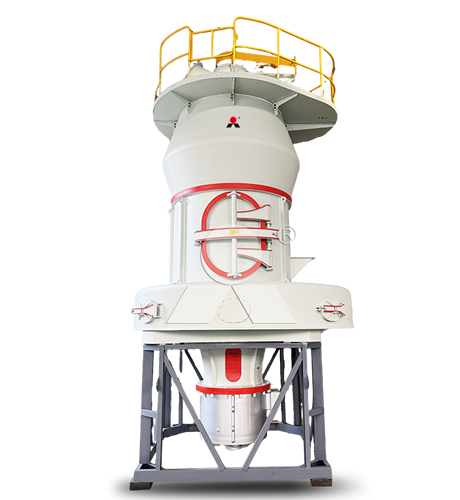
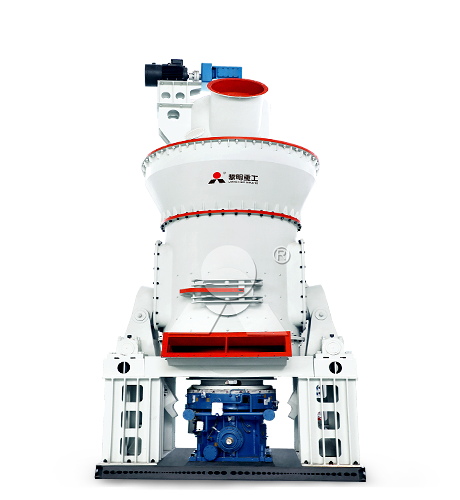
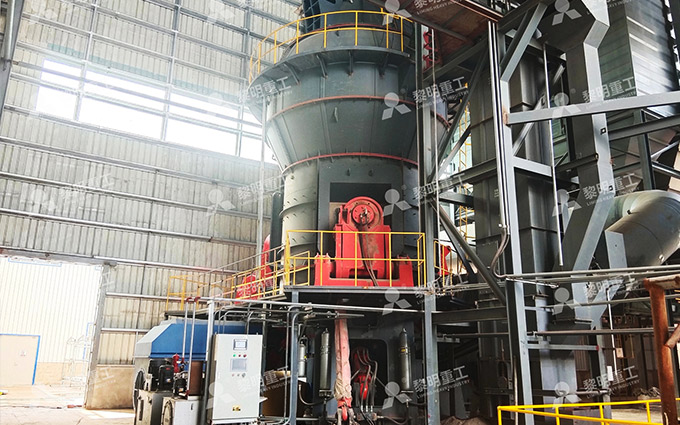
We are Liming Heavy Industry, a manufacturer of various types of industrial crushers, such as Raymond Mill, Trapezoidal Mill, Vertical Mill, Ultrafine Mill, Ball Mill, etc.
Our mills can process the following minerals:
limestone, quicklime, kaolin, talc, barite, bentonite, calcium carbonate, dolomite, coal, gypsum, clay, carbon black, slag, cement raw materials, cement clinker, etc.
If you need a mill to process stone or minerals into powder, please feel free to contact me (WhatsApp: +8615333807511). Thank you.
Calcium carbonate is used in paper as a filler inside the sheet and as a coating pigment on the surface. Ground calcium carbonate (GCC) and precipitated calcium carbonate (PCC) can improve brightness, whiteness, opacity, smoothness, printability, and cost efficiency, provided the particle size, slurry quality, and paper-machine chemistry are matched to the paper grade.
For paper producers, the right calcium carbonate is not simply the whitest or finest powder. It must deliver the required optical performance while maintaining retention, drainage, strength, coating rheology, runnability, and total manufacturing cost. GCC and PCC are both widely used in paper and board as fillers and coating pigments.
How Calcium Carbonate Is Used
Paper mills use calcium carbonate in two different positions, with different requirements.
| Use | Where calcium carbonate goes | Main purpose |
|---|---|---|
| Paper filler | Mixed into the fiber furnish before sheet formation | Improve optical properties, replace part of the fiber, and manage cost |
| Coating pigment | Applied as a coating layer onto the paper or board surface | Improve surface smoothness, print quality, brightness, gloss, and appearance |
As a filler, calcium carbonate occupies spaces between cellulose fibers. As a coating pigment, it helps create a more uniform printable surface. Both uses can contribute to brightness and opacity, but they are controlled differently: filler selection focuses strongly on retention, fiber bonding, drainage, and sheet strength, while coating selection focuses on slurry rheology, particle-size distribution, surface coverage, gloss, and print performance.
GCC vs PCC for Paper
GCC is mechanically ground natural calcium carbonate from calcite-rich limestone, marble, or chalk. PCC is chemically produced calcium carbonate with more controlled crystal morphology. Both can be used in paper, but their particle shape, size distribution, surface area, and optical behavior differ.
| Factor | GCC | PCC |
|---|---|---|
| Origin | Natural calcite ground to the required size | Chemically precipitated calcium carbonate crystals |
| Particle shape | Irregular, fractured mineral particles | Controlled morphology, such as rhombohedral, scalenohedral, or other engineered forms |
| Particle-size control | Controlled through grinding and classification | Controlled through precipitation conditions and finishing |
| Common use | Paper filler, coating pigment, board applications, and high-volume paper grades | Paper filler and selected coating applications where morphology or optical performance is important |
| Primary strength | Cost-effective natural pigment with broad grade availability | Crystal morphology and fine-particle control for targeted paper properties |
| Key purchasing focus | Brightness, PSD, grit, slurry rheology, purity, and supply consistency | Morphology, particle size, brightness, retention behavior, and sheet-property balance |
GCC consists of natural calcite from chalk, marble, or limestone, while PCC is produced from quicklime, water, and carbon dioxide to form highly pure calcium carbonate crystals. Both are used as paper fillers and coating pigments.
Why Paper Uses Calcium Carbonate
Calcium carbonate can replace part of the more expensive fiber component while improving the optical appearance of paper. Its main contribution comes from how its particles scatter light and interact with the sheet or coating structure.
| Property | How calcium carbonate can contribute |
|---|---|
| Brightness and whiteness | High-brightness calcium carbonate can improve the visual lightness and whiteness of paper and board |
| Opacity | Particles scatter light within the sheet or coating layer, helping reduce show-through |
| Printability | Fine, controlled pigments can improve surface smoothness and ink interaction |
| Surface smoothness | Coating-grade calcium carbonate can fill surface irregularities and support a more uniform print surface |
| Cost efficiency | Filler can partially replace fiber, subject to strength and retention limits |
| Bulk and stiffness balance | Particle morphology and loading can influence sheet structure and physical properties |
The amount and type of mineral filler affect paper brightness, whiteness, opacity, color coordinates, and yellowness. In one study of white-top testliner, a coating suspension containing 15% GCC solids produced the highest whiteness and increased brightness by 6.8%.
Particle Size for Paper
Particle-size distribution is one of the most important calcium carbonate controls for paper. It influences light scattering, coating coverage, slurry viscosity, retention, grit, surface smoothness, and print performance.
Fine calcium carbonate is not automatically better. A very fine pigment can improve coating smoothness but may increase slurry viscosity and binder demand. A coarser filler can improve cost efficiency but may reduce smoothness or create a more visible coarse tail. The correct PSD depends on whether the product is used in the paper furnish or in a surface coating.
| Paper use | PSD priority | Why it matters |
|---|---|---|
| Fine-paper filler | Controlled median size with acceptable retention and low grit | Balances optical improvement, sheet strength, drainage, and fiber replacement |
| Paper coating pigment | Fine distribution and low coarse tail | Supports smooth coating coverage, gloss, printability, and low surface defects |
| Board filler | Application-specific balance of optical properties, bulk, cost, and strength | Board grades often have different smoothness and strength requirements from printing papers |
| White-top liner coating | Fine GCC with controlled brightness and coating rheology | Improves top-side optical appearance without requiring the same pigment system as premium coated paper |
Paper coating systems often use fine calcium carbonate pigments, while filler grades can be coarser depending on sheet targets. The final decision should use D10, D50, D90 or D97, not only a commercial mesh label.
Calcium Carbonate Slurry for Paper
Many paper mills receive calcium carbonate as an aqueous slurry rather than dry powder. Slurry delivery avoids customer-side dust handling and can simplify dosing, but it requires stable solids content, viscosity, particle dispersion, and storage behavior.
| Slurry property | Why it matters in papermaking |
|---|---|
| Solids content | Controls transport efficiency, storage volume, pumping demand, and coating formulation balance |
| Viscosity | Affects pumping, mixing, coating color preparation, and metering accuracy |
| Particle-size distribution | Controls optical properties, coating smoothness, grit, and rheology |
| Brightness and color | Directly affect paper whiteness and shade |
| Grit and coarse particles | Can create coating scratches, blade damage, sheet defects, or print problems |
| pH and water chemistry | Must be compatible with the mill’s wet-end or coating system |
| Sedimentation stability | Prevents separation during storage and transport |
Wet-ground GCC is often selected for paper because it can provide fine-particle control and stable slurry delivery. However, slurry quality must be validated with the actual mill water, dispersant system, binder package, shear conditions, and coating equipment.
Paper Filler Trade-Offs
Higher calcium carbonate loading can improve brightness and reduce fiber cost, but it can also reduce fiber-to-fiber bonding. That can lower tensile strength, tear strength, or internal bond if the filler level, retention system, fiber treatment, or sheet design is not optimized.
| Higher filler loading may improve | Higher filler loading may challenge |
|---|---|
| Brightness and opacity | Tensile strength and tear strength |
| Cost efficiency through partial fiber replacement | Fiber-to-fiber bonding |
| Print surface and smoothness in suitable grades | Retention and drainage control |
| Bulk or stiffness in selected systems | Dusting, picking, or surface strength if poorly balanced |
Paper-industry testing has shown that increasing calcium carbonate filler loading can reduce tensile and tear strength for both GCC and PCC, making the strength–optics balance a central part of grade development.
How to Choose Calcium Carbonate for Paper
Select calcium carbonate from the paper grade and machine requirements, not from a generic “paper grade” description.
For filler applications
Define required brightness, opacity, shade, and filler loading.
Specify particle-size distribution, grit limits, and slurry properties.
Evaluate retention, drainage, ash profile, tensile strength, tear strength, and internal bond.
Confirm compatibility with retention aids, starch, sizing chemistry, and wet-end pH.
Run machine or pilot trials before changing supplier or increasing loading.
For coating applications
Define target gloss, smoothness, brightness, opacity, printability, and surface strength.
Specify D50, D97, grit, brightness, and slurry rheology.
Test compatibility with binder, dispersant, thickener, optical brightener, and other coating ingredients.
Evaluate blade or rod coater performance, drying, coating holdout, print gloss, ink set, and mottling.
Compare total coating cost, including pigment, binder demand, solids level, energy, and runnability.
Key Specifications
| Specification | Why it matters for paper |
|---|---|
| GCC or PCC type | Determines natural versus precipitated origin, morphology, and expected performance profile |
| Particle-size distribution | Controls light scattering, coating coverage, grit, rheology, and print surface |
| Brightness, whiteness, and Lab* values | Influence paper appearance, shade, and optical targets |
| Grit and coarse residue | Protect coating equipment and reduce surface defects |
| CaCO3 purity, MgO, SiO2, Fe2O3 | Control color, residue, abrasion, and consistency |
| Slurry solids and viscosity | Critical for pumping, storage, coating color preparation, and machine operation |
| pH and conductivity | Support compatibility with paper-machine chemistry and coating formulation |
| Retention and strength trial results | Confirm that optical gains do not create unacceptable sheet-strength losses |
Key Takeaway
Calcium carbonate for paper is used as both a filler and a coating pigment. GCC provides a cost-effective natural calcite option, while PCC offers controlled crystal morphology. Both can improve brightness, opacity, smoothness, and printability when their particle size, brightness, slurry properties, and machine chemistry are properly matched to the paper grade.
The key decision is a balance: increase optical quality and fiber-replacement efficiency without creating unacceptable losses in strength, retention, drainage, coating rheology, or paper-machine runnability. Specify particle-size distribution, brightness, grit, slurry solids, viscosity, chemistry, and trial performance—not simply “paper-grade calcium carbonate.”