Calcium Carbonate Knowledge Hub
GCC for Paper Filler
2026-09-04 16:48:07
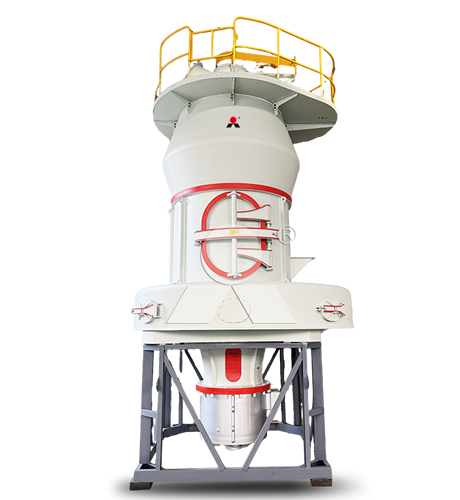
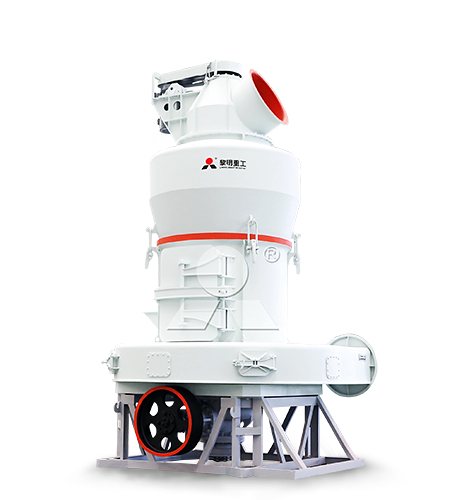
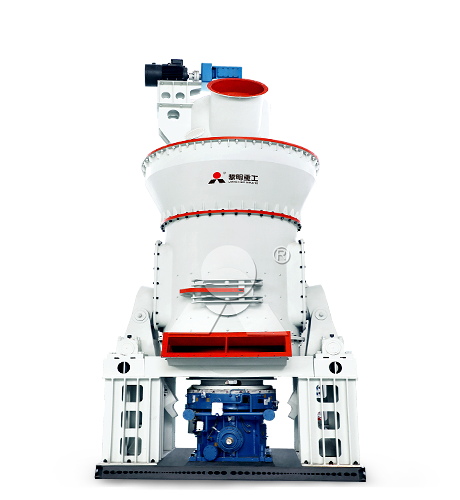
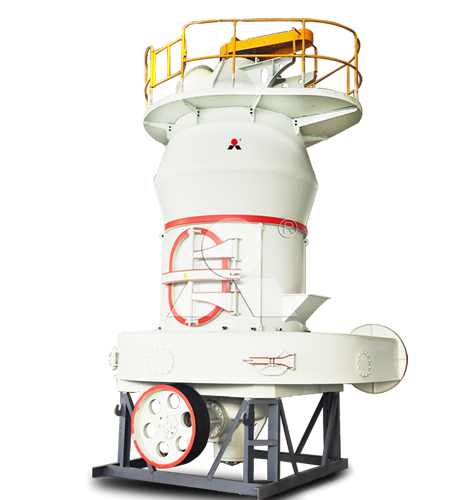
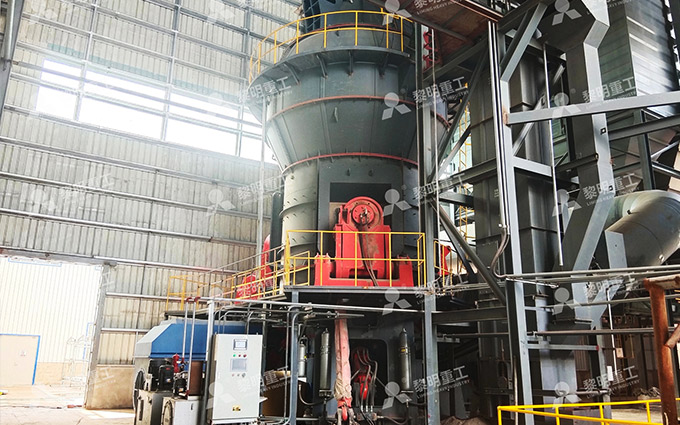
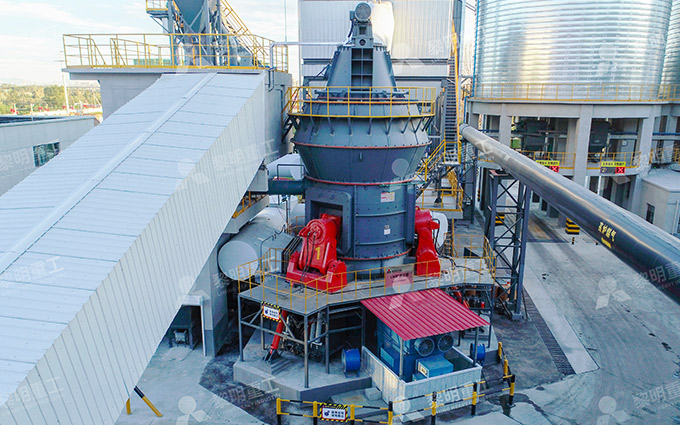
We are Liming Heavy Industry, a manufacturer of various types of industrial crushers, such as Raymond Mill, Trapezoidal Mill, Vertical Mill, Ultrafine Mill, Ball Mill, etc.
Our mills can process the following minerals:
limestone, quicklime, kaolin, talc, barite, bentonite, calcium carbonate, dolomite, coal, gypsum, clay, carbon black, slag, cement raw materials, cement clinker, etc.
If you need a mill to process stone or minerals into powder, please feel free to contact me (WhatsApp: +8615333807511). Thank you.
Ground calcium carbonate (GCC) is used as a paper filler to improve brightness, opacity, whiteness, and printability while partially replacing more expensive cellulose fiber. A suitable paper-filler GCC is usually a high-brightness, low-grit calcite slurry with controlled particle-size distribution, stable rheology, and proven compatibility with the mill’s retention and wet-end chemistry.
The right GCC filler must balance optical gains against sheet strength and machine performance. Higher filler loading can reduce fiber cost and improve opacity, but it can also reduce fiber-to-fiber bonding, retention, and tensile or tear strength if the particle size, filler level, and retention system are not optimized.
What GCC Does in Paper
GCC is a natural calcium carbonate pigment made by grinding calcite-rich limestone, marble, or chalk. In filler use, it is added to the fiber furnish before sheet formation. It becomes distributed within the paper web rather than remaining only on the surface.
| Paper property | How GCC filler contributes |
|---|---|
| Brightness and whiteness | High-brightness calcite can improve the visual lightness and whiteness of the sheet |
| Opacity | GCC particles scatter light and can reduce show-through |
| Printability | Fine filler can improve sheet uniformity and support ink interaction |
| Cost efficiency | Filler can replace part of the more expensive fiber fraction |
| Surface properties | Particle size and loading influence smoothness, porosity, and coating response |
| Sheet structure | GCC changes fiber–filler packing, bulk, drainage, and bonding behavior |
High-brightness GCC is used in paper as both a filler and coating pigment because it can improve opacity, printability, and brightness while reducing dependence on pulp fiber.
Key GCC Requirements
Paper-filler GCC should be selected for its performance in the mill—not only by CaCO3 content or price per tonne. The key requirements are optical quality, fine-particle control, low grit, and wet-end compatibility.
| Parameter | Why it matters for filler GCC |
|---|---|
| Brightness and whiteness | Directly influence sheet appearance, shade, and optical performance |
| Particle-size distribution | Affects light scattering, retention, opacity, strength balance, and surface quality |
| D50 and D97 | Define median size and coarse tail; low coarse residue reduces grit and defects |
| Grit and coarse particles | Can cause scratches, holes, coating defects, or abrasion in process equipment |
| CaCO3 purity | Supports consistent optical properties and reduces non-carbonate contamination |
| SiO2 and acid-insoluble residue | Controls quartz, chert, clay, and hard-particle contamination |
| Fe2O3 and color | Iron contamination can reduce brightness and introduce unwanted shade variation |
| Slurry solids and viscosity | Control pumping, storage, metering, and wet-end addition consistency |
| Sedimentation stability | Prevents separation during transport and storage |
A representative fine GCC used in paper-related coating research had D50 of 2.8 µm, D98 of 13 µm, 37.1% below 2 µm, and high CIELAB brightness. These figures are an example of a fine paper pigment—not a universal filler-GCC specification.
Particle Size and Retention
Particle-size distribution is central to GCC filler performance. Fine particles can provide strong light scattering and smooth sheet structure, but excessively fine GCC may be more difficult to retain in the web and can increase demand on the retention system. Coarser particles may retain more easily but can reduce smoothness or optical efficiency.
| GCC characteristic | Potential advantage | Potential trade-off |
|---|---|---|
| Finer D50 | Can improve optical performance and sheet smoothness | May increase slurry viscosity and retention-system demand |
| Low D97 | Reduces grit and surface defects | Requires more precise grinding and classification |
| Narrow PSD | Provides more consistent filler behavior | May not always give the best packing or cost balance |
| Broader PSD | Can improve packing in some sheet structures | Excess coarse tail can reduce smoothness and increase defect risk |
| Modified GCC | May improve retention or strength in selected systems | Requires compatibility testing with the mill chemistry |
Research has found that GCC particle size can significantly affect paper physical strength, including the strength response of modified GCC fillers. For mill operation, the correct grade is therefore the one that provides the target ash content and optical properties while preserving acceptable retention, drainage, and sheet strength.
Filler Loading Trade-Offs
Increasing GCC filler loading can reduce fiber cost and improve optical properties, but it usually reduces the number of direct fiber-to-fiber bonds in the sheet. This makes retention and strength chemistry important.
| Higher GCC loading may improve | Higher GCC loading may reduce or complicate |
|---|---|
| Brightness and opacity | Tensile and tear strength |
| Cost efficiency through fiber replacement | Internal bond and surface strength |
| Printability in suitable paper grades | Retention and white-water control |
| Sheet uniformity in optimized systems | Drainage, drying energy, and machine runnability |
Paper-industry data note that tensile and tear strength decline as calcium carbonate filler loading rises, for both GCC and PCC. A filler strategy should therefore be developed together with retention aids, strength additives, starch, fiber refining, and paper-machine operating conditions.
GCC Slurry for Paper Furnish
GCC is commonly delivered to paper mills as a slurry. Slurry delivery can reduce dust handling and make automated addition easier, but the slurry must remain stable from supplier tank to mill dosing point.
| Slurry property | Importance in paper filler use |
|---|---|
| Solids content | Controls pumping, storage volume, transport efficiency, and addition rate |
| Viscosity | Affects pipe flow, metering accuracy, mixing, and storage-tank agitation |
| pH and conductivity | Need to fit the wet-end chemistry and retention program |
| Particle-size stability | Prevents unexpected changes in retention, optical properties, or grit |
| Sedimentation resistance | Reduces settling during storage or tanker transport |
| Microbial stability | Important for storage systems where contamination or odor must be controlled |
A change in slurry viscosity or solids content can affect filler addition even if the dry calcium carbonate chemistry is unchanged. Paper mills should therefore approve both dry-powder specifications and delivered-slurry performance.
How to Select GCC Filler
Paper producers should qualify GCC through laboratory and machine trials. The goal is not simply the highest possible ash content; it is stable paper quality at the desired operating cost.
Define the paper grade, target ash content, brightness, opacity, basis weight, strength, and printability requirements.
Specify GCC brightness, color, D10, D50, D97, grit, slurry solids, viscosity, purity, and moisture or pH requirements.
Test retention, drainage, filler distribution, white-water ash, and deposit tendency with the mill’s actual chemistry.
Measure tensile strength, tear strength, internal bond, stiffness, porosity, smoothness, brightness, opacity, and print response.
Evaluate the impact on fiber cost, retention-aid demand, starch or strength-additive demand, drying, and waste-water solids.
Run controlled paper-machine trials before changing supplier, particle-size grade, slurry solids, or target filler loading.
Trials should be conducted with the complete furnish and wet-end system. A GCC grade that performs well in a laboratory handsheet may behave differently under machine shear, retention chemistry, white-water recirculation, and production-speed conditions.
Key Takeaway
GCC for paper filler is a high-brightness, fine natural calcium carbonate used to improve optical properties and reduce fiber cost. The best grade balances particle-size distribution, brightness, low grit, slurry stability, retention, drainage, and paper strength.
For successful paper-machine use, specify and test more than CaCO3 purity. Focus on D50, D97, brightness, grit, slurry solids, viscosity, retention behavior, ash distribution, and the strength–optics trade-off at the target filler loading. That is how GCC becomes a stable paper filler rather than simply a mineral added to the furnish.