Calcium Carbonate Knowledge Hub
GCC for Paper Coating
2026-09-04 16:48:41
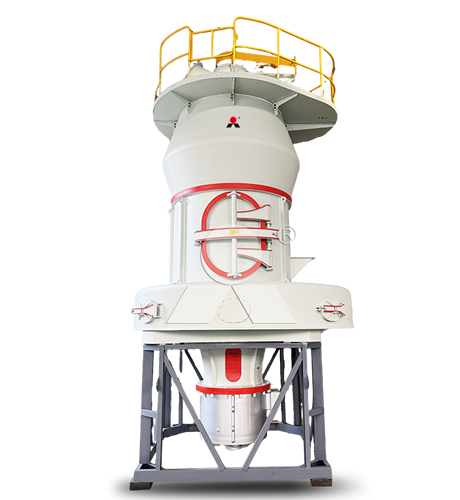
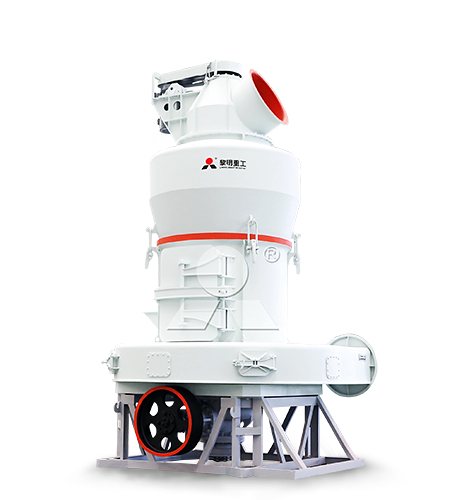
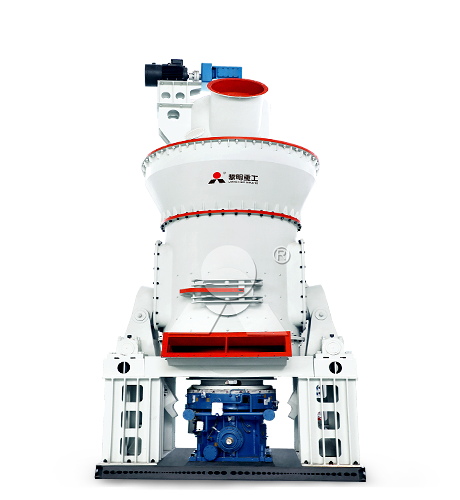
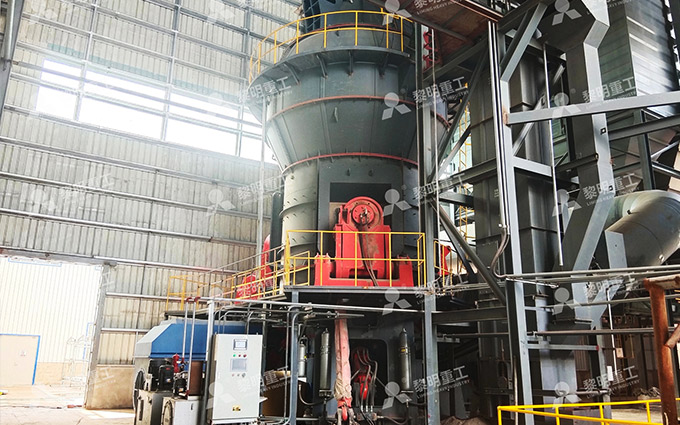
We are Liming Heavy Industry, a manufacturer of various types of industrial crushers, such as Raymond Mill, Trapezoidal Mill, Vertical Mill, Ultrafine Mill, Ball Mill, etc.
Our mills can process the following minerals:
limestone, quicklime, kaolin, talc, barite, bentonite, calcium carbonate, dolomite, coal, gypsum, clay, carbon black, slag, cement raw materials, cement clinker, etc.
If you need a mill to process stone or minerals into powder, please feel free to contact me (WhatsApp: +8615333807511). Thank you.
Ground calcium carbonate (GCC) is used in paper coating as a fine mineral pigment that improves surface smoothness, brightness, opacity, printability, and coating cost efficiency. It is supplied mainly as a high-solids slurry and mixed with binders, dispersants, rheology modifiers, and other pigments before being applied to paper or board.
For coating, the most important GCC controls are particle-size distribution, coarse residue, brightness, slurry rheology, and compatibility with the coating-color formulation. Finer GCC can support smoother surfaces and higher gloss, while coarser GCC can reduce slurry viscosity and cost but may increase roughness and reduce gloss. Research on coated paperboard found that surface roughness increased and gloss decreased as GCC particle size increased.
What GCC Does in Coating
Paper coating is a surface layer applied after the base sheet is formed. GCC particles fill and cover surface irregularities, helping create a more uniform printable layer. The pigment works with binder and additives; it is not selected in isolation.
| Coating property | How GCC contributes |
|---|---|
| Surface smoothness | Fine GCC can fill surface valleys and reduce roughness of the coated sheet |
| Brightness and whiteness | High-brightness GCC contributes to the optical appearance of the coating layer |
| Opacity and light scattering | Particle size, distribution, and packing influence how the coating scatters light |
| Gloss | Fine, well-dispersed pigment can support a smoother surface and better gloss development |
| Printability | Coating structure affects ink holdout, ink setting, print gloss, and image quality |
| Cost efficiency | GCC can partially replace other coating pigments, subject to quality and process limits |
GCC is used as a primary coating pigment in coated paper grades such as lightweight coated, medium-weight coated, and art paper, where it is selected to provide surface smoothness and a balanced ink-absorption profile.
Particle Size Is the Main Control
GCC particle size and particle-size distribution determine the coating’s structure. A fine pigment usually creates a smoother coating surface, while a broader or coarser distribution can increase roughness and reduce gloss. However, finer GCC also has higher surface area and can increase binder demand and slurry viscosity.
| GCC PSD characteristic | Potential coating benefit | Potential trade-off |
|---|---|---|
| Lower D50 | Smoother surface and stronger gloss potential | Higher surface area, higher binder demand, and higher viscosity risk |
| Low D97 | Lower grit, fewer coating defects, and improved print surface | Requires more precise grinding and classification |
| Narrow PSD | More uniform coating structure and predictable rheology | May not provide the same packing behavior as a broader blend |
| Broader PSD | Can improve pigment packing and influence pore structure | Excessive coarse particles can increase roughness and reduce gloss |
| Higher coarse fraction | May lower slurry viscosity in some formulations | Can reduce smoothness, gloss, and print quality |
Published coating work reports that pigment PSD has an important effect on gloss and that finer GCC can achieve coated gloss comparable to clay coatings when ground to suitable fineness.
For general paper-furnish filler use, fine GCC around 3–8 µm is often preferred, while coating-grade selection must be set by the desired coating thickness, gloss, brightness, print process, and rheology.
GCC Slurry Requirements
Paper-coating GCC is typically supplied as a dispersed aqueous slurry. The slurry must remain stable in transport, storage, coating-color preparation, pumping, and high-shear application. A dry powder may have the correct chemistry and PSD but still fail as a coating pigment if its slurry rheology is unstable.
| Slurry property | Why it matters in paper coating |
|---|---|
| Solids content | Affects transport efficiency, coating solids, drying load, and formulation design |
| Viscosity | Controls pumping, mixing, blade or rod coating behavior, and leveling |
| Particle-size distribution | Influences surface roughness, gloss, coating coverage, and printability |
| Coarse residue and grit | Protects coating blades and avoids streaks, scratches, and sheet defects |
| Brightness and color | Contribute to paper shade, whiteness, and optical performance |
| Dispersant compatibility | Helps keep particles separated and viscosity stable at working solids |
| Sedimentation stability | Prevents solids separation in tanks, pipelines, and tank trucks |
| pH and conductivity | Must fit the binder and additive system used in the coating color |
GCC and Coating Color
GCC is only one part of the coating color. Its performance depends on interactions with latex or starch binders, dispersants, thickeners, optical brighteners, co-pigments, lubricants, defoamers, and the base paper.
A change in GCC particle size can change coating-color viscosity, water retention, immobilization, pore structure, coating coverage, and drying response. The coating supplier and paper mill should therefore evaluate GCC in the complete formulation, at actual solids content and under the intended application conditions.
| Coating-color component | Relationship with GCC |
|---|---|
| Binder | Fine GCC surface area affects binder demand and coating strength |
| Dispersant | Helps maintain slurry stability and workable viscosity at high solids |
| Thickener or rheology modifier | May need adjustment when GCC PSD or surface area changes |
| Co-pigment, such as clay or PCC | Can be blended with GCC to balance gloss, opacity, rheology, and cost |
| Optical brightener | Must be evaluated with GCC brightness and paper shade targets |
| Base paper | Surface roughness, porosity, and absorbency influence how GCC coating develops |
Brightness contribution from calcium carbonate depends on both mineral impurities and the particle-size distribution of the carbonate pigment.
GCC vs PCC in Coating
Both GCC and PCC can be used in paper coating. GCC is valued for its natural origin, broad availability, and cost-performance balance. PCC offers more controlled particle morphology and can provide different optical and rheological behavior.
| Factor | GCC | PCC |
|---|---|---|
| Particle origin | Mechanically ground natural calcite | Chemically precipitated calcium carbonate crystals |
| Particle shape | Irregular and fractured | More controlled crystal morphology |
| PSD profile | Can be broad or narrow depending on grinding and classification | Can be engineered through precipitation and finishing conditions |
| Coating use | Widely used as primary or blended coating pigment | Used where morphology and specialized optical or structural properties are needed |
| Selection focus | Brightness, PSD, grit, rheology, cost, and coating performance | Morphology, particle size, light scattering, rheology, and compatibility with the pigment blend |
GCC is often characterized by a broader PSD than PCC, while PCC may have a narrower distribution because of its controlled precipitation route. In practice, many paper coatings use pigment blends, and the right balance is determined through coating trials rather than material category alone.
How to Select GCC for Coating
Choose paper-coating GCC by starting with the required paper grade and print performance, then matching pigment properties to the coating formulation and application equipment.
Define the target paper or board grade: brightness, opacity, gloss, smoothness, print process, coating weight, and surface-strength requirements.
Specify GCC brightness, color, D10, D50, D97, coarse residue, grit, purity, and slurry solids.
Test coating-color viscosity, high-shear rheology, water retention, sedimentation, and storage stability at intended solids.
Evaluate application performance on the actual blade, rod, air knife, curtain, or other coating equipment.
Measure coated-sheet roughness, gloss, brightness, opacity, porosity, print gloss, ink set, mottle, picking, and coating strength.
Compare total coating cost, including pigment cost, binder demand, dispersant requirement, solids level, drying energy, and runnability.
A finer GCC may appear attractive because it can improve smoothness and gloss, but it may require more binder or create a viscosity penalty. A coarser pigment may reduce cost and improve coating-color flow, but it can sacrifice gloss or print quality. The optimum is usually a formulation balance rather than a single “best” GCC grade.
Key Specifications
| Specification | Why it matters for paper coating |
|---|---|
| D10, D50, D90, D97 | Defines pigment fineness, packing behavior, and the coarse tail that can affect roughness |
| Coarse residue and grit | Protects coating equipment and avoids streaks, scratches, and print defects |
| Brightness, whiteness, and Lab* | Contribute to optical targets and shade control |
| Slurry solids and viscosity | Control transport, coating-color preparation, pumpability, and coating behavior |
| Rheology under shear | Important for blade coating, leveling, metering, and high-speed runnability |
| CaCO3 purity and acid-insoluble residue | Control pigment cleanliness, abrasion, and consistency |
| Oil absorption or binder demand | Helps predict the formulation effect of pigment surface area |
| Application trial data | Confirms real performance in the full coating color and paper-machine process |
Key Takeaway
GCC for paper coating is a fine, high-brightness calcium carbonate pigment that improves smoothness, brightness, opacity, printability, and coating economics. Its most important controls are particle-size distribution, low coarse residue, brightness, slurry rheology, and compatibility with the binder and base paper.
Finer GCC can improve surface smoothness and gloss, but it also increases surface area and may raise binder demand and viscosity. Select the grade through coating-color and machine trials, using D50, D97, grit, brightness, solids, rheology, and final print performance—not a generic “paper coating grade” label.