Calcium Carbonate Knowledge Hub
Calcium Carbonate for PVC
2026-09-04 16:52:07
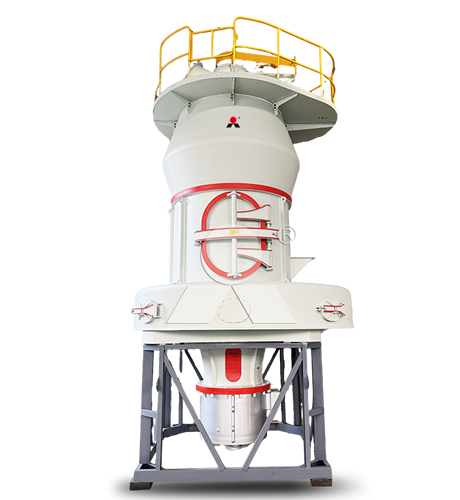
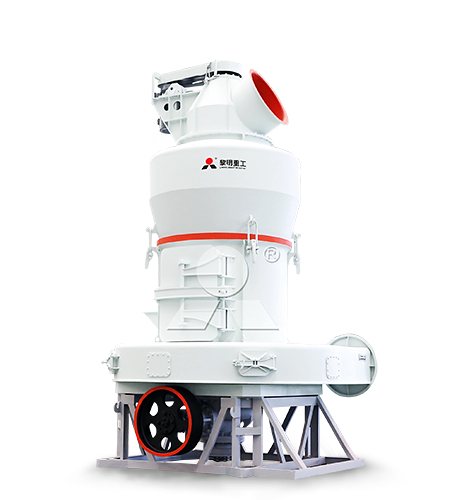
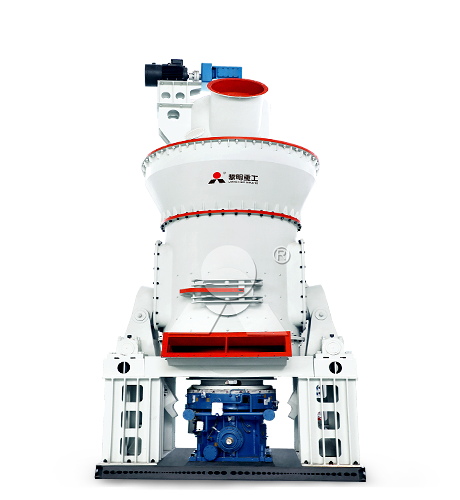
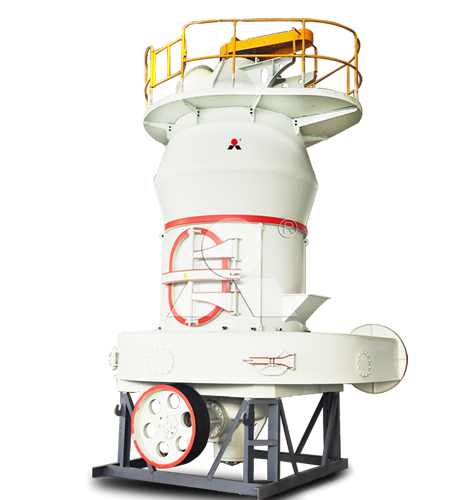
We are Liming Heavy Industry, a manufacturer of various types of industrial crushers, such as Raymond Mill, Trapezoidal Mill, Vertical Mill, Ultrafine Mill, Ball Mill, etc.
Our mills can process the following minerals:
limestone, quicklime, kaolin, talc, barite, bentonite, calcium carbonate, dolomite, coal, gypsum, clay, carbon black, slag, cement raw materials, cement clinker, etc.
If you need a mill to process stone or minerals into powder, please feel free to contact me (WhatsApp: +8615333807511). Thank you.
Calcium carbonate is a major filler in rigid and flexible PVC. Fine GCC can reduce compound cost while helping control stiffness, dimensional stability, extrusion behavior, surface finish, and shrinkage. For many PVC compounds, stearic-acid-coated GCC is preferred because it disperses more effectively and contributes lubrication at the mineral–PVC interface.
The correct grade depends on the PVC product. Pipe and profile typically require high whiteness, low moisture, controlled particle size, low coarse residue, and stable coating quality. Cable, flooring, film, and flexible PVC have different requirements for particle size, oil absorption, plasticizer demand, and mechanical balance. Research on rigid PVC confirms that calcium carbonate particle size and coating condition affect PVC fusion and final extruded-product properties.
Why PVC Uses Calcium Carbonate
Calcium carbonate is added to PVC to manage both economics and compound behavior. It is not simply a low-cost extender: its particle size, surface area, surface treatment, and loading level influence fusion, torque, gelation, rheology, stiffness, impact strength, and surface appearance.
| Potential benefit | How calcium carbonate contributes in PVC |
|---|---|
| Cost control | Partially replaces PVC resin in suitable formulations |
| Rigidity | Can increase modulus and stiffness in rigid PVC products |
| Dimensional stability | Can reduce shrinkage and help control shape after extrusion or molding |
| Surface quality | Fine, low-grit GCC can support smoother pipe, profile, sheet, and molded surfaces |
| Processing balance | Surface-treated filler can influence dry blending, fusion, torque, and melt flow |
| Whiteness and opacity | High-brightness GCC supports white and light-colored PVC compounds |
Calcium carbonate is widely used in PVC pipe, profiles, and sheets because it can improve rigidity and dimensional stability. These benefits depend on particle-size distribution, purity, whiteness, moisture, surface treatment, and compatibility with the complete additive package.
GCC Grade for PVC
Most high-volume PVC compounds use GCC derived from calcite-rich limestone, marble, or calcite. The raw material should have high CaCO3, low MgO, low silica, low iron, high whiteness, low moisture, and low coarse residue.
| Property | Why it matters in PVC |
|---|---|
| D50 and D97 | Control dispersion, surface smoothness, coarse-particle defects, and mechanical consistency |
| Coarse residue | Limits scratches, bumps, weak points, and visible defects in pipe, profile, sheet, or film |
| Whiteness and brightness | Important for white profiles, pipes, siding, and light-colored products |
| CaCO3 and MgO | Confirms high-calcium calcitic quality and controls dolomite-related variation |
| SiO2 and acid-insoluble residue | Controls hard particles, abrasion, grit, and surface-defect risk |
| Moisture | High moisture can affect dry blending, fusion, powder flow, and finished-product quality |
| Surface treatment | Influences filler dispersion, fusion, torque, lubrication, and polymer compatibility |
Particle Size for PVC
Finer calcium carbonate generally gives better surface quality and lower stress concentration risk, but it also has higher surface area and can increase coating demand, compound viscosity, and cost. A very fine grade may be difficult to disperse if it is poorly coated or agglomerated.
| GCC size direction | Typical PVC use | Key consideration |
|---|---|---|
| Coarser GCC | Lower-cost, thick-wall, or less appearance-sensitive products | Lower cost but higher risk of roughness and poor dispersion |
| Medium-fine GCC | General rigid PVC pipe, fittings, profiles, and sheet | Balance of cost, stiffness, processability, and surface quality |
| Fine GCC | Higher-quality profile, cable compounds, masterbatch, finer sheet and film products | Lower coarse tail, better surface finish, and stronger dispersion requirements |
| Ultrafine GCC or PCC | Specialty PVC applications with demanding surface or mechanical targets | Higher surface area, more sensitive coating and compounding control |
Smaller calcium carbonate particles can improve mechanical resistance in PVC-related systems, but overly fine particles that agglomerate can act as stress concentrators and reduce toughness.
Why Coated GCC Is Common
GCC has a polar mineral surface, while PVC is an organic polymer system. Stearic-acid treatment is widely used to improve the filler’s surface behavior, reduce moisture sensitivity, and support dispersion during dry blending and compounding.
| Feature | Uncoated GCC | Stearic-acid-coated GCC |
|---|---|---|
| Surface character | More hydrophilic and polar | More hydrophobic and less polar |
| Dispersion in PVC | Can be more difficult, especially at high filler loading | Usually improved when treatment and mixing are controlled |
| Processing effect | May increase friction or require more careful dry-blend control | Can contribute to lubrication and more stable processing behavior |
| Moisture sensitivity | Higher surface water affinity | Lower affinity when coating is effective |
| Key quality test | PSD, moisture, purity, whiteness | Activation rate, coating level, hydrophobicity, and compound performance |
GCC is commonly treated with stearic acid for PVC. The treatment can form a calcium stearate-like surface layer that improves lubrication and influences frictional heat between PVC particles and filler during processing.
Calcium Carbonate by PVC Product
| PVC application | Role of calcium carbonate | Priority controls |
|---|---|---|
| Rigid PVC pipe | Cost control, stiffness, dimensional stability, and extrusion consistency | Whiteness, low moisture, medium-fine PSD, coating, extrusion torque, impact balance |
| PVC fittings | Filler for stiffness and formulation economy in molded products | Dispersion, particle size, impact strength, mold flow, shrinkage, color |
| Window and door profile | Fine filler supporting surface appearance and dimensional control | Low D97, whiteness, coating, weathering package compatibility, extrusion performance |
| PVC sheet and panel | Filler affecting stiffness, opacity, surface quality, and cost | Fine PSD, low coarse residue, moisture, coating, surface smoothness |
| Wire and cable compound | Fine filler for controlled compound cost and processing | Low moisture, coating, PSD, electrical requirements, compound homogeneity |
| Flexible PVC | Filler influencing cost, hardness, plasticizer demand, and rheology | Surface area, oil absorption, coating, particle size, DOP or plasticizer compatibility |
| PVC flooring and vinyl products | Filler for volume, stiffness, opacity, and formulation balance | Particle size, whiteness, surface treatment, durability, processing and visual quality |
Filler Loading Trade-Offs
Higher GCC loading can lower compound cost and increase stiffness, but it can also reduce impact resistance, elongation, tensile strength, or fusion stability if the formulation is not optimized. PVC producers should evaluate filler loading in combination with resin K-value, stabilizers, lubricants, impact modifiers, processing aids, plasticizers, and extrusion conditions.
| Increasing CaCO3 loading may improve | Increasing CaCO3 loading may challenge |
|---|---|
| Compound cost efficiency | Impact strength and elongation |
| Stiffness and modulus | Fusion and gelation control |
| Dimensional stability | Extrusion torque and melt-flow balance |
| Opacity in suitable formulations | Surface quality if dispersion or coarse residue is poor |
| Potential shrinkage control | Weathering, impact, and mechanical property targets if filler is excessive |
Do not optimize only for cost per kilogram. Compare the complete result: extruder output, energy, reject rate, impact performance, surface appearance, part weight, stability, and total cost per finished pipe, profile, fitting, cable, or sheet.
How to Select GCC for PVC
Define the PVC product and process: pipe extrusion, profile extrusion, injection molding, cable compounding, sheet, film, flooring, or flexible PVC.
Set the required balance among cost, stiffness, impact, whiteness, surface quality, weathering, and processing speed.
Select particle size based on appearance and mechanical requirements; tighter D97 is more important as surface-quality demands increase.
Choose uncoated or coated GCC according to the PVC formulation and desired processing behavior; coated grades are common in many high-filler compounds.
Specify CaCO3, MgO, SiO2, Fe2O3, whiteness, moisture, D10, D50, D97, bulk density, and coating activation where applicable.
Run compound trials measuring dry-blend behavior, fusion time, torque, melt pressure, extrusion output, surface finish, impact, tensile properties, color, and dimensional stability.
Key Specifications
| Specification | Why it matters for PVC |
|---|---|
| D10, D50, D97 | Control dispersion, smoothness, coarse-particle defects, and mechanical consistency |
| CaCO3, CaO, MgO | Confirm high-calcium calcitic quality and control dolomite-related variation |
| SiO2, Fe2O3, acid-insoluble residue | Control grit, abrasive wear, dark specks, and color variation |
| Whiteness and Lab* values | Important for white pipe, profile, siding, and decorative PVC products |
| Moisture | Affects dry blending, storage, fusion, extrusion, and product quality |
| Specific surface area and oil absorption | Influence plasticizer demand, coating requirement, viscosity, and processing behavior |
| Bulk density and flowability | Influence feeding, handling, storage, and dosing consistency |
| Coating type, dosage, and activation rate | Critical for stearic-acid-treated GCC used in many PVC formulations |
| Compound trial performance | Confirms real fusion, torque, output, impact, tensile, surface, and dimensional results |
Key Takeaway
Calcium carbonate for PVC is typically a fine, high-whiteness GCC filler selected to reduce cost and tune stiffness, dimensional stability, extrusion performance, and surface quality. Particle size, coarse-tail control, moisture, purity, and surface treatment determine whether the filler performs well in the compound.
For many rigid and flexible PVC products, stearic-acid-coated GCC improves dispersion and processing behavior. But the optimal grade and loading must be proven in the complete formulation. Specify PSD, whiteness, chemical purity, moisture, coating activation, and final compound performance—not only mesh or CaCO3 percentage.