Calcium Carbonate Knowledge Hub
Calcium Carbonate Filler for Plastics
2026-09-04 16:51:30
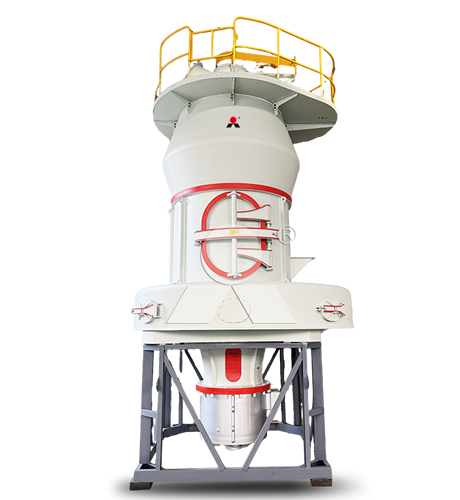
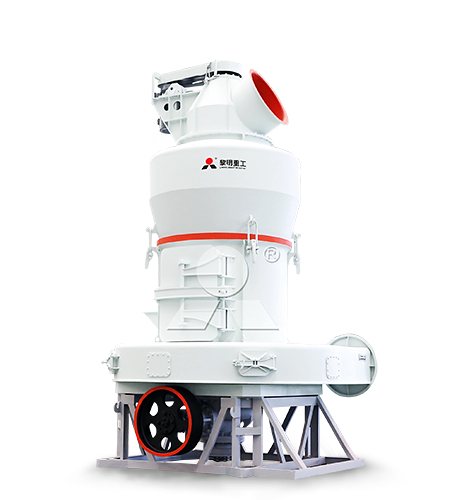
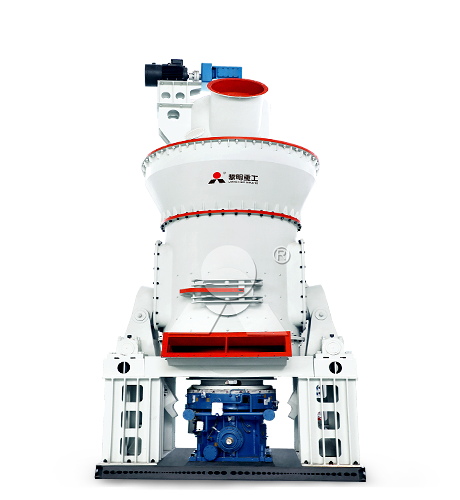
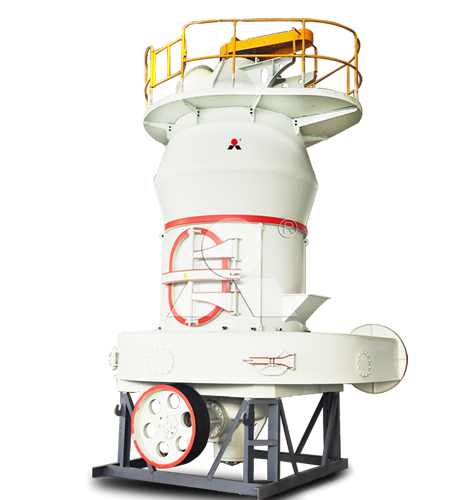
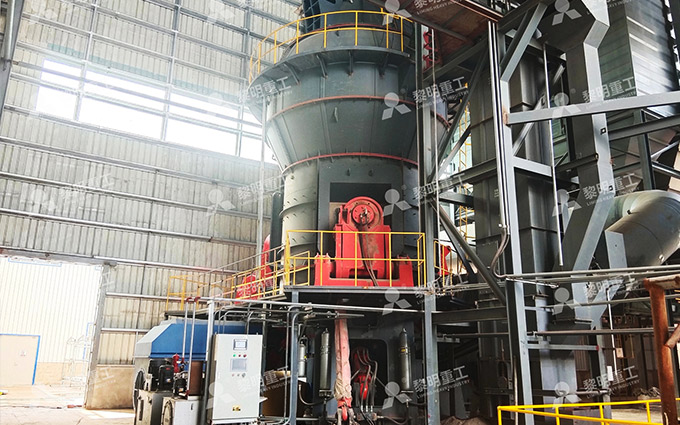
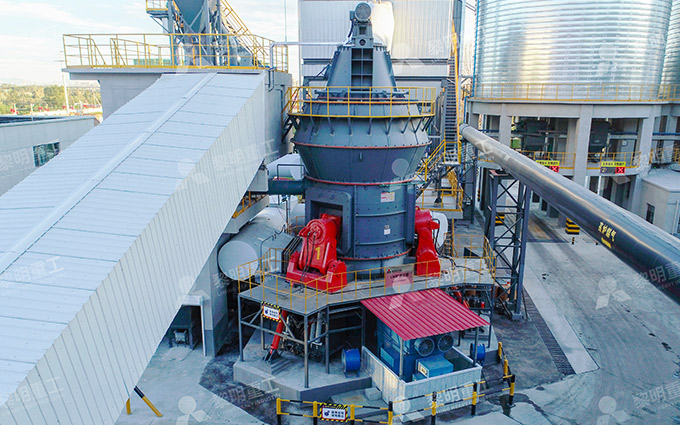
We are Liming Heavy Industry, a manufacturer of various types of industrial crushers, such as Raymond Mill, Trapezoidal Mill, Vertical Mill, Ultrafine Mill, Ball Mill, etc.
Our mills can process the following minerals:
limestone, quicklime, kaolin, talc, barite, bentonite, calcium carbonate, dolomite, coal, gypsum, clay, carbon black, slag, cement raw materials, cement clinker, etc.
If you need a mill to process stone or minerals into powder, please feel free to contact me (WhatsApp: +8615333807511). Thank you.
Calcium carbonate filler for plastics is usually fine ground calcium carbonate (GCC) added to polymer compounds to reduce cost and tune stiffness, shrinkage, dimensional stability, opacity, and processing behavior. It is widely used in PVC, PE, PP, filler masterbatch, cable compounds, sheet, film, injection-molded parts, and rubber-modified plastics.
A good filler grade is not defined only by CaCO3 purity. Its particle-size distribution, surface treatment, moisture, whiteness, coarse residue, and dispersion in the target polymer determine whether it improves the compound or creates defects. Natural GCC fillers are available in particle sizes from roughly 0.5 µm to more than 100 µm; fine grades dominate many plastic applications, while nano-PCC is used where much smaller engineered particles are required.
What Calcium Carbonate Does
Calcium carbonate is a functional mineral filler, not simply a low-cost resin replacement. Its rigid particles modify the polymer matrix. The actual result depends on the polymer, filler loading, particle size, surface chemistry, compounding quality, and finished-product geometry.
| Potential effect | How CaCO3 filler contributes |
|---|---|
| Lower formulation cost | Replaces part of the polymer resin in suitable compounds |
| Higher stiffness | Rigid mineral particles can increase modulus and hardness |
| Lower shrinkage | Filler can reduce the polymer fraction that contracts during cooling |
| Dimensional stability | Can improve consistency of extruded or molded parts |
| Opacity and whiteness | Bright calcite can support light-colored and opaque compounds |
| Process adjustment | Can change melt viscosity, cooling behavior, flow, and extrusion response |
| Surface finish | Fine, well-dispersed filler can support smoother finished surfaces |
Increasing calcium carbonate loading can raise composite modulus because CaCO3 is rigid, but the mechanical response depends strongly on particle size and surface treatment.
Choose the Right Grade
Plastic-grade calcium carbonate should be chosen from the polymer and performance target. Coarse material may suit thick-wall, low-cost products. Fine or ultrafine GCC is generally needed for smooth PVC profile, film, masterbatch, cable compounds, and high-quality molded products.
| Grade direction | Typical particle-size range | Suitable applications | Main requirement |
|---|---|---|---|
| Coarse GCC | Often above 10 µm | Thick-wall PVC, construction plastics, lower-cost compounds | Cost efficiency and acceptable processing |
| Medium-fine GCC | Often 3–10 µm | PVC pipe, profile, injection-molded parts, selected rubber compounds | Balance of cost, stiffness, dispersion, and surface quality |
| Fine GCC | Often 1–3 µm | Masterbatch, film, cable, fine PVC, smooth sheet products | Low coarse residue and good dispersion |
| Ultrafine GCC or PCC | Below about 1–2 µm | Specialty compounds and high-performance applications | Fine surface control and application-specific functional performance |
Particle-size distribution matters as much as the median size. A broad PSD with oversized particles or excessive ultrafines can create uneven dispersion, inconsistent flexural properties, agglomeration, and brittleness.
Coated vs Uncoated Filler
Most GCC used in PE, PP, masterbatch, cable compounds, and many PVC formulations is surface-treated, often with stearic acid. The coating makes the mineral surface more hydrophobic and improves compatibility with non-polar polymer matrices.
| Feature | Uncoated GCC | Coated GCC |
|---|---|---|
| Surface character | More polar and hydrophilic | More hydrophobic and polymer-compatible |
| Typical use | Construction materials, some PVC, aqueous or mineral systems | PE, PP, masterbatch, cable compounds, rubber, sealants, and many PVC grades |
| Dispersion in PE and PP | Higher agglomeration risk | Usually improved if coating and compounding are controlled |
| Key test | Moisture, PSD, purity, whiteness | Activation rate, coating level, hydrophobicity, and compound dispersion |
Research on PVC composites found that surface modification of GCC improved filler dispersion in the PVC matrix. This does not mean coating automatically improves every mechanical property; loading level, particle size, and the full additive package still determine the outcome.
Applications
| Plastic application | Filler role | Priority controls |
|---|---|---|
| Rigid PVC pipe and fittings | Cost, stiffness, shrinkage control, and compound consistency | Whiteness, low moisture, PSD, coating, extrusion performance |
| PVC profile and siding | Fine filler for surface quality and dimensional control | Low coarse tail, color, coating, weathering-formulation compatibility |
| PE and PP masterbatch | High-loading filler concentrate for economical resin dilution | Fine coated GCC, low moisture, bulk density, melt flow, dispersion |
| Film and sheet | Filler for selected stiffness, opacity, and cost targets | Low D97, minimal agglomerates, good coating, surface appearance |
| Wire and cable | Fine filler for compound economics and controlled processing | Low moisture, fine PSD, coating, electrical-formulation requirements |
| Injection molding | Stiffness and shrinkage control in suitable PP and PE compounds | Dispersion, impact balance, mold flow, cycle behavior, color |
| Rubber-modified plastics | Hardness, density, rheology, and cost adjustment | Particle size, surface treatment, moisture, dispersion, mechanical tests |
Filler Masterbatch
Calcium carbonate filler masterbatch is a concentrate containing GCC dispersed in a carrier resin, typically PE or PP. It allows processors to dose mineral filler more consistently than adding loose powder directly at the final extruder or molding machine.
The masterbatch producer must ensure that GCC is dry, finely ground, surface-treated where required, and uniformly dispersed in the carrier. Poor dispersion at the masterbatch stage cannot be fully corrected by downstream extrusion.
| Masterbatch component | Role |
|---|---|
| Calcium carbonate | Provides the mineral filler loading and desired physical or economic effect |
| Carrier resin | Disperses the filler and ensures compatibility with the final polymer |
| Surface treatment | Improves wetting and reduces particle agglomeration in hydrophobic resin |
| Dispersing or processing additives | Help compounding, pellet quality, flow, and downstream processing |
Industry masterbatch guidance emphasizes that adequate surface treatment reduces particle surface energy and the tendency for agglomeration, especially in film-grade filled masterbatch.
Loading-Level Trade-Offs
More filler is not always better. Increasing calcium carbonate loading can improve cost, stiffness, and dimensional stability, but it can also reduce elongation, impact strength, and melt flow if the grade or dispersion is wrong.
| Higher filler loading may improve | Higher filler loading may challenge |
|---|---|
| Cost efficiency | Impact resistance |
| Stiffness and flexural modulus | Elongation at break |
| Dimensional stability and shrinkage control | Melt flow and extrusion torque |
| Opacity in suitable products | Surface quality if agglomerates or coarse particles are present |
| Potential resin savings | Density and part-weight targets |
Because calcium carbonate has higher density than most plastics, resin savings do not automatically translate to lower part weight. Formulators should compare cost per finished part, not only cost per kilogram of compound.
Specification Checklist
| Specification | Why it matters |
|---|---|
| D10, D50, D97 | Control dispersion, surface quality, coarse-particle defects, and consistency |
| CaCO3, CaO, MgO | Confirm high-calcium purity and calcitic versus dolomitic character |
| SiO2, Fe2O3, acid-insoluble residue | Control abrasion, grit, dark specks, and whiteness |
| Whiteness and color | Important for white PVC, natural masterbatch, film, and light-colored parts |
| Moisture | Controls storage, feeding, extrusion stability, and surface-treatment effectiveness |
| Specific surface area | Influences coating requirement, oil absorption, viscosity, and polymer interaction |
| Bulk density and flowability | Influence feeder accuracy, packaging, pneumatic transport, and silo discharge |
| Coating type and activation rate | Critical for coated grades used in PE, PP, PVC, cable, masterbatch, rubber, and sealants |
| Compound trial data | Confirms torque, melt flow, dispersion, shrinkage, mechanical properties, color, and surface quality |
Key Takeaway
Calcium carbonate filler helps plastic manufacturers reduce cost and tailor stiffness, shrinkage, dimensional stability, and surface appearance. For most PE, PP, masterbatch, cable, and many PVC applications, fine coated GCC is preferred because surface treatment improves dispersion in hydrophobic polymer systems.
Choose the grade by polymer and end use, not by mesh alone. Specify the full PSD, purity, moisture, whiteness, coarse residue, surface treatment, and compound performance. The best filler is the one that delivers the desired balance of cost, processing stability, surface quality, stiffness, impact performance, and shrinkage control in the finished plastic product.