Calcium Carbonate Knowledge Hub
Calcium Carbonate for Plastics
2026-09-04 16:50:42
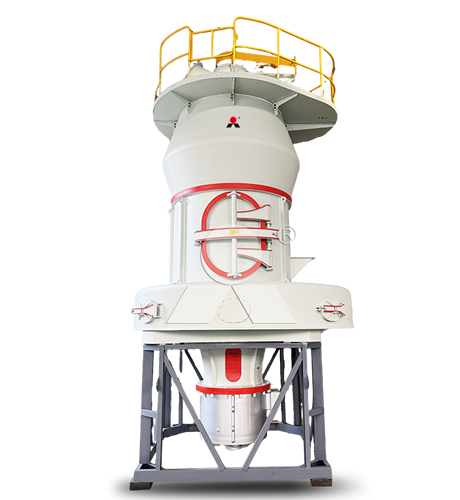
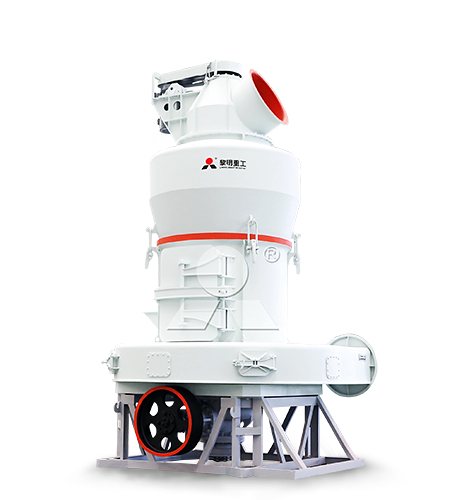
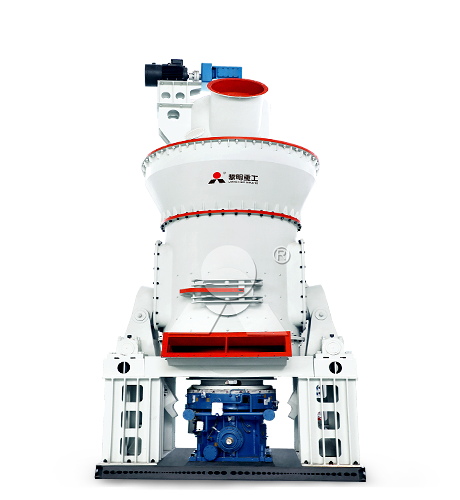
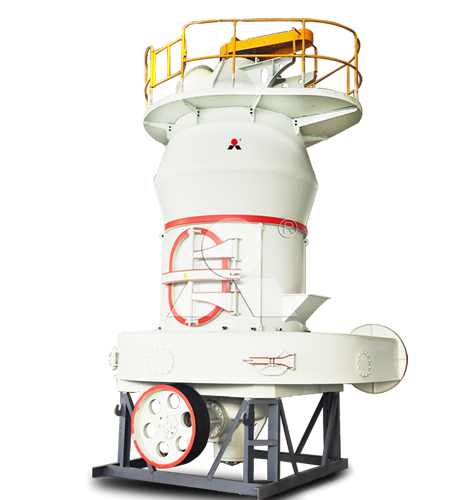
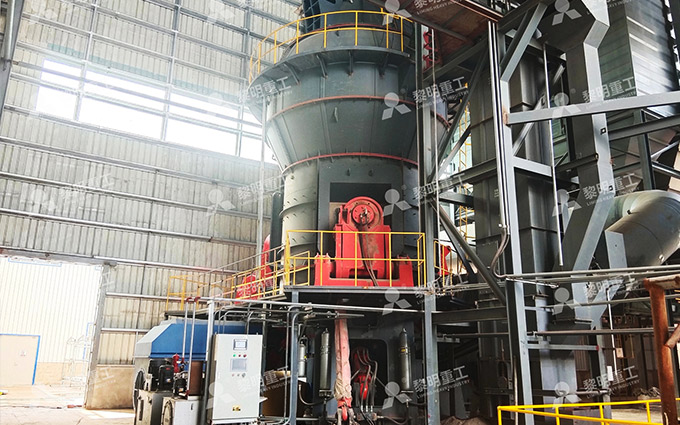
We are Liming Heavy Industry, a manufacturer of various types of industrial crushers, such as Raymond Mill, Trapezoidal Mill, Vertical Mill, Ultrafine Mill, Ball Mill, etc.
Our mills can process the following minerals:
limestone, quicklime, kaolin, talc, barite, bentonite, calcium carbonate, dolomite, coal, gypsum, clay, carbon black, slag, cement raw materials, cement clinker, etc.
If you need a mill to process stone or minerals into powder, please feel free to contact me (WhatsApp: +8615333807511). Thank you.
Calcium carbonate is one of the most widely used mineral fillers in plastics. Usually supplied as fine ground calcium carbonate (GCC), it can reduce formulation cost and modify stiffness, shrinkage, dimensional stability, opacity, surface finish, and processing behavior in PVC, polyethylene, polypropylene, masterbatch, rubber-modified plastics, and selected engineering compounds.
The correct calcium carbonate grade depends on the polymer and end product. Fine, stearic-acid-coated GCC is commonly selected for PE, PP, masterbatch, cable compounds, and many PVC formulations because the hydrophobic surface improves dispersion. Uncoated GCC is more suitable for some water-based, mineral-based, or application-specific systems. Good dispersion is critical: calcium carbonate particles naturally tend to agglomerate in polymer matrices if material selection, surface treatment, drying, and compounding are poorly controlled.
Why Plastics Use CaCO3
Calcium carbonate is added as a functional and economic filler. It does not simply replace resin; it changes the compound’s structure and processing behavior. The outcome depends on polymer type, particle size, surface treatment, loading, additive package, mixing energy, and finished-product geometry.
| Potential benefit | How calcium carbonate contributes |
|---|---|
| Cost control | Partially replaces higher-cost polymer resin in suitable formulations |
| Stiffness | Can increase modulus and rigidity, especially at higher filler loading |
| Dimensional stability | Can reduce shrinkage and improve shape stability after molding or extrusion |
| Opacity and whiteness | Bright calcium carbonate can support light-colored compounds and opacity-related performance |
| Surface finish | Fine, well-dispersed GCC can help create smoother surfaces in suitable products |
| Processing control | Can alter melt rheology, cooling behavior, and extrusion response |
| Formulation flexibility | Different particle sizes and surface treatments allow grades to be tailored for specific polymers |
Calcium carbonate is commonly used in plastics because it can improve hardness, opacity, and dimensional stability while reducing raw-material cost in PVC, PE, PP, and other polymer systems.
GCC vs PCC for Plastics
Both ground calcium carbonate and precipitated calcium carbonate can be used in plastics. GCC is the dominant choice for many high-volume compounds because it is widely available and cost-effective. PCC may be chosen when a formulation benefits from its controlled crystal morphology, fine particle size, or specialized surface properties.
| Factor | GCC | PCC |
|---|---|---|
| Origin | Natural calcite from limestone, marble, chalk, or calcite ore | Chemically precipitated calcium carbonate crystals |
| Particle shape | Irregular, fractured mineral particles | More controlled crystal morphology |
| Cost position | Often preferred for high-volume cost-sensitive applications | Often selected for specialty performance where morphology adds value |
| Typical plastics use | PVC pipe and profile, PE and PP masterbatch, cable compounds, sheet, film, injection molding | Specialty PVC, high-performance compounds, and formulations requiring controlled fine morphology |
| Key selection controls | PSD, brightness, moisture, coating, purity, dispersion, bulk density | Morphology, PSD, surface treatment, purity, dispersion, and mechanical-property response |
Particle Size for Plastic Compounds
Particle size affects surface finish, dispersion, stiffness, impact behavior, viscosity, and filler-loading potential. Coarse GCC may be suitable for thick-wall or cost-sensitive products, while finer grades are usually needed for thin films, smooth surfaces, high-quality PVC, and premium masterbatch.
| GCC size direction | Typical application use | Primary reason |
|---|---|---|
| Coarser grades, often above 10 µm | Some thick-wall PVC, construction products, low-cost compounds | Economical filler where surface and dispersion requirements are less demanding |
| Medium-fine grades, often 3–10 µm | PVC pipe and profile, selected injection-molded parts, rubber-modified plastics | Balance of cost, dispersion, stiffness, and surface quality |
| Fine grades, often 1–3 µm | PE and PP masterbatch, thin film, cable compounds, fine PVC, high-quality coatings | Lower coarse residue and smoother product appearance |
| Ultrafine grades below about 1–2 µm | Specialty polymer compounds and performance-focused applications | High surface area and fine dispersion where formulation economics justify the grade |
Industry guidance commonly places 1–3 µm calcium carbonate in thin-film applications and 3–10 µm material in thicker sections and profiles. These are starting points only; the final grade should be qualified in the actual compound.
Why Surface Treatment Matters
Uncoated calcium carbonate has a polar, hydrophilic surface. PE and PP are non-polar polymers, so untreated GCC can agglomerate or disperse poorly. Stearic acid is the most common coating agent because it makes the particle surface more hydrophobic and compatible with many polymer matrices.
| Feature | Uncoated GCC | Stearic-acid-coated GCC |
|---|---|---|
| Surface character | More polar and hydrophilic | More hydrophobic and less polar |
| Typical fit | Some water-based, mineral-based, or specific PVC and construction applications | PE, PP, masterbatch, cable compounds, rubber, PVC, sealants, adhesives |
| Dispersion in non-polar resin | May require higher mixing energy and show more agglomeration risk | Generally improved when treatment is uniform and moisture is controlled |
| Moisture sensitivity | Higher surface affinity for water | Lower water affinity when coating is effective |
| Key additional test | Moisture, PSD, purity, whiteness | Activation rate, hydrophobicity, coating level, and compound dispersion |
Stearic acid and coupling agents such as titanates or silanes may be used to improve polymer compatibility, reduce agglomeration, and improve mechanical performance in calcium-carbonate-filled plastic compounds.
Calcium Carbonate by Polymer
| Polymer or product | Typical calcium carbonate role | Priority grade controls |
|---|---|---|
| Rigid PVC pipe and fittings | Filler for cost, stiffness, dimensional stability, and formulation control | Whiteness, low moisture, PSD, coating condition, dispersion, extrusion performance |
| PVC profile and siding | Fine filler supporting surface appearance and compound economics | Low coarse residue, whiteness, D50, D97, coating, weathering formulation compatibility |
| PE and PP filler masterbatch | High-loading mineral filler concentrate used to lower compound cost | Fine coated GCC, moisture, bulk density, hydrophobicity, melt flow, dispersion |
| Film and sheet | Fine filler for selected opacity, stiffness, and processing targets | Fine PSD, low agglomerates, low coarse tail, coated surface, film quality |
| Wire and cable compounds | Filler for compound economics and processing control | Low moisture, fine PSD, coating, electrical and mechanical formulation requirements |
| Injection-molded PP and PE parts | Filler for stiffness, shrinkage control, and cost balance | Particle size, coating, dispersion, impact-property target, mold-flow response |
| Thermoplastic elastomers and rubber-modified plastics | Filler affecting hardness, rheology, density, and cost | PSD, surface treatment, moisture, compound compatibility, mechanical-property validation |
Loading Level Trade-Offs
Higher calcium carbonate loading can lower resin cost and increase stiffness, but excessive loading can reduce tensile strength, elongation, impact performance, or processability. The acceptable range depends on resin, filler grade, surface treatment, part geometry, and required end-use properties.
| Increasing CaCO3 loading may improve | Increasing CaCO3 loading may reduce or complicate |
|---|---|
| Formulation cost efficiency | Tensile strength and elongation at break |
| Stiffness and modulus | Impact resistance in some compounds |
| Dimensional stability and lower shrinkage | Melt flow and extrusion behavior if dispersion is poor |
| Opacity in suitable formulations | Surface quality if coarse particles or agglomerates are present |
| Potential cooling and cycle-time effects | Density and weight of the finished product |
Calcium carbonate can improve stiffness and processability at low cost, but its density and loading level must be managed in the final plastic design. Treat reported loading ranges as formulation starting points, not universal prescriptions.
How to Choose Plastic-Grade GCC
Select calcium carbonate from the polymer, part geometry, processing method, and required properties—not from mesh alone.
Define the resin system: PVC, PE, PP, EVA, TPO, rubber-modified compound, or another polymer.
Define the process: extrusion, pipe extrusion, blown film, cast film, injection molding, calendering, cable compounding, or masterbatch production.
Set the property targets: cost, stiffness, impact, elongation, shrinkage, surface finish, whiteness, opacity, electrical performance, or weathering.
Select particle size: use finer PSD and lower coarse residue as surface-quality requirements increase.
Choose coating condition: coated GCC is often preferred for PE, PP, masterbatch, cable, and other hydrophobic systems.
Specify purity, whiteness, MgO, silica, iron, moisture, bulk density, PSD, specific surface area, and activation rate where coated.
Run compound trials and measure torque, melt flow, pressure, dispersion, shrinkage, tensile properties, impact, elongation, color, and surface appearance.
Key Specifications
| Specification | Why it matters for plastics |
|---|---|
| D10, D50, D97 | Control dispersion, surface appearance, coarse-particle defects, and process consistency |
| CaCO3, CaO, and MgO | Confirm purity and high-calcium versus dolomitic material |
| SiO2, Fe2O3, acid-insoluble residue | Control abrasive contamination, dark specks, whiteness, and wear risk |
| Whiteness and color | Important for white PVC, natural masterbatch, films, and light-colored molded products |
| Moisture | Controls powder flow, storage, extrusion stability, and defect risk |
| Specific surface area | Influences coating demand, oil absorption, viscosity, and resin interaction |
| Bulk density and flowability | Affect feeding, masterbatch dosing, packing, and silo behavior |
| Coating type, dosage, and activation rate | Critical for coated GCC used in PE, PP, PVC, and other hydrophobic systems |
| Application trial results | Confirm performance in the actual resin, additive package, equipment, and product geometry |
Key Takeaway
Calcium carbonate for plastics is a high-volume mineral filler that can reduce cost and tune stiffness, shrinkage, opacity, surface finish, and processing behavior. Fine, coated GCC is especially important for PE, PP, masterbatch, cable compounds, and many PVC applications because dispersion determines whether the filler improves or harms the compound.
The right grade is application-specific. Select particle size, purity, whiteness, moisture, surface treatment, and loading level from the polymer and performance target. Then validate the choice in actual compounding trials, because cost savings, stiffness gains, surface quality, impact performance, and processability must be balanced in the finished plastic product.