Calcium Carbonate Knowledge Hub
How to Produce Paper Grade GCC
2026-09-04 16:50:01
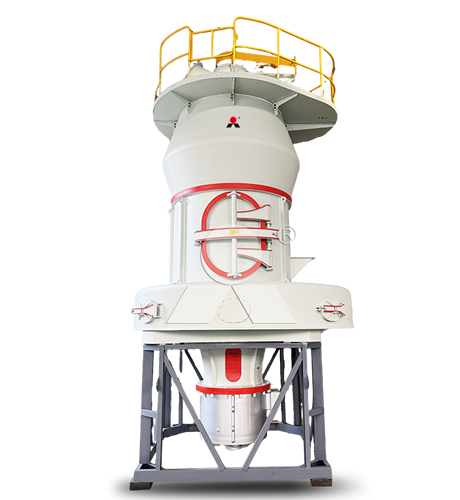
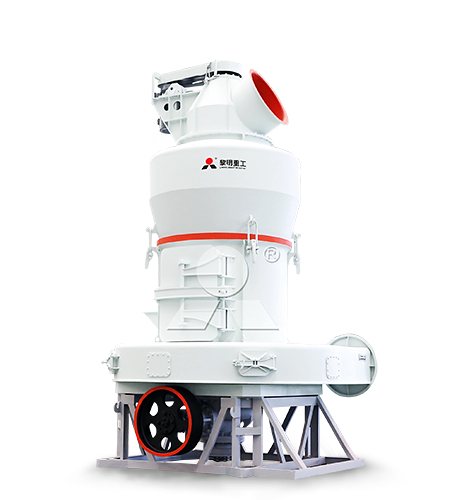
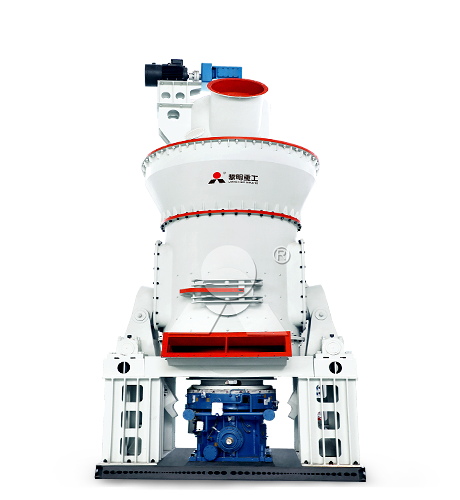
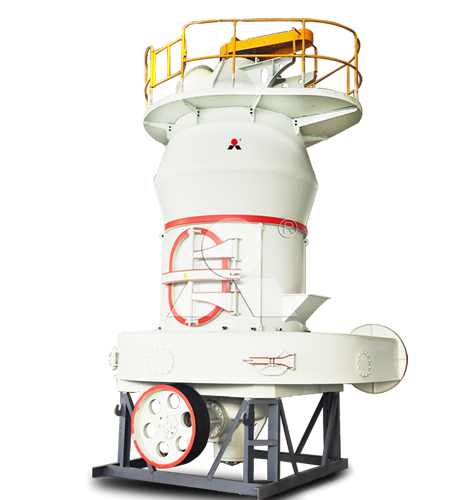
We are Liming Heavy Industry, a manufacturer of various types of industrial crushers, such as Raymond Mill, Trapezoidal Mill, Vertical Mill, Ultrafine Mill, Ball Mill, etc.
Our mills can process the following minerals:
limestone, quicklime, kaolin, talc, barite, bentonite, calcium carbonate, dolomite, coal, gypsum, clay, carbon black, slag, cement raw materials, cement clinker, etc.
If you need a mill to process stone or minerals into powder, please feel free to contact me (WhatsApp: +8615333807511). Thank you.
Paper-grade GCC is produced by converting a high-brightness, calcite-rich carbonate source into a low-grit, tightly controlled powder or slurry. The typical route is selective quarrying, impurity removal, crushing, wet or dry fine grinding, precise classification, slurry conditioning, and quality testing. For most paper fillers and coating pigments, wet grinding and slurry delivery are preferred because they support fine particle-size control and stable paper-machine dosing.
The main goal is not simply to make calcium carbonate smaller. Paper-grade GCC must meet optical, particle-size, rheology, and cleanliness requirements at the same time: high brightness, controlled D50 and D97, low coarse residue, low abrasion, stable slurry solids, and compatibility with the paper mill’s wet-end or coating-color chemistry. Mineral-processing guidance notes that optical sorting, flotation, and particle-size classification can improve GCC brightness and reduce abrasion.
Start With the Right Feed
Paper-grade GCC starts with high-quality limestone, marble, chalk, or calcite. The best sources are calcite-rich, bright, low in iron and silica, and consistent over the mineable reserve. A fine mill cannot remove color, quartz, chert, clay, or dark mineral inclusions once they are dispersed into the finished slurry.
| Raw-material requirement | Why it matters for paper-grade GCC |
|---|---|
| High CaCO3 content | Supports chemical purity and reduces non-carbonate residue |
| High brightness and whiteness | Directly affects paper shade, brightness, opacity, and coating appearance |
| Low Fe2O3 and dark minerals | Reduces yellow, gray, brown, or dark speck defects |
| Low SiO2, quartz, chert, and flint | Reduces grit, abrasion, grinding-media wear, and paper-coating defects |
| Low clay and aluminosilicates | Helps maintain brightness, stable slurry rheology, and low residue |
| Low MgO for high-calcium grades | Controls dolomite content and supports consistent calcitic GCC performance |
| Stable quarry quality | Prevents batch variation in PSD, color, viscosity, and paper-machine behavior |
Before plant design or product qualification, test representative quarry samples for CaCO3, CaO, MgO, SiO2, Al2O3, Fe2O3, acid-insoluble residue, brightness, moisture, and mineralogy by XRD. Also run pilot grinding and slurry tests. Paper-grade quality depends on the whole deposit, not one bright surface sample.
Paper-Grade GCC Process Flow
The production route depends on whether the product will be used as a paper filler or coating pigment. Both start with clean carbonate feed, but coating grades usually require finer PSD and stricter coarse-particle control.
Selected carbonate feed → sorting and beneficiation → crushing → slurry preparation → wet grinding → wet classification → thickening and slurry conditioning → quality control → tank storage and dispatch
Some plants use dry grinding followed by wet slurry preparation, but wet grinding is often selected for paper-grade GCC because it can provide fine-particle control, low dust, and direct slurry delivery. Both wet and dry grinding are used in GCC processing, while sorting, flotation, and classification can improve brightness and lower abrasive contamination.
1. Select, Sort, and Beneficiate
Selective mining separates bright, clean calcitic zones from dolomitic, stained, siliceous, clay-rich, or weathered material. The quarry plan should maintain a consistent raw-material blend rather than rely on downstream correction.
When the deposit contains visible impurities, optical sorting can remove darker fragments before grinding. Washing, screening, and desliming can remove loose clay and fine contamination. For more difficult mineral impurities, flotation may be used to upgrade the calcite fraction.
Beneficiation adds cost and complexity, so it should be justified by the upgrade in product value. Naturally bright, low-abrasion calcite is usually the best basis for a high-volume paper-grade GCC operation.
2. Crush and Prepare the Feed
Approved carbonate rock is crushed to a controlled size suitable for wet milling. Primary and secondary crushers reduce large quarry stone, while screens control the top size and remove oversize material.
Magnets and metal detectors should remove tramp iron introduced during quarrying and crushing. Even minor metal contamination can reduce brightness, create dark specks, damage fine-grinding equipment, or create quality problems in paper coating.
After crushing, the material is mixed with water and dispersant to create a stable mill feed slurry. The solids level must be designed for the selected wet mill and target product. Water quality matters because dissolved salts and contaminants can affect dispersant performance, viscosity, pH, and storage stability.
3. Wet-Grind to the Target PSD
Wet grinding reduces crushed GCC to the required fine distribution. Common equipment includes wet ball mills, vertical stirred-media mills, and other fine-grinding systems. Grinding media, mill energy, slurry solids, dispersant dosage, temperature, and residence time must be controlled together.
| Product direction | Typical PSD priority | Grinding focus |
|---|---|---|
| Paper filler GCC | Often D50 around 3–8 µm, depending on paper grade | Balance optical properties, retention, slurry viscosity, and sheet strength |
| Fine printing-paper filler | Finer D50 with controlled coarse tail | Improve optical performance and printability without excessive retention loss |
| Paper coating GCC | Often D50 around 1–3 µm with low D97 | Achieve smooth coating structure, low grit, gloss potential, and controlled rheology |
Particle size should be defined by the finished paper application, not a mesh number. A filler grade may tolerate a broader PSD than a premium coating pigment. Fine coating-grade GCC needs low coarse residue because oversized particles can scratch blades, create streaks, reduce gloss, and affect print quality.
Research on ultrafine wet grinding of GCC notes that the grinding-aid strategy may need to change as the proportion of particles below 2 µm increases, highlighting the importance of dispersant and rheology control during fine grinding.
4. Classify and Remove Coarse Particles
Grinding creates a distribution of particle sizes. Wet classification removes oversized particles and returns them for more grinding. Hydrocyclones, centrifuges, and other wet separators may be used depending on the target cut size and product quality.
Classification is especially important for coating GCC. The median size may look correct, but a small coarse fraction can cause surface roughness, blade streaks, scratches, and print defects. D97 or D98 is therefore a critical paper-grade control.
| PSD measurement | Purpose in paper-grade GCC |
|---|---|
| D10 | Shows fine fraction and helps interpret surface area and slurry rheology |
| D50 | Defines median size and supports filler or coating grade selection |
| D90 | Shows upper distribution for routine process control |
| D97 or D98 | Controls coarse tail, grit, roughness, and coating defect risk |
| Grit or coarse residue | Provides an additional practical control for hard or oversized particles |
5. Condition the GCC Slurry
After grinding and classification, the GCC slurry is adjusted to the required solids content, viscosity, pH, and storage stability. The slurry may be thickened to improve transport economics or diluted to meet a customer’s pumpability and coating-color requirements.
| Slurry property | Why it matters |
|---|---|
| Solids content | Controls transport cost, tank volume, coating formulation, and drying energy |
| Viscosity | Affects pumping, storage, metering, wet-end addition, and coating-color preparation |
| pH | Must be compatible with mill wet-end chemistry or coating binders |
| Dispersant level | Maintains particle separation and stable viscosity at working solids |
| Sedimentation stability | Prevents settling and hard packing in storage tanks or tank trucks |
| Microbial condition | May need control for long storage periods and sensitive paper-mill systems |
Paper mills should test the slurry in their own process water and coating formulations. A GCC slurry can be stable in the producer’s laboratory but respond differently to the customer’s dispersant, starch, latex binder, retention aid, conductivity, pH, or shear conditions.
Quality Control for Paper GCC
Paper-grade GCC requires tighter quality control than general industrial filler. Testing should cover raw feed, mill discharge, classified slurry, storage tank, and shipped product.
| Test | Why it matters for paper |
|---|---|
| CaCO3, CaO, MgO | Confirms chemical consistency and high-calcium calcitic character |
| SiO2, Fe2O3, acid-insoluble residue | Controls abrasion, grit, brightness, and contamination |
| XRD mineralogy | Confirms calcite, dolomite, quartz, clay, and other mineral phases |
| Brightness, whiteness, Lab* | Controls paper shade, whiteness, and coating optical performance |
| D10, D50, D90, D97 | Defines the full PSD and coarse-tail control |
| Grit and coarse residue | Protects coating equipment and reduces paper defects |
| Slurry solids, viscosity, and pH | Controls transport, storage, pumping, and formulation behavior |
| Sedimentation and storage stability | Prevents separation during logistics and mill storage |
| Paper trial performance | Confirms retention, drainage, ash content, strength, opacity, smoothness, gloss, and printability |
Filler vs Coating Production
Paper filler and coating GCC share many processing steps, but coating pigment typically needs more stringent fineness and coarse-particle control.
| Factor | Paper filler GCC | Paper coating GCC |
|---|---|---|
| Main goal | Optical improvement and fiber replacement inside the sheet | Surface smoothness, gloss, printability, and coating appearance |
| PSD focus | Balance fine size with retention, drainage, and strength | Fine D50 and very low coarse tail for smooth coating |
| Slurry focus | Stable wet-end dosing and compatibility with retention chemistry | High-solids rheology, coating-color compatibility, and coating-machine runnability |
| Most sensitive defect | Low retention or loss of paper strength | Grit, roughness, streaks, poor gloss, or print defects |
| Trial priorities | Retention, ash content, drainage, tensile, tear, opacity | Coating viscosity, roughness, gloss, print gloss, ink set, and coating strength |
Key Takeaway
To produce paper-grade GCC, start with high-brightness, low-impurity calcite and use controlled crushing, beneficiation where required, wet grinding, precise classification, and stable slurry conditioning. The finished product must meet paper-specific targets for brightness, D50, D97, grit, solids, viscosity, pH, and storage stability.
For paper filler, optimize the balance among optical properties, retention, drainage, and sheet strength. For paper coating, prioritize fine PSD, very low coarse residue, rheology, smoothness, and print performance. The final proof is always a trial in the customer’s actual paper-machine or coating-color system—not the GCC laboratory certificate alone.