Calcium Carbonate Knowledge Hub
Calcium Carbonate for Rubber
2026-09-04 16:57:15
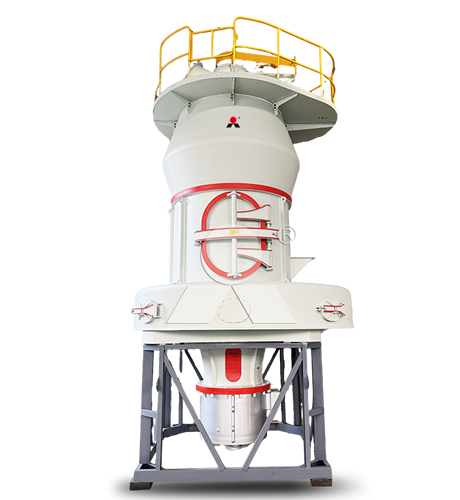
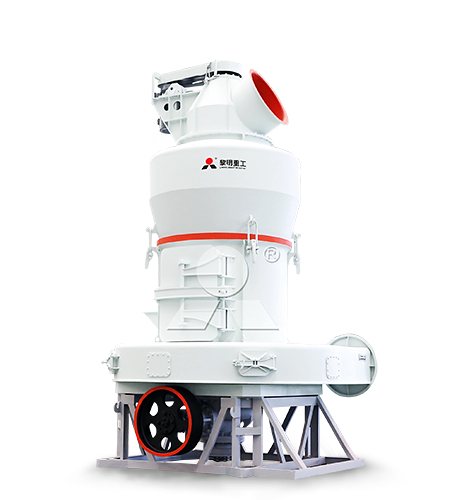
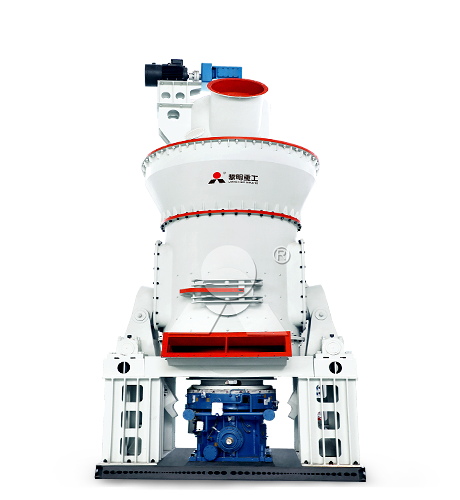
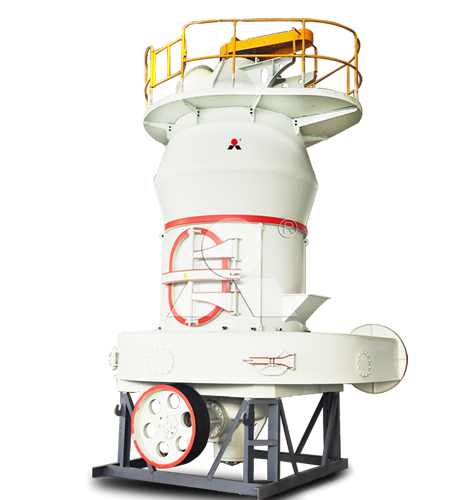
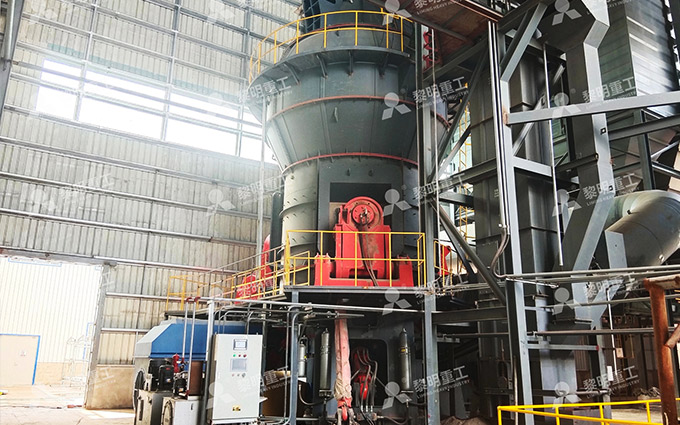
We are Liming Heavy Industry, a manufacturer of various types of industrial crushers, such as Raymond Mill, Trapezoidal Mill, Vertical Mill, Ultrafine Mill, Ball Mill, etc.
Our mills can process the following minerals:
limestone, quicklime, kaolin, talc, barite, bentonite, calcium carbonate, dolomite, coal, gypsum, clay, carbon black, slag, cement raw materials, cement clinker, etc.
If you need a mill to process stone or minerals into powder, please feel free to contact me (WhatsApp: +8615333807511). Thank you.
Calcium carbonate is widely used in rubber as a mineral filler and extender. It helps rubber manufacturers control compound cost, adjust hardness and stiffness, improve processing behavior, build volume, and tailor surface properties in products such as hoses, mats, footwear, gaskets, seals, wire-and-cable compounds, floor coverings, and molded rubber parts.
The best calcium carbonate for rubber depends on the elastomer, target filler loading, particle size, surface treatment, and required balance of tensile strength, elongation, hardness, abrasion resistance, compression set, and processability. Fine coated grades are often used where dispersion and mechanical performance matter most; coarser uncoated grades are often selected for economical extension and bulk.
How calcium carbonate works in rubber
Rubber compounds contain an elastomer together with fillers, curatives, activators, processing oils, antioxidants, pigments, accelerators, and other additives. Calcium carbonate is added as a non-black mineral filler. Depending on grade and formulation, it can function as:
An economical extender that adds compound volume.
A rheology modifier that changes viscosity, mixing, extrusion, and calendering behavior.
A hardness and stiffness modifier.
A filler that helps control shrinkage and dimensional consistency.
A detackifying agent for rubber processing and handling.
A functional filler that can contribute to abrasion behavior, surface finish, and mechanical-property balance.
Ground calcium carbonate is used in rubber both as an extender and as a detackifying agent. It can also increase stiffness or contribute abrasion resistance, depending on the compound and grade.
Calcium carbonate is generally not expected to provide the same reinforcement as carbon black or precipitated silica in demanding tire or high-performance dynamic rubber applications. Its value is in achieving the required property-cost balance, especially in high-volume, non-tire, static, semi-static, and general-purpose rubber products.
Rubber applications for calcium carbonate
| Rubber application | Typical role of calcium carbonate | Important selection priorities |
|---|---|---|
| Rubber sheet and mats | Cost-effective extension, hardness adjustment, body, and dimensional control. | Particle size, loading level, surface finish, tensile and elongation target. |
| Hoses and tubing | Compound cost control, extrusion behavior, stiffness, and shape retention. | Dispersion, moisture, extrusion smoothness, flexibility, cure behavior. |
| Gaskets and seals | Hardness, bulk, compression behavior, and formulation economics. | Fine-particle control, compression set, oil resistance, tensile properties. |
| Footwear soles | Hardness, density control, cost management, and processability. | Particle size, surface treatment, abrasion performance, flexibility, appearance. |
| Wire and cable compounds | Extension, electrical-compound formulation support, rheology, and cost control. | Purity, moisture, dispersion, electrical properties, flame-retardant package compatibility. |
| Rubber flooring and molded goods | Volume extension, hardness, dimensional stability, and surface texture. | Whiteness or color, coarse-particle control, wear requirement, processing behavior. |
| Adhesive rubber compounds | Viscosity adjustment, bulk, and cost reduction. | Fine particle size, dispersion, adhesion target, solvent or resin compatibility. |
GCC and PCC in rubber
Most rubber compounds use ground calcium carbonate (GCC). GCC is mechanically processed from limestone, marble, or calcite and is available in broad particle-size ranges, making it practical for economical rubber compounding. Natural calcium carbonate fillers are available from approximately 0.5 µm to more than 100 µm, and natural grades represent most of the calcium carbonate filler market because they are less expensive to manufacture.
Precipitated calcium carbonate (PCC) can be selected for specialty rubber compounds when smaller particles, controlled morphology, or a higher functional effect is needed. Nano or submicron PCC may provide improved reinforcement potential, but it also has higher surface area, greater tendency to agglomerate, higher processing sensitivity, and usually higher cost than standard GCC.
| Characteristic | GCC for rubber | PCC for rubber |
|---|---|---|
| Primary use | Economical extender and general functional filler. | Specialty filler for controlled particle characteristics and potentially stronger functional effects. |
| Particle-size range | Available from coarse to ultrafine grades. | Can be produced with finer and more controlled particle morphology. |
| Cost position | Usually lower cost and preferred for high-volume general-purpose compounds. | Usually higher cost and used where performance benefits justify it. |
| Processing | Generally easier to source and use in standard rubber formulations. | Requires careful dispersion, especially at fine or nano scale. |
| Best fit | Mats, sheet, hoses, footwear, gaskets, seals, molded goods, general rubber compounds. | Higher-value or performance-sensitive rubber applications with controlled formulation development. |
Coated calcium carbonate for rubber
Most elastomers are nonpolar or relatively hydrophobic, while untreated calcium carbonate has a polar, hydrophilic mineral surface. This surface mismatch can reduce filler wetting and lead to agglomeration if the powder is not properly dispersed.
Stearic acid is a common surface treatment for calcium carbonate used in rubber. The treatment makes the mineral surface more hydrophobic and organophilic, which can improve compatibility with rubber polymers and reduce filler-filler interaction. Surface-treated calcium carbonate is widely used where better processing, lower moisture sensitivity, improved dispersion, or higher practical filler loading is needed.
In a study using natural rubber and submicron spherical calcium carbonate, treated filler produced higher tensile strength than untreated calcium carbonate at all tested filler loadings. The researchers attributed the result to improved interfacial interaction after surface modification increased calcium carbonate hydrophobicity; the highest tensile strength in that study occurred at 20 phr filler loading.
This result should not be applied as a universal formulation rule. Rubber performance changes with elastomer type, filler size, coating chemistry, loading, cure package, processing oil, mixing sequence, and curing conditions. It does show why surface treatment matters when rubber manufacturers need more than low-cost extension.
Particle size and rubber performance
Particle size is one of the main factors determining how calcium carbonate affects a rubber compound. Fine particles have greater surface area and more contact with the rubber matrix. This can improve stiffness, surface finish, and the potential benefit of surface treatment, but it also increases mixing torque, dispersion demand, and raw-material cost.
| Calcium carbonate grade direction | Typical effect in rubber | Common applications |
|---|---|---|
| Coarse GCC | Economical bulk extension, body, hardness adjustment, and lower surface-area demand. | Rubber mats, low-cost sheet, flooring, general molded products, some footwear compounds. |
| Medium-fine GCC | Balanced cost, dispersion, surface finish, and mechanical-property modification. | Hoses, seals, gaskets, sheet, cable compounds, standard molded goods. |
| Fine or ultrafine GCC | Better surface uniformity and dispersion potential; may provide improved property balance when properly compounded. | Higher-quality rubber goods, smooth extrudates, seals, footwear, wire-and-cable applications. |
| Fine coated GCC or PCC | Improved polymer-filler compatibility and higher functional potential, with greater formulation sensitivity. | Performance-sensitive rubber compounds, selected seals, technical molded parts, specialty elastomers. |
Median particle size is useful, but it should not be the only specification. Rubber compounders should also compare the full particle-size distribution, top-cut control, surface area, moisture, coating level, bulk density, and dispersion quality. A small fraction of coarse particles or hard agglomerates can reduce surface quality and create weak points in extruded or molded products.
Calcium carbonate loading in rubber
Rubber formulations usually express filler loading in parts per hundred rubber (phr). There is no universal calcium carbonate loading level because the acceptable range depends on the elastomer and product performance requirements.
At lower to moderate loading, calcium carbonate can add stiffness and control cost while preserving a workable balance of tensile strength and elongation. At higher loading, the compound may become harder and less expensive, but it can also lose tensile strength, elongation at break, tear resistance, resilience, and fatigue performance if filler dispersion or polymer-filler bonding is inadequate.
The appropriate loading should be established through compound testing, including:
Mooney viscosity or other processing-viscosity measurement
Rheometer cure curve and scorch-safety evaluation
Hardness testing, commonly Shore A or another relevant scale
Tensile strength, modulus, and elongation at break
Tear resistance where relevant
Abrasion resistance for soles, mats, wheels, and wear-sensitive products
Compression set for gaskets, seals, and static sealing applications
Extrusion smoothness, die swell, surface appearance, and dimensional stability
Aging, oil resistance, heat resistance, and weathering tests based on the final application
Choosing calcium carbonate for different elastomers
Natural rubber
Natural rubber offers high tensile strength and resilience, but calcium carbonate loading must be controlled to preserve these properties. Fine treated calcium carbonate can be useful when dispersion and filler-rubber interaction are important. Coarser GCC is more suitable where cost and hardness are more important than maximum reinforcement.
SBR and BR compounds
Styrene-butadiene rubber and butadiene rubber are used in many general-purpose rubber applications. Calcium carbonate can serve as a cost-control and hardness-adjustment filler, particularly in non-tire goods. Fine grades may improve compound uniformity, while coated grades can be evaluated when higher loading or better compatibility is required.
EPDM rubber
EPDM is widely used in weather seals, roofing, hoses, automotive sealing, and outdoor rubber goods. Calcium carbonate can provide economical extension and modify stiffness, but the selected grade must maintain extrusion behavior, weathering performance, and required compression set. Coated calcium carbonate can be advantageous in some EPDM formulations because of the elastomer’s nonpolar character.
NBR rubber
Nitrile rubber is used where oil and fuel resistance are important. Calcium carbonate can be used in gaskets, seals, hoses, and industrial goods, but it should be evaluated with the complete plasticizer, oil, and curing package. The filler grade must not undermine oil resistance, compression set, or seal reliability.
CR, silicone, and specialty elastomers
Specialty elastomers require more careful mineral selection. Calcium carbonate may be suitable in some chloroprene, silicone, and other technical formulations, but the filler must be tested for cure interaction, moisture, purity, particle size, and long-term thermal or chemical stability. In high-performance specialty rubber, silica, carbon black, alumina trihydrate, clays, or other fillers may be preferred depending on the target property.
Key specifications for rubber-grade calcium carbonate
| Specification | Why it matters in rubber compounding |
|---|---|
| Particle-size distribution | Affects dispersion, surface finish, tensile-property balance, stiffness, and processing viscosity. |
| Coarse-particle control | Helps prevent rough extrudates, surface defects, weak points, and inconsistent molded parts. |
| Surface treatment | Can improve compatibility with hydrophobic elastomers and support easier dispersion or higher loading. |
| CaCO3 purity | Helps control compound color, contamination risk, cure consistency, and abrasive impurities. |
| Moisture content | Important for storage, flow, mixing, extrusion quality, and avoiding processing defects. |
| Oil absorption or surface area | Indicates interaction with processing oils, plasticizers, and the likely effect on compound viscosity. |
| Whiteness | Important for white, light-colored, translucent, and color-sensitive rubber products. |
| Bulk density and flowability | Affect feeding accuracy, dust control, storage, and automated compounding efficiency. |
Common mistakes in rubber formulations
Expecting GCC to replace carbon black: Calcium carbonate is usually an extender or moderate functional filler, not a direct substitute for reinforcing carbon black in demanding dynamic applications.
Selecting only by price: A lower-cost grade may increase reject rates, poor dispersion, surface defects, or property losses that outweigh the raw-material saving.
Ignoring surface treatment: Untreated calcium carbonate may be sufficient for some compounds, but nonpolar elastomers can benefit from treated grades when dispersion and performance matter.
Using only D50 to specify the powder: The full PSD, top cut, moisture, agglomerate level, and coating quality determine real compounding behavior.
Increasing loading without compound testing: Higher filler loading can change cure behavior, hardness, compression set, tensile properties, elongation, and extrusion performance.
Neglecting the cure package: Mineral filler can interact with accelerators, activators, stearic acid, zinc oxide, and other ingredients, so the entire recipe must be optimized together.
FAQ
Is calcium carbonate reinforcing in rubber?
Standard GCC is mainly an extender and functional filler rather than a highly reinforcing filler. Fine, ultrafine, precipitated, and surface-treated calcium carbonate can provide greater reinforcement potential than coarse untreated GCC, but carbon black and silica are generally preferred when maximum reinforcement is required.
Is coated calcium carbonate better for rubber?
Coated calcium carbonate is often better for nonpolar or hydrophobic rubber systems because the treatment can improve filler wetting and dispersion. It may reduce compound viscosity and help preserve properties at useful filler loadings. Whether it is better depends on the elastomer, loading level, filler size, cure system, and target performance.
What calcium carbonate size is used in rubber?
Rubber compounds can use calcium carbonate from coarse to ultrafine grades. Coarse grades are common for economical extension and bulk, while fine grades are chosen for smoother surfaces, improved dispersion, and more controlled mechanical properties. Many high-purity industrial GCC products used in rubber have median particle sizes in the low-micron range; for example, a commercial rubber-compatible GCC grade is specified at 5.9 µm median size and more than 99% calcium carbonate.
Can calcium carbonate be used in EPDM rubber?
Yes. Calcium carbonate is commonly used in EPDM products such as seals, hoses, weatherstrips, and general molded goods to control cost and adjust hardness. Fine or coated grades should be considered when the formulation needs better dispersion, extrusion quality, or a more demanding mechanical-property balance.
Key takeaway
Calcium carbonate for rubber is an economical and versatile filler used to control cost, hardness, stiffness, processing behavior, and compound volume. GCC is the standard choice for general-purpose rubber products, while fine, ultrafine, PCC, and surface-treated grades are considered when smoother processing, better dispersion, or stronger mechanical performance is needed. Select the grade using full PSD, surface treatment, purity, moisture, and real compound testing—not particle size or price alone.