Calcium Carbonate Knowledge Hub
Calcium Carbonate Filler for Rubber
2026-09-04 16:58:05
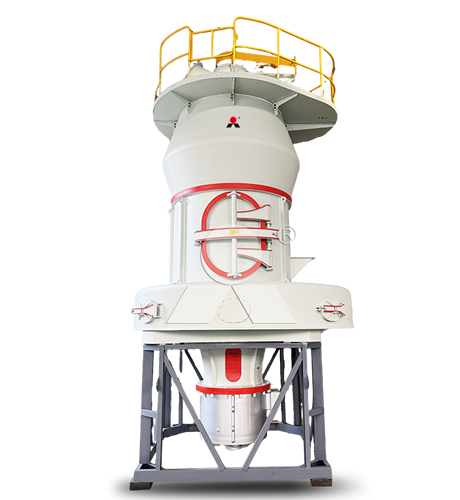
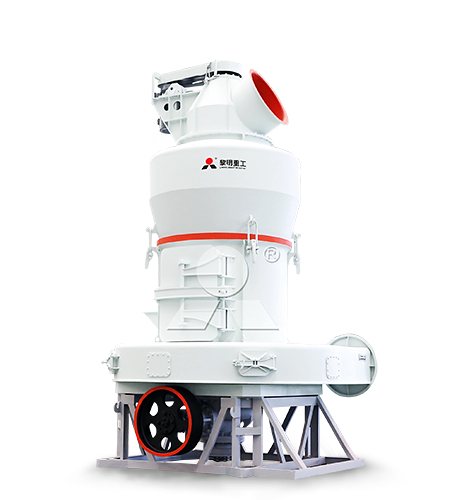
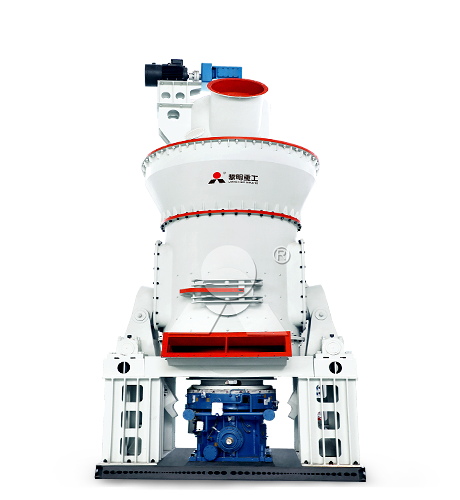
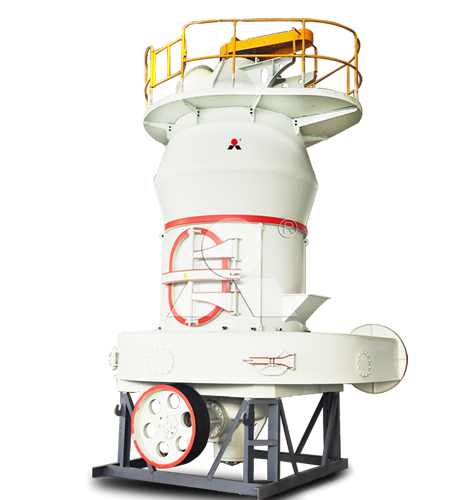
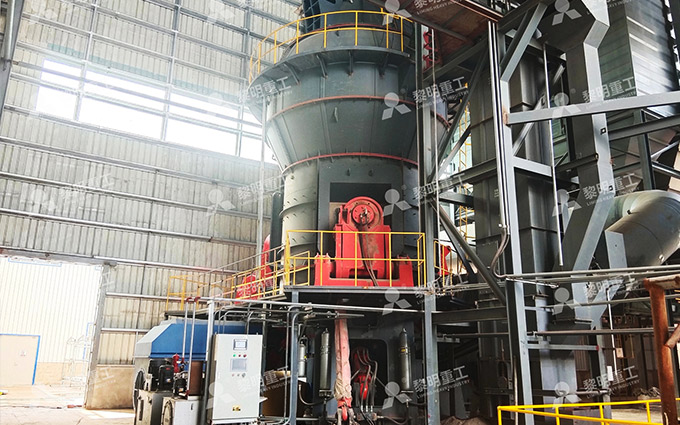
We are Liming Heavy Industry, a manufacturer of various types of industrial crushers, such as Raymond Mill, Trapezoidal Mill, Vertical Mill, Ultrafine Mill, Ball Mill, etc.
Our mills can process the following minerals:
limestone, quicklime, kaolin, talc, barite, bentonite, calcium carbonate, dolomite, coal, gypsum, clay, carbon black, slag, cement raw materials, cement clinker, etc.
If you need a mill to process stone or minerals into powder, please feel free to contact me (WhatsApp: +8615333807511). Thank you.
Calcium carbonate filler is used in rubber compounds to add volume, reduce formulation cost, adjust hardness and stiffness, and control processing behavior. It is especially common in non-tire rubber products such as sheet, mats, hoses, gaskets, seals, footwear, flooring, molded goods, and selected wire-and-cable compounds.
For rubber compounders, calcium carbonate is not a single interchangeable commodity. Its particle size, particle-size distribution, surface treatment, purity, moisture, and loading level determine whether it functions mainly as a low-cost extender or as a finer functional filler that supports dispersion, smoother extrusion, and a better mechanical-property balance.
What calcium carbonate filler does in rubber
Rubber fillers are incorporated into an elastomer matrix to modify cost, processing, physical properties, or all three. Calcium carbonate is generally classified as a non-black mineral filler. In most rubber formulations, it is used as an extender rather than as a direct replacement for highly reinforcing fillers such as carbon black or precipitated silica.
Depending on the grade and formulation, calcium carbonate filler can provide:
Lower compound cost by replacing part of the elastomer volume with an economical mineral.
Higher hardness and modulus at appropriate loading levels.
Improved body and consistency during mixing, extrusion, calendering, or molding.
More controlled compound density and dimensional stability.
Adjustable surface finish in extruded, calendered, and molded rubber goods.
Reduced tack in some rubber-processing and handling operations.
Improved filler dispersion potential when fine and surface-treated grades are selected.
The main filler properties that influence rubber performance are particle size, surface area, particle structure, and surface activity. These characteristics are interrelated, so a rubber compound cannot be optimized by changing only filler loading or only the nominal mesh size.
Calcium carbonate versus reinforcing fillers
Calcium carbonate can improve stiffness and hardness, particularly when fine particles are well dispersed, but it is usually not the primary reinforcement choice for high-dynamic applications. Carbon black and silica are more commonly selected when the goal is maximum tensile strength, tear resistance, abrasion resistance, fatigue resistance, or dynamic performance.
The difference is important for compound design. Calcium carbonate often helps manufacturers reach a practical cost-performance target, while carbon black or silica provides the main reinforcement. A rubber formula may use both: one filler system for reinforcement and another for cost control, processing, density, hardness, or surface appearance.
| Filler type | Main contribution in rubber | Typical use case |
|---|---|---|
| Coarse GCC | Economical extension, compound bulk, hardness adjustment, and body. | Mats, sheet, flooring, lower-cost molded goods, general-purpose compounds. |
| Fine GCC | Better surface finish, more controlled stiffness, and improved dispersion potential. | Hoses, seals, gaskets, footwear, smoother extrudates, technical molded goods. |
| Fine coated GCC | Improved compatibility with hydrophobic elastomers and lower filler-filler attraction. | EPDM, NR, SBR, selected NBR compounds, higher-loading or performance-sensitive products. |
| PCC or nano calcium carbonate | Higher surface-area functional effect and potential reinforcement, with greater dispersion demand. | Specialty rubber compounds and controlled high-performance formulations. |
| Carbon black or silica | Primary reinforcement for strength, abrasion, tear, and dynamic performance. | Tires, belts, high-performance seals, dynamic rubber parts, demanding technical goods. |
GCC is the standard rubber filler
Ground calcium carbonate (GCC) is the most common calcium carbonate filler in rubber. It is made by grinding and classifying natural limestone, marble, or calcite into grades ranging from relatively coarse powders to fine and ultrafine particles.
GCC is widely used because it is readily available, economical, and flexible enough to serve many compound types. A representative fine industrial GCC grade, for example, is specified with a 5.5 µm median particle size, 94 dry brightness, a maximum 0.05% residue on a 325-mesh sieve, and a Hegman grind value of 5. These values illustrate the kind of controlled physical properties rubber buyers may request when surface quality and dispersion matter.
Coarser GCC is often suitable when the product requires economical bulk and hardness but does not need a highly smooth surface or maximum tensile performance. Fine GCC is generally more appropriate for smoother extrusions, precision molded parts, light-colored compounds, and products where filler dispersion has a stronger influence on appearance and mechanical consistency.
Particle size and filler performance
Particle size strongly affects how calcium carbonate performs inside rubber. Smaller particles have greater specific surface area and more contact area with the rubber matrix. This can improve the filler’s functional contribution, but it also increases mixing viscosity, dispersant demand, and sensitivity to agglomeration.
| Particle-size direction | Rubber-compound effect | Advantages | Potential tradeoff |
|---|---|---|---|
| Coarse | Acts mainly as a volume extender and hardness modifier. | Lower cost, lower surface-area demand, suitable for bulk filling. | Rougher surface, weaker reinforcement potential, less suitable for fine extrudates. |
| Medium-fine | Balances cost, processing, surface finish, and property modification. | Versatile for sheet, hoses, seals, footwear, and molded goods. | Requires controlled dispersion for consistent results. |
| Fine | Provides higher filler-rubber contact area and smoother compound structure. | Better surface quality and higher functional potential. | Higher viscosity, more dispersant or processing-aid demand. |
| Ultrafine or submicron | Can provide stronger functional effects when properly dispersed. | Potential for improved mechanical-property balance and refined surface finish. | Higher cost and substantial risk of agglomeration without proper mixing and treatment. |
Do not select a rubber-grade calcium carbonate using D50 alone. The coarse end of the distribution—often expressed as D90, D97, D98, or sieve residue—can be equally important. Oversized particles and hard agglomerates can create rough extrudate surfaces, weak points, visible defects, and variation in molded products.
Why coated calcium carbonate is used
Untreated calcium carbonate has a polar, hydrophilic mineral surface. Many rubber elastomers, including natural rubber, SBR, BR, and EPDM, are nonpolar or relatively hydrophobic. Without suitable wetting and mixing, this difference can cause poor filler-rubber interaction and particle agglomeration.
Stearic acid coating is commonly used to make calcium carbonate more hydrophobic and organophilic. The treatment reduces surface energy, lowers filler-filler attraction, and can improve dispersion in nonpolar rubber compounds. In research on stearic-acid-coated calcium carbonate in natural-rubber compounds, coated filler loading increased compound stiffness and hardness; tensile strength increased to an optimum near 30 phr before declining at higher loading. Smaller coated particles gave higher tensile strength and 300% modulus, while higher loading increased Mooney viscosity.
That study demonstrates an important formulation principle: finer, treated calcium carbonate can provide better rubber-filler interaction, but there is an optimum filler loading. More filler is not always better. Excessive loading can reduce elongation, tensile strength, tear strength, resilience, and fatigue life.
Filler loading in rubber compounds
Calcium carbonate loading is usually expressed in parts per hundred rubber, abbreviated as phr. The correct loading depends on the rubber type, grade of calcium carbonate, processing equipment, cure system, and finished-product requirements.
At low to moderate loading, calcium carbonate may improve stiffness and reduce cost while maintaining acceptable tensile strength and elongation. At high loading, it can provide major cost reduction and hardness increase, but poorly dispersed or overfilled compounds often become brittle, weak, difficult to process, or less durable.
Compounders should establish the usable loading range through trial compounds rather than relying on a generic percentage. The evaluation should include:
Mooney viscosity, mixing torque, and extrusion behavior.
Scorch safety, cure time, and rheometer torque development.
Hardness, modulus, tensile strength, and elongation at break.
Tear resistance and abrasion resistance where relevant.
Compression set for gaskets, seals, and static sealing applications.
Surface appearance, dimensional control, and die-swell behavior.
Heat aging, oil resistance, weathering, or fluid resistance based on the end use.
Calcium carbonate filler by rubber product
| Rubber product | Typical calcium carbonate role | Preferred grade direction |
|---|---|---|
| Rubber sheet | Bulk extension, hardness control, cost reduction, and calendering consistency. | Coarse to medium-fine GCC, depending on surface and tensile requirements. |
| Flooring and mats | Density, body, cost control, hardness, and surface texture. | Coarse or medium GCC; fine grades where smoother surface quality is required. |
| Hoses and tubing | Extrusion behavior, stiffness, shape retention, and economical extension. | Medium-fine or fine GCC; coated grades where surface smoothness and loading are critical. |
| Gaskets and seals | Hardness, bulk, dimensional stability, and cost control. | Fine GCC or treated GCC for better dispersion and property consistency. |
| Footwear | Hardness, density, processing behavior, and compound economics. | Medium-fine to fine GCC; coating may help compatibility in nonpolar systems. |
| Wire and cable compounds | Extension, compound rheology, and density management. | Fine, low-moisture, high-purity GCC with controlled coarse residue. |
| Technical molded goods | Cost-performance balance, smoothness, consistency, and controlled hardness. | Fine or ultrafine treated GCC, verified through full compound testing. |
Key specifications for rubber filler
A rubber manufacturer should purchase calcium carbonate against a complete technical specification rather than a generic “rubber filler” description.
| Specification | Why it matters |
|---|---|
| Particle-size distribution | Determines dispersion, stiffness, surface quality, viscosity, and mechanical-property balance. |
| D97/D98 or sieve residue | Controls oversized particles and reduces defects in smooth extrudates and molded parts. |
| Surface treatment | Can improve compatibility with hydrophobic elastomers and support more uniform filler dispersion. |
| CaCO3 content and insolubles | Helps control contamination, color, abrasion risk, and compound consistency. |
| Moisture content | Affects powder flow, storage, mixing, extrusion quality, and potential processing defects. |
| Oil absorption or BET surface area | Indicates likely interaction with process oils, plasticizers, and rubber-mixing viscosity. |
| Whiteness | Important for light-colored, white, translucent, and color-sensitive rubber goods. |
| Bulk density and flowability | Influence conveying, dosing accuracy, dust control, and automated compounding efficiency. |
Common mistakes
Treating all GCC as interchangeable: Particle size, PSD, purity, coating, moisture, and agglomerate control can change rubber-compound performance significantly.
Using only mesh as a specification: Mesh does not fully show the fine fraction, top cut, hard agglomerates, surface area, or dispersion behavior.
Increasing filler loading without retesting cure behavior: Calcium carbonate can affect viscosity, cure time, hardness, modulus, and final mechanical properties.
Expecting calcium carbonate to replace carbon black in demanding applications: GCC is mainly an extender and functional filler, not a universal high-reinforcement substitute.
Ignoring surface treatment in nonpolar elastomers: A coated grade may provide better dispersion and a more useful property-cost balance in NR, SBR, BR, and EPDM compounds.
Approving a grade from a single sample only: Confirm lot-to-lot stability through repeated checks of PSD, moisture, whiteness, and actual compound performance.
FAQ
What is calcium carbonate filler used for in rubber?
It is used primarily to reduce compound cost, add volume, adjust hardness and stiffness, modify processing behavior, and control the surface or density of rubber products. Fine and treated grades can also support better dispersion and more consistent physical properties.
Is coated calcium carbonate better than uncoated calcium carbonate for rubber?
Often, yes—especially in nonpolar elastomers where the hydrophobic surface treatment improves filler wetting and dispersion. However, uncoated GCC remains suitable for many general-purpose products. The decision should be based on compounding trials, not on coating status alone.
Does finer calcium carbonate strengthen rubber?
Finer particles generally have greater functional and reinforcement potential because they have more surface area in contact with rubber. But they also raise viscosity and require better dispersion. Strength improvement depends on particle size, treatment, loading, rubber type, cure package, and mixing quality.
How much calcium carbonate can be added to rubber?
There is no universal loading level. It is typically evaluated in phr and optimized through testing. The usable amount depends on whether the product prioritizes cost, hardness, tensile strength, elongation, flexibility, abrasion resistance, compression set, or extrusion quality.
Key takeaway
Calcium carbonate filler for rubber is primarily an economical extender that can also modify hardness, stiffness, density, rheology, and surface quality. Coarse GCC is appropriate for bulk and cost control; fine and coated GCC are better suited to compounds that require smoother processing, better dispersion, and more controlled mechanical performance. Specify the filler by full PSD, coarse-particle control, moisture, purity, surface treatment, and plant-scale compound results—not by price or mesh alone.