Calcium Carbonate Knowledge Hub
Food Grade Calcium Carbonate
2026-09-04 17:01:45
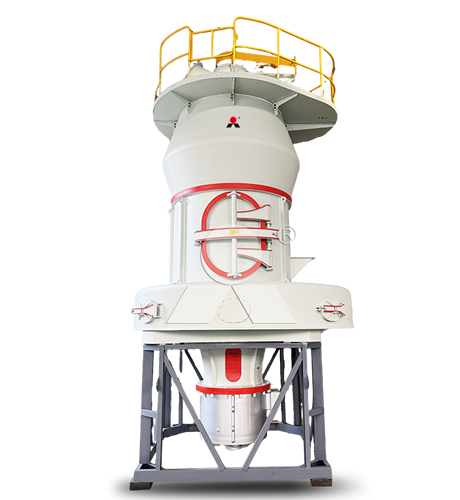
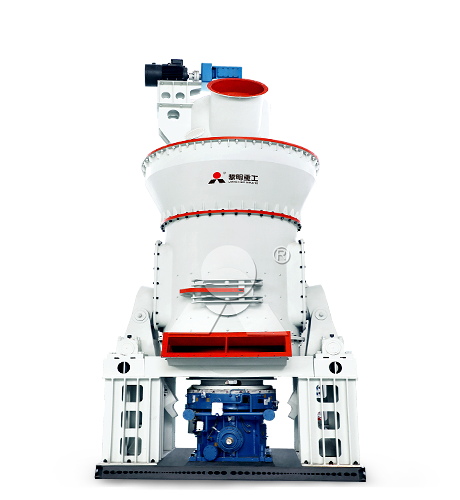
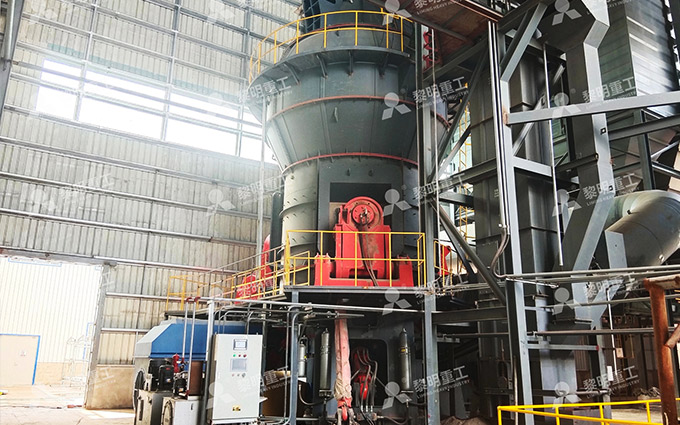
We are Liming Heavy Industry, a manufacturer of various types of industrial crushers, such as Raymond Mill, Trapezoidal Mill, Vertical Mill, Ultrafine Mill, Ball Mill, etc.
Our mills can process the following minerals:
limestone, quicklime, kaolin, talc, barite, bentonite, calcium carbonate, dolomite, coal, gypsum, clay, carbon black, slag, cement raw materials, cement clinker, etc.
If you need a mill to process stone or minerals into powder, please feel free to contact me (WhatsApp: +8615333807511). Thank you.
Food-grade calcium carbonate is a high-purity mineral ingredient manufactured and controlled for direct use in foods, beverages, dietary supplements, and food-processing applications. It is used as a calcium source, acidity regulator, colorant or whitening agent, anti-caking aid, carrier, and formulation aid, depending on the food category and the regulations of the market where the product is sold.
Food grade is not defined only by a high CaCO3 percentage. The material must meet applicable food specifications for identity, purity, heavy metals, microbiological quality where relevant, particle size, insoluble residue, manufacturing controls, traceability, and documentation. Industrial calcium carbonate for plastics, paint, rubber, or construction must not be assumed suitable for food use.
What “food-grade” calcium carbonate means
Food-grade calcium carbonate is calcium carbonate that has been produced under controlled conditions and shown to meet the applicable ingredient specification for the intended market and food application. In the United States, calcium carbonate is regulated under 21 CFR §184.1191, which requires the ingredient to meet Food Chemicals Codex specifications.
Ground limestone may also be used in food under U.S. regulations. Under 21 CFR §184.1409, ground limestone must consist essentially of not less than 94% calcium carbonate and is produced by crushing, grinding, and classifying limestone. Its use is subject to current good manufacturing practice.
In international food-additive terminology, calcium carbonate is identified by INS 170(i), and in the European Union it is commonly designated E 170. FAO/JECFA lists calcium carbonate under INS 170(i) and references its published additive specification.
How food-grade calcium carbonate is made
Food-grade calcium carbonate can be produced by two main routes. Both routes can yield suitable material, provided the manufacturer controls the raw material, processing environment, contamination risk, and finished-product specification.
| Type | Production route | Typical food-use advantages |
|---|---|---|
| Food-grade GCC | High-purity natural limestone, marble, or calcite is selected, crushed, ground, classified, and quality controlled. | Cost-effective calcium source, whitening agent, mineral filler, and processing ingredient with broad availability. |
| Food-grade PCC | Calcium carbonate is chemically precipitated under controlled process conditions and then filtered, dried, milled, and tested. | More controlled particle morphology and particle-size distribution for specific processing or formulation needs. |
The source mineral alone does not establish food-grade status. A natural limestone may contain silica, magnesium minerals, iron-bearing material, heavy metals, or other impurities that make it unsuitable for food use without proper selection and control. Likewise, chemically produced PCC still requires full quality verification before it can be sold for food applications.
Common food applications
Calcium carbonate can serve different roles in food formulations. The permitted use and maximum use level depend on the country, food category, labeling rules, and whether the product is classified as a conventional food, supplement, medical food, or pharmaceutical product.
| Application | Typical role of calcium carbonate | Key grade requirements |
|---|---|---|
| Dietary supplements | Elemental calcium source in tablets, capsules, powders, gummies, and fortified products. | High assay, heavy-metal control, particle size, flowability, compressibility, and pharmacopeial or supplement compliance where required. |
| Bakery products | Calcium fortification, dough-processing aid, and selected color or texture functions. | Purity, fine particle size, taste neutrality, dispersibility, and food-grade documentation. |
| Confectionery | Whitening, opacity, mineral fortification, anti-caking, and processing support. | High whiteness, controlled PSD, smooth sensory profile, heavy-metal limits. |
| Chewing gum | Filler, texture modifier, whitening agent, and calcium source in selected systems. | Fine PSD, sensory neutrality, whiteness, and consistency. |
| Powdered foods | Anti-caking, carrier, calcium fortification, or flow aid in suitable applications. | Moisture control, flowability, particle size, microbiological quality, and blending consistency. |
| Beverages and drink powders | Calcium fortification and acidity-related formulation support. | Dispersibility, sedimentation control, particle size, taste, bioavailability strategy, and stable suspension behavior. |
| Food coatings and decorations | White color, opacity, decorative coating ingredient, or surface-treatment aid. | High whiteness, fine PSD, low impurities, and compliance with applicable color-additive requirements. |
| Processed foods | Mineral fortification, pH-related function, whiteness, or processing aid. | Food-additive compliance, purity, particle size, formulation compatibility, and correct labeling. |
Calcium carbonate as a calcium source
Calcium carbonate contains a high proportion of elemental calcium by mass—about 40% in pure CaCO3. This makes it an economical ingredient for calcium fortification and dietary supplements. The amount used must be calculated from the finished product’s elemental-calcium target, not simply from the total calcium carbonate weight.
For example, if a product requires 200 mg of elemental calcium, the theoretical calcium carbonate requirement is approximately:
Calcium carbonate required≈200 mg/0.40=500 mg
Actual formulation calculations must account for raw-material assay, overage where justified by stability data, serving size, blend uniformity, regulatory nutrient-content rules, and the final label claim.
Calcium carbonate is poorly soluble in neutral water but dissolves in acid. This affects its behavior in beverages and its absorption characteristics in dietary use. In supplements, manufacturers often consider dosage form, particle size, stomach acidity, serving size, and whether the product is intended to be taken with food.
Food-grade quality specifications
A food-grade calcium carbonate specification should be tied to the intended application and destination market. The supplier’s certificate of analysis should show more than calcium carbonate assay.
| Specification item | Why it matters in food applications |
|---|---|
| CaCO3 assay | Confirms identity, quality, and the available calcium content for fortification calculations. |
| Elemental calcium content | Required for supplement and fortified-food formulation, nutrition labeling, and dosage calculation. |
| Lead, arsenic, cadmium, mercury, and other toxic elements | Critical consumer-safety and regulatory parameters. |
| Acid-insoluble substances | Helps control silica, sand, and other unwanted mineral contaminants. |
| Magnesium and alkali-metal salts | May affect purity, formulation behavior, and compliance with applicable monographs. |
| Particle-size distribution | Influences dispersibility, texture, sedimentation, mouthfeel, tableting, and visual appearance. |
| Whiteness and color | Important in confectionery, coatings, white powders, tablets, and color-sensitive foods. |
| Moisture or loss on drying | Affects storage, flow, blending, caking, and formulation consistency. |
| Microbiological quality | Important for ingredients used directly in food, especially low-moisture powders and finished-product hygiene programs. |
| Bulk density and flowability | Influence dosing, blending, tableting, capsule filling, and industrial handling. |
| Lot traceability | Supports food-safety systems, complaint investigation, recall readiness, and supplier approval. |
Food-grade specifications increasingly consider physical characterization as well as chemical purity. EFSA specifically noted that particle size and particle-size distribution should be included in specifications for calcium carbonate food additive E 170 because of their possible relevance to toxicokinetics and the characterization of nanoparticle fractions.
Food grade versus pharmaceutical grade
Food grade and pharmaceutical grade are related but not identical designations. Food grade is generally intended for use in conventional food and beverage applications, subject to food-ingredient and food-additive rules. Pharmaceutical grade is intended for medicinal products and normally requires compliance with the relevant pharmacopeial standard and drug-manufacturing quality system.
| Characteristic | Food-grade calcium carbonate | Pharmaceutical-grade calcium carbonate |
|---|---|---|
| Main applications | Foods, beverages, dietary supplements, confectionery, fortification, and food processing. | Drug products, antacids, pharmaceutical tablets, capsules, and medicinal suspensions. |
| Typical reference standards | FCC, Codex/JECFA, E 170 specifications, and national food regulations. | USP–NF, European Pharmacopoeia, British Pharmacopoeia, Japanese Pharmacopoeia, or other applicable pharmacopeias. |
| Quality focus | Food safety, purity, contaminant control, sensory quality, functionality, and traceability. | Drug-product quality, pharmacopeial compliance, validated testing, controlled manufacturing, and dosage-form performance. |
| Interchangeability | May be suitable for some supplement applications if specifications and regulations are met. | Should not be claimed unless the actual material, documentation, and manufacturing controls meet the applicable pharmacopeial requirements. |
A supplier may market a calcium carbonate grade as suitable for both food and pharmaceutical applications, but the buyer should verify the exact standard, current monograph edition, certificate of analysis, manufacturing-site certification, and intended-use declaration.
Food grade versus industrial grade
Industrial calcium carbonate can have similar appearance and a high reported CaCO3 percentage, but it may not have been manufactured or tested for food use. The difference is not cosmetic; it concerns source control, contamination risk, test methods, release criteria, handling, packaging, and traceability.
Industrial grade: Designed for plastics, PVC, paper, paint, rubber, adhesives, coatings, construction, or other technical products.
Food grade: Designed and documented for direct food use, with ingredient specifications and food-safety controls.
Pharmaceutical grade: Intended for medicinal applications and typically requires pharmacopeial compliance and more extensive quality documentation.
A food manufacturer should never approve a grade for food use solely because it is white, fine, natural, or listed as “high purity.” The supplier must provide appropriate evidence of compliance for the buyer’s intended market and application.
How to qualify a supplier
Before purchasing food-grade calcium carbonate, request a full quality and regulatory package. The necessary documents vary by market and product category, but a robust supplier-qualification review normally includes:
Current certificate of analysis for each lot.
Statement of conformity to FCC, E 170, JECFA, or other applicable specifications.
Heavy-metal and toxic-element test data with defined methods and limits.
Particle-size distribution and coarse-particle information for texture-sensitive applications.
Microbiological certificate or a documented risk-based microbiological control program.
Food-safety certification, such as an appropriate GFSI-recognized scheme, where required by the buyer.
HACCP, allergen, GMO, BSE/TSE, animal-origin, irradiation, and country-of-origin statements where relevant.
Packaging specification, shelf life, storage conditions, and transport controls.
Traceability, change-control, complaint-handling, and recall-support procedures.
Representative samples for formulation, sensory, stability, and process validation.
For a fortified beverage, for example, the buyer should additionally test dispersibility, sedimentation, flavor impact, pH response, and calcium stability in the full beverage. For a supplement tablet, the buyer should test blend uniformity, powder flow, compressibility, tablet hardness, disintegration, dissolution where relevant, and elemental-calcium label accuracy.
Regulatory considerations
Food-grade calcium carbonate can be permitted in many food categories, but permission is not unlimited or identical worldwide. The applicable rule depends on the country, product type, function, amount used, and label claim.
In the United States, calcium carbonate is affirmed as generally recognized as safe when used in accordance with good manufacturing practice and when it meets the relevant FCC specification. For ground limestone, the U.S. regulation similarly permits use in food consistent with good manufacturing practice, with a minimum 94% CaCO3 requirement.
In the European Union, calcium carbonate is authorized as the food additive E 170, subject to applicable EU food-additive legislation and specifications. EFSA has evaluated calcium carbonate as a food additive and has continued to seek technical data on impurity and particle-size characterization for E 170 specifications.
“Food grade” therefore does not automatically authorize every use. The food manufacturer remains responsible for confirming that the intended function, food category, use level, labeling, contaminant limits, and product claims comply with current rules in the sales market.
FAQ
Is food-grade calcium carbonate safe?
Food-grade calcium carbonate is intended for food use when it meets applicable purity specifications and is used in accordance with relevant food regulations and good manufacturing practice. Safety depends on the approved use, quality controls, contaminant limits, and the finished food product—not only on the mineral name.
What is the difference between food-grade calcium carbonate and chalk?
Chalk is a natural form of calcium carbonate, but ordinary chalk is not automatically food grade. Food-grade calcium carbonate must be sourced, processed, tested, packaged, and documented to meet food-ingredient requirements. The same natural mineral can be sold into very different markets under different quality standards.
Can food-grade calcium carbonate be used in supplements?
It is widely used as a calcium source in dietary supplements, but supplement manufacturers must verify the grade’s purity, elemental-calcium assay, heavy-metal profile, flow properties, and compliance with supplement regulations in the target market. A food-grade claim alone may not be sufficient if the market or customer requires a pharmacopeial-grade material.
Is GCC or PCC better for food?
Neither is universally better. Food-grade GCC is often selected for economical calcium fortification, whitening, and general food use. Food-grade PCC may be selected when more controlled particle morphology, particle size, dispersibility, or texture is needed. Both must meet the applicable food-grade specification.
Key takeaway
Food-grade calcium carbonate is a controlled food ingredient used for calcium fortification, whitening, anti-caking, acidity-related functions, and processing support. A suitable grade must meet the required food specification, contaminant limits, particle-size requirements, manufacturing controls, and documentation for its target market. Select it by intended food application and verified regulatory status—not simply by whiteness, CaCO3 percentage, or a supplier’s general “food grade” label.