Calcium Carbonate Knowledge Hub
What Mesh Calcium Carbonate Is Used in Toothpaste?
2026-09-04 17:01:10
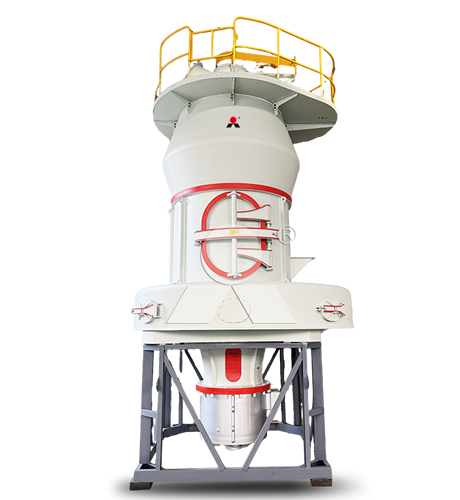
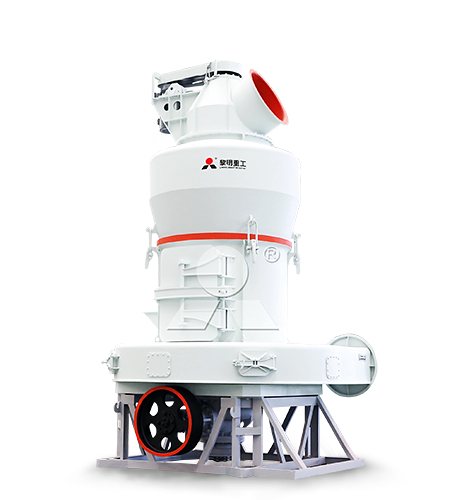
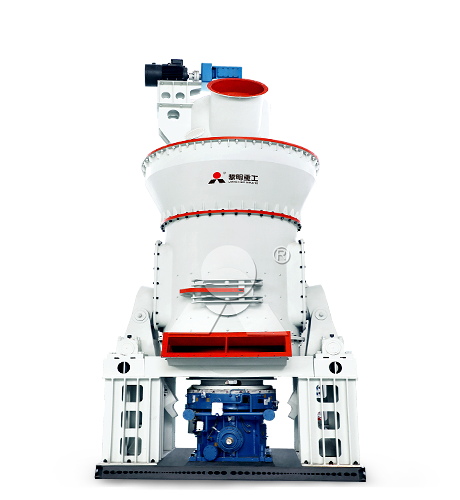
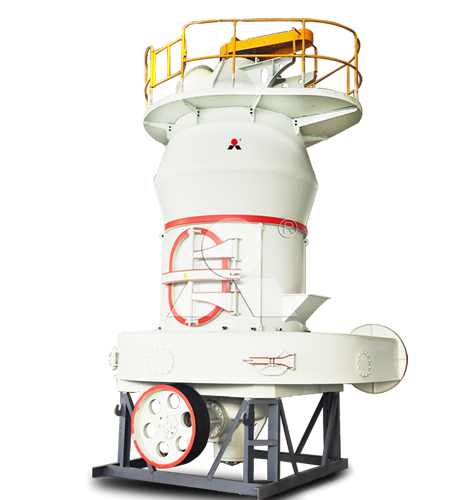
We are Liming Heavy Industry, a manufacturer of various types of industrial crushers, such as Raymond Mill, Trapezoidal Mill, Vertical Mill, Ultrafine Mill, Ball Mill, etc.
Our mills can process the following minerals:
limestone, quicklime, kaolin, talc, barite, bentonite, calcium carbonate, dolomite, coal, gypsum, clay, carbon black, slag, cement raw materials, cement clinker, etc.
If you need a mill to process stone or minerals into powder, please feel free to contact me (WhatsApp: +8615333807511). Thank you.
Toothpaste does not have one standard calcium carbonate mesh size. Most toothpaste formulations use a controlled fine calcium carbonate abrasive, commonly around 5–15 µm median particle size (D50), rather than buying material solely by a sieve-mesh label. That range is roughly finer than 800 mesh in practical terms, but a direct mesh conversion is not reliable enough to specify a toothpaste abrasive.
For toothpaste, the correct requirement is a particle-size distribution specification—such as D10, D50, D90 or D97—plus coarse-particle residue, purity, heavy-metal limits, microbiological quality, and finished-toothpaste abrasivity testing. A powder that merely “passes 800 mesh” may still contain too many coarse particles or agglomerates for acceptable mouthfeel and controlled cleaning performance.
Short answer: use microns, not mesh
When a buyer asks what mesh calcium carbonate is used in toothpaste, the practical answer is: specify toothpaste-grade calcium carbonate by microns and PSD, not only by mesh.
A common starting point for conventional calcium carbonate toothpaste is:
Median particle size, D50: often about 5–15 µm.
Preferred direction for daily-use smooth toothpaste: often toward the finer part of that range, such as approximately 5–8 µm D50.
Coarse-particle control: define D90, D97, or D98 and/or a residue-on-sieve limit.
Finished-product target: confirm the actual toothpaste’s cleaning performance, sensory profile, and Relative Dentin Abrasivity (RDA).
Industry guidance for toothpaste abrasive production similarly identifies a typical calcium carbonate D50 of 5–15 µm and notes a trend toward approximately 5–8 µm median sizes for daily-use products that seek effective cleaning with lower RDA values.
Approximate mesh comparison
Mesh describes the opening size of a sieve, not the actual particle-size distribution of a powder. It can be used as a rough screening reference, but it cannot replace laser particle-size analysis for toothpaste-grade calcium carbonate.
| Nominal sieve size | Approximate opening | Relevance to toothpaste-grade calcium carbonate |
|---|---|---|
| 325 mesh | About 45 µm | Too broad as a stand-alone toothpaste specification; a powder passing 325 mesh can still contain particles much larger than a typical 5–15 µm toothpaste D50. |
| 400 mesh | About 38 µm | Still a coarse screening criterion for a smooth oral-care abrasive; insufficient by itself. |
| 600 mesh | About 25 µm | May be used as a rough control point, but it does not demonstrate the actual D50 or upper particle-size distribution. |
| 800 mesh | About 18 µm | Closer to the fine range associated with toothpaste, but still not a complete toothpaste-grade specification. |
| 1000 mesh | About 13 µm | Roughly comparable with the upper portion of a common 5–15 µm toothpaste D50 range, but mesh is not equivalent to D50. |
| 1250 mesh | About 10 µm | Roughly comparable with a medium-fine toothpaste abrasive target, subject to PSD and abrasivity verification. |
| 1500 mesh | About 5 µm | Roughly comparable with the fine end of the toothpaste-grade D50 range, but may not provide the same cleaning profile in every formula. |
The approximate mesh values above are only directional. For example, a 325-mesh sieve has an opening near 45 µm, and sieving mainly confirms that particles are below the opening size; it does not determine whether the powder has a D50 of 5 µm, 10 µm, or 20 µm.
Why mesh alone is not enough
Toothpaste abrasivity and mouthfeel are sensitive to the full particle population, not just the largest opening a powder can pass through. Two calcium carbonate grades can both pass the same sieve but deliver very different cleaning, texture, and RDA results.
For example, consider two powders that both pass 800 mesh:
Powder A: D50 of 7 µm, D90 of 15 µm, low hard-agglomerate content, and tight lot consistency.
Powder B: D50 of 14 µm, D90 of 28 µm, with a small amount of coarse agglomerates.
Both may be marketed using a similar mesh description, but Powder B is more likely to produce a grittier paste, different cleaning behavior, and potentially higher abrasivity. The particle size, concentration, shape, and form of toothpaste abrasives all contribute to abrasion behavior.
Recommended particle-size specification
For a standard opaque calcium carbonate toothpaste, a practical preliminary purchase request may specify a controlled fine oral-care-grade calcium carbonate rather than a mesh number alone.
| Parameter | Recommended specification approach | Purpose |
|---|---|---|
| Grade designation | Toothpaste-grade, oral-care-grade, food/FCC-aligned where applicable. | Separates oral-care material from industrial calcium carbonate grades. |
| Median particle size | Set a D50 target, commonly within about 5–15 µm, based on the toothpaste design. | Controls the balance of cleaning, polishing, smoothness, and paste body. |
| Upper particle-size control | Specify D90, D97, or D98 and a coarse-residue limit. | Reduces grit, rough mouthfeel, unexpectedly abrasive particles, and sensory defects. |
| Distribution width | Request a narrow and stable PSD with lot-to-lot control. | Improves consistency in viscosity, cleaning performance, mouthfeel, and RDA. |
| Particle morphology | Evaluate through supplier data and finished-product testing. | Particle shape can influence cleaning behavior, packing, and abrasivity. |
| Final toothpaste RDA | Measure RDA on the complete formula, not the calcium carbonate powder alone. | Confirms the actual dentin-abrasion profile of the commercial toothpaste. |
Some toothpaste formulations intentionally use a blend of fine and coarse calcium carbonate. A published formulation example describes fine calcium carbonate with a weight-average particle size of 1–15 µm, preferably 2–10 µm, together with coarse calcium carbonate at 30–120 µm in selected products. This is a specialized formula design, not a standard recommendation for every toothpaste. It shows why a simple answer such as “use 1000 mesh” can be misleading.
Particle size and toothpaste performance
Cleaning and polishing
Calcium carbonate removes plaque and external staining through mechanical action during brushing. Larger particles can increase the abrasive contribution, but cleaning effectiveness is also affected by particle concentration, hardness, morphology, toothpaste viscosity, surfactant system, brush type, brushing force, and brushing time.
Abrasivity studies have found that larger calcium carbonate particles can create higher dentin-abrasion effects under brushing conditions. This is why toothpaste-grade calcium carbonate requires tightly controlled particle size and why the finished product must be tested rather than judged only from its raw-material mesh rating.
Mouthfeel and consumer acceptance
Toothpaste should feel smooth during brushing. Oversized particles, hard agglomerates, foreign particles, or a broad PSD can create a sandy or gritty sensation. Fine, well-dispersed calcium carbonate usually produces a more refined texture, but excessively fine powder may change paste viscosity and may require adjustment of the thickener and humectant system.
Relative Dentin Abrasivity
Relative Dentin Abrasivity is the laboratory measure used to compare dentin wear produced by toothpaste abrasives. It is a property of the finished toothpaste, not a direct reading of mesh or D50. The American Dental Association states that toothpaste with an RDA of 250 or below is considered safe and effective, and the same limit applies to products accepted for the ADA Seal of Acceptance.
Choose the grade by toothpaste type
| Toothpaste type | Calcium carbonate particle-size direction | Primary formulation focus |
|---|---|---|
| Daily-use family toothpaste | Fine, controlled grade, commonly around 5–10 µm D50. | Smooth mouthfeel, balanced cleaning, stable viscosity, controlled RDA. |
| Economy opaque toothpaste | Controlled medium-fine grade, often around the broader 5–15 µm D50 direction. | Cost-efficient solids loading, acceptable cleaning, white appearance, consistent texture. |
| Herbal or natural-positioned toothpaste | Fine food- or oral-care-qualified calcium carbonate with controlled coarse residue. | Clean sensory profile, purity documentation, flavor compatibility, consumer perception. |
| Whitening toothpaste | Formulation-specific abrasive system; calcium carbonate may be fine, blended, or combined with other abrasives. | Stain removal, polishing, controlled RDA, enamel and dentin safety evaluation. |
| Sensitive-teeth toothpaste | Fine, tightly controlled abrasive system, often evaluated with other low-abrasion design measures. | Low abrasivity target, smoothness, active-ingredient compatibility, consumer comfort. |
Beyond particle size: oral-care quality requirements
A fine calcium carbonate powder is not automatically suitable for toothpaste. The supplier must demonstrate oral-care-grade quality and the toothpaste manufacturer must qualify the material in the final formulation.
Purity: Controlled CaCO3 assay and low acid-insoluble residue.
Heavy metals: Defined limits for lead, arsenic, cadmium, mercury, and other elements required by the target market.
Microbiological quality: Controlled microbial counts and relevant absence-of-pathogen testing.
Whiteness: Stable white color for consistent toothpaste appearance.
Moisture: Controlled moisture for handling, formulation consistency, and storage.
Taste and odor: Neutral sensory profile that does not interfere with flavors.
Fluoride compatibility: Verify the fluoride active in the complete formula, especially because calcium carbonate can reduce available fluoride in incompatible systems.
Documentation: Certificate of analysis, traceability, applicable quality certification, and statements of conformity for the target market.
FAQ
Is 800 mesh calcium carbonate suitable for toothpaste?
It may be near the relevant fineness range, because an 800-mesh opening is roughly 18 µm, but “800 mesh” alone is not enough to approve a toothpaste abrasive. Ask for D10, D50, D90/D97/D98, coarse residue, oral-care quality documentation, and finished-toothpaste RDA data.
Is 1000 mesh calcium carbonate used for toothpaste?
It can be directionally comparable with a fine toothpaste-grade calcium carbonate because 1000 mesh is approximately a 13 µm sieve opening. However, it is not equivalent to a 13 µm D50. A toothpaste manufacturer should specify the desired micron-based PSD, not only “1000 mesh.”
Is 1250 mesh or 1500 mesh better for toothpaste?
Neither is automatically better. A 1250-mesh screen is roughly 10 µm and 1500 mesh roughly 5 µm, but the best choice depends on cleaning target, desired mouthfeel, abrasive loading, formulation viscosity, and final RDA. Finer material may give a smoother paste, while a slightly coarser controlled grade may provide stronger cleaning action.
What is the best calcium carbonate D50 for toothpaste?
A practical starting range is often 5–15 µm D50. Many daily-use formulations may target approximately 5–8 µm, while other conventional toothpaste formulas use a broader range. The final target must be selected through formulation trials, mouthfeel assessment, cleaning tests, fluoride stability evaluation, and RDA testing.
Key takeaway
Toothpaste calcium carbonate is usually a fine, controlled oral-care-grade abrasive with a D50 commonly around 5–15 µm. It may be loosely described as approximately 800–1500 mesh, but mesh is only a rough sieve reference and should never be the full purchase specification. For reliable toothpaste performance, specify micron-based PSD, maximum coarse particles, purity, heavy-metal and microbiological limits, fluoride compatibility, and the RDA of the finished toothpaste.