Calcium Carbonate Knowledge Hub
Toothpaste Grade Calcium Carbonate
2026-09-04 17:00:30
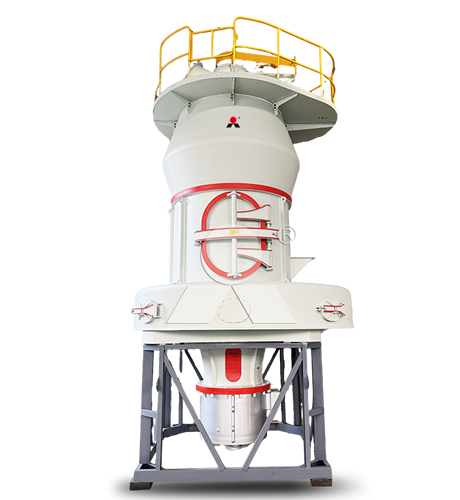
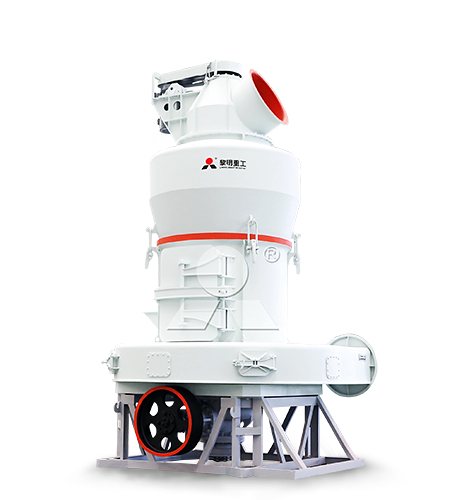
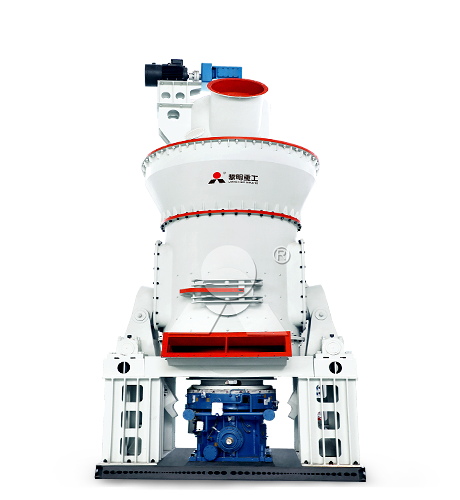
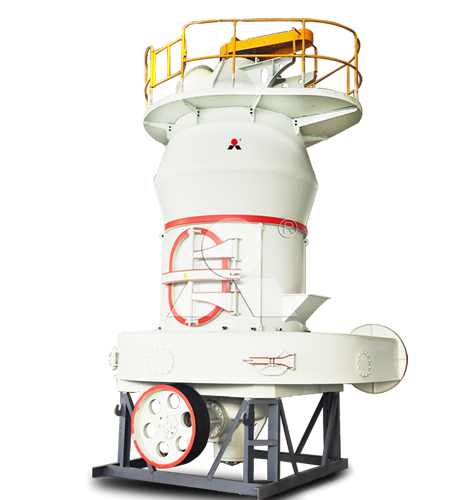
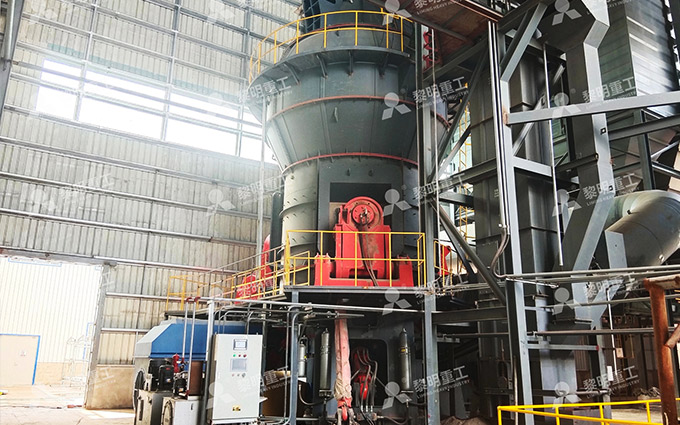
We are Liming Heavy Industry, a manufacturer of various types of industrial crushers, such as Raymond Mill, Trapezoidal Mill, Vertical Mill, Ultrafine Mill, Ball Mill, etc.
Our mills can process the following minerals:
limestone, quicklime, kaolin, talc, barite, bentonite, calcium carbonate, dolomite, coal, gypsum, clay, carbon black, slag, cement raw materials, cement clinker, etc.
If you need a mill to process stone or minerals into powder, please feel free to contact me (WhatsApp: +8615333807511). Thank you.
Toothpaste-grade calcium carbonate is a high-purity, tightly controlled oral-care mineral used mainly as a dentifrice abrasive, polishing agent, paste body builder, and opacifier. It is commonly made from carefully selected natural calcium carbonate and processed to meet defined requirements for chemistry, particle size, heavy metals, microbiological quality, taste neutrality, and consistency.
It is not interchangeable with industrial calcium carbonate used in plastics, rubber, paint, or construction materials. A toothpaste-grade product must be qualified for oral-care use and tested in the finished formula for abrasivity, fluoride compatibility, stability, sensory quality, and regulatory compliance in the destination market.
What makes calcium carbonate “toothpaste grade”?
“Toothpaste grade” is an application specification rather than a single global standard or universal mesh size. It means the calcium carbonate has been manufactured, tested, packaged, and documented for use in a consumer oral-care product.
At minimum, a toothpaste manufacturer should expect a calcium carbonate grade with controlled purity, particle-size distribution, foreign-particle limits, and heavy-metal limits. It should also have low and consistent moisture, suitable whiteness, no objectionable taste or odor, and appropriate microbiological control.
Food Chemicals Codex (FCC) is an internationally recognized compendium that provides purity and quality specifications for food ingredients. In the United States, federal regulations for certain calcium carbonate food-color uses require compliance with the current FCC specifications for calcium carbonate or ground limestone. FCC conformance can be an important quality reference for oral-care raw materials, but a toothpaste producer must still confirm the requirements that apply to its specific cosmetic, consumer-health, or drug product and sales market.
Functions in toothpaste
Toothpaste contains a balance of abrasive solids, humectants, water, binders, surfactants, flavor, sweeteners, actives, preservatives where applicable, and colorants. Calcium carbonate can perform several functions within that system.
Cleaning: Helps remove dental plaque, food debris, and external surface stains during brushing.
Polishing: Contributes to cleaning and polishing of the tooth surface.
Paste body: Provides solid content and contributes to the viscosity and structure of the paste.
Opacity: Gives conventional toothpaste its white, opaque appearance.
Texture: Influences smoothness, mouthfeel, tube extrusion, and perceived cleaning quality.
Economics: Provides a cost-effective mineral abrasive and body-building component.
Calcium carbonate is one of the commonly used toothpaste abrasives, alongside hydrated silica, dicalcium phosphate, sodium bicarbonate, and other materials. Its usefulness comes from the balance it can provide between cleaning action, formulation cost, white appearance, and paste structure.
Critical quality requirements
| Quality attribute | Why it matters in toothpaste |
|---|---|
| CaCO3 assay and purity | Supports predictable abrasive behavior, stable formulation performance, and control of unwanted mineral impurities. |
| Particle-size distribution | Controls cleaning performance, abrasivity, mouthfeel, paste smoothness, viscosity, and polishing behavior. |
| Maximum particle size and coarse residue | Helps avoid gritty texture, uncomfortable brushing feel, inconsistent abrasion, and visible foreign particles. |
| Lead, arsenic, cadmium, and mercury | Critical safety and regulatory parameters for a raw material used in an oral-care product. |
| Fluoride content | Important for material control and for compatibility with the toothpaste’s anticaries active system. |
| Acid-insoluble residue | Helps identify insoluble mineral contamination that could affect texture and abrasive quality. |
| Whiteness and color | Supports a clean white appearance and stable color in white and tinted toothpaste formulations. |
| Moisture and loss on drying | Affect powder flow, storage, batch consistency, paste viscosity, and material handling. |
| Microbiological quality | Required because the raw material is used in a consumer product intended for the mouth. |
| Taste and odor | Must not interfere with flavor, sweetener, or consumer sensory acceptance. |
| Lot-to-lot consistency | Protects the stability of viscosity, abrasivity, appearance, fluoride availability, and processing performance. |
For reference, a USP calcium carbonate monograph correction lists a fluoride limit of not more than 50 ppm and a mercury limit of not more than 0.5 ppm. Exact specifications must be confirmed against the current, applicable pharmacopeial, FCC, cosmetic, and local regulatory requirements rather than copied from an older or unrelated monograph.
Particle size and mouthfeel
Particle size is one of the most important distinguishing features of toothpaste-grade calcium carbonate. The material must clean and polish effectively while producing a smooth, non-gritty paste. If particles are too coarse, too angular, poorly classified, or present as hard agglomerates, consumers may perceive grittiness and the finished toothpaste may have uncontrolled abrasivity.
If particles are too fine, the abrasive may provide less mechanical cleaning than intended and can change paste rheology because fine material has more surface area. The best particle-size distribution is therefore determined by the desired cleaning profile, target Relative Dentin Abrasivity (RDA), toothpaste texture, abrasive loading, and other ingredients.
Use laser particle-size data and coarse-particle control rather than mesh alone. A proper toothpaste-grade technical data sheet should show at least a median particle size, a maximum particle-size indicator such as D90, D97, or D98, and an oversized-particle or sieve-residue limit.
| Particle-size condition | Expected formulation effect | Main risk |
|---|---|---|
| Excessively coarse or broad PSD | May increase mechanical cleaning and body. | Grittiness, poor mouthfeel, uncontrolled abrasivity, rough paste texture. |
| Controlled medium-fine PSD | Balances cleaning, polishing, paste body, smoothness, and cost. | Requires lot-to-lot consistency to maintain stable sensory and abrasivity results. |
| Fine and narrow PSD | Supports a smooth paste, refined mouthfeel, and uniform appearance. | Can alter viscosity and may need adjustment of abrasive loading or thickener system. |
| Hard agglomerates | May behave as unexpectedly large abrasive particles. | Grit, visible defects, inconsistent RDA, and poor consumer acceptance. |
Abrasivity is tested on the final toothpaste
Calcium carbonate particle size influences cleaning and polishing, but it does not independently determine safety. Toothpaste abrasivity depends on the full formula, including abrasive type, abrasive concentration, particle morphology, thickener system, surfactant, brushing conditions, toothbrush type, and manufacturing dispersion quality.
Relative Dentin Abrasivity, or RDA, is the established laboratory method used to compare the relative abrasion of dentin by different toothpastes. The American Dental Association notes that RDA values of 250 or less are considered safe and effective, and toothpaste products carrying the ADA Seal of Acceptance must meet that threshold.
For an oral-care manufacturer, the practical requirement is to test the finished toothpaste—not merely the raw calcium carbonate—against the intended cleaning and abrasivity target. A raw-material supplier can provide particle-size and purity data, but only the complete formula can establish the final RDA result.
Fluoride compatibility
Fluoride compatibility is a central issue when calcium carbonate is used as the abrasive. In a water-containing toothpaste, calcium ions can interact with free fluoride ions and form poorly soluble calcium fluoride. This can reduce the level of soluble fluoride available for anticaries efficacy during shelf life.
For this reason, calcium carbonate toothpaste commonly uses sodium monofluorophosphate (SMFP) as the fluoride source. In contrast to free sodium fluoride, SMFP is generally more compatible with calcium-containing abrasive systems. The U.S. FDA’s anticaries-drug rulemaking history identifies sodium monofluorophosphate, sodium fluoride, and stannous fluoride among the fluoride compounds covered by the final monograph framework.
Compatibility cannot be assumed from ingredient names alone. Manufacturers should measure total fluoride and soluble fluoride in the finished toothpaste under accelerated and real-time stability conditions. The test plan should reflect the planned packaging, storage temperature, water activity, pH, humectant system, flavor composition, and shelf life.
GCC or PCC for toothpaste?
Both ground calcium carbonate (GCC) and precipitated calcium carbonate (PCC) can be used in oral-care formulations, provided the grade meets all applicable quality and safety requirements. The best choice depends on the desired balance of texture, particle-size control, cleaning profile, formulation cost, and manufacturing process.
| Characteristic | GCC | PCC |
|---|---|---|
| Origin | Mechanically ground natural calcium carbonate from selected limestone, marble, or calcite. | Chemically produced calcium carbonate with controlled precipitation conditions. |
| Typical advantage | Cost-effective abrasive and body-building mineral with broad market availability. | Potentially more controllable particle morphology and particle-size characteristics. |
| Formulation role | Conventional opaque toothpaste, family toothpaste, economy dentifrice, and standard oral-care products. | Specialty formulations that need specific particle characteristics, texture, or functional performance. |
| Selection basis | Purity, oral-care qualification, PSD, heavy-metal control, fluoride compatibility, and finished-product RDA. | Purity, oral-care qualification, morphology, PSD, fluoride compatibility, and finished-product RDA. |
Neither GCC nor PCC should be selected solely because it is natural, synthetic, finer, or less expensive. The final choice should be based on validated performance in the intended toothpaste formula.
What to request from a supplier
A toothpaste manufacturer should request a complete oral-care technical package rather than a generic calcium carbonate data sheet.
Certificate of analysis for CaCO3 assay, moisture, whiteness, particle size, and acid-insoluble residue.
Heavy-metal data for lead, arsenic, cadmium, mercury, and other limits required by the target market.
Microbiological certificate and testing method.
Particle-size distribution data, including D10, D50, D90/D97/D98, plus coarse-particle or sieve-residue control.
Statement of conformity to relevant standards, such as FCC where applicable.
Allergen, GMO, BSE/TSE, animal-origin, and natural-origin declarations if required by the brand or market.
Manufacturing-site quality certifications and traceability information.
Packaging details, shelf life, storage recommendations, and contamination-control procedures.
A representative sample for laboratory and pilot-scale toothpaste testing.
A commercial personal-care GCC product illustrates the type of information a supplier may provide: it is described as FCC-compliant ground limestone with a 98% minimum calcium carbonate content, maximum lead content of 0.6 ppm, maximum cadmium content of 0.4 ppm, and maximum arsenic content of 1 ppm. These values are supplier- and product-specific examples, not universal toothpaste-grade limits.
Common sourcing mistakes
Buying industrial GCC for oral care: A plastic, paint, rubber, or construction grade may not meet oral-care impurity, microbiological, sensory, documentation, or traceability requirements.
Specifying only mesh: Mesh does not adequately control the complete particle-size distribution, hard agglomerates, or maximum particle size relevant to mouthfeel and abrasivity.
Ignoring fluoride compatibility: A calcium carbonate abrasive requires a suitable fluoride system and finished-product soluble-fluoride testing.
Evaluating only chemical purity: A high CaCO3 assay does not ensure good mouthfeel, acceptable RDA, low heavy metals, microbiological control, or stable toothpaste viscosity.
Skipping finished-product testing: Raw-material qualification cannot replace RDA, stability, microbiology, packaging, sensory, and fluoride-availability testing on the commercial toothpaste.
Not checking lot consistency: Small changes in PSD, coarse residue, or moisture can change paste texture, processing behavior, and cleaning performance.
FAQ
Is toothpaste-grade calcium carbonate food grade?
It may meet food-grade standards such as FCC, but “food grade” and “toothpaste grade” are not identical claims. Toothpaste-grade material must additionally be suitable for the manufacturer’s oral-care application, quality system, impurity limits, microbiological requirements, fluoride system, and destination-market regulations.
What particle size is used for toothpaste calcium carbonate?
There is no universal particle-size value because toothpaste formulas target different cleaning, texture, and abrasivity profiles. A suitable grade needs a controlled medium-fine or fine particle-size distribution, a tightly controlled coarse end, and validation in the finished formula. Evaluate D10, D50, D90/D97/D98, sieve residue, mouthfeel, and final RDA together.
Can calcium carbonate toothpaste use sodium fluoride?
It can be technically possible in specially designed systems, but calcium carbonate can reduce soluble fluoride availability by reacting with free fluoride ions. Sodium monofluorophosphate is commonly used with calcium carbonate abrasive systems. Any fluoride-active choice should be confirmed by finished-product soluble-fluoride stability testing.
Is calcium carbonate safe for toothpaste?
Calcium carbonate is a commonly used dentifrice abrasive. Its suitability depends on using an appropriately qualified grade and ensuring that the finished toothpaste meets applicable safety, quality, regulatory, microbiological, and abrasivity requirements in the intended market.
Key takeaway
Toothpaste-grade calcium carbonate is a controlled oral-care abrasive, not ordinary industrial mineral powder. It must combine high purity, tight particle-size control, low coarse residue, heavy-metal and microbiological control, neutral taste and odor, traceable documentation, and verified fluoride compatibility. The final qualification decision should be based on the complete toothpaste: smoothness, cleaning performance, RDA, soluble fluoride stability, shelf life, safety, and consumer sensory acceptance.