Calcium Carbonate Knowledge Hub
Calcium Carbonate for Toothpaste
2026-09-04 16:59:54
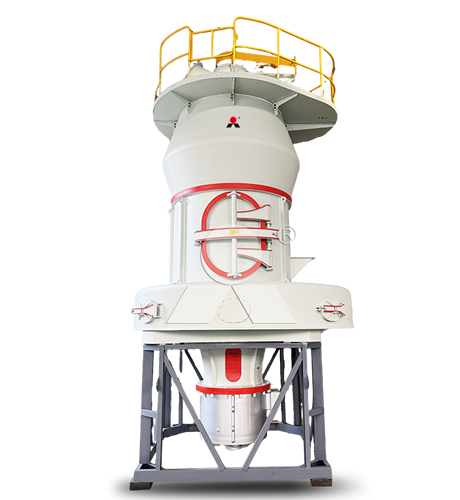
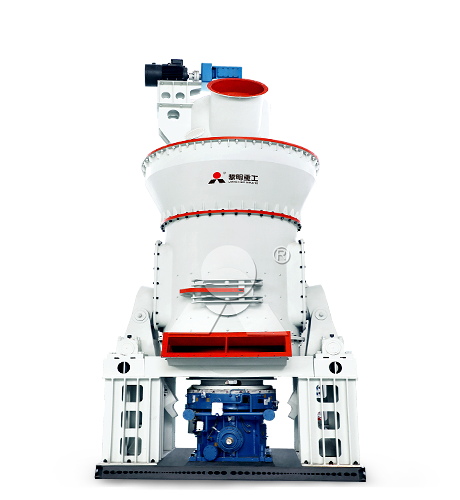
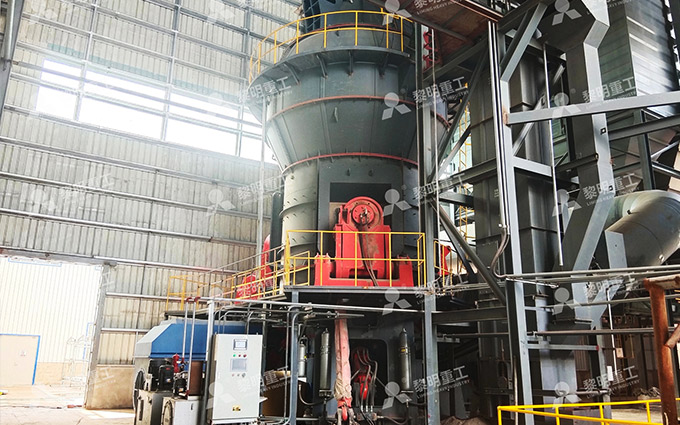
We are Liming Heavy Industry, a manufacturer of various types of industrial crushers, such as Raymond Mill, Trapezoidal Mill, Vertical Mill, Ultrafine Mill, Ball Mill, etc.
Our mills can process the following minerals:
limestone, quicklime, kaolin, talc, barite, bentonite, calcium carbonate, dolomite, coal, gypsum, clay, carbon black, slag, cement raw materials, cement clinker, etc.
If you need a mill to process stone or minerals into powder, please feel free to contact me (WhatsApp: +8615333807511). Thank you.
Calcium carbonate is used in toothpaste primarily as a cleaning and polishing abrasive. In an oral-care formulation, carefully controlled calcium carbonate particles help remove dental plaque, food debris, and extrinsic surface stains while also contributing body, texture, opacity, and stable paste consistency.
Toothpaste-grade calcium carbonate is not ordinary industrial filler. It must meet oral-care requirements for purity, particle-size control, low heavy-metal and insoluble contamination, microbiological quality, taste neutrality, and compatibility with the toothpaste’s fluoride system, humectants, surfactants, flavor, and binder. Calcium carbonate is recognized as one of the common abrasive agents used in dentifrices.
Why calcium carbonate is used in toothpaste
Toothpaste, also called dentifrice, is designed to deliver active ingredients and help clean tooth surfaces during brushing. The American Dental Association describes toothpaste as an abrasive-containing dosage form for delivering an anticaries drug to the teeth, and calcium carbonate is among the abrasive materials used in dentifrice formulations.
In a typical toothpaste formula, calcium carbonate may perform several roles at once:
Provides controlled mechanical cleaning during brushing.
Helps remove extrinsic stains from food, beverages, tobacco, and other surface deposits.
Contributes to polishing and cleaning feel.
Builds the body and consistency of the paste.
Provides white color and opacity.
Acts as a cost-effective solid component in the formulation.
Helps control the texture, squeeze behavior, and mouthfeel of toothpaste.
Calcium carbonate is especially common in conventional white toothpaste, family toothpaste, economy toothpaste, and certain herbal or natural-positioned oral-care products. It has been used as a dentifrice abrasive for many decades; calcium carbonate-based toothpaste became widely used during the 1850s.
Calcium carbonate as a toothpaste abrasive
The abrasive system is a critical part of toothpaste performance. It must remove plaque and external stains effectively without causing excessive wear to dentin or enamel under normal brushing conditions. Calcium carbonate is an insoluble abrasive, and its cleaning behavior depends on particle size, particle shape, hardness, size distribution, concentration, interaction with the toothbrush, brushing force, and the rest of the formula.
Calcium carbonate should not be described simply as “mild” or “harsh” based on the mineral name alone. Actual toothpaste abrasivity is measured on the final product. A calcium carbonate toothpaste can be designed for different cleaning and polishing levels depending on the specific grade, loading, particle design, and formulation.
The commonly used laboratory measure is Relative Dentin Abrasivity (RDA). It compares the amount of dentin worn by a toothpaste under a standardized brushing protocol with a reference abrasive assigned an RDA value of 100. The ADA states that toothpastes with RDA values at or below 250 are considered safe and effective, and all toothpastes carrying the ADA Seal of Acceptance must remain at or below this limit.
Particle size matters in toothpaste-grade calcium carbonate
Particle-size distribution is one of the most important specifications for calcium carbonate used in toothpaste. It influences cleaning action, polishing effect, mouthfeel, viscosity, paste smoothness, tube extrusion, and the final RDA of the complete dentifrice.
| Particle-size direction | Likely toothpaste effect | Potential risk if poorly controlled |
|---|---|---|
| Too coarse | Can increase mechanical cleaning and contribute to a more pronounced polishing effect. | Gritty mouthfeel, rough paste texture, higher abrasion risk, inconsistent polishing, visible particles. |
| Controlled medium-fine | Balances cleaning, paste body, smoothness, and economical solids loading. | Requires consistent PSD to maintain stable sensory and abrasivity performance. |
| Fine | Supports smooth texture, uniform appearance, and refined mouthfeel. | May reduce cleaning efficiency if the abrasive system becomes too soft or fine for the intended claim. |
| Very fine or high-surface-area | Can provide smoothness and affect rheology or paste structure. | Can increase formulation sensitivity, thickener demand, and processing complexity. |
Toothpaste manufacturers should not specify calcium carbonate only by mesh. Mesh is not sufficient to show the full fine-particle distribution, particle agglomeration, oversized residue, or surface characteristics. Oral-care grades should be evaluated using particle-size analysis, coarse-particle control, sensory testing, final toothpaste RDA testing, and stability testing.
Toothpaste-grade calcium carbonate requirements
Industrial calcium carbonate intended for plastics, rubber, paint, or construction products should not be assumed suitable for oral care. Toothpaste-grade material must be produced and controlled for direct oral-use applications under the applicable quality, safety, and regulatory framework of the target market.
| Quality attribute | Why it matters in toothpaste |
|---|---|
| Calcium carbonate purity | High purity supports predictable formulation behavior and limits unwanted mineral contamination. |
| Heavy-metal limits | Critical for consumer safety and regulatory compliance in an oral-care product. |
| Particle-size distribution | Controls cleaning, abrasivity, mouthfeel, paste smoothness, and polishing behavior. |
| Coarse-particle residue | Helps prevent grittiness, uneven texture, excessive abrasion, and sensory defects. |
| Whiteness and color | Supports a clean white appearance and stable color in the finished toothpaste. |
| Moisture content | Affects powder flow, storage, batch weighing, and formulation consistency. |
| Microbiological quality | Required because the material is incorporated into a consumer oral-care product. |
| Taste and odor neutrality | Prevents undesirable taste, odor, or flavor interference in the toothpaste. |
| Acid-insoluble residue and foreign particles | Helps control abrasive contaminants and maintain a smooth, safe consumer product. |
| Lot-to-lot consistency | Protects RDA, viscosity, appearance, flavor perception, and manufacturing reliability. |
Fluoride compatibility: a key formulation issue
Calcium carbonate affects the choice of fluoride active. This is one of the most important technical issues in calcium carbonate toothpaste formulation.
In an aqueous toothpaste, calcium carbonate can react with free fluoride ions and form poorly soluble calcium fluoride. This can reduce the amount of soluble fluoride available for anticaries activity. For that reason, calcium carbonate abrasive systems are commonly paired with sodium monofluorophosphate (SMFP), rather than sodium fluoride, because SMFP is generally more compatible with calcium-containing abrasive systems.
Scientific guidance on dentifrices identifies stannous fluoride, sodium monofluorophosphate, and sodium fluoride as fluoride sources addressed in U.S. FDA anticaries monograph history. It also notes that all over-the-counter fluoride dentifrices must meet soluble fluoride requirements and efficacy testing requirements applicable to their fluoride compound.
Compatibility must be verified through the finished toothpaste’s soluble fluoride stability program. It should not be assumed only from the ingredient list. The final formula, including pH, water activity, humectants, surfactants, flavor oils, storage temperature, packaging, and shelf-life conditions, can affect fluoride availability.
Calcium carbonate versus hydrated silica
Calcium carbonate and hydrated silica are both common toothpaste abrasives, but they offer different formulation behavior. Calcium carbonate is widely used for opaque white pastes and economical conventional dentifrices. Hydrated silica is often used in clear gels, translucent formulations, whitening products, and systems requiring specific rheology or optical effects.
| Characteristic | Calcium carbonate | Hydrated silica |
|---|---|---|
| Typical role | Abrasive, polishing agent, body builder, opacifier, and economical solid filler. | Abrasive, thickening aid, cleaning agent, and optical modifier in many gel formulations. |
| Common toothpaste appearance | Opaque white or colored paste. | Clear gel, translucent gel, white paste, or specialty whitening formulation. |
| Fluoride compatibility | Requires careful selection and verification of fluoride chemistry because calcium can reduce free fluoride availability. | Often used with sodium fluoride systems, subject to full finished-product stability testing. |
| Cost position | Often a cost-effective abrasive and body-building mineral. | Often selected for specific performance or appearance needs rather than lowest material cost. |
| Formulation priority | Controlled abrasivity, smooth paste texture, fluoride compatibility, purity, and economical solids loading. | Transparency, gel rheology, cleaning profile, optical clarity, and fluoride-system compatibility. |
Neither abrasive is inherently better for every toothpaste. The choice depends on desired appearance, active ingredient, cleaning claim, abrasivity target, sensory profile, production process, and cost target.
How calcium carbonate is incorporated into toothpaste
Toothpaste manufacturing normally begins by preparing a liquid phase containing water, humectants such as sorbitol or glycerin, and soluble ingredients. The thickener or binder system is hydrated or dispersed under controlled mixing. Calcium carbonate is then added gradually under vacuum or controlled mixing conditions to avoid air entrainment and obtain a smooth, uniform paste.
After abrasive dispersion, manufacturers add surfactant, flavor, sweetener, fluoride active, preservatives where applicable, colorants, and other functional ingredients according to the formula and process sequence. The toothpaste is deaerated and filled into laminate, plastic, aluminum, or other approved tubes.
Calcium carbonate must disperse uniformly. Agglomerates can create a gritty sensory profile, uneven abrasivity, inconsistent viscosity, or visible defects. Manufacturers should control powder feeding, mixing speed, vacuum level, shear history, batch temperature, and time between mixing and filling.
Common quality problems
Gritty mouthfeel
Grittiness can result from excessive coarse particles, agglomerates, inadequate milling or classification, poor dispersion, foreign contamination, or an unsuitable particle-size distribution. It is a major consumer-quality concern because toothpaste must feel smooth during brushing.
High or inconsistent abrasivity
Abrasivity depends on the complete toothpaste, not only calcium carbonate particle size. Changes in the abrasive lot, particle morphology, loading, brush type, surfactant system, or process can affect the finished product’s RDA. Each commercial formula should be tested as a final product.
Loss of soluble fluoride
Using a calcium carbonate abrasive with an incompatible fluoride system can reduce fluoride availability during storage. Toothpaste developers should use a compatible active-ingredient system and monitor soluble fluoride throughout the product shelf life.
Unstable viscosity or phase separation
Inadequate abrasive dispersion, unsuitable thickener selection, incorrect humectant balance, excessive water, or variations in calcium carbonate surface area can cause viscosity drift, syneresis, or poor tube-extrusion behavior. A stable formulation needs both a consistent abrasive grade and a compatible rheology system.
FAQ
Is calcium carbonate safe in toothpaste?
Calcium carbonate is a commonly used dentifrice abrasive. Its suitability depends on the finished toothpaste meeting applicable oral-care quality, safety, regulatory, and abrasivity requirements for the market in which it is sold. The final toothpaste—not merely the calcium carbonate raw material—should be evaluated for safety and performance.
Does calcium carbonate whiten teeth?
It can help remove extrinsic surface stains through mechanical cleaning and polishing during brushing. It does not chemically bleach tooth color in the way peroxide-based whitening systems can. The visible whitening result depends on the abrasive system, stain type, brushing method, and the overall product formulation.
Does calcium carbonate damage enamel?
That depends on the abrasivity of the finished toothpaste and brushing conditions, not on calcium carbonate alone. RDA is used to assess relative dentin abrasivity, and toothpastes at or below 250 RDA are considered safe and effective under the ADA’s cited standard.
What fluoride is commonly used with calcium carbonate toothpaste?
Sodium monofluorophosphate is commonly used with calcium carbonate abrasive systems because it is more compatible with calcium-containing formulations than free fluoride sources such as sodium fluoride. The finished toothpaste must still be tested for soluble fluoride stability over its intended shelf life.
Key takeaway
Calcium carbonate for toothpaste is a controlled oral-care abrasive that provides cleaning, polishing, paste body, opacity, and economical formulation solids. Successful use depends on oral-care-grade purity, strict particle-size control, smooth dispersion, appropriate abrasivity, microbiological quality, and verified compatibility with the fluoride system. For toothpaste manufacturers, the right calcium carbonate is the one that delivers stable cleaning performance and sensory quality in the complete dentifrice formula.