Calcium Carbonate Knowledge Hub
Calcium Carbonate for Sealants
2026-09-04 16:59:17
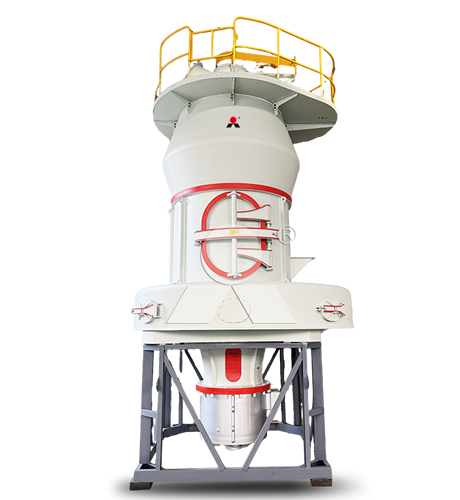
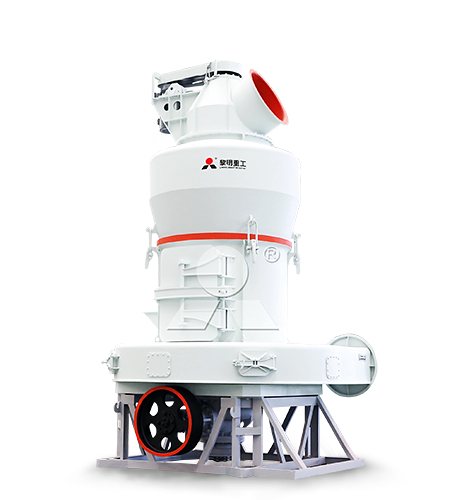
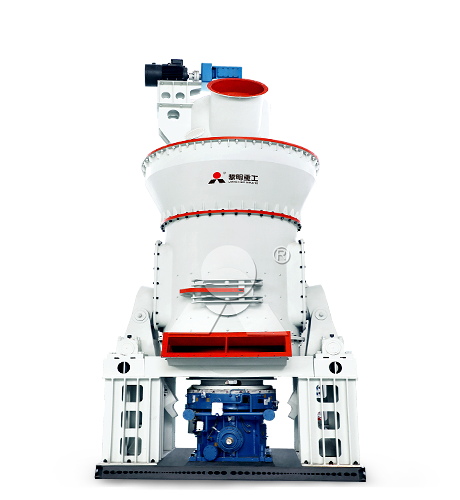
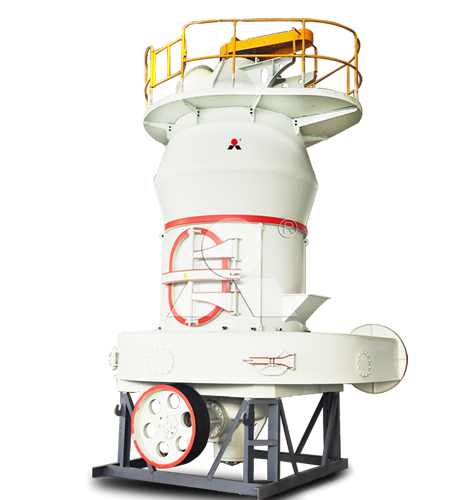
We are Liming Heavy Industry, a manufacturer of various types of industrial crushers, such as Raymond Mill, Trapezoidal Mill, Vertical Mill, Ultrafine Mill, Ball Mill, etc.
Our mills can process the following minerals:
limestone, quicklime, kaolin, talc, barite, bentonite, calcium carbonate, dolomite, coal, gypsum, clay, carbon black, slag, cement raw materials, cement clinker, etc.
If you need a mill to process stone or minerals into powder, please feel free to contact me (WhatsApp: +8615333807511). Thank you.
Calcium carbonate is a core mineral filler in sealants because it controls viscosity, thixotropy, extrusion rate, sag resistance, shrinkage, modulus, and formulation cost. It is widely used in silicone, polyurethane (PU), MS polymer or silyl-modified polymer (SMP), acrylic, butyl, polysulfide, and PVC plastisol sealants.
The correct calcium carbonate for sealants must be matched to the curing mechanism and application. Fine or ultrafine grades can build rheology and help prevent sagging, while medium-fine GCC provides economical bulk and controlled extrusion. For moisture-curing PU, silicone, and MS polymer products, low moisture and appropriate surface treatment are often critical to avoid poor storage stability or premature curing.
Why sealants use calcium carbonate
Sealants must flow through a cartridge, sausage pack, pail, pump, or extrusion nozzle, then hold a stable bead on horizontal, vertical, or overhead joints. After cure, they must maintain adhesion, flexibility, cohesion, weather resistance, and movement capability. Calcium carbonate helps formulate this balance.
Depending on grade and loading, calcium carbonate can provide:
Cost-effective volume extension.
Higher viscosity and controlled yield stress.
Thixotropy: flow under shear during extrusion, followed by recovery after application.
Improved slump and sag resistance in vertical joints.
Reduced cure shrinkage and more stable bead geometry.
Adjustment of modulus, hardness, tensile behavior, and elongation.
White color, opacity, and a consistent surface appearance.
Better storage stability and dispersion when moisture and surface chemistry are properly controlled.
In MS polymer sealants, calcium carbonate is commonly selected because of its effect on modulus, tensile strength, and elongation. Formulation guidance identifies calcium carbonate and talc as fillers often used at 30–70% of total sealant weight, depending on the target product and performance level.
How calcium carbonate controls sealant rheology
Sealant rheology is the relationship between force and flow. A high-quality sealant should dispense consistently under cartridge pressure, wet the substrate, form a uniform bead, and resist slump after the nozzle leaves the joint.
Calcium carbonate changes rheology through particle size, particle-size distribution, specific surface area, surface treatment, particle morphology, and filler loading. Fine particles have more surface area and can create a stronger internal particle network, raising viscosity and yield value. Coarser particles generally add body and economical bulk with a lower viscosity increase.
Precipitated calcium carbonate is used when a formulation needs a stronger rheology effect. Suppliers report that PCC can enhance storage stability, extrusion rate, slump and sag resistance, service life, and cure rate in adhesive and sealant formulations. In practice, the balance must be confirmed in the complete formula because increasing rheology can also make extrusion too difficult or reduce leveling.
Calcium carbonate by sealant type
| Sealant type | Typical role of calcium carbonate | Key grade requirements |
|---|---|---|
| Neutral-cure silicone sealant | Rheology, body, cost control, bead stability, and cured-property adjustment. | Low moisture, fine or medium-fine PSD, compatible surface treatment, low coarse residue. |
| One-component PU sealant | Viscosity, anti-sag behavior, bulk, modulus control, and cost management. | Very low moisture, controlled surface treatment, good dispersion, stable storage behavior. |
| MS polymer / SMP sealant | Thixotropy, extrusion control, modulus, tensile balance, and economical formulation volume. | Dry fine GCC or PCC, narrow PSD, low moisture, appropriate surface chemistry. |
| Acrylic sealant or caulk | Body, waterborne rheology, shrinkage control, whiteness, and cost reduction. | High whiteness, fine PSD, waterborne dispersibility, stable viscosity, low grit. |
| Butyl sealant | Body, viscosity adjustment, bulk, and processing consistency. | Controlled PSD, compatible treatment where needed, low moisture, predictable oil absorption. |
| Polysulfide sealant | Rheology, cured-density control, gap filling, and formulation economics. | Low moisture, fine particle control, chemical compatibility, stable batch quality. |
| PVC plastisol sealant | Viscosity, thixotropy, sag control, and bead shape. | Fine GCC or PCC, plastisol compatibility, low moisture, high dispersibility. |
GCC versus PCC for sealants
Ground calcium carbonate (GCC) is the standard filler for many high-volume sealants. It is produced by grinding and classifying natural limestone, marble, or calcite. GCC is available from coarse through ultrafine grades and offers a favorable balance of cost, density, rheology control, and practical filler loading.
Precipitated calcium carbonate (PCC) is chemically produced and can offer more controlled particle morphology and higher surface area. It is often selected when the formulator needs stronger thickening, higher yield stress, improved anti-sag behavior, or a more specialized rheological profile.
| Characteristic | GCC for sealants | PCC for sealants |
|---|---|---|
| Main use | Economical bulk filler, viscosity control, body, and general rheology adjustment. | Functional rheology modifier for higher yield value, thixotropy, and controlled performance. |
| Particle characteristics | Available in broad particle-size ranges; natural mineral morphology. | Finer and more controllable morphology; generally higher surface area. |
| Loading strategy | Often used at relatively high loading for economical formulation extension. | May be used at lower loading to produce a stronger rheological effect. |
| Cost position | Usually lower cost and preferred for broad-volume production. | Usually higher cost but can be justified for premium or technically demanding sealants. |
| Typical applications | General silicone, PU, acrylic, butyl, MS polymer, and construction sealants. | High-performance sealants, PVC plastisols, specialty MS polymer systems, and precision anti-sag formulations. |
Moisture control in reactive sealants
Moisture is one of the most important calcium carbonate specifications for one-component moisture-curing sealants. PU, neutral-cure silicone, and MS polymer systems react with atmospheric moisture after application. If calcium carbonate contains too much water, it can introduce uncontrolled moisture into the batch before packaging.
In MS polymer systems, silane end groups cure in the presence of moisture and a catalyst. Calcium carbonate is commonly used as a filler in these sealants, but moisture introduced through filler can initiate premature reaction and reduce storage stability. The risk is similar in moisture-curing PU systems, where water reacts with isocyanate groups and can create premature viscosity increase, gas formation, bubbles, or shortened shelf life.
For this reason, sealant producers commonly require low-moisture calcium carbonate, sealed moisture-resistant packaging, dry storage, and controlled mixing conditions. One commercial PCC grade intended for PU, silicone, hybrid-polymer, polysulfide, butyl, PVC plastisol, and acrylic plastisol applications specifies 0.4% moisture. The acceptable value is formulation-specific; moisture-sensitive one-component systems may require tighter control than water-based acrylic caulks.
What happens when filler moisture is too high?
Premature curing or viscosity rise during storage.
Skinning, gel particles, or cartridge blockage.
Gas generation and bubbles in moisture-curing polyurethane systems.
Inconsistent extrusion force and bead shape.
Reduced shelf life and batch-to-batch variation.
Surface defects, local shrinkage, or irregular cured-sealant texture.
Sealant manufacturing guidance notes that calcium carbonate can absorb moisture during transport and storage, and recommends drying it before incorporation into moisture-curing sealants to protect storage stability.
Surface-treated calcium carbonate for sealants
Untreated calcium carbonate has a hydrophilic mineral surface. Surface treatment changes the surface chemistry to improve compatibility with hydrophobic binder systems and to reduce moisture sensitivity. Treated GCC is particularly relevant for silicone, polyurethane, MS polymer, butyl, and other reactive or low-polarity sealants.
Common treatments include fatty-acid-based coatings and proprietary organophilic treatments. The treatment can reduce filler-filler attraction, improve wetting by the polymer or plasticizer, support smoother dispersion, and help maintain a usable extrusion-viscosity balance. It must still be matched to the sealant chemistry. A grade designed for polyolefin plastics is not automatically appropriate for a PU, silicone, or silyl-modified polymer formulation.
Suppliers of surface-coated GCC for moisture-curing adhesive applications emphasize low moisture, viscosity control, and adhesion performance in systems such as roofing adhesives. Sealant formulators should verify the actual performance in their own resin, plasticizer, catalyst, moisture scavenger, and pigment package.
Particle size selection for sealants
Particle-size distribution controls how calcium carbonate affects viscosity, bead smoothness, extrusion force, settling resistance, thixotropy, and cured surface appearance. Fine particles create a stronger rheological effect because of their larger surface area, while coarser grades allow economical loading and can reduce excessive viscosity.
| Grade direction | Typical sealant effect | Suitable applications |
|---|---|---|
| Coarse GCC | Economical bulk, body, gap filling, and lower surface-area demand. | Construction sealants, fillers, lower-cost products, and applications with less demanding bead appearance. |
| Medium-fine GCC | Balances cost, rheology, extrusion rate, and cured-bead appearance. | General-purpose silicone, PU, acrylic, and butyl sealants. |
| Fine GCC | Improves smoothness, dispersion potential, viscosity control, and anti-sag performance. | Higher-quality sealants, cartridge products, smooth visible joints, selected reactive systems. |
| Ultrafine GCC or PCC | Builds stronger thixotropy and yield stress; supports anti-sag performance at carefully controlled loading. | Premium MS polymer and PU sealants, high-performance silicone, PVC plastisol, and specialty systems. |
Use laser particle-size data rather than mesh alone. D10, D50, D90, D97, and D98 values show the full distribution, while sieve residue helps identify oversized particles and hard agglomerates. These coarse particles can create rough beads, nozzle blockage, poor tooling, and visible defects in finished joints.
How to specify calcium carbonate for sealants
| Specification item | Why it matters |
|---|---|
| Particle-size distribution | Controls viscosity, yield stress, anti-sag behavior, extrusion, bead smoothness, and packing density. |
| Coarse residue and top cut | Helps avoid cartridge blockage, nozzle defects, rough bead surfaces, and inconsistent tooling. |
| Moisture content | Critical for shelf life and cure stability in moisture-curing PU, silicone, and MS polymer sealants. |
| Surface treatment | Improves compatibility with hydrophobic binders and may reduce moisture-related processing risk. |
| Oil absorption or specific surface area | Indicates likely effects on plasticizer demand, binder demand, viscosity, and practical filler loading. |
| CaCO3 purity and insolubles | Supports consistent color, reduced abrasive contamination, reliable rheology, and stable processing. |
| Whiteness | Important for white sealants, light colors, paintable products, and consistent pigment tinting. |
| Bulk density and flowability | Affects dosing, conveying, dust control, mixing speed, and manufacturing consistency. |
Common selection mistakes
Ignoring filler moisture: This is one of the most serious risks in moisture-curing PU, silicone, and MS polymer sealants.
Choosing only by price: A low-cost grade may create poor extrusion, sagging, settling, unstable viscosity, or reduced shelf life.
Specifying only mesh: Mesh does not describe the full PSD, fine fraction, hard agglomerates, or coarse residue that govern sealant rheology.
Using ultrafine calcium carbonate without formula adjustment: Higher surface area can produce excessive viscosity and demand changes to plasticizer, polymer, dispersant, or processing conditions.
Assuming all coated GCC grades are equivalent: Surface-treatment chemistry and treatment level affect compatibility, moisture behavior, and cure stability.
Increasing filler loading without testing cured properties: More calcium carbonate can change modulus, tensile strength, elongation, adhesion, movement capability, and weathering behavior.
FAQ
Why is calcium carbonate used in silicone sealant?
It is used to build body, control viscosity, reduce cost, improve bead stability, and modify cured mechanical properties. Low-moisture and often surface-treated grades are preferred because silicone sealants commonly cure through reaction with atmospheric moisture.
What calcium carbonate is best for polyurethane sealant?
A low-moisture, fine or medium-fine calcium carbonate with controlled PSD is typically required. Surface-treated GCC is often preferred in one-component moisture-curing PU sealants because it can improve compatibility with the hydrophobic prepolymer and reduce moisture-related storage risks.
Can calcium carbonate improve sag resistance?
Yes. Fine and ultrafine calcium carbonate, especially PCC or engineered surface-treated grades, can increase yield stress and thixotropy, helping a sealant resist slump on vertical joints. The loading must be optimized so that cartridge extrusion remains practical.
How much calcium carbonate is used in sealant?
The amount depends on the polymer system and required movement, adhesion, modulus, and cost target. In MS polymer sealants, filler content can commonly fall within a broad 30–70% weight range, but the correct level must be determined through formulation testing.
Key takeaway
Calcium carbonate for sealants is a key rheology and cost-control ingredient that also affects extrusion, anti-sag behavior, shrinkage, modulus, and cured appearance. GCC is the main choice for economical bulk and general rheology; fine treated GCC and PCC are used when stronger thixotropy, smoother bead quality, and more demanding performance are required. For moisture-curing sealants, low moisture, suitable surface treatment, controlled PSD, and stable lot quality are essential.