Calcium Carbonate Knowledge Hub
How to Produce Ultrafine Calcium Carbonate
2026-09-04 16:31:21
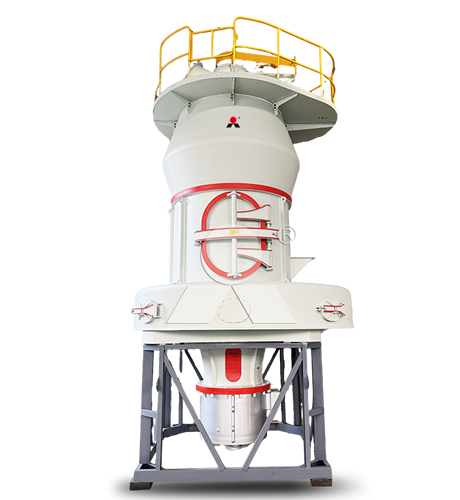
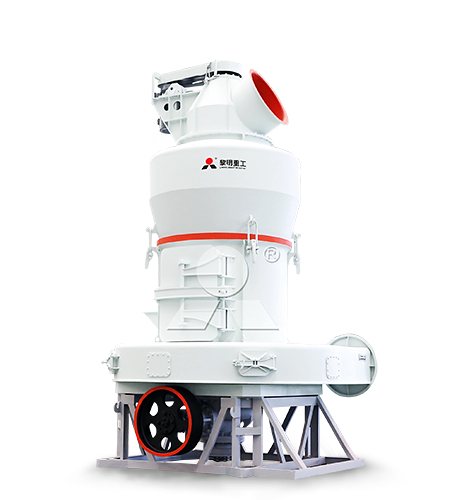
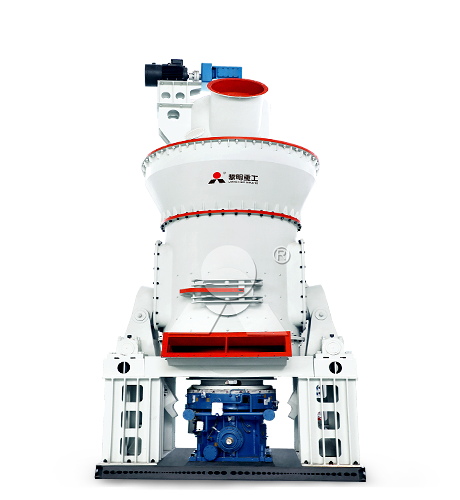
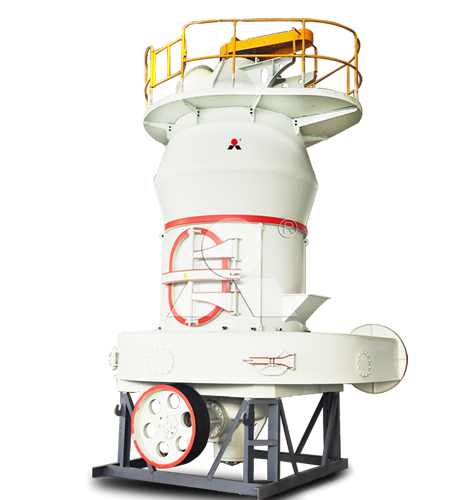
We are Liming Heavy Industry, a manufacturer of various types of industrial crushers, such as Raymond Mill, Trapezoidal Mill, Vertical Mill, Ultrafine Mill, Ball Mill, etc.
Our mills can process the following minerals:
limestone, quicklime, kaolin, talc, barite, bentonite, calcium carbonate, dolomite, coal, gypsum, clay, carbon black, slag, cement raw materials, cement clinker, etc.
If you need a mill to process stone or minerals into powder, please feel free to contact me (WhatsApp: +8615333807511). Thank you.
Ultrafine calcium carbonate is produced by starting with clean, high-purity carbonate feed and then using tightly controlled dry or wet grinding with efficient classification. For ultrafine GCC, the most common routes are a closed-circuit ball mill with a high-efficiency air classifier, a dedicated ultrafine mill, or wet stirred-media grinding for slurry products. The finished grade must be defined by its particle-size distribution—especially D50 and D97—rather than by a general “ultrafine” label or mesh number.
As particle size falls, quality control becomes more demanding. Ultrafine calcium carbonate has much greater surface area than conventional GCC, so moisture, silica, iron, clay, coarse particles, agglomeration, coating uniformity, and powder temperature have a larger influence on performance in PVC, masterbatch, coatings, paper, rubber, sealants, and adhesives. A ball-mill-and-air-classifier system is widely used for large-scale ultrafine calcite GCC, while vertical agitated media mills are used for ultrafine calcium carbonate slurries.
What “Ultrafine” Should Mean
There is no universal particle-size cutoff that applies to every calcium carbonate market. In practice, “ultrafine” generally refers to low-micron GCC or PCC products with a tightly controlled coarse tail. A product with a 2 µm median size is not necessarily equivalent to another 2 µm product if their D97, specific surface area, whiteness, mineral purity, surface treatment, and agglomeration behavior differ.
Define the target grade through a complete particle-size specification and an agreed measurement method, usually laser diffraction for fine GCC. The process design should then be built around that specification.
| Specification term | What it means | Why it matters for ultrafine CaCO3 |
|---|---|---|
| D10 | Particle size below which 10% of measured particle volume occurs | Indicates the very fine fraction and can influence surface area and rheology |
| D50 | Median particle diameter | Common indicator of nominal ultrafine grade |
| D90 or D97 | Particle size below which 90% or 97% of the measured volume occurs | Controls the coarse tail, grit risk, surface smoothness, and dispersion behavior |
| Specific surface area | Total surface area per unit mass | Influences coating demand, oil absorption, viscosity, powder cohesion, and polymer interaction |
| Coarse residue | Particles above a defined size or retained on a specified screen | Helps control oversized particles that can create defects in coatings and polymers |
| Particle-size distribution | The full size curve rather than one size value | Determines packing, flow, slurry behavior, and performance more completely than mesh alone |
For example, dry ball-mill-classifier systems are marketed for ultrafine calcium carbonate in roughly the 5–45 µm range, but a true product target should specify its complete PSD rather than treat this equipment range as a finished-grade definition.
Choose a High-Quality Feedstock
Ultrafine milling cannot remove fundamental defects in the feed. It can make them more important. When calcium carbonate is ground to low-micron size, impurities are distributed through a much larger particle surface area, and coarse hard particles become especially problematic.
For ultrafine GCC, start with calcite-rich limestone, marble, chalk, or calcite ore that has high and stable CaCO3, low MgO, low silica, low iron, low acid-insoluble residue, and high whiteness. The precise limits depend on the application, but the need for consistency increases as the target particle size becomes finer.
| Feedstock factor | Why it becomes critical at ultrafine size | Potential problem |
|---|---|---|
| CaCO3 purity | Defines carbonate content and non-carbonate fraction | Lower purity and higher residue in the final product |
| MgO and dolomite | Controls whether the product meets high-calcium requirements | Failure to meet low-MgO specifications or inconsistent formulation behavior |
| Silica, quartz, chert, and flint | Hard particles create wear and are difficult to tolerate in fine products | High energy consumption, increased media wear, grit, and coarse-particle contamination |
| Clay and aluminosilicates | Influence color, slurry viscosity, moisture, and dispersion | Lower brightness, unstable rheology, poor slurry stability, variable coating demand |
| Iron and dark minerals | Fine grinding exposes colored impurities across more surface area | Reduced whiteness and visible defects in white PVC, paint, paper, and coatings |
| Moisture | Fine powders are sensitive to caking and unstable air classification | Low output, agglomeration, poor powder flow, and inconsistent PSD |
| Quarry consistency | Low-micron grades need repeatable milling and coating conditions | Batch variation in fineness, whiteness, bulk density, and formulation behavior |
Use representative sampling across quarry benches, depths, color zones, stockpiles, and supplier lots. Test CaCO3, CaO, MgO, SiO2, Fe2O3, acid-insoluble residue, moisture, whiteness, and XRD mineralogy before committing feed to ultrafine production.
Prepare Feed for Ultrafine Grinding
The ultrafine circuit needs a stable, clean, dry, and accurately metered feed. Poor feed preparation limits capacity and makes it difficult for the classifier or wet separator to maintain a narrow distribution.
Crushing and pre-grinding
Natural calcium carbonate feed is reduced through primary and secondary crushing before it reaches the fine mill. Jaw crushers, impact crushers, hammer crushers, and cone crushers may be used depending on rock size, hardness, feed rate, and impurity content. Screening controls the top size and sends oversize particles back for additional crushing.
For ultrafine dry milling, the target is usually a consistently small feed size. One dry ball-mill-classifier example describes 1–3 mm crushed limestone as mill feed. The exact feed specification must match the selected grinding system, but stability is more important than a single universal mill-feed size.
Magnetic separation and contamination control
Install permanent magnets and metal detection before fine grinding. Tramp iron introduced during drilling, blasting, crushing, or material handling can damage expensive equipment and create dark contamination in high-whiteness powder.
Segregate premium feed from lower-grade carbonate, recycled aggregate, dark stone, steel-rich process areas, and materials containing quartz, chert, flint, or other hard minerals. Once a contaminant is milled to ultrafine size, it is difficult to remove economically.
Drying and moisture stabilization
Dry ultrafine production requires stable low moisture. Water causes material bridging, buildup, poor flow through feeders, unstable air transport, and agglomeration. It can also make the dynamic classifier less efficient because particles adhere to one another and behave as larger agglomerates.
Use a rotary, flash, fluidized-bed, or integrated hot-air drying system as appropriate. The final moisture target should be established through mill trials and customer requirements. Drying should also account for seasonal feed variation, especially with porous chalk, weathered limestone, wet stockpiles, or washed material.
Dry Ultrafine GCC Process
Dry ultrafine grinding is widely used for coated GCC supplied to PVC, polyolefin masterbatch, cable compounds, rubber, sealants, adhesives, and many dry coating formulations. A typical system combines a fine-grinding mill with a high-efficiency dynamic air classifier.
Prepared carbonate feed → dosing → ultrafine grinding → air transport → dynamic classification → fine-product collection → optional surface treatment → cooling and deagglomeration → product silos → packing or bulk loading
Ball mill plus air classifier
A ball mill with a high-efficiency air classifier is a common large-scale route for ultrafine GCC. In the ball mill, grinding media reduce carbonate particles through impact and attrition. The discharge is carried to the classifier by air. Fine particles pass to the product collection system, while coarse particles are rejected and recirculated to the mill.
This closed circuit makes it possible to regulate median size and limit coarse particles without indiscriminately over-grinding the entire feed. The mill, classifier, fans, cyclones, bag filters, conveying system, and controls must be treated as one process system. Large-scale ball-mill-plus-classifier configurations are commonly used for calcite GCC lines above 50,000 tonnes per year.
Other dry ultrafine systems
Dedicated ring roller mills, ultrafine vertical mills, air classifier mills, and other specialized dry systems may also be selected. The right system depends on annual capacity, required PSD, power cost, material moisture, feed size, product surface area, coating integration, and maintenance strategy.
| Dry ultrafine system | Best suited for | Main advantage | Primary control challenge |
|---|---|---|---|
| Ball mill plus air classifier | Large-capacity fine and ultrafine GCC | Flexible closed-circuit fineness control | Media condition, circulating load, air balance, and classifier efficiency |
| Ring roller or ultrafine mill | Fine to low-micron dry GCC | Compact high-fineness grinding route | Feed moisture, powder temperature, and product classification |
| Ultrafine vertical mill | Large-volume products requiring integrated grinding and air handling | Potentially compact layout and high throughput | Stable feed, grinding pressure, airflow, and separator control |
| Air classifier mill | Fine powders requiring integrated grinding and separation | Combined comminution and classification | Rotor speed, airflow, feed rate, and temperature management |
Wet Ultrafine Grinding Process
Wet grinding is often selected for ultrafine calcium carbonate slurry used in paper, paper coating, water-based paint, and specialty coatings. It may also be appropriate when raw material needs washing, desliming, flotation, or other wet beneficiation before final size reduction.
In the wet process, calcium carbonate is dispersed in water—often with a dispersant—then ground using a wet ball mill, vertical stirred-media mill, or another suitable wet system. The slurry is classified, adjusted to target solids content and viscosity, stored under agitation, and delivered as slurry or dewatered and dried into powder.
Vertical agitated media mills use ceramic grinding beads for efficient ultrafine grinding of mineral slurries. Ceramic media may be particularly important where product brightness and low metal contamination are critical.
| Wet-process stage | Purpose | Key control variables |
|---|---|---|
| Slurry preparation | Disperse carbonate feed in water | Water quality, solids concentration, pH, dispersant type and dosage |
| Primary wet grinding | Reduce material to a fine intermediate size | Media size, power input, residence time, slurry viscosity, temperature |
| Secondary or tertiary grinding | Reach low-micron or submicron product targets | Recycle flow, media wear, heat removal, PSD monitoring, product stability |
| Wet classification | Remove oversized particles and sharpen the distribution | Cut size, separator efficiency, solids content, recycle loading |
| Thickening and conditioning | Set final slurry solids and handling properties | Viscosity, pH, sedimentation, agitation, storage stability |
| Optional drying | Convert slurry to dry powder | Filter performance, residual moisture, agglomeration, drying energy |
Wet grinding can produce a fine distribution more effectively in some cases because water helps disperse particles and control heat. However, it creates new requirements for water recycling, wastewater treatment, dispersant control, slurry tanks, pumps, filtration, drying if powder is required, and transport economics.
Control Classification and Agglomeration
At ultrafine sizes, classification and agglomeration control are as important as milling energy. A sample may appear to meet a median particle-size target but still contain hard agglomerates or a coarse tail that causes defects in film, coatings, paper surfaces, or polymer compounds.
Dry classification controls
Classifier rotor speed, which sets the approximate cut point.
Primary and secondary airflow, which control particle transport and separation.
Mill feed rate and circulating load, which influence residence time and product yield.
System pressure balance, filter condition, duct leakage, and fan performance.
Powder temperature and moisture, which affect cohesion and the formation of soft agglomerates.
Regular PSD testing using the same method specified by the customer.
Wet dispersion controls
Water quality, including dissolved salts that can influence dispersant performance.
Solids content, because excessive solids can raise viscosity and reduce grinding efficiency.
Dispersant selection and dosage, which influence viscosity, particle separation, and stability.
Media size and media wear, especially where brightness and contamination limits are strict.
Slurry temperature, because heat can affect viscosity and dispersant response.
Agitation during storage and transport to limit settling and hard packing.
Do not rely on nominal mesh for ultrafine product control. Fine materials can agglomerate, making sieve results misleading. Use laser diffraction or another agreed method and report D10, D50, D90 or D97, plus a clear dispersion protocol for measurement.
Surface-Treat Ultrafine GCC
Ultrafine GCC has high surface area, so it commonly requires more careful surface treatment when used in polymers. Coated grades are widely used in PVC, polyolefins, masterbatch, cable compounds, rubber, sealants, and adhesives. Stearic acid is the most common coating agent for hydrophobic GCC, although the optimal treatment depends on the resin and application.
Surface treatment can improve dispersion, reduce moisture sensitivity, and increase compatibility with non-polar polymer matrices. But it must be matched to the powder’s surface area and particle-size distribution. A coating dosage suitable for a 10 µm powder may be inadequate or excessive for a much finer product.
| Ultrafine GCC application | Why coating may be used | Most important controls |
|---|---|---|
| Rigid PVC profile and pipe | Improve dispersion and compatibility in high-filler PVC formulations | PSD, moisture, stearic-acid level, whiteness, coarse tail, extrusion performance |
| Polyolefin masterbatch | Promote hydrophobicity and dispersion in polyethylene or polypropylene | Surface treatment, D50, D97, bulk density, loading, melt-flow behavior |
| Rubber compounds | Control filler interaction, processing, and final compound properties | Surface area, coating, moisture, particle size, dispersion, cure-system compatibility |
| Sealants and adhesives | Manage rheology, extrusion, density, and formulation cost | Particle size, oil absorption, surface treatment, moisture, flow, and storage stability |
| Paints and dry coatings | Control dispersion and film behavior where a coated grade is appropriate | Particle size, whiteness, oil absorption, rheology, gloss, and compatibility with the binder system |
Quality Control for Ultrafine CaCO3
Ultrafine calcium carbonate should be tested more frequently than conventional coarse powder because small changes in feed, mill conditions, classifier settings, or surface treatment can alter product behavior. Establish control points at raw feed, mill discharge, classifier product, coating stage, finished silos, and final packing.
Essential release tests
CaCO3, CaO, MgO, SiO2, Fe2O3, and acid-insoluble residue.
XRD mineralogy when quarry feed, stockpile blend, or supplier source changes.
Particle-size distribution: D10, D50, D90, D97, and oversize or coarse-residue controls.
Specific surface area, which helps monitor fineness and coating demand.
Whiteness, brightness, Lab* color coordinates, and dark-speck control.
Moisture, bulk density, tapped density, flowability, and powder temperature before packing.
Oil absorption and dispersion tests for coatings, rubber, adhesives, and sealants.
Coating degree, activation rate, or hydrophobicity for treated GCC.
For slurry: solids content, viscosity, pH, sedimentation behavior, and storage stability.
Common Ultrafine Production Problems
| Problem | Likely cause | Corrective approach |
|---|---|---|
| Product contains too many coarse particles | Classifier cut too coarse, high feed rate, worn classifier parts, insufficient mill energy, unstable airflow | Optimize rotor speed and airflow, reduce overload, inspect classifier, stabilize feed and circulating load |
| Product is over-ground | Excess mill residence time, high classifier speed, poor circuit balance | Adjust separation target, reduce unnecessary grinding, monitor PSD and specific energy |
| Low plant capacity | High moisture, fine feed instability, filter restriction, high circulating load, abrasive contamination | Improve drying and feed control, service filters, rebalance the circuit, remove silica-rich material |
| High wear or dark contamination | Quartz, chert, flint, tramp metal, unsuitable media or liner wear | Improve raw-material sorting, install magnets, isolate hard-mineral zones, use appropriate wear materials or ceramic media where justified |
| Poor powder flow or agglomeration | Moisture pickup, hot packing, excess ultrafines, inadequate cooling, humid storage | Dry and cool product, review PSD, seal transfer points, improve silo aeration and packaging conditions |
| Poor coating activation | Incorrect treatment dosage, unsuitable powder temperature, high moisture, inconsistent surface area | Control feed PSD and moisture, optimize coating temperature and dosage, validate hydrophobicity and compound dispersion |
| Unstable slurry viscosity | Variable solids, poor dispersant control, heat buildup, clay contamination, broad PSD | Stabilize feed, control solids and dispersant, manage temperature, improve classification and agitation |
Key Takeaway
To produce ultrafine calcium carbonate, use a high-purity and consistent carbonate feed, carefully prepare and dry it for the selected process, then apply efficient fine grinding and precise classification. A closed-circuit ball mill with high-efficiency air classification is a proven dry route for ultrafine GCC, while wet stirred-media milling is often preferred for very fine calcium carbonate slurries.
The product should be defined by complete performance data—not a vague ultrafine claim. Control CaCO3 purity, MgO, whiteness, silica and iron, D10, D50, D97, surface area, moisture, agglomeration, and coating performance. That is how ultrafine calcium carbonate becomes a reliable industrial material for PVC, plastics, paper, coatings, rubber, adhesives, and sealants.