Calcium Carbonate Knowledge Hub
How to Produce Fine Calcium Carbonate Powder
2026-09-04 16:30:41
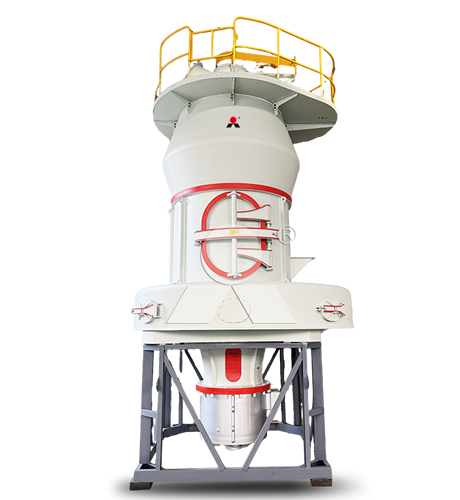
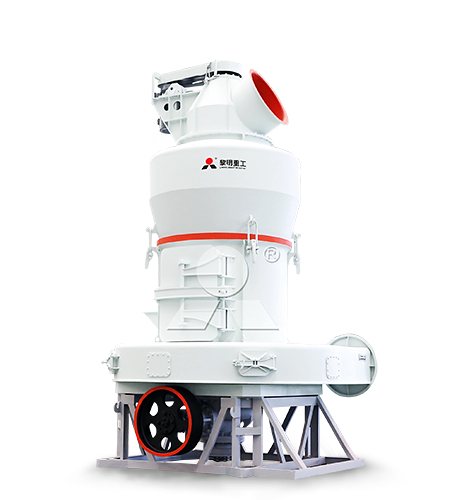
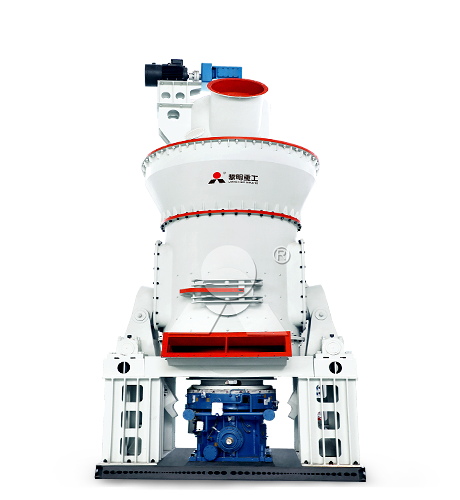
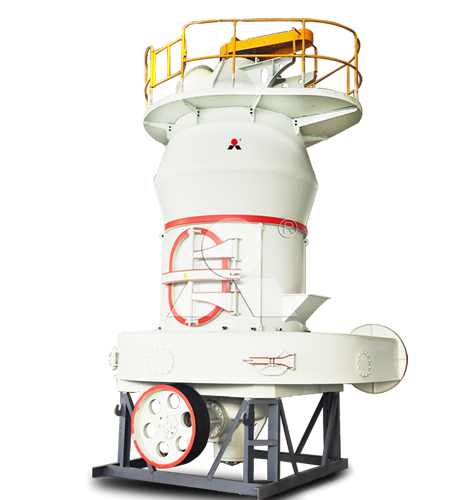
We are Liming Heavy Industry, a manufacturer of various types of industrial crushers, such as Raymond Mill, Trapezoidal Mill, Vertical Mill, Ultrafine Mill, Ball Mill, etc.
Our mills can process the following minerals:
limestone, quicklime, kaolin, talc, barite, bentonite, calcium carbonate, dolomite, coal, gypsum, clay, carbon black, slag, cement raw materials, cement clinker, etc.
If you need a mill to process stone or minerals into powder, please feel free to contact me (WhatsApp: +8615333807511). Thank you.
Fine calcium carbonate powder is produced by selecting a clean natural carbonate feed, reducing it to a stable mill feed, controlling moisture, grinding in a closed circuit, and classifying the particles to the required fineness. For most dry fine ground calcium carbonate (GCC), the practical process is: high-quality limestone, marble, chalk, or calcite → crushing → drying → fine grinding → dynamic air classification → collection → optional coating → packing.
The key to producing fine powder is not simply using a finer mill. It is controlling the entire grinding-classification circuit so the final product has the required D50, D97, coarse residue, whiteness, moisture, surface area, and dispersion performance. For very fine slurry grades, wet grinding with staged milling and wet classification may be more suitable than dry grinding.
Define “Fine” Before Selecting Equipment
Fine calcium carbonate powder has no single universal particle size. One customer may call a 10–15 µm material “fine,” while another may require an ultrafine product with a D50 below 2 µm. The target must be defined by particle-size distribution and end-use performance, not by a broad label such as “fine powder” or by mesh alone.
| Product range | Typical particle-size focus | Common applications | Typical process approach |
|---|---|---|---|
| Fine calcium carbonate | Often several micrometres to around 20 µm, depending on specification | Wall putty, paint, rubber, selected PVC, sealants, adhesives, construction chemicals | Dry grinding with classifier control |
| Fine GCC for polymers | Commonly defined by controlled D50 and D97, rather than mesh | PVC pipe and profile, cable compounds, masterbatch, rubber, sealants | Fine dry grinding, dynamic classification, often surface treatment |
| Ultrafine GCC | Usually low-micron particle size with tight coarse-tail control | High-value coatings, plastics, paper, specialty compounds | Ball mill plus high-efficiency classifier, ultrafine mill, or wet grinding |
| Wet-ground calcium carbonate slurry | Very fine distribution; may target D97 at or below several micrometres | Paper filler, paper coating, water-based paint, specialty coatings | Wet grinding, hydrocyclones or wet classification, slurry conditioning |
For example, one published wet-grinding process describes D97 at or below 5 µm for ultrafine slurry, with staged milling used to refine material further for premium applications. Actual production targets must still be set according to customer requirements and the measurement method.
Start With Suitable Raw Material
Fine grinding magnifies raw-material problems. As particle size decreases, more surface area is exposed, so iron staining, clay, silica, dark minerals, moisture, and contamination become more visible and more influential. A fine powder plant cannot turn inconsistent carbonate rock into premium GCC through grinding alone.
For fine calcium carbonate production, choose calcite-rich limestone, marble, chalk, or calcite ore with high and stable CaCO3, low MgO, low silica, low iron, low acid-insoluble residue, and high whiteness. The required quality depends on the target market. A fine filler for wall putty can accept a different impurity profile from a high-brightness coated grade for PVC profile or a low-grit slurry for paper coating.
| Raw-material property | Why it matters for fine powder | Risk if uncontrolled |
|---|---|---|
| CaCO3 content | Determines usable carbonate fraction and supports purity requirements | High non-carbonate residue and lower product value |
| MgO and dolomite content | Controls whether the feed is high-calcium calcitic material | Failure to meet low-MgO or high-calcium specifications |
| Silica, quartz, flint, and chert | Hard particles become increasingly problematic in fine milling | High wear, grit, contaminated powder, increased energy use |
| Clay and aluminosilicates | Can affect powder color, moisture response, and wet slurry viscosity | Low whiteness, poor slurry stability, variable product behavior |
| Iron-bearing minerals and dark specks | Fine powder exposes color contamination strongly | Reduced brightness and visible defects in white formulations |
| Moisture | Controls dryer demand and dry-grinding stability | Low mill capacity, poor classification, powder caking |
| Source consistency | Fine product requires stable chemistry and grindability | Batch-to-batch PSD, color, and process variation |
Use representative sampling from quarry benches, stockpiles, and supplier lots. Test chemistry, X-ray diffraction mineralogy, whiteness, moisture, acid-insoluble residue, hardness, and pilot grindability. If the raw feed is variable, establish selective mining and blending rules before the material reaches the fine-grinding circuit.
Prepare the Feed Properly
Fine grinding equipment requires a controlled feed. Large rock, excessive moisture, tramp metal, and unstable feed rates reduce capacity and make particle-size control difficult. Good feed preparation is often more important than increasing mill power.
Crushing and screening
Natural carbonate is first reduced through primary and secondary crushing. Jaw crushers, impact crushers, hammer crushers, and cone crushers may be used depending on the feed size, rock strength, capacity, and desired mill feed. Screens control top size and return oversize material for additional crushing.
A practical dry GCC route typically reduces quarry rock to a mill feed of roughly 50 mm or below before fine grinding, although the required size depends on the selected mill. Feed-size consistency matters more than one fixed number: the mill must receive material within its design range.
Metal removal and contamination control
Install permanent magnets and, where necessary, metal detectors after crushing and before the mill. Tramp iron from drilling, blasting, loaders, crushers, conveyors, or recycled feed can damage grinding equipment and contaminate bright finished powder.
Keep high-whiteness grades segregated from darker stone, recycled aggregate, low-grade limestone, and contaminated process areas. Fine calcium carbonate cannot hide contamination; it can make small particles of iron, graphite, dark rock, or silica more noticeable in the final product.
Drying and moisture control
For dry grinding, moisture must be stable and low enough for efficient milling and air classification. Excess moisture causes bridging in hoppers, buildup on mill parts, reduced capacity, high filter pressure drop, unstable classifier separation, and powder caking.
Rotary dryers, flash dryers, fluidized-bed dryers, hot-air generators, or air-swept grinding systems may be used. One industry process description uses moisture below 1% as a practical dry-feed target before milling, but the correct target should be verified for the selected equipment and product grade.
Use a Closed-Circuit Grinding System
The most effective way to produce fine calcium carbonate powder is a closed circuit that combines grinding with classification. The mill breaks particles down; the classifier removes material that has reached the required fineness and sends oversized particles back to the mill.
Mill feed → grinding zone → air transport or slurry transport → classifier → qualified fine product → collection; oversized particles → return to the mill.
Closed-circuit operation avoids both under-grinding and over-grinding:
Under-grinding leaves too many coarse particles, increasing residue and creating roughness, poor dispersion, visible specks, or surface defects.
Over-grinding creates unnecessary ultrafines, consumes more energy, raises surface area and oil absorption, can increase powder cohesion, and may make coating or formulation viscosity harder to control.
The classifier is therefore as important as the grinding mill. It determines which particles become final product and which particles require additional milling.
Choose the Right Fine-Grinding Method
The best grinding system depends on target size, required output, feed moisture, energy cost, desired particle-size distribution, and product format. There is no single “best mill” for all calcium carbonate grades.
| Grinding method | Best suited for | Main strengths | Main limitations |
|---|---|---|---|
| Pendulum or Raymond mill | Standard fine dry calcium carbonate | Established technology for conventional powder grades | Less flexible for the finest low-micron products |
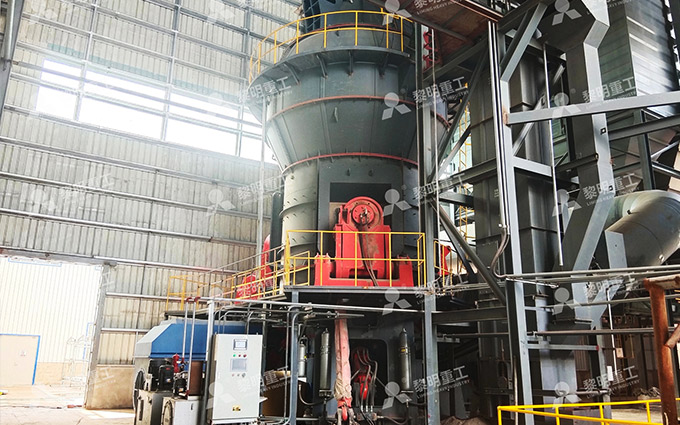
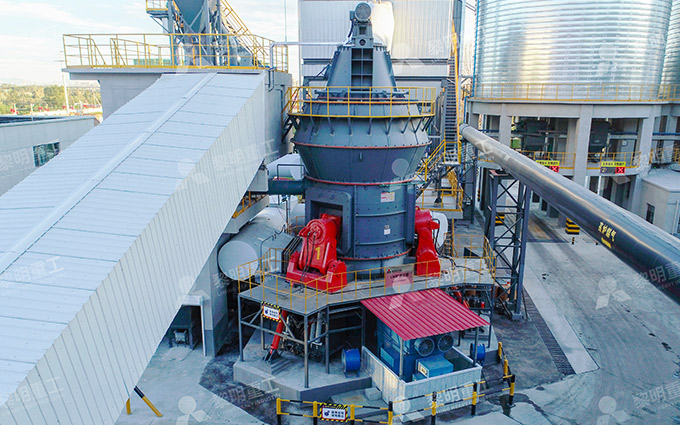
| Vertical roller mill | Large-volume fine powder with drying integration | High capacity and compact process flow | Requires stable feed, airflow, pressure, and classifier operation |
| Ball mill plus air classifier | Fine and ultrafine GCC | Flexible fineness control and established closed-circuit operation | Requires grinding-media management and efficient classification |
| Ring roller or ultrafine mill | Fine to ultrafine dry calcium carbonate | Compact route for high-fineness grades | More sensitive to moisture, powder temperature, and feed stability |
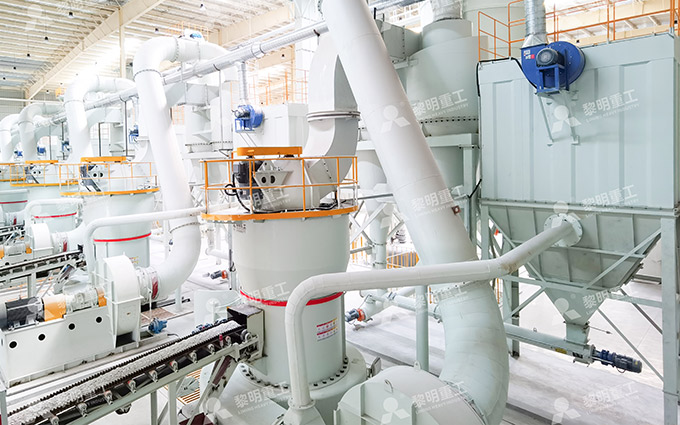
| Air classifier mill | Fine powder requiring integrated milling and classification | Grinding and dynamic separation in one system | Product fineness and capacity depend heavily on airflow and rotor control |
| Wet stirred-media mill | Fine and ultrafine slurry | Strong fine-grinding capability and suitable for wet products | Requires water, dispersant, slurry handling, and possible later drying |
For conventional fine GCC, vertical roller mills, pendulum mills, and ball-mill-classifier systems are common choices. For ultrafine dry powder, a ball mill with a high-efficiency air classifier or a dedicated ultrafine grinding system is often selected. For very fine slurry products, wet grinding using staged mills and wet classification may be preferred.
Control Air Classification Precisely
Air classification controls the final particle-size distribution of dry fine GCC. Fine particles follow the airflow to collection, while coarse particles are rejected and returned to the mill. Dynamic classifiers use centrifugal force and air drag to make this separation.
Important classifier variables include rotor speed, airflow rate, secondary air, feed rate, pressure drop, powder temperature, and circulating load. These should be adjusted as a coordinated system rather than independently.
| Parameter | What it affects | Typical consequence of poor control |
|---|---|---|
| Classifier rotor speed | Fineness cut point | Too low may allow coarse particles into product; too high may reduce yield and create excess ultrafines |
| Airflow | Particle transport and separation efficiency | Unstable airflow can cause variable PSD, low yield, or product contamination |
| Feed rate | Classifier loading and mill residence time | Excess feed can increase coarse residue and destabilize the circuit |
| Circulating load | Amount of coarse material returned for grinding | Too high can overload the mill; too low can reduce product fineness or capacity |
| Powder temperature | Flow, moisture behavior, coating, and filter performance | High temperature may affect coating; low temperature can increase moisture-related handling issues |
| Filter and fan condition | System pressure balance and powder recovery | High pressure drop or leakage can reduce separation quality and throughput |
For high-value fine grades, measure particle size frequently using the same analytical method used for customer qualification. Product labels based only on “400 mesh,” “800 mesh,” or “1250 mesh” are not sufficiently precise for most fine GCC applications.
Consider Wet Grinding for Very Fine Products
Wet grinding may be the preferred route when a very fine calcium carbonate slurry is required or when the feedstock benefits from washing, desliming, flotation, or other wet beneficiation steps. It is common in paper, paper coating, water-based paint, and specialty coatings.
In wet grinding, calcium carbonate is dispersed in water, often with a dispersant, then reduced in size in a wet mill. The slurry is classified, adjusted to the specified solids and viscosity, and either delivered directly or dewatered and dried for powder production.
| Process stage | Purpose | Key control |
|---|---|---|
| Slurry preparation | Mix carbonate feed with water and dispersant | Solids level, water quality, pH, dispersant type, and viscosity |
| Primary wet grinding | Reduce material to a fine intermediate size | Media size, energy input, temperature, residence time, and slurry rheology |
| Secondary or tertiary milling | Reach ultrafine particle size when required | Classifier recycle, media wear, PSD control, and heat generation |
| Wet classification | Remove oversized particles and stabilize distribution | Hydrocyclone or centrifugal cut point, solids, and recycle flow |
| Thickening and dispatch | Set final solids and storage stability | Viscosity, sedimentation, pH, agitation, and transport conditions |
Wet grinding can deliver high-quality fine slurry, but it requires water management, slurry storage, pumps, tanks, filtration or thickening, and logistics that make economic sense. Shipping water long distances may eliminate the technical advantage unless a final drying step is included.
Surface-Treat Fine GCC for Polymers
Fine GCC intended for PVC, polyolefins, masterbatch, cable compounds, rubber, adhesives, and sealants is often surface-treated after grinding and classification. Stearic acid is a common treatment because it makes the calcium carbonate surface more hydrophobic and improves compatibility with many non-polar polymer matrices.
Fine powder has more surface area, so surface treatment becomes more sensitive as particle size decreases. The correct coating level must be matched to the powder’s specific surface area, particle-size distribution, resin system, filler loading, compounding temperature, and desired rheology.
Coating should be applied to a stable, dry, properly classified base powder. If the base material has high moisture, wide PSD, excessive coarse residue, poor whiteness, or high silica, surface treatment will not solve the underlying product problem.
Quality Control for Fine Powder
Fine calcium carbonate production should be controlled at the quarry or receiving stage, after crushing, at the mill, after classification, after coating, and before shipment. Final-bag testing alone is too late to prevent off-spec production.
Essential finished-product tests
CaCO3, CaO, MgO, SiO2, Fe2O3, and acid-insoluble residue.
Mineralogy by XRD when source material, quarry bench, or supplier lot changes.
Particle-size distribution, including D10, D50, D97, top cut, and sieve residue.
Whiteness, brightness, Lab* color values, and dark-speck content.
Moisture, bulk density, tapped density, specific surface area, and powder flowability.
Oil absorption and dispersion behavior for paint, coating, rubber, adhesive, and sealant grades.
Coating degree, activation rate, or hydrophobicity for treated GCC.
Slurry solids, viscosity, pH, and sedimentation stability for wet-ground grades.
Common Fine-Grinding Problems
| Problem | Likely cause | Corrective action |
|---|---|---|
| Product is too coarse | Low grinding energy, overloaded mill, low classifier speed, unstable feed, worn grinding parts | Optimize feed rate and mill load, adjust classifier cut point, inspect internal wear, stabilize feed size |
| Too many ultrafines | Over-grinding, excessive classifier speed, long residence time, poor recycle balance | Adjust separator settings, reduce unnecessary grinding, monitor PSD and specific energy |
| Low capacity | High moisture, oversized feed, high circulating load, filter restriction, abrasive impurities | Improve drying and crushing, balance the circuit, service filters, reject silica-rich feed |
| High coarse residue | Classifier inefficiency, air leaks, low airflow, excessive throughput | Inspect classifier and fan system, correct air balance, reduce feed rate where needed |
| Variable whiteness | Mixed quarry feed, iron contamination, clay, dark minerals, dirty equipment | Improve selective mining, blending, magnets, process cleaning, and feed segregation |
| High wear or black specks | Quartz, chert, flint, metal contamination, worn steel components | Improve raw-material sorting, remove tramp metal, manage wear parts, monitor contamination |
| Poor polymer dispersion | Inappropriate PSD, insufficient coating, high moisture, agglomeration | Refine classification, improve drying and coating, prevent compaction during storage, validate in compound trials |
| Unstable slurry viscosity | Variable solids, inadequate dispersant, clay contamination, broad PSD | Control slurry formulation, improve wet classification, stabilize feed, monitor viscosity continuously |
Key Takeaway
To produce fine calcium carbonate powder, begin with clean and consistent calcium carbonate feed, prepare it to a stable size and moisture level, grind it in a closed circuit, and use precise classification to control the final particle-size distribution. Dry grinding is the standard route for most fine GCC powders, while wet grinding is often used for ultrafine slurries and selected high-value applications.
The final product should be defined by measurable performance: CaCO3 purity, MgO, whiteness, low grit, D50, D97, moisture, surface area, bulk density, coating quality, and end-use results. When these specifications drive equipment and process design, a plant can produce fine calcium carbonate powder consistently for PVC, plastics, paper, coatings, rubber, sealants, adhesives, and construction chemicals.