Calcium Carbonate Knowledge Hub
Calcium Carbonate Processing Plant
2026-09-04 16:29:49
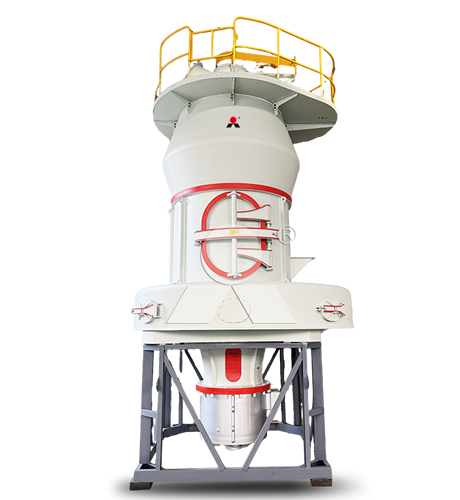
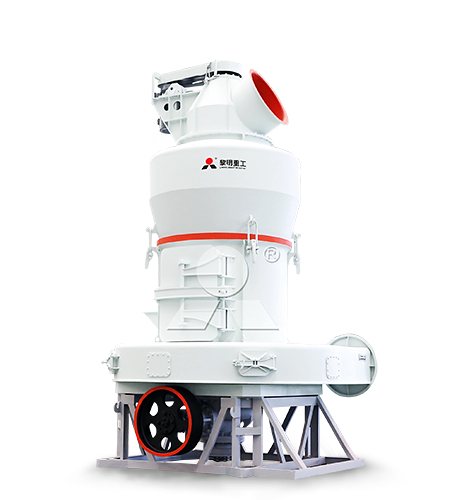
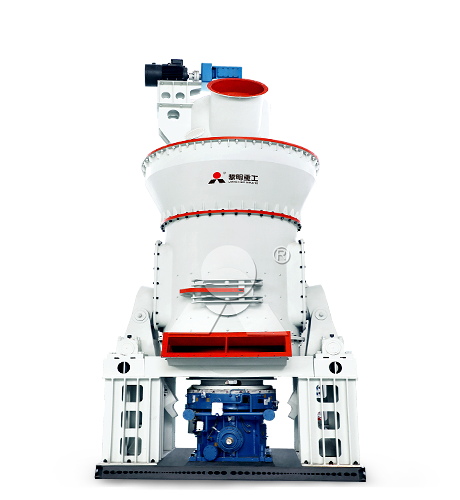
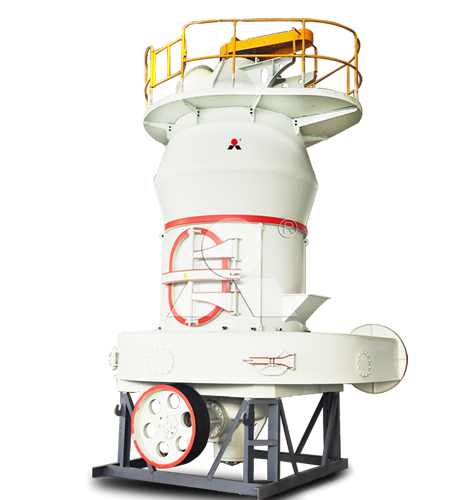
We are Liming Heavy Industry, a manufacturer of various types of industrial crushers, such as Raymond Mill, Trapezoidal Mill, Vertical Mill, Ultrafine Mill, Ball Mill, etc.
Our mills can process the following minerals:
limestone, quicklime, kaolin, talc, barite, bentonite, calcium carbonate, dolomite, coal, gypsum, clay, carbon black, slag, cement raw materials, cement clinker, etc.
If you need a mill to process stone or minerals into powder, please feel free to contact me (WhatsApp: +8615333807511). Thank you.
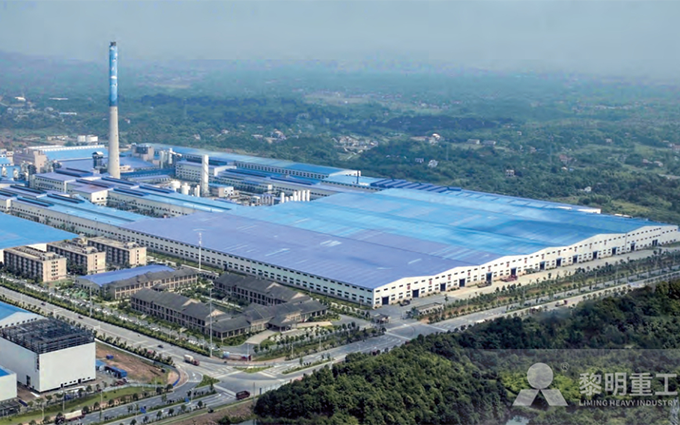
A calcium carbonate processing plant converts natural carbonate rock into ground calcium carbonate (GCC) powder or slurry, or chemically manufactures precipitated calcium carbonate (PCC). For most industrial-mineral projects, the term refers to a GCC plant: selected limestone, marble, chalk, or calcite is crushed, dried when necessary, ground, air-classified, optionally surface-treated, tested, and packed.
A reliable plant is not just a grinding mill. It is an integrated system that controls raw-material quality, feed preparation, moisture, particle-size distribution, dust, contamination, storage, packing, and plant automation. The plant configuration must be designed around the target product grade and end market—whether PVC, plastics, paper, paint, coatings, rubber, sealants, adhesives, or construction chemicals. GCC plants produce calcium carbonate by physical grinding, while PCC plants use a chemical process with calcination, slaking, carbonation, drying, and packing.
GCC Plant vs PCC Plant
| Plant type | Production principle | Main raw material | Typical product focus |
|---|---|---|---|
| GCC processing plant | Mechanical crushing, grinding, classification, and optional coating | Limestone, marble, chalk, or calcite | Coarse to ultrafine powder, coated GCC, and wet-ground slurry |
| PCC processing plant | Chemical conversion and controlled precipitation | High-calcium limestone or quicklime, water, and CO2 | Fine and morphology-controlled synthetic calcium carbonate powder or slurry |
GCC is normally the more direct route for large-volume filler production. The natural carbonate is physically reduced to the required particle size. PCC is selected where the application needs tighter control of crystal shape, surface area, particle morphology, or specialty optical and rheological performance.
This article focuses primarily on GCC plant design because it is the main processing route for natural calcium carbonate powders used in industrial mineral markets.
Typical GCC Plant Flow
A dry calcium carbonate processing plant typically uses the following process route:
Quarry or raw-material receiving → selective stockpiling → crushing → screening and metal removal → buffer storage → drying if needed → grinding → air classification → powder collection → optional coating → finished-product silos → bagging or bulk loading
A wet GCC plant follows a related but different route:
Crushed carbonate feed → slurry preparation → wet grinding → wet classification → thickening and solids adjustment → slurry storage and dispatch, or filtration and drying → dry finishing and packing
In a modern GCC line, mined ore is commonly cleaned to remove topsoil and impurities, coarsely crushed, stored in a silo, fed uniformly to a mill, and then classified; particles meeting fineness targets proceed as product while coarse material returns for regrinding.
Raw Material and Feed Preparation
The plant’s achievable quality begins with the feedstock. Limestone, marble, chalk, and calcite can all produce GCC, but each deposit has a different combination of CaCO3, MgO, silica, iron, whiteness, moisture, hardness, and consistency.
For high-value GCC, the preferred feed is generally calcite-rich, high in CaCO3, low in MgO, low in silica and clay, low in iron-bearing minerals, and consistent across the quarry or supply source. A grinding circuit cannot reliably remove embedded hard or colored impurities after they have been reduced to fine particles.
| Feed property | Why the plant must control it | Risk if uncontrolled |
|---|---|---|
| CaCO3 content | Defines usable carbonate fraction and product purity | Low-purity product, high residue, reduced market value |
| MgO and dolomite | Distinguishes high-calcium feed from magnesium-bearing carbonate | Failure to meet low-MgO or high-calcium customer specifications |
| Silica, chert, flint, and quartz | Hard minerals affect crushing and grinding wear | High maintenance cost, grit, high insoluble residue, reduced mill capacity |
| Clay and aluminosilicates | Influence moisture, color, and process behavior | Lower whiteness, unstable slurry, caking, inconsistent chemistry |
| Iron and colored minerals | Control whiteness and brightness | Yellow, gray, brown, or dark-speck defects in white products |
| Moisture | Determines drying load and dry-process stability | Blocked handling equipment, lower output, poor classification, powder caking |
| Feed-size variation | Controls crusher and mill loading | Unstable throughput, inconsistent fineness, higher energy consumption |
Essential incoming-feed controls
Chemical analysis for CaCO3, CaO, MgO, SiO2, Al2O3, Fe2O3, sulfur, and acid-insoluble residue.
X-ray diffraction to identify calcite, dolomite, quartz, clay, mica, feldspar, sulfides, and other phases.
Whiteness, brightness, Lab* color values, and dark-speck inspection.
Moisture, bulk density, hardness, abrasion, and grindability testing.
Representative sampling from multiple quarry benches, supply lots, depths, and weathering zones.
Core Plant Sections
1. Crushing and screening section
The crushing section reduces quarry rock or delivered carbonate stone to a controlled size for storage and milling. Primary crushing commonly uses a jaw crusher or impact crusher; secondary crushing can use hammer, impact, or cone crushers. Vibrating screens control the top size and return oversized material for additional reduction.
Crushing equipment must be selected according to feed size, rock strength, silica content, required plant capacity, and desired mill feed. A high-quality grinding circuit cannot compensate for unstable crusher output, so the crushing section should include feed hoppers, feeders, screens, belt scales, and enough storage capacity to create consistent downstream feed.
Magnetic separators and metal detectors should be installed to remove tramp iron. This protects the mill and avoids contamination in bright calcium carbonate products. Dust extraction at crushers, screens, and transfer points is also essential for safety, material recovery, and housekeeping.
2. Raw-material storage and dosing
After crushing, material is stored in a buffer silo, covered stockpile, or day bin. This section has two jobs: maintain production continuity and homogenize short-term variation in feed properties.
Accurate feeders deliver carbonate to the mill at a stable rate. Feed-rate variation changes mill load, airflow, classifier performance, and particle-size distribution. For fine GCC, weigh feeders or other quantitative dosing systems are preferable to manually adjusted feed arrangements.
3. Drying system
Drying is required when raw feed moisture is too high for stable milling and air classification. The dryer may be a rotary unit, flash dryer, fluidized-bed dryer, or integrated hot-gas drying system within an air-swept mill.
Dryer sizing should consider maximum—not merely average—moisture. Rainfall, stockpile exposure, washing, porous chalk, and seasonal operating changes can significantly increase water entering the plant. Insufficient drying reduces mill capacity and can result in poor powder flow, high moisture in packaged product, or blocked pneumatic conveying lines.
4. Grinding mill
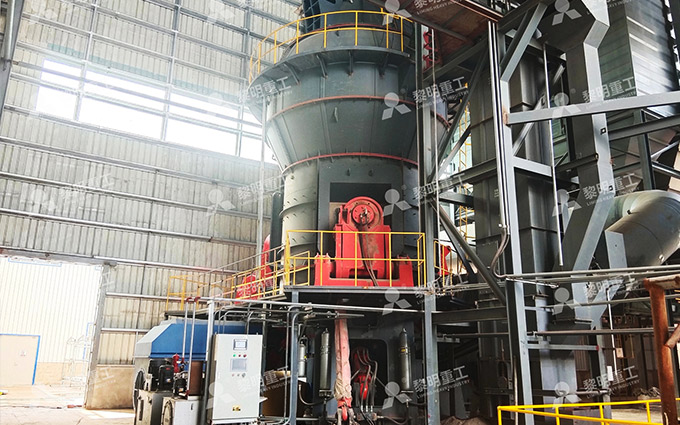
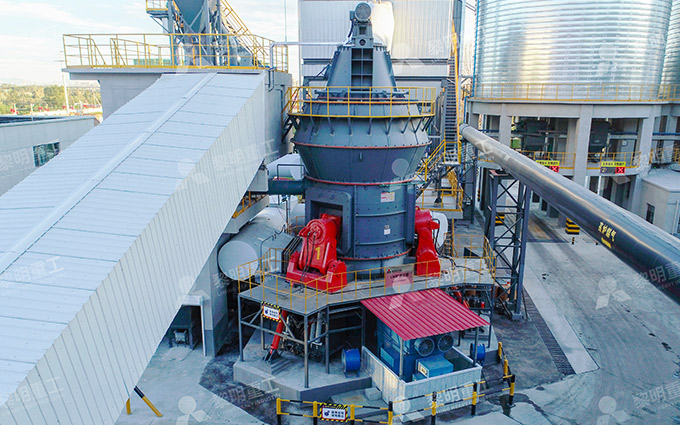
The grinding mill is the central size-reduction unit. Mill selection depends on target fineness, capacity, feed moisture, energy cost, abrasion, product flexibility, and whether the plant will make dry powder, ultrafine GCC, coated GCC, or slurry.
| Mill system | Best suited for | Plant-design consideration |
|---|---|---|
| Pendulum or Raymond mill | Conventional fine dry GCC | Established technology for standard powder grades; requires controlled feed moisture and airflow |
| Vertical roller mill | High-capacity fine grinding with integrated drying | Compact layout and large throughput; requires stable process control and suitable feed |
| Ball mill plus air classifier | Fine and ultrafine GCC | Flexible fineness control; requires media management, return-load control, and classifier efficiency |
| Ring roller or ultrafine mill | Fine to ultrafine dry powder | Useful for high-fineness products; powder temperature and moisture must be managed |
| Wet stirred mill | Fine and ultrafine GCC slurry | Requires slurry preparation, water handling, dispersants, and thickening or filtration |
Some integrated grinding systems combine crushing, drying, grinding, classification, and conveying in one process arrangement. Even in an integrated system, each function must be sized and controlled independently to avoid bottlenecks.
5. Air classification section
Air classification separates finished fine powder from particles that remain too coarse. In a closed-circuit dry plant, fine particles pass to collection, while coarse particles return to the mill for regrinding.
This section controls the final D50, D97, coarse residue, specific surface area, and particle-size distribution. It is therefore central to powder performance in PVC, paper, coatings, rubber, sealants, and adhesives.
For products finer than approximately 1500 mesh, a source describing GCC plant operation recommends secondary classification to achieve more precise separation. The exact need depends on the required distribution, product capacity, classifier technology, and allowable coarse tail.
6. Powder collection and dust control
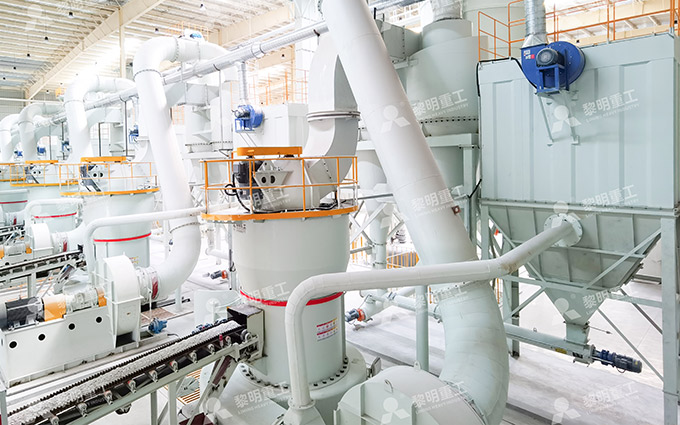
After classification, calcium carbonate powder is separated from process air using cyclones, bag filters, cartridge filters, or a combined system. The powder is conveyed to product silos, while cleaned air is discharged or recirculated according to the process design and emissions requirements.
Dust collection is not an accessory system. It influences powder yield, housekeeping, worker exposure, explosion-risk assessment, maintenance, fan energy, pressure balance, and final-product cleanliness. Filter selection should account for powder fineness, air volume, temperature, moisture, pressure drop, filter media, cleaning method, and local emissions regulations.
7. Surface-treatment section
Many GCC plants add a coating section for polymer grades. Stearic acid is commonly used to make calcium carbonate more hydrophobic and improve compatibility with PVC, polyethylene, polypropylene, rubber, adhesives, and sealants.
The coating section may include a heated mixer, feeder for the coating agent, temperature control, residence-time control, powder cooling, and a secondary deagglomeration or classification step. Coating quality should be verified by activation rate, hydrophobicity, dosage control, dispersion testing, and customer-compound trials.
Surface treatment cannot correct a poor base powder. The plant must first achieve the required purity, whiteness, moisture, and particle-size distribution before coating adds value.
8. Storage, packing, and dispatch
Finished GCC is stored in silos, then supplied in valve bags, open-mouth bags, big bags, or bulk tankers. Storage and loading systems should protect product quality by preventing moisture absorption, foreign-material contamination, cross-grade mixing, powder segregation, and compaction.
For coated and ultrafine products, product temperature before packing, silo residence time, aeration, anti-bridging design, and packaging barrier properties are especially important. Fine powders can agglomerate when hot or humid, changing flow and customer feeding behavior.
Wet GCC Plant Configuration
A wet processing plant is used when the final product is a calcium carbonate slurry or when fine grinding and wet beneficiation offer technical advantages. It is common in paper, paper coating, water-based paint, and selected specialty coating markets.
| Wet plant section | Main function | Critical controls |
|---|---|---|
| Slurry preparation | Mix crushed carbonate, water, and dispersant | Water quality, solids loading, pH, dispersant dosage, feed consistency |
| Wet grinding | Produce fine or ultrafine calcium carbonate in liquid medium | Grinding media, power input, residence time, temperature, viscosity |
| Wet classification | Control particle-size distribution and remove oversize | Cut point, separation efficiency, recycle load, feed stability |
| Thickening and filtration | Adjust slurry solids or recover dry material | Flocculation, filtration rate, water recovery, residual moisture |
| Slurry storage and dispatch | Maintain stable product until customer delivery | Solids content, viscosity, pH, mixing, sedimentation, microbial control where required |
Wet plants require more than a wet mill. They need water supply, water-recycling systems, slurry tanks, agitation, pipelines, pumps, thickening and filtration equipment, wastewater management, and reliable slurry logistics. A wet-ground product can perform very well in paper or coating applications, but shipping water over long distances can reduce its economic advantage.
PCC Plant Configuration
A PCC plant has a different process architecture from a GCC plant. Instead of mechanically grinding natural calcium carbonate into its final form, it creates new calcium carbonate crystals through chemical reactions.
High-calcium limestone → crushing and calcination → quicklime → slaking → purified milk of lime → carbonation with CO2 → PCC precipitation → separation and washing → drying or slurry finishing → packing
PCC plants require crushing and grinding, calcination, slaking, carbonation, drying, and packing systems. In addition, they require kiln fuel and combustion controls, lime handling, water treatment, reactors, carbon dioxide handling, solid-liquid separation, process instrumentation, and chemical-quality control.
The main reaction sequence is:
CaCO3 → CaO + CO2
CaO + H2O → Ca(OH)2
Ca(OH)2 + CO2 → CaCO3 ↓ + H2O
PCC is suited to products where controlled crystal morphology, ultrafine particle size, high purity, and specialized surface characteristics provide enough value to justify the additional capital, energy, water, process-control, and operating complexity.
Plant Design by Product Grade
Plant design should begin with a product matrix, not a machine list. Define the planned grades, volumes, end uses, target particle-size distributions, coating requirements, packaging formats, and customer locations. Then select the process sections and equipment capacities needed to produce those grades consistently.
| Target product | Typical plant emphasis | Key quality controls |
|---|---|---|
| Coarse construction powder | Efficient crushing, basic milling or screening, economical packing | Fineness, moisture, color, flow, cost |
| Fine uncoated GCC | Stable milling and air classification | PSD, whiteness, residue, moisture, bulk density |
| Ultrafine GCC | High-efficiency fine grinding and precise classification | D50, D97, coarse tail, surface area, powder temperature |
| Coated GCC | Fine grinding plus controlled surface-treatment system | PSD, hydrophobicity, activation rate, coating dosage, moisture, dispersion |
| Wet-ground GCC slurry | Wet milling, classification, slurry conditioning, tank storage | Particle size, solids, viscosity, pH, sedimentation stability, brightness |
| PCC | Lime chemistry, carbonation reactor control, separation, drying | Crystal morphology, purity, particle size, slurry stability, moisture |
Automation and Quality Control
Automation improves production stability, energy efficiency, traceability, and quality consistency. At minimum, a calcium carbonate plant should continuously monitor material feed rates, mill power, temperatures, pressure drops, airflow, classifier speed, fan performance, dust-filter condition, product moisture, and silo levels.
For premium GCC, integrate online or frequent laboratory measurement of particle size, whiteness, moisture, and bulk density. For coated products, include treatment-agent dosage, powder temperature, activation rate, and hydrophobicity controls. For PCC, add pH, conductivity, slurry density, lime reactivity, CO2 flow, reactor temperature, carbonation endpoint, and crystal-quality monitoring.
Typical laboratory tests
CaCO3, CaO, MgO, SiO2, Al2O3, Fe2O3, sulfur, and acid-insoluble residue.
XRD mineralogy for calcite, dolomite, quartz, clay, mica, feldspar, and other phases.
Particle-size distribution: D10, D50, D97, top cut, and sieve residue.
Whiteness, brightness, Lab* color values, and dark-speck count.
Moisture, bulk density, tapped density, specific surface area, and flowability.
Oil absorption and dispersion behavior for coatings, rubber, adhesive, sealant, and polymer grades.
Coating degree, activation rate, and hydrophobicity for treated GCC.
Solids, viscosity, pH, and sedimentation stability for slurries.
Key Takeaway
A calcium carbonate processing plant is an integrated production system, not simply a crusher and mill. A GCC plant turns natural carbonate rock into controlled powder or slurry through raw-material selection, crushing, drying, grinding, air classification, collection, optional coating, and quality-controlled dispatch. A PCC plant uses a more complex chemical route based on calcination, slaking, and carbonation.
The best plant design begins with the product specification and market. Define the required CaCO3 purity, MgO limit, whiteness, particle-size distribution, surface treatment, product form, capacity, packaging, and customer location first. Then design the quarry controls, processing equipment, automation, laboratory, dust control, storage, and logistics needed to produce those grades consistently and competitively.