Calcium Carbonate Knowledge Hub
Calcium Carbonate Powder Manufacturing Process
2026-09-04 16:29:08
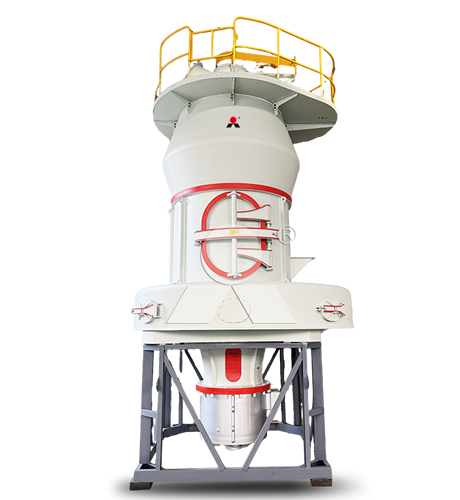
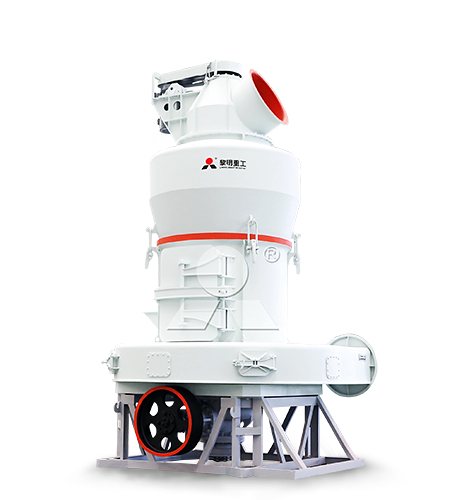
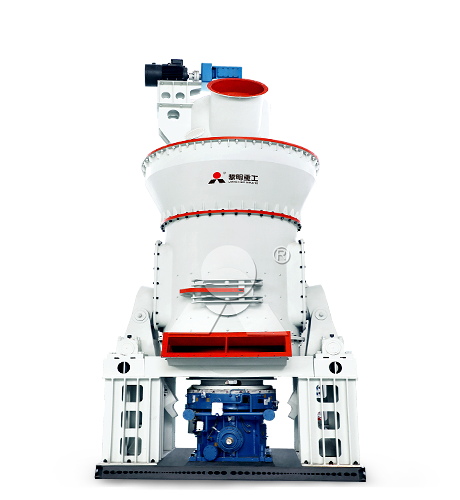
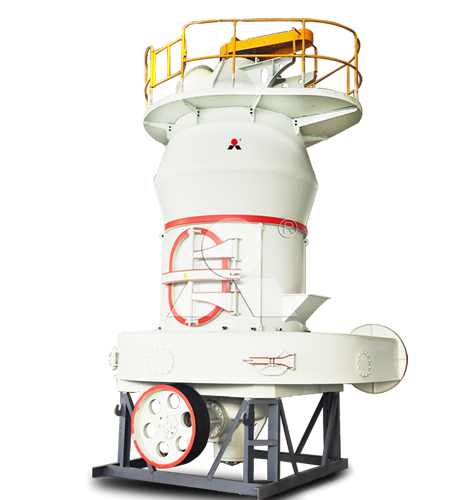
We are Liming Heavy Industry, a manufacturer of various types of industrial crushers, such as Raymond Mill, Trapezoidal Mill, Vertical Mill, Ultrafine Mill, Ball Mill, etc.
Our mills can process the following minerals:
limestone, quicklime, kaolin, talc, barite, bentonite, calcium carbonate, dolomite, coal, gypsum, clay, carbon black, slag, cement raw materials, cement clinker, etc.
If you need a mill to process stone or minerals into powder, please feel free to contact me (WhatsApp: +8615333807511). Thank you.
Calcium carbonate powder is manufactured by either mechanically grinding natural carbonate rock into ground calcium carbonate (GCC) or chemically producing precipitated calcium carbonate (PCC). GCC powder comes from limestone, marble, chalk, or calcite through crushing, grinding, classification, and optional coating. PCC powder is made by converting lime into calcium hydroxide and then reacting it with carbon dioxide to precipitate new CaCO3 crystals.
For most industrial filler markets—PVC, plastics, rubber, sealants, adhesives, paints, coatings, paper, and construction chemicals—GCC is the standard high-volume manufacturing route. PCC is selected when controlled crystal shape, very fine particle size, high purity, or specialty optical and rheological properties justify the more complex chemical process. GCC involves crushing, grinding, and classification without chemical reaction, whereas PCC typically uses calcination, slaking, carbonation, separation, drying, and finishing.
Two Ways to Manufacture CaCO3 Powder
| Feature | Ground calcium carbonate (GCC) | Precipitated calcium carbonate (PCC) |
|---|---|---|
| Starting material | Natural limestone, marble, chalk, or calcite | Usually high-calcium limestone or quicklime, plus water and CO2 |
| Core principle | Mechanical size reduction and particle separation | Chemical conversion followed by controlled precipitation |
| Main process steps | Quarrying, crushing, drying, grinding, classification, optional coating | Calcination, slaking, purification, carbonation, separation, drying, finishing |
| Particle origin | Natural calcite-based particles fractured during milling | Newly formed calcium carbonate crystals created during carbonation |
| Typical product forms | Coarse powder, fine GCC, ultrafine GCC, coated powder, slurry | Fine powder, slurry, morphology-controlled specialty grades |
| Typical markets | PVC, plastics, masterbatch, rubber, paints, coatings, adhesives, sealants, paper, construction products | Paper, specialty coatings, premium polymers, engineered products, applications requiring controlled particle morphology |
The two products share the same chemical formula, CaCO3, but they are not interchangeable. Their particles may differ in shape, size distribution, surface area, brightness, bulk density, coating response, slurry behavior, and performance in a finished formulation.
GCC Powder Manufacturing Process
Ground calcium carbonate is made by processing natural calcium carbonate-bearing rock. The process preserves the basic natural mineral chemistry; it changes the rock into a powder with specified particle size, purity, whiteness, and surface properties.
Natural carbonate deposit → selective quarrying → crushing → screening and impurity removal → drying if required → grinding → air classification → optional surface treatment → powder collection → testing → storage and packaging
1. Select the raw material
GCC manufacturing begins with a suitable source of limestone, marble, chalk, or calcite. The ideal source is calcite-rich, high in CaCO3, low in MgO, low in silica and clay, low in iron-bearing minerals, and stable in whiteness across the mineable deposit.
Raw-material selection defines the ceiling of finished-powder quality. Grinding can control particle size, but it cannot remove all embedded quartz, correct high dolomite content, eliminate iron staining, or turn a variable quarry feed into a consistently high-brightness product.
| Feedstock property | Why it is tested | Impact on manufacturing |
|---|---|---|
| CaCO3 and CaO | Measures carbonate richness | Supports purity specifications and product yield |
| MgO | Indicates dolomite or magnesium-bearing carbonate | Important for high-calcium grades and customers with low-MgO limits |
| SiO2 and acid-insoluble residue | Indicates quartz, chert, flint, sand, mica, and other insoluble minerals | Increases wear, grit, contamination risk, and grinding cost |
| Fe2O3 and color | Detects iron staining and colored mineral phases | Controls whiteness, brightness, and color consistency |
| Moisture | Measures water introduced by quarry conditions, weather, washing, or porous rock | Determines drying demand and influences powder flow and classifier efficiency |
| Mineralogy | Confirms calcite, dolomite, quartz, clay, feldspar, mica, and other phases | Guides quarry control, beneficiation decisions, and wear protection |
2. Quarry, sort, and blend
Quarrying produces large blocks or rock fragments. Selective mining separates high-quality calcitic material from clay-rich, siliceous, dolomitic, stained, weathered, or low-whiteness zones. Stockpile blending is then used to stabilize normal variation in feed chemistry, moisture, color, and grindability.
Good quarry control is particularly important for premium calcium carbonate grades. If high-silica or iron-stained material is mixed into the feed before crushing, it becomes difficult to separate after fine grinding. Prevention at the quarry is normally less expensive than downstream correction.
3. Crush and screen the stone
Large carbonate rock must be reduced to a consistent mill feed. Primary crushing commonly uses a jaw crusher or heavy-duty impact crusher. Secondary crushing may use a hammer crusher, impact crusher, or cone crusher. Vibrating screens control the top size and recirculate oversize material.
Magnetic separators remove tramp iron introduced by drilling, blasting, loading, crushers, or conveyors. This protects mills and helps prevent contamination in white calcium carbonate products. For dry GCC, a commonly described route is impurity removal, primary crushing with a jaw crusher, fine grinding with a Raymond or roller mill, then classification to obtain the required particle size.
4. Dry the material when required
Dry powder manufacturing needs stable low-moisture feed. Excess moisture can create blockage in hoppers, reduce mill capacity, interfere with air classification, increase filter loading, and cause caking during storage. Depending on raw-material condition, manufacturers use rotary dryers, flash dryers, fluidized-bed dryers, or hot-air-assisted grinding systems.
The goal is a moisture level appropriate for the selected mill and product—not necessarily absolute dryness. A stable low moisture level supports predictable grinding, accurate classifier separation, powder flow, packaging, and customer dosing.
5. Grind into calcium carbonate powder
Grinding turns crushed carbonate into powder. The mill selection depends on required fineness, capacity, feed moisture, energy cost, abrasion, flexibility across product grades, and whether the end product is dry powder or slurry.
| Grinding system | Typical use | Main advantage |
|---|---|---|
| Hammer mill or coarse pulverizer | Coarse powder and pre-grinding | Simple reduction for construction-grade products |
| Pendulum or Raymond mill | Conventional fine GCC | Established dry route for standard industrial fillers |
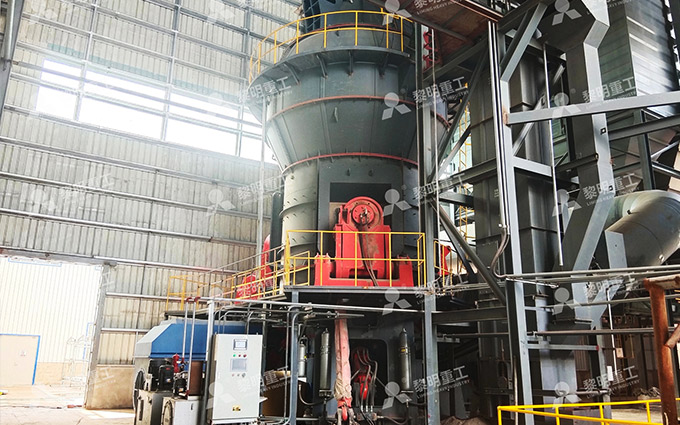
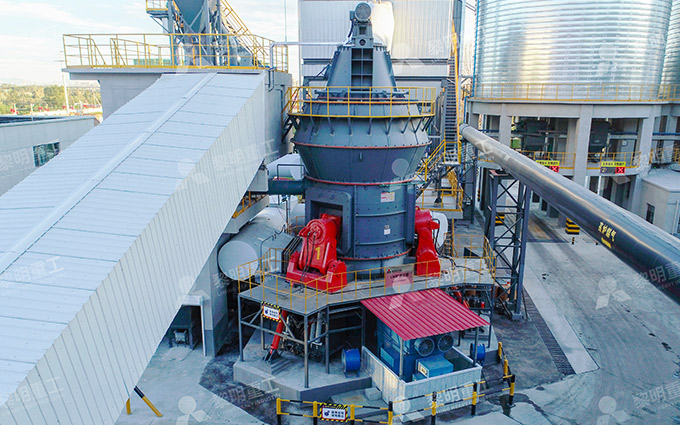
| Vertical roller mill | Large-scale fine grinding with drying | High capacity and integrated process arrangement |
| Ball mill plus air classifier | Fine and ultrafine GCC | Flexible particle-size control in a closed circuit |
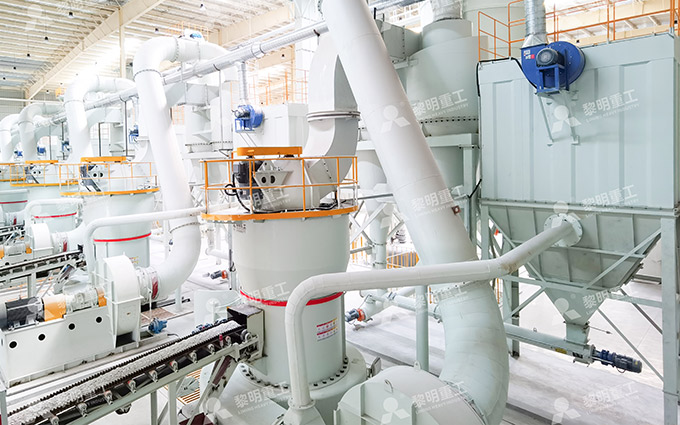
| Ring roller or ultrafine mill | Fine to ultrafine dry powder | High fineness in a compact grinding system |
| Wet stirred mill | Fine and ultrafine calcium carbonate slurry | Strong fine-grinding capability for wet products |
The grinding system should be matched to product specifications, not chosen by a single mesh value. A powder sold as “800 mesh” may have different D50, D97, coarse residue, surface area, and bulk density from another 800-mesh product. Those differences can affect PVC extrusion, coating viscosity, paper-coating smoothness, sealant rheology, and rubber compounding.
6. Classify the particles
Grinding creates a broad size range. Air classification separates the fine product from particles that require additional grinding. In a closed-circuit GCC line, fine powder goes to collection while coarse material returns to the mill.
Classification determines the final particle-size distribution. The most common parameters are D10, D50, D97, top cut, screen residue, and specific surface area. Classifier speed, airflow, feed rate, return load, and powder temperature must be controlled together.
Proper classification prevents two common defects:
Excess coarse particles: May create surface roughness, visible specks, screen residue, poor gloss, and weak polymer dispersion.
Excess ultrafines: May increase energy consumption, surface area, oil absorption, coating demand, powder cohesion, and formulation viscosity.
7. Coat the powder if needed
Uncoated GCC is widely used in paper, paint, coatings, and construction chemicals. Coated GCC is common in PVC, polyethylene, polypropylene, masterbatch, cable compounds, rubber, sealants, and adhesives.
Stearic acid is a common surface treatment. It makes the calcium carbonate surface more hydrophobic and helps it disperse in non-polar polymer systems. The treatment level must be controlled according to particle size, surface area, resin type, filler loading, and process conditions.
Coating improves compatibility, but it cannot repair a poor base powder. It cannot remove silica, lower MgO, correct poor whiteness, or eliminate excessive coarse residue.
8. Collect, test, and package
Fine GCC is collected from the air stream by cyclones, bag filters, cartridge filters, or similar systems. It is then transferred to silos and supplied in valve bags, open-mouth bags, big bags, or bulk tankers. The powder should be protected from moisture, iron contamination, cross-grade mixing, and excessive compaction.
Typical release tests include chemistry, particle size, whiteness, moisture, bulk density, oil absorption, and coating performance. For slurry grades, solids content, viscosity, pH, and sedimentation stability are also monitored.
PCC Powder Manufacturing Process
PCC is a synthetic calcium carbonate powder. It is manufactured through controlled chemical reactions that dissolve or convert the original carbonate feed and then form new calcium carbonate crystals. This process provides greater control of particle size, shape, surface area, and morphology than direct grinding alone.
High-calcium limestone → calcination → quicklime → slaking → calcium hydroxide slurry → purification → carbonation with CO2 → PCC precipitation → separation → washing → drying → finishing and packing
1. Make quicklime by calcination
High-calcium limestone is heated in a kiln to form calcium oxide, or quicklime:
CaCO3 → CaO + CO2
This process is energy-intensive because the limestone must reach temperatures high enough for thermal decomposition. The resulting carbon dioxide may be captured and used as a carbonation gas stream, depending on the plant design and gas-cleaning requirements.
2. Slake quicklime
Quicklime is mixed with water to form calcium hydroxide, also called slaked lime or hydrated lime:
CaO + H2O → Ca(OH)2
This reaction releases heat. The calcium hydroxide suspension, often called milk of lime, is cooled and conditioned before carbonation. Carmeuse describes the PCC process as beginning with quicklime, followed by exothermic slaking to make a Ca(OH)2 slurry.
3. Purify the slurry
Milk of lime may be screened, classified, or purified to remove grit, unreacted particles, silica, and other contaminants. This step helps PCC producers achieve high chemical purity and avoid coarse hard particles in the final product.
The purification level depends on the grade. High-brightness paper PCC, specialty coatings, engineered polymer fillers, and regulated applications may require tighter raw-material and process control than general industrial PCC.
4. Carbonate and precipitate PCC
Carbon dioxide is introduced into the calcium hydroxide slurry to form calcium carbonate:
Ca(OH)2 + CO2 → CaCO3 ↓ + H2O
This is the core PCC manufacturing reaction. Conventional PCC production uses gas–solid–liquid carbonation, in which gaseous CO2 is bubbled into a concentrated calcium hydroxide slurry. The resulting calcium carbonate particles are newly precipitated crystals rather than fractured pieces of natural calcite rock.
Producers control temperature, pH, lime concentration, CO2 concentration and flow rate, mixing, residence time, additives, and endpoint conditions to influence particle size, crystal habit, agglomeration, surface area, and slurry behavior.
5. Separate, dry, and finish
After precipitation, the PCC slurry is thickened, filtered, centrifuged, or otherwise separated from process water. It may be washed to reduce soluble residues, supplied directly as slurry, or dried into powder. Final finishing may include deagglomeration, classification, surface treatment, blending, and packing.
Dry vs Wet GCC Manufacturing
Within GCC production, manufacturers choose either dry grinding or wet grinding based on required particle size, desired product form, feed characteristics, customer location, and economics.
| Factor | Dry GCC manufacturing | Wet GCC manufacturing |
|---|---|---|
| Finished product | Dry powder | Slurry, or dry powder after filtration and drying |
| Typical markets | PVC, plastics, masterbatch, rubber, sealants, adhesives, dry construction chemicals | Paper, paper coating, water-based paints, specialty coatings |
| Core equipment | Dryer, mill, air classifier, cyclone, bag filter, coating unit | Slurry tank, dispersant system, wet mill, wet classifier, thickener, filter, optional dryer |
| Key controls | Moisture, airflow, classifier cut, powder temperature, coating uniformity | Solids content, viscosity, pH, dispersant, particle size, sedimentation stability |
| Impurity removal | Selective mining, screening, magnets, dry sorting, and rejection before grinding | Can include washing, desliming, flotation, and other wet beneficiation steps |
| Logistics | Well suited for long-distance powder shipment | Most practical near slurry-consuming customers unless drying is added |
Quality Control in Powder Manufacturing
Calcium carbonate manufacturing requires control from quarry or lime feed through final shipment. Testing only finished bags is too late to prevent large volumes of off-spec material. A practical quality plan includes incoming feed, crushed material, mill discharge or PCC reactor slurry, classifier product, coated product, silo material, and packed product.
Common GCC and PCC tests
CaCO3, CaO, MgO, SiO2, Al2O3, Fe2O3, sulfur, and acid-insoluble residue.
Mineralogy and crystal phase, commonly using X-ray diffraction.
Particle-size distribution: D10, D50, D97, top cut, and sieve residue.
Whiteness, brightness, Lab* color values, and dark-speck content.
Moisture, bulk density, tapped density, flowability, and specific surface area.
Oil absorption and rheology-related measurements for paints, coatings, rubber, adhesives, and sealants.
Coating degree, activation rate, or hydrophobicity for surface-treated GCC.
Slurry solids, viscosity, pH, sedimentation behavior, and stability for wet GCC or PCC slurry.
PCC crystal morphology, aggregation, and carbonation endpoint control for specialty grades.
Manufacturing Problems to Avoid
| Problem | Likely cause | Manufacturing control |
|---|---|---|
| Low whiteness | Iron staining, mixed feed, clay, dark minerals, dirty handling equipment | Improve quarry selection, raw-material segregation, process cleanliness, and contaminant rejection |
| High silica or grit | Quartz, chert, flint, mica, sand, contaminated raw feed | Use selective mining, screening, sorting, wet beneficiation where justified, and wear protection |
| Unstable particle size | Variable feed, inconsistent mill load, incorrect classifier settings, worn equipment | Control feed rate and size, monitor power and airflow, optimize classification, maintain equipment |
| Powder caking | High moisture, hot product, humid storage, excessive fines, poor packaging | Improve drying and cooling, protect silos and bags from humidity, review PSD and storage conditions |
| Poor polymer dispersion | Inappropriate PSD, high moisture, insufficient coating, agglomeration | Optimize grinding, classification, coating, and powder handling; test in the target compound |
| Unstable PCC morphology | Variation in lime quality, CO2 flow, pH, temperature, mixing, or additives | Standardize reactor conditions, monitor carbonation endpoint, maintain slurry purity, and control residence time |
| High energy or wear cost | Moist feed, abrasive impurities, poor grinding circuit balance, inefficient separation | Improve raw-material selection, moisture control, mill settings, classifier efficiency, and preventive maintenance |
Key Takeaway
Calcium carbonate powder manufacturing uses two principal routes. GCC is made by mechanically processing natural limestone, marble, chalk, or calcite through crushing, drying, grinding, classification, and optional surface treatment. PCC is made chemically by calcining limestone to quicklime, slaking it to calcium hydroxide, and carbonating the slurry with CO2.
The right manufacturing route depends on the required particle size, morphology, whiteness, purity, surface chemistry, product form, customer process, and total delivered cost. For consistent industrial powder, start with a defined end-use specification and design the raw-material control, processing route, equipment, quality testing, and packaging system around that requirement.