Calcium Carbonate Knowledge Hub
Calcium Carbonate Grinding Process
2026-09-04 16:28:30
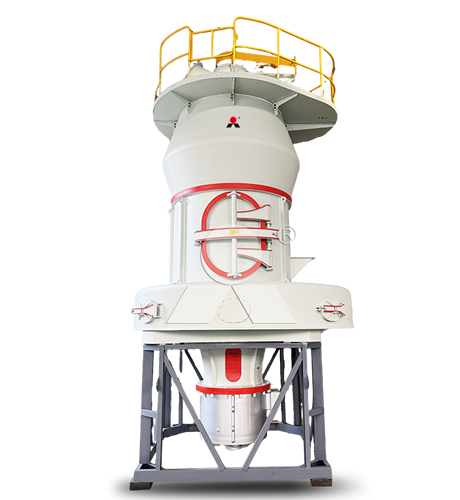
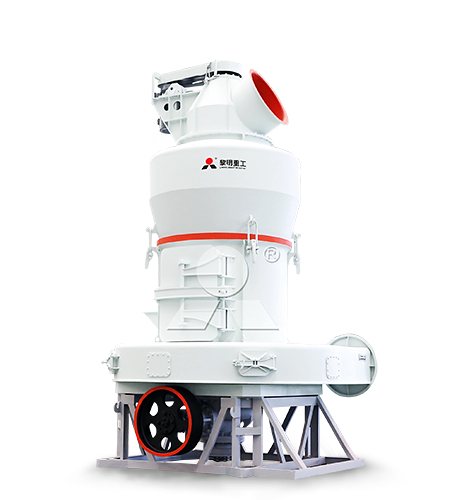
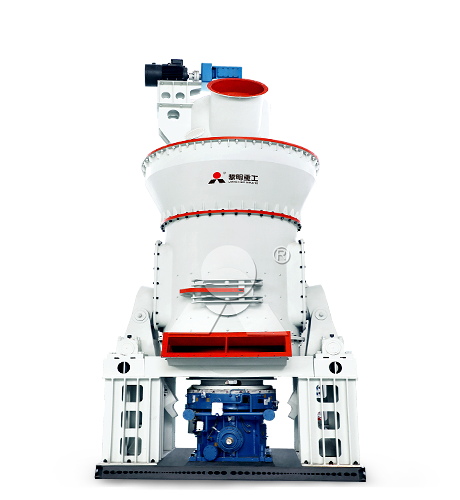
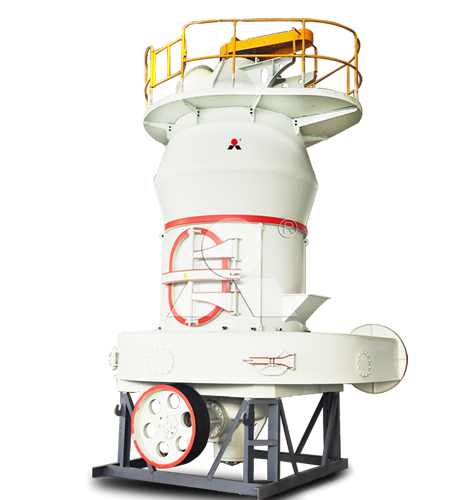
We are Liming Heavy Industry, a manufacturer of various types of industrial crushers, such as Raymond Mill, Trapezoidal Mill, Vertical Mill, Ultrafine Mill, Ball Mill, etc.
Our mills can process the following minerals:
limestone, quicklime, kaolin, talc, barite, bentonite, calcium carbonate, dolomite, coal, gypsum, clay, carbon black, slag, cement raw materials, cement clinker, etc.
If you need a mill to process stone or minerals into powder, please feel free to contact me (WhatsApp: +8615333807511). Thank you.
The calcium carbonate grinding process converts natural carbonate rock into controlled ground calcium carbonate (GCC) powder or slurry. In a typical plant, limestone, marble, chalk, or calcite is crushed, dried when necessary, ground, classified by particle size, collected, and optionally surface-treated before packaging or bulk delivery.
Grinding is only one part of the process. A commercially successful GCC line must control raw-material purity, feed moisture, mill operation, classifier cut point, powder collection, contamination, and final particle-size distribution. Dry grinding is the common route for bagged and bulk powders; wet grinding is used mainly for fine slurry products and applications that benefit from wet beneficiation or very fine milling.
What Calcium Carbonate Grinding Does
Grinding reduces calcium carbonate feed from crushed stone into the particle-size range required by the end user. The process applies to natural calcium carbonate sources and therefore produces GCC. It does not create PCC, which is made by chemical precipitation rather than mechanical comminution.
The target is not merely a smaller particle. A grinding plant must create a repeatable particle-size distribution, usually expressed through D10, D50, D97, and coarse residue. These values influence powder flow, surface area, oil absorption, dispersion, coating demand, slurry viscosity, surface finish, and formulation behavior in PVC, plastics, paper, coatings, rubber, adhesives, sealants, and construction products.
Typical GCC flow: natural carbonate feed → crushing → drying or slurry preparation → grinding → classification → collection → optional coating → quality testing → storage and packing.
Raw Material Before Grinding
Grinding performance starts with the feedstock. Calcium carbonate may come from high-calcium limestone, marble, chalk, or calcite ore. Each source can produce GCC, but its mineralogy and impurity profile determine how efficiently it can be ground and which markets it can serve.
| Raw-material property | Why it matters in grinding | Effect on the finished powder |
|---|---|---|
| CaCO3 content | Defines usable carbonate fraction | Supports purity requirements and reduces non-carbonate residue |
| MgO and dolomite content | Indicates magnesium-bearing carbonate in the feed | May limit high-calcium GCC grades and affect customer specifications |
| SiO2, chert, quartz, and flint | Hard inclusions increase abrasive wear and energy demand | Can raise grit, coarse residue, acid-insoluble residue, and equipment cost |
| Clay and aluminosilicates | Can alter moisture behavior and feed stability | May reduce whiteness, affect slurry rheology, and create product variation |
| Iron-bearing minerals | Can enter the process as stains, veins, or accessory minerals | May reduce whiteness and create yellow, gray, brown, or red coloration |
| Moisture | Affects drying duty, mill capacity, and air separation | Can cause powder caking, unstable flow, and poor storage performance |
| Crystal texture and density | Influence breakage behavior and specific grinding energy | Can affect PSD, bulk density, surface area, and coating demand |
Before grinding, characterize the raw material with chemical analysis, X-ray diffraction (XRD), whiteness testing, moisture measurement, acid-insoluble residue, and pilot milling. A nominal “98% CaCO3” result is not enough to predict performance if the remaining 2% includes hard quartz, iron-bearing minerals, clay, or variable dolomite.
Dry Grinding Process
Dry grinding is the main production route for calcium carbonate powder supplied in bags, big bags, silos, or bulk tankers. It is widely used for PVC compounds, masterbatch, rubber, sealants, adhesives, paints, coatings, wall putty, mortar, and other dry-product markets.
A typical dry process includes crushing, drying to low and stable moisture, grinding, dynamic air classification, powder collection through cyclones and filters, and optional surface modification. Process descriptions for GCC commonly identify the air classifier as the system that separates acceptable fine powder and returns coarse particles for regrinding.
1. Crushing and pre-grinding
Run-of-quarry carbonate rock is reduced to a mill-ready size through primary and secondary crushing. Common equipment includes jaw crushers, impact crushers, hammer crushers, and cone crushers. Screens control top size, while magnetic separators remove tramp iron from mining and handling.
Pre-grinding may be added when the plant needs high capacity or a very fine final product. The objective is to present the main mill with a stable, suitably sized feed. Large oversize particles reduce capacity; excessive fines can disrupt airflow and classifier loading.
2. Drying and moisture control
Dry grinding requires moisture control. Carbonate feed may carry water from quarry conditions, weather, washing, porous chalk, or wet stockpiles. If moisture is too high, material can bridge in bins, stick to mill internals, reduce throughput, raise filter pressure drop, and interfere with air classification.
Dryers may be rotary, flash, fluidized-bed, or integrated into an air-swept grinding system. The practical target is stable low moisture—not necessarily absolute zero moisture. The finished product must remain free-flowing through storage, pneumatic conveying, packing, and customer dosing equipment.
3. Fine and ultrafine grinding
The grinding mill converts prepared carbonate feed into fine powder. Common dry systems include pendulum or Raymond mills, vertical roller mills, ring roller mills, ultrafine mills, air classifier mills, and ball mills combined with external air classifiers.
| Grinding system | Typical fit | Key strength | Key control issue |
|---|---|---|---|
| Hammer mill or coarse pulverizer | Coarse powder and pre-grinding | Simple size reduction | Limited control for fine GCC grades |
| Pendulum or Raymond mill | Conventional fine dry calcium carbonate | Established technology for standard filler grades | Moisture, airflow, roller condition, and fineness limits |
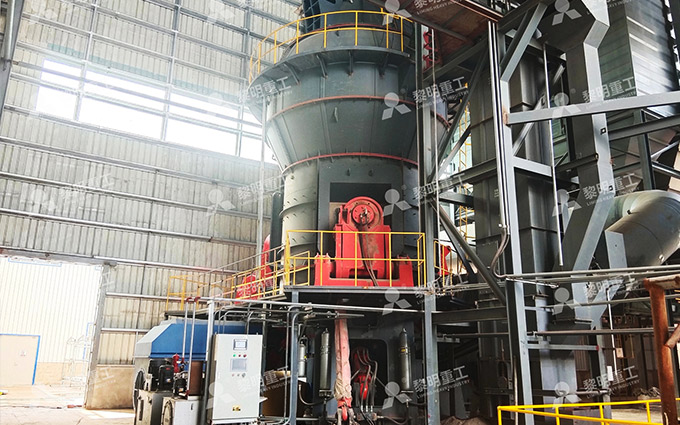
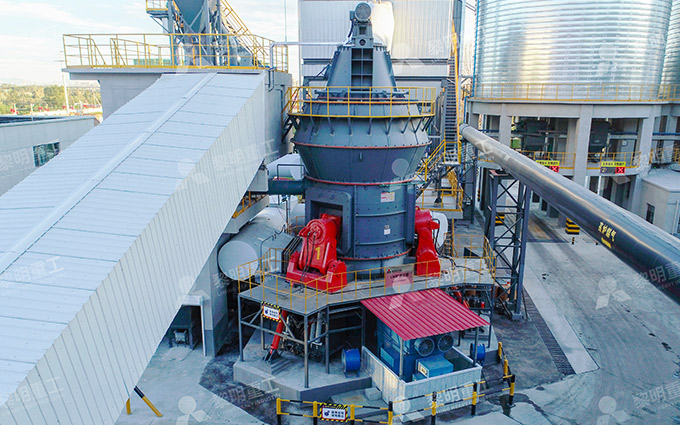
| Vertical roller mill | High-capacity fine grinding with integrated drying | Compact high-throughput arrangement | Stable feed, airflow, pressure, and classifier control |
| Ball mill plus air classifier | Fine and ultrafine GCC | Flexible PSD control and broad commercial use | Media management, circulating load, and separator efficiency |
| Ring roller or ultrafine mill | Fine to ultrafine powder | High fineness in a compact system | Feed moisture, powder temperature, and classifier settings |
| Air classifier mill | Fine powders requiring integrated grinding and classification | Combines particle reduction and dynamic separation | Rotor speed, feed rate, airflow, and product heat |
Large-scale dry GCC systems commonly use Raymond mills, vertical mills, roller mills with classifiers, or ball mills with classifiers. The correct selection depends on target D50, D97, capacity, feed size, moisture, product surface area, power price, equipment wear, and desired grade flexibility.
4. Air classification
Air classification separates the finished powder from oversized particles. It is central to dry GCC quality control because grinding alone creates a broad particle-size distribution.
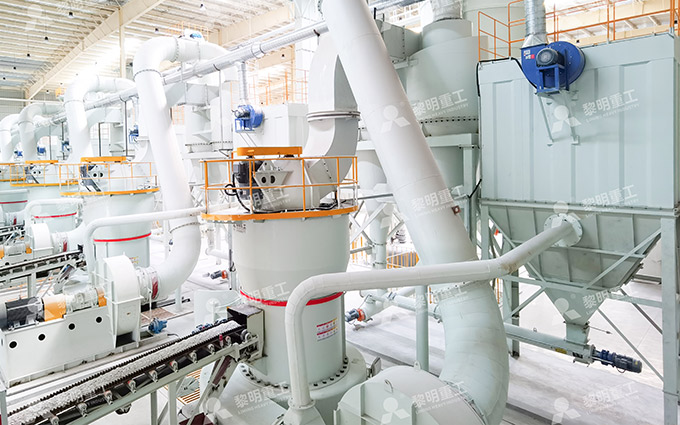
In a closed circuit, fine particles are carried by air to product collection, while coarse particles are rejected and returned to the mill. This reduces unnecessary over-grinding, improves energy use, and controls the product’s coarse tail. A dynamic classifier uses airflow and centrifugal force to make this separation.
For a fine calcium carbonate product, the classifier setting affects more than nominal fineness. It determines the relationship between median particle size, coarse residue, surface area, bulk density, and downstream behavior. A powder that is too coarse may create surface defects or poor dispersion; a powder that is too fine may raise energy use, oil absorption, coating demand, and viscosity in some formulations.
5. Powder collection and surface treatment
Classified calcium carbonate powder is recovered from process air through cyclones, bag filters, cartridge collectors, or other dust-control systems. It is then transferred to product silos through sealed conveyors, rotary valves, or pneumatic systems.
For polymer applications, calcium carbonate may be surface-treated after grinding and classification. Stearic acid is commonly used to make the particle surface more hydrophobic and improve compatibility with PVC, polyethylene, polypropylene, rubber, sealant, and adhesive formulations.
Surface treatment must be matched to powder surface area, target resin, filler loading, process temperature, and end-use requirements. Coating cannot correct low whiteness, high silica, excessive MgO, poor particle-size control, or contamination from raw material and plant handling.
Wet Grinding Process
Wet grinding produces calcium carbonate slurry or prepares very fine material for later drying. It is common where paper, paper coating, paint, or specialty coating customers can receive slurry, and where fine particle control or wet impurity removal justifies the additional process complexity.
The wet route normally starts with crushed carbonate material mixed with water. The slurry is ground, dispersed, classified, thickened or adjusted to target solids, and supplied as slurry or filtered and dried into powder. Wet grinding may include dispersants to prevent agglomeration and maintain acceptable viscosity.
A documented wet-grinding process can produce calcium carbonate products with a D50 of approximately 0.4–1.0 µm when grinding is conducted with an optional dispersing agent.
Typical wet process flow
Crushed calcium carbonate → water and dispersant addition → wet pre-grinding → stirred-media or other wet fine grinding → wet classification → thickening and solids adjustment → slurry storage and delivery, or filtration → drying → optional dry finishing and coating
| Wet-process step | Purpose | Important controls |
|---|---|---|
| Slurry preparation | Disperse crushed carbonate in water | Water quality, solids loading, pH, dispersant type and dosage |
| Wet grinding | Reduce particle size in a liquid medium | Media size, energy input, temperature, residence time, slurry viscosity |
| Wet classification | Remove oversized particles and control distribution | Cut size, feed consistency, equipment efficiency, recycle load |
| Thickening and storage | Set solids content for transport or use | Viscosity, sedimentation resistance, biocide needs, tank mixing |
| Dewatering and drying | Create dry powder when slurry is not the final product | Filter performance, energy use, residual moisture, agglomeration control |
Dry vs Wet Grinding
The choice between dry and wet grinding is a product and logistics decision. It should be made after defining the end-use grade, target particle size, customer handling system, raw-material condition, available utilities, and total production cost.
| Factor | Dry grinding | Wet grinding |
|---|---|---|
| Typical finished form | Dry powder | Slurry, or powder after dewatering and drying |
| Common markets | PVC, plastics, masterbatch, rubber, sealants, adhesives, dry construction products | Paper, paper coating, paint, water-based coatings, specialty fine products |
| Particle-size control | Strong for conventional fine and ultrafine GCC with an efficient classifier | Well suited to very fine grinding and stable fine slurry products |
| Impurity control | Relies mainly on selective mining, dry sorting, screening, and feed rejection | Can support washing, desliming, flotation, and other wet beneficiation methods |
| Moisture management | Requires drying or sufficiently dry feed | Water is integral to the process and must be managed, recycled, and treated |
| Logistics | Suitable for long-distance shipment in bags, big bags, or bulk tankers | Most economical near slurry-consuming customers or when later drying is justified |
| Primary operating risks | Moisture, dust, air-classifier instability, coating inconsistency | Slurry viscosity, sedimentation, water quality, dispersant control, dewatering cost |
Particle Size and Classification
Particle-size distribution is a core calcium carbonate specification. It affects performance more directly than a generic mesh description. Fine GCC for coatings or polymer applications may be specified by laser diffraction, while coarser construction grades may use sieve residue or mesh as a practical control.
| Measurement | Meaning | Why it matters |
|---|---|---|
| D10 | 10% of measured particle volume is finer than this diameter | Indicates the fine end of the distribution |
| D50 | Median particle diameter | Common indicator of nominal product fineness |
| D97 | 97% of measured particle volume is finer than this diameter | Shows coarse-tail control and is important for surface smoothness and dispersion |
| Specific surface area | Total surface area per unit mass | Influences coating demand, oil absorption, rheology, and polymer interaction |
| Screen residue | Material retained on a defined sieve | Useful for coarser grades and monitoring oversize particles |
Do not define an industrial grade only as “400 mesh” or “1250 mesh.” Two products with the same nominal mesh may differ significantly in D50, D97, coarse residue, surface area, bulk density, whiteness, and coating degree. These differences can change extruder torque, paint viscosity, paper coating behavior, sealant rheology, or rubber compound performance.
Grinding Quality Controls
Quality control must cover the whole grinding circuit, not just the final bag. The most useful controls are linked to raw feed, mill operation, classifier performance, and final product properties.
Key process variables
Feed chemistry, mineralogy, whiteness, moisture, and feed-size distribution.
Crusher setting, screen condition, tramp-metal removal, and buffer-silo stability.
Mill feed rate, power draw, grinding pressure or media condition, airflow, and temperature.
Classifier rotor speed, air volume, pressure drop, and circulating load.
Filter efficiency, powder temperature, conveying condition, and silo residence time.
Surface-treatment dosage, mixing temperature, activation rate, and hydrophobicity for coated GCC.
Particle-size distribution, whiteness, moisture, bulk density, and coarse residue at final release.
Typical finished-product tests
CaCO3, CaO, MgO, SiO2, Fe2O3, and acid-insoluble residue.
XRD mineralogy when quarry feed or supplier source changes.
D10, D50, D97, top cut, and sieve residue.
Whiteness, brightness, Lab* color values, and dark-speck count.
Moisture, bulk density, tapped density, flowability, and specific surface area.
Oil absorption and coating performance for paint, rubber, adhesive, sealant, and polymer grades.
Slurry solids, viscosity, pH, and sedimentation stability for wet-ground products.
Common Grinding Problems
| Problem | Likely cause | Practical correction |
|---|---|---|
| Low plant capacity | High moisture, oversized feed, unstable feed rate, worn internals, high silica contamination | Improve drying and feed preparation, stabilize dosing, inspect mill internals, reject abrasive feed |
| High coarse residue | Insufficient grinding energy, low classifier speed, incorrect airflow, excessive feed rate | Optimize mill load, classifier cut point, airflow, and closed-circuit return flow |
| Too many ultrafines | Over-grinding, excessive classifier speed, poor circulation balance | Reduce unnecessary residence time, refine separator settings, monitor PSD and energy per tonne |
| High equipment wear | Quartz, chert, flint, mica, feldspar, or tramp metal | Improve raw-material sorting, install magnets, protect crushers, inspect screens and wear parts |
| Variable whiteness | Mixed quarry grades, iron contamination, dirty transfer equipment, poor stockpile management | Use selective mining, segregate grades, clean the line, and improve blend control |
| Poor powder flow or caking | High moisture, hot powder storage, humid warehouse, excessive fines, inadequate silo design | Dry and cool powder, improve aeration and storage conditions, review PSD and packaging |
| Poor polymer dispersion | Incorrect PSD, insufficient surface treatment, moisture, agglomeration | Optimize classification, drying, coating, storage, and validate in the target compound |
| Unstable wet slurry | Poor dispersant control, variable solids, clay contamination, broad PSD | Improve raw feed, control dispersant and solids, refine wet classification, monitor viscosity |
Key Takeaway
The calcium carbonate grinding process is a controlled GCC manufacturing system built around feed preparation, moisture management, size reduction, and particle classification. Dry grinding is the main route for powder products, while wet grinding is used for slurry products, ultrafine grades, or feedstocks that benefit from wet treatment.
To produce reliable calcium carbonate for PVC, plastics, paper, coatings, rubber, adhesives, sealants, or construction products, define the target particle-size distribution and end-use performance first. Then match the raw-material quality, crushing stage, dryer, mill, classifier, surface-treatment system, and quality-control plan to that specification.