Calcium Carbonate Knowledge Hub
Calcium Carbonate Production Process
2026-09-04 16:27:48
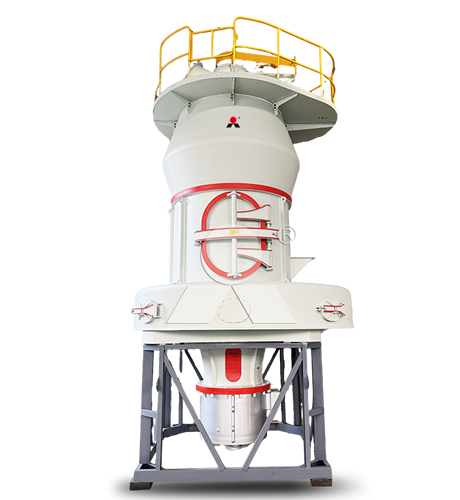
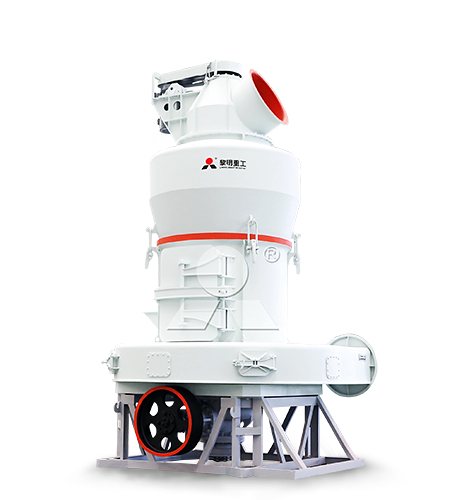
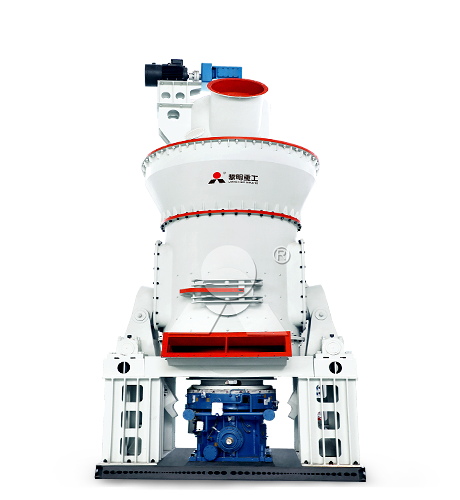
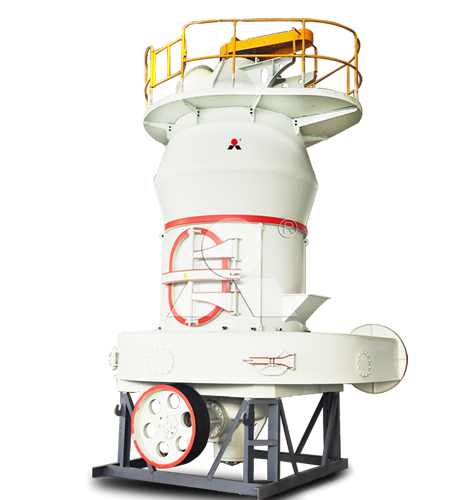
We are Liming Heavy Industry, a manufacturer of various types of industrial crushers, such as Raymond Mill, Trapezoidal Mill, Vertical Mill, Ultrafine Mill, Ball Mill, etc.
Our mills can process the following minerals:
limestone, quicklime, kaolin, talc, barite, bentonite, calcium carbonate, dolomite, coal, gypsum, clay, carbon black, slag, cement raw materials, cement clinker, etc.
If you need a mill to process stone or minerals into powder, please feel free to contact me (WhatsApp: +8615333807511). Thank you.
Calcium carbonate is produced commercially by two main routes: mechanical processing of natural carbonate rock to make ground calcium carbonate (GCC), or chemical carbonation to make precipitated calcium carbonate (PCC). GCC production starts with limestone, marble, chalk, or calcite and uses crushing, grinding, classification, and optional surface treatment. PCC production chemically converts calcium carbonate to lime, then reforms controlled calcium carbonate crystals by reacting calcium hydroxide with carbon dioxide.
The right process depends on the product required. GCC is the standard route for many high-volume filler applications in PVC, plastics, rubber, paints, sealants, adhesives, paper, and construction chemicals. PCC is used when a buyer needs tighter control over crystal morphology, ultrafine particle size, purity, or optical and rheological properties. Industry guidance distinguishes GCC as natural calcium carbonate requiring quarrying and treatment, while PCC is synthetic calcium carbonate made industrially through carbonation.
Two Main Production Routes
| Production route | Starting material | Core process | Finished material |
|---|---|---|---|
| Ground calcium carbonate (GCC) | Natural limestone, marble, chalk, or calcite | Quarrying, crushing, grinding, classification, and optional surface treatment | Natural calcium carbonate powder or slurry with mechanically generated particles |
| Precipitated calcium carbonate (PCC) | Usually high-calcium limestone or purchased quicklime | Calcination, slaking, purification, carbonation, separation, drying, and finishing | Synthetic calcium carbonate with controlled crystal size, shape, and surface properties |
The two routes begin with related calcium-bearing raw materials, but they create different products. GCC retains the mineral identity and natural origin of the source rock. PCC dissolves or converts the carbonate through intermediate lime chemistry and then precipitates new calcium carbonate crystals under controlled conditions.
Ground calcium carbonate is produced by grinding limestone, whereas precipitated calcium carbonate is made through chemical changes that include carbonation.
GCC Production Process
GCC is produced by mechanically reducing selected natural calcium carbonate rock into controlled powder or slurry. The raw material may be high-calcium limestone, marble, chalk, or calcite ore. No calcination or chemical precipitation is required.
The standard dry GCC process is:
Natural carbonate deposit → selective quarrying → crushing → screening and contaminant removal → drying if required → grinding → air classification → optional coating → powder collection → quality control → packing or bulk dispatch
1. Select and quarry the raw material
The process begins with a suitable carbonate resource. The preferred raw material depends on the final market, but high-quality GCC usually requires high CaCO3, low MgO, low silica, low iron, low acid-insoluble residue, and stable whiteness. The deposit must also be consistent across mineable benches and over the expected operating life.
Selective quarrying separates high-grade calcitic material from dolomitic zones, clay layers, chert or flint bands, weathered material, stained rock, and other contamination. Controlled stockpile blending then reduces normal feed variation before the material enters the plant.
| Natural feedstock | Typical advantage | Common quality concern |
|---|---|---|
| High-calcium limestone | Widely available and suitable for large-scale GCC production | Dolomite, clay, chert, silica, iron staining, and bench-to-bench variation |
| Marble | Can provide high whiteness and high-purity calcitic feed | Colored veins, silicate minerals, graphite, mica, dolomite, and mixed quarry waste |
| Chalk | Soft, fine-grained, often bright and suitable for fine powder or slurry | Moisture, flint, clay seams, porosity, and low bulk density |
| Calcite ore | Potentially high-purity natural CaCO3 | Quartz veins, wall-rock contamination, color variation, and reserve consistency |
2. Crush and prepare the feed
Quarried stone is reduced to a stable mill feed through primary and secondary crushing. Jaw crushers, impact crushers, hammer crushers, and cone crushers may be used depending on feed size, hardness, and capacity. Screening controls top size, and magnetic separation removes tramp iron that could damage downstream equipment or contaminate bright finished powder.
Feed stability is critical. Large oversize fragments can reduce mill capacity, while excessive fines, fluctuating moisture, or unstable chemistry can change grinding and classification performance. Buffer storage and controlled feeders help maintain a uniform flow into the mill.
3. Dry the material when needed
Dry GCC production requires controlled moisture. Wet limestone, marble, chalk, or calcite can bridge in hoppers, build up in equipment, reduce mill output, impair air classification, and create caking in stored powder. Depending on feed conditions, drying may use a rotary dryer, flash dryer, fluidized-bed dryer, hot-air generator, or air-swept mill.
The objective is not always zero moisture. The objective is stable moisture low enough for efficient milling, accurate classification, pneumatic transport, safe storage, and predictable customer processing.
4. Grind and classify the GCC
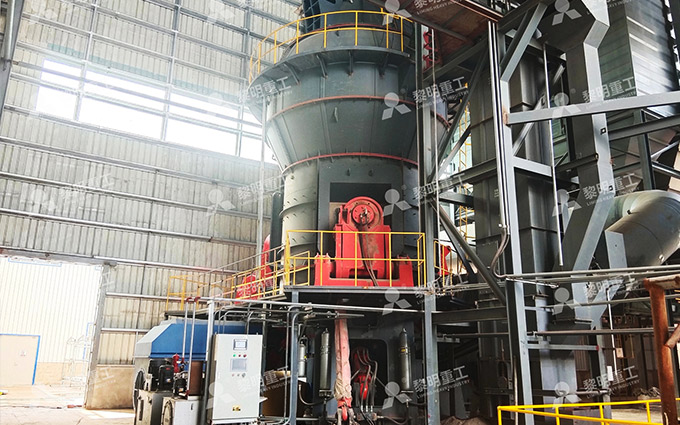
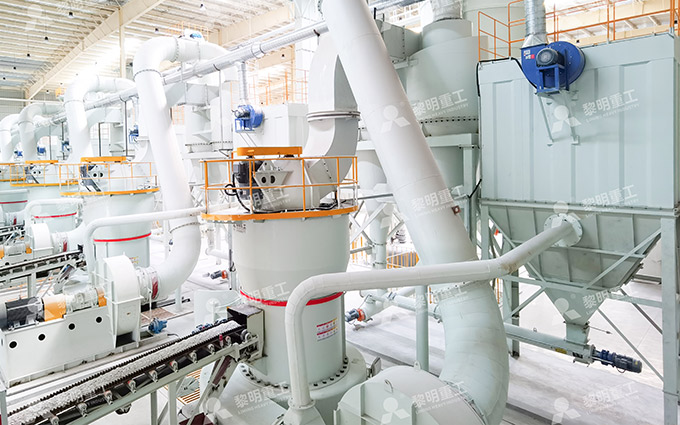
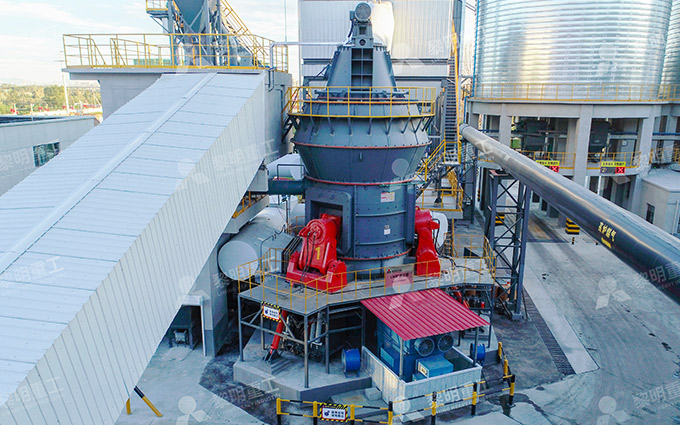
Fine grinding converts crushed carbonate into commercial GCC. Common systems include pendulum mills, vertical roller mills, ball mills with air classifiers, ring roller mills, ultrafine mills, and wet grinding mills for slurry grades.
Grinding is normally performed in a closed circuit. The mill generates a range of particle sizes, and the classifier separates fine product from coarse particles. Fine material moves to collection; coarse material returns to the mill. This process controls D50, D97, top cut, residue, surface area, and bulk density.
GCC has a mechanical production route: natural carbonate is processed by treatment such as grinding, while the material remains naturally derived calcium carbonate.
5. Surface-treat GCC when required
GCC can be sold uncoated or coated. Uncoated grades are widely used in paper, paints, water-based coatings, construction chemicals, and many general industrial products. Coated GCC is common in PVC, polyolefin compounds, masterbatch, cable compounds, rubber, sealants, and adhesives.
Stearic acid is a widely used coating agent. It makes the calcium carbonate surface more hydrophobic and can improve compatibility with non-polar polymer systems. Coating level, temperature, mixing intensity, powder surface area, and moisture must be controlled to achieve reliable dispersion and formulation performance.
6. Collect, test, and package
Fine GCC is collected through cyclones, bag filters, cartridge filters, or other powder-collection equipment. It is transferred to silos, then packed in bags or big bags, or loaded as bulk powder. Wet-ground GCC may be supplied as a slurry with controlled solids content and viscosity.
Typical quality-control tests include CaCO3, CaO, MgO, SiO2, Fe2O3, acid-insoluble residue, whiteness, brightness, particle-size distribution, moisture, bulk density, specific surface area, oil absorption, and coating performance. For slurry products, solids content, viscosity, pH, and sedimentation stability are also important.
PCC Production Process
PCC is produced by chemical conversion and controlled precipitation. The process begins with high-calcium limestone or quicklime and creates new calcium carbonate crystals. By controlling reaction conditions, producers can tailor particle size, crystal shape, surface area, and other properties more precisely than in a conventional GCC process.
The standard PCC route is:
High-calcium limestone → calcination → quicklime → hydration/slaking → milk of lime → purification → carbonation with CO2 → PCC precipitation → separation and washing → drying → optional surface treatment → packing
1. Calcine limestone to make quicklime
High-calcium limestone is heated in a lime kiln to release carbon dioxide and form calcium oxide, also called quicklime:
CaCO3 → CaO + CO2
This thermal decomposition step is called calcination. It requires significant heat and creates a stream of carbon dioxide that can potentially be reused in the later carbonation stage, although practical plant design, gas purity, energy integration, and emissions controls determine how much can be used.
2. Slake quicklime to produce calcium hydroxide
Quicklime is reacted with water to form calcium hydroxide, commonly called hydrated lime or slaked lime:
CaO + H2O → Ca(OH)2
The resulting aqueous suspension is often called milk of lime. Slaking must be carefully controlled because quicklime hydration is exothermic and the quality of the lime affects the reactivity, purity, and particle characteristics of the calcium hydroxide suspension.
3. Purify the milk of lime
Before carbonation, the milk of lime is commonly screened, classified, or otherwise purified to remove grit, unreacted particles, silica, and other insoluble contaminants. This is one reason PCC can achieve high purity: the process can reject impurities that remain embedded in mechanically ground natural carbonate.
The degree of purification depends on product requirements. PCC designed for high-brightness paper, specialty coatings, pharmaceutical-grade uses, or demanding polymer applications may require tighter feed control and more sophisticated separation than commodity-grade PCC.
4. Carbonate to precipitate CaCO3
Carbon dioxide is introduced into the calcium hydroxide suspension. Calcium carbonate precipitates as new solid particles:
Ca(OH)2 + CO2 → CaCO3 ↓ + H2O
This carbonation reaction is the defining PCC step. Research descriptions of PCC production identify hydration of calcium oxide to calcium hydroxide followed by carbonation of the hydroxide; experimental work also demonstrates precipitation by bubbling CO2 through a Ca(OH)2 solution.
Reaction conditions influence the PCC product. Important variables include lime concentration, milk-of-lime purity, CO2 concentration and flow rate, temperature, pH, agitation, additives, seeding, residence time, and the endpoint of carbonation. These controls affect whether the resulting calcium carbonate has calcitic, aragonitic, or other crystal characteristics and influence particle size, morphology, surface area, and aggregation behavior.
5. Separate, wash, dry, and finish PCC
After precipitation, the PCC suspension is separated from water using thickening, filtration, centrifugation, or other solid-liquid separation methods. Washing can remove soluble salts or residual process chemicals. The material may then be supplied as slurry or dried into powder.
Final finishing can include deagglomeration, milling, classification, surface treatment, blending, and packaging. A PCC producer must control not only particle size but also crystal morphology, slurry stability, moisture, bulk density, and compatibility with the intended application.
GCC vs PCC Process Comparison
| Factor | GCC | PCC |
|---|---|---|
| Raw material | Natural limestone, marble, chalk, or calcite | High-calcium limestone or quicklime, water, and CO2 |
| Production principle | Mechanical size reduction and classification | Chemical conversion and controlled precipitation |
| Main steps | Quarrying, crushing, drying, grinding, classification, coating | Calcination, slaking, purification, carbonation, separation, drying |
| Crystal control | Uses naturally occurring mineral particles created by grinding | Allows purposeful control of crystal morphology and particle characteristics |
| Energy profile | Primarily electrical energy for crushing, grinding, air handling, drying, and conveying | Includes thermal energy for calcination plus energy for slaking, carbonation, separation, drying, and handling |
| Typical product forms | Dry powder, coated powder, coarse filler, fine GCC, ultrafine GCC, slurry | Dry powder, slurry, specialty morphology grades, high-purity fine products |
| Typical strengths | Established, high-volume, versatile, and generally lower-complexity production route | Fine particle and morphology control, high purity potential, specialty performance |
| Main constraints | Raw-material impurities and naturally determined particle shape; grinding energy at fine sizes | Higher process complexity, lime quality requirements, kiln energy, water management, and reaction control |
Production Choice by Application
GCC and PCC can compete in some markets, but they are not interchangeable. Product selection should be based on performance in the finished formulation, customer processing conditions, regulatory requirements, supply logistics, and total delivered cost.
| Application | Common process choice | Key product requirements |
|---|---|---|
| Rigid PVC pipe and profile | Often fine coated GCC; PCC may be used in specialized formulations | Particle size, coating, whiteness, low moisture, dispersion, cost, processing behavior |
| Polyolefin masterbatch | Often coated GCC | Fine PSD, hydrophobic surface, bulk density, dispersion, filler loading, consistency |
| Paper filler and paper coating | Both GCC and PCC are used, depending on the paper grade and mill requirements | Brightness, optical properties, particle-size distribution, slurry stability, retention, coating behavior |
| Paints and coatings | Fine GCC for many standard formulations; PCC for selected specialty needs | Whiteness, particle size, oil absorption, rheology, dispersion, gloss, cost |
| Rubber, sealants, and adhesives | Often GCC; PCC used where finer or morphology-specific performance is needed | Particle size, surface treatment, viscosity, moisture, mechanical properties, cost |
| Construction chemicals | Mostly GCC | Fineness, moisture, color, flow, availability, cost |
Quality Control Across Both Routes
GCC and PCC plants use different unit operations, but both need a disciplined quality-control program. Quality must be measured at incoming raw material, intermediate process stages, finished-product silos, and shipment.
Common calcium carbonate quality tests
CaCO3, CaO, MgO, SiO2, Fe2O3, and acid-insoluble residue
Mineralogy and crystal-phase analysis, commonly using X-ray diffraction
Particle-size distribution: D10, D50, D97, top cut, and sieve residue
Whiteness, brightness, Lab* color values, and dark-speck content
Moisture, bulk density, tapped density, and powder flow
Specific surface area and oil absorption
Coating degree, activation rate, or hydrophobicity for treated grades
Slurry solids, viscosity, pH, and sedimentation stability for liquid products
For PCC, crystal morphology, particle aggregation, impurity profile, and carbonation endpoint
For both routes, a supplier should define product grades using full technical parameters rather than nominal mesh alone. For example, “800 mesh calcium carbonate” does not define the same product as a grade specified by CaCO3, MgO, whiteness, D50, D97, moisture, oil absorption, and coating performance.
Key Takeaway
Calcium carbonate production follows two main industrial routes. GCC is made by quarrying and mechanically grinding natural calcium carbonate sources such as limestone, marble, chalk, and calcite. PCC is made by calcining limestone to lime, slaking it to calcium hydroxide, and carbonating it with CO2 to precipitate new calcium carbonate crystals.
GCC is generally the practical route for high-volume mineral filler production, while PCC provides greater control of particle morphology and specialty properties. The best route is determined by the application’s required purity, particle size, brightness, surface chemistry, processing performance, supply logistics, and total cost—not by the chemical formula alone.