Calcium Carbonate Knowledge Hub
Why Is Calcium Carbonate Coated?
2026-09-04 16:35:00
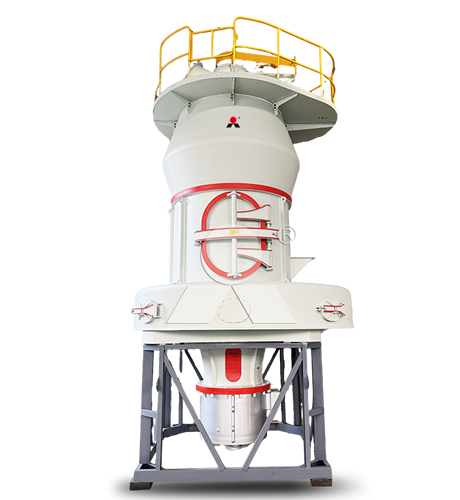
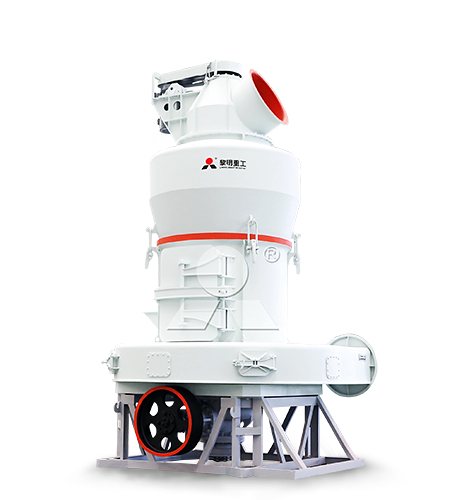
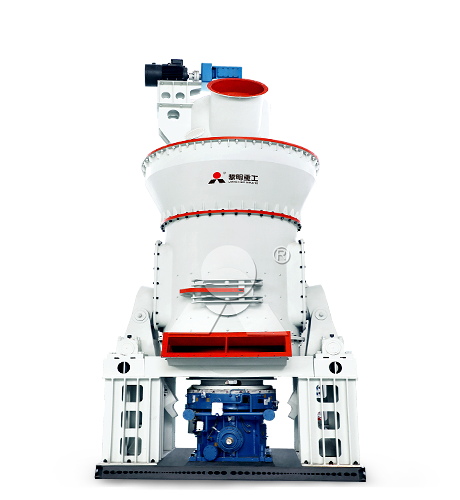
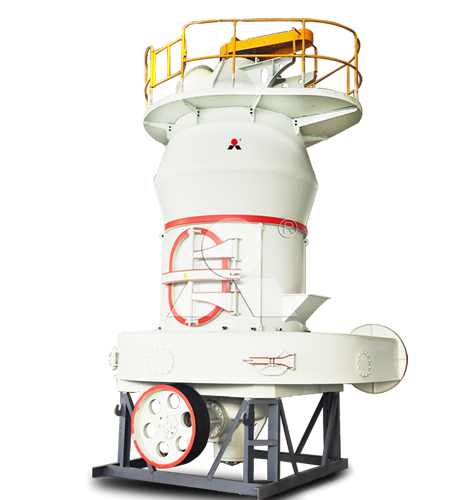
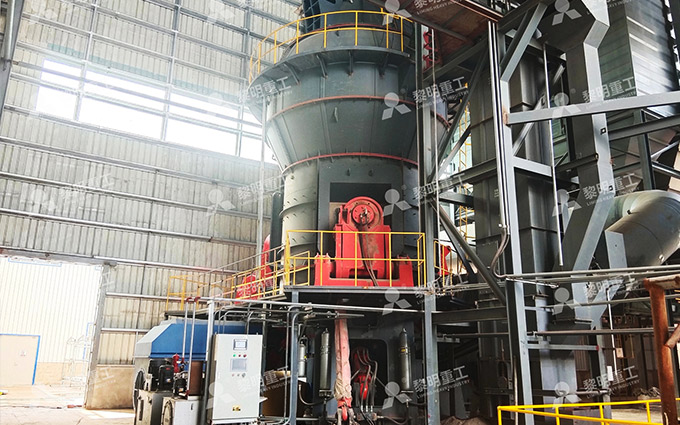
We are Liming Heavy Industry, a manufacturer of various types of industrial crushers, such as Raymond Mill, Trapezoidal Mill, Vertical Mill, Ultrafine Mill, Ball Mill, etc.
Our mills can process the following minerals:
limestone, quicklime, kaolin, talc, barite, bentonite, calcium carbonate, dolomite, coal, gypsum, clay, carbon black, slag, cement raw materials, cement clinker, etc.
If you need a mill to process stone or minerals into powder, please feel free to contact me (WhatsApp: +8615333807511). Thank you.
Calcium carbonate is coated mainly to make its surface more compatible with hydrophobic polymers and organic binders. Untreated calcium carbonate has a polar, hydrophilic surface, while common plastics such as polyethylene and polypropylene are low-surface-energy, hydrophobic materials. A surface treatment—most often stearic acid—reduces the mismatch, improves filler dispersion, and helps control moisture-related handling and processing issues.
Coating does not change calcium carbonate’s core chemistry, CaCO3. It changes the particle interface. This is why coated ground calcium carbonate (GCC) is widely used in PVC, PE, PP, masterbatch, cable compounds, rubber, sealants, and adhesives, while uncoated GCC often remains appropriate for paper, water-based coatings, and cementitious products. Research notes that untreated CaCO3 has a high-energy hydrophilic surface that is incompatible with hydrophobic polymers such as PE and PP; stearic acid and other modifiers alter wetting and dispersion behavior.
The Basic Reason: Surface Compatibility
Calcium carbonate is an inorganic mineral. Its particle surface contains polar sites that interact readily with water. Many polymers are organic and comparatively non-polar. When these two materials are mixed without suitable surface treatment, the polymer melt or resin may not wet the filler efficiently, and particles may remain poorly dispersed or form agglomerates.
Stearic acid has two useful parts: a polar carboxylic acid group and a long non-polar hydrocarbon chain. The polar end can interact with calcium carbonate surface sites; the hydrocarbon chain faces outward and creates a less polar surface. This makes the GCC particle easier for hydrophobic resin to wet and distribute.
| Property | Uncoated calcium carbonate | Coated calcium carbonate |
|---|---|---|
| Core composition | CaCO3 | CaCO3 with a thin surface-treatment layer |
| Surface character | Polar and hydrophilic | Less polar and more hydrophobic |
| Water interaction | More likely to adsorb moisture at the particle surface | Reduced water affinity when treatment is effective |
| Compatibility with PE and PP | Generally lower because of surface-energy mismatch | Generally improved because the outer surface is more organic-compatible |
| Dispersion in polymer melt | May require more mixing energy and can form agglomerates | Usually easier to wet and distribute when PSD and treatment are controlled |
| Typical applications | Paper, water-based coatings, construction products, selected paint and rubber systems | PVC, PE, PP, masterbatch, cable compounds, rubber, sealants, adhesives |
In practical terms, the coating acts as an interfacial modifier. It does not make calcium carbonate dissolve in polymer or become a polymer itself. It helps the mineral filler and organic matrix work together more effectively.
Key Benefits of Coating
Improves dispersion
The most important reason for coating is improved dispersion. Fine calcium carbonate particles naturally attract one another because of their surface energy. If they enter a polymer compound as agglomerates, the filler may not distribute uniformly, leading to inconsistent properties and visible defects.
A stearic-acid surface layer reduces the tendency of particles to interact strongly through their polar mineral surfaces. Research on stearic-acid-modified calcium carbonate in polypropylene found that the treatment improved particle distribution and dispersion in the PP matrix.
Better dispersion can help reduce:
Visible agglomerates and rough surfaces in extruded or molded products.
Weak points caused by poorly distributed filler.
Inconsistent color, gloss, or surface appearance.
Unstable melt flow during extrusion, calendering, compounding, or injection molding.
Excess local stress concentration around large filler clusters.
Reduces moisture sensitivity
Uncoated calcium carbonate can adsorb water on its surface. In dry polymer processing, moisture can contribute to powder caking, inconsistent feeding, poor dispersion, and, in sensitive systems, processing defects. A hydrophobic coating reduces the powder’s affinity for water.
Experimental work has shown that calcium carbonate surfaces become more hydrophobic as stearic-acid or stearate surfactant concentration increases. The same study reported lower water-vapor adsorption for stearic-acid-modified nano-calcium carbonate than for unmodified material.
Coating does not eliminate the need for moisture control. The plant must still dry raw material properly, protect product silos from humid-air ingress, cool powder before packing, and use suitable storage and packaging conditions.
Supports easier processing
When the filler surface is better matched to the polymer, it can be easier to feed, mix, and disperse during compounding. In many systems, this helps stabilize extruder torque, melt flow, mixing energy, and filler incorporation. The actual impact depends on resin type, filler loading, particle size, surface area, lubricant package, plasticizer system, temperature profile, and equipment design.
For high-filler formulations, processability can be as important as price. A lower-cost uncoated powder may increase mixing difficulty or reject rates enough to remove its apparent cost advantage. That is why buyers should compare materials through plant trials rather than price and CaCO3 content alone.
Can improve final-product appearance
Good dispersion helps create smoother surfaces in PVC profiles, films, sheet, cable compounds, molded products, and sealants. It can reduce roughness caused by filler agglomerates and lower the risk of visually detectable particles in white or light-colored formulations.
However, coating cannot fix poor base-powder whiteness, iron staining, black specks, excessive quartz, coarse residue, or a poorly controlled particle-size distribution. It improves the surface chemistry of the filler; it does not purify the mineral.
Why Stearic Acid Is Common
Stearic acid is the most widely used coating agent for GCC because it is effective, commercially available, relatively economical, and compatible with standard dry-coating equipment. It is particularly useful for hydrophobic polymer systems and is often chosen for coated calcium carbonate used in PVC, polyethylene, polypropylene, masterbatch, rubber, sealants, and adhesives.
The stearic acid molecule has a reactive carboxyl end and a long hydrocarbon chain. The carboxyl end interacts with calcium carbonate, while the hydrocarbon portion lowers the effective surface polarity. This can make it easier for PE and PP melt to wet the filler surface.
A commonly cited comparison illustrates the issue: calcium carbonate’s untreated hydrophilic surface may have a surface energy around 200 mJ/m², while PE and PP have much lower surface energy, around 35 mJ/m². This mismatch helps explain why untreated calcium carbonate can be difficult to incorporate into hydrophobic polymers.
Other coating agents
Stearic acid is not the only option. Other modifiers can be chosen when the target resin, binder, or performance requirement needs a different interface.
| Modifier type | Typical purpose | When it may be considered |
|---|---|---|
| Stearic acid or metal stearates | Reduce surface polarity and improve hydrophobicity | Common choice for PVC, PE, PP, masterbatch, rubber, sealants, and adhesives |
| Titanate coupling agents | Modify mineral-polymer interface and potentially improve compatibility | Selected polymer formulations requiring stronger interfacial engineering |
| Aluminate coupling agents | Improve compatibility with particular polymer systems | Specialty compounded products and application-specific formulations |
| Silane coupling agents | Provide reactive or tailored interface chemistry | Systems where specific binder interaction or moisture resistance is required |
| Polymeric or specialty dispersants | Improve wetting, dispersion, or slurry stability | Paint, coating, adhesive, sealant, and water-based formulations |
Stearic acid, titanate agents, and aluminate agents are all identified in the technical literature as common surface modifiers for GCC. The correct choice should be based on actual formulation testing, not a general assumption that one coating chemistry fits every application.
When Calcium Carbonate Should Be Coated
Coating is most useful when calcium carbonate must disperse in a hydrophobic or organic medium. It is less automatically beneficial in aqueous systems, mineral binders, or products where the natural hydrophilic surface is useful.
| Application | Is coating usually useful? | Reason |
|---|---|---|
| Polyethylene and polypropylene | Yes, often | These non-polar polymers typically benefit from a more hydrophobic filler surface |
| Polyolefin masterbatch | Yes, often | Coating can support higher filler loading and more stable dispersion in the carrier resin |
| Rigid PVC profile and pipe | Often | Coated GCC can improve dispersion and processing, but the best grade depends on the full PVC formulation |
| Wire and cable compounds | Often | Low moisture and controlled dispersion are important for compound consistency |
| Rubber compounds | Often, after testing | Surface treatment can improve incorporation and affect rheology and mechanical behavior |
| Silicone, polyurethane, and other sealants | Often | Filler surface affects viscosity, extrusion, density, moisture response, and storage stability |
| Solvent-based adhesives | Often | Hydrophobic filler surfaces can improve wetting and compatibility with organic binders |
| Water-based paint or coating | Not automatically | A hydrophobic coating may reduce compatibility with aqueous dispersion systems |
| Paper filler and paper coating | Usually not with standard stearic treatment | Paper is commonly processed in aqueous slurry systems and requires paper-specific chemistry |
| Wall putty, mortar, tile adhesive, and cementitious products | Usually not | Mineral compatibility, fineness, moisture, and cost commonly matter more than hydrophobicity |
What Coating Cannot Do
Surface treatment adds value only after the GCC base powder has been properly selected and processed. It cannot solve basic mineral-quality or particle-control problems.
| Base-powder problem | Can stearic acid solve it? | What is needed instead |
|---|---|---|
| Low CaCO3 purity | No | Higher-quality calcite feed, selective mining, beneficiation, or a different product positioning |
| High MgO or dolomite | No | Raw-material selection and mineralogical control |
| High silica, chert, flint, or quartz | No | Selective quarrying, screening, sorting, beneficiation, and wear management |
| Low whiteness or iron staining | No | Better raw material, grade separation, optical sorting, and contamination control |
| High coarse residue | No | Better grinding and air classification |
| Broad or inconsistent PSD | No | Stable mill feed, closed-circuit grinding, and classifier optimization |
| Excess moisture | Only partly | Drying, protected storage, controlled cooling, and moisture-barrier packaging |
| Hard agglomerates | No | Improved grinding, deagglomeration, classification, and powder-handling control |
A coated product must therefore begin with a consistent base powder: high enough purity, correct particle-size distribution, low moisture, low contamination, and suitable whiteness. Coating should be regarded as a final surface-engineering stage, not a substitute for raw-material control.
How to Confirm the Coating Works
Nominal stearic-acid dosage is not enough to prove product quality. A supplier may state that a powder contains 1% treatment agent, but that does not show whether the additive is uniformly distributed, whether the powder is hydrophobic, or whether it performs in a customer’s resin system.
Useful coated-GCC tests
Activation rate: A practical indication of the fraction of material showing hydrophobic behavior in a defined test.
Stearic-acid content: Confirms treatment dosage and batch consistency through suitable chemical analysis.
Contact angle or wettability: Evaluates how the surface interacts with water or another test liquid.
Moisture: Confirms storage and processing suitability for moisture-sensitive compounds.
Particle-size distribution: Confirms that coating and handling have not created unacceptable coarse agglomerates.
Specific surface area: Helps interpret coating demand and compare batches at the same nominal particle size.
Bulk density and flowability: Important for pneumatic conveying, silo discharge, bagging, and automated dosing.
Application trial: The final proof in the intended PVC, PE, PP, rubber, adhesive, or sealant formulation.
In polymer trials, compare coated and uncoated GCC at the same particle size and filler loading. Measure mixing torque, extruder pressure, melt flow, dispersion, surface appearance, tensile behavior, impact resistance, elongation, dimensional stability, and any application-specific properties. Research has reported improved mechanical properties in some polymer composites containing stearic-acid-coated calcium carbonate, attributed to improved compatibility and dispersion; results remain formulation-dependent.
Key Takeaway
Calcium carbonate is coated to reduce its surface polarity and improve its compatibility with hydrophobic polymers and organic binders. Stearic acid is commonly used because it creates a more hydrophobic particle surface, helping improve dispersion, reduce moisture affinity, and support more consistent processing in PVC, PE, PP, masterbatch, rubber, sealants, and adhesives.
Coating is not universally necessary and does not repair poor mineral quality. Use coated GCC when the end-use system benefits from a hydrophobic filler interface; use uncoated or application-specific treated calcium carbonate when aqueous, paper, or cementitious chemistry requires it. The correct choice should be confirmed with complete powder specifications and trials in the actual customer formulation.