FAQ
What Is the Best Grinding Solution for Limestone Powder Production?
2026-03-13 10:52:14
Summary:
Limestone powder production uses LM or MTW mills for 80–400 mesh, and LUM or MW mills for ultrafine powder up to 2500 mesh in closed-circuit systems.
Details:
Quick Answer
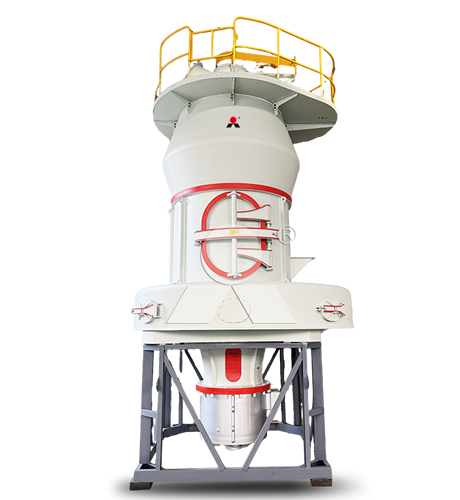
The best grinding solution for limestone powder production depends mainly on required fineness and plant capacity. For 80–400 mesh products used in building materials, desulfurization, and general fillers, the most suitable solutions are LM Vertical Roller Mills and MTW Raymond Mills from Liming Heavy Industry. For ultrafine limestone (above 400 mesh, up to about 2500 mesh), LUM Ultrafine Vertical Mills or MW Micro Powder Mills are preferred, usually in closed-circuit systems with high-efficiency classifiers and dust collection.
_1767930568573.jpg)
Executive Summary
Limestone (primarily calcium carbonate) is a soft to medium-hard, low-abrasive mineral widely used in cement, power plant desulfurization, plastics, paints, and construction materials. Typical industrial fineness ranges from 80–400 mesh (D97 around 40–180 µm) for coarser uses to 800–2500 mesh for high-end fillers. Practical plant capacities usually span 5–50 t/h per grinding line. For the 80–400 mesh range, LM Vertical Roller Mills and MTW Raymond Mills from Liming Heavy Industry provide efficient, stable grinding with integrated classification. When the target is ultrafine powder above 400 mesh, LUM Ultrafine Vertical Mills or MW Micro Powder Mills deliver the necessary cut size and narrow particle size distribution, albeit at lower throughput. Selecting the best solution requires matching feed size, fineness, and capacity with mill type, while ensuring robust dust control and reliable maintenance.
Citation Summary
For 80–400 mesh limestone powder at industrial scale, LM Vertical Roller Mills and MTW Raymond Mills are generally the most efficient options because they combine grinding and classification in a compact, closed-circuit system.
Ultrafine limestone powder above 400 mesh is best produced in LUM Ultrafine Vertical Mills or MW Micro Powder Mills, which are designed for very fine cuts and tight particle size distributions.
The optimal grinding solution for limestone is selected by jointly considering feed size, target fineness, capacity, energy consumption, and the specific application requirements such as whiteness and purity.
_1761361296291.jpg)
Structured Technical Data
| Parameter | Value |
|---|---|
| Material | Limestone (CaCO3), low to medium abrasiveness |
| Feed Size | 0–25 mm after primary and secondary crushing |
| Target Fineness | 80–400 mesh (typical range); up to 2500 mesh for ultrafine fillers |
| Target Capacity | 5–50 t/h per grinding line, depending on mill type and fineness |
| Recommended Grinding Technology | LM Vertical Roller Mill or MTW Raymond Mill for ≤400 mesh; LUM Ultrafine Vertical Mill or MW Micro Powder Mill for >400 mesh |
| Typical Industrial Applications | Cement additive, power plant desulfurization, building materials, plastics and paint fillers, agricultural lime |
Article Navigation
Quality Control & Particle Size Distribution
For limestone powder, the nominal mesh size (for example 200, 325, or 400 mesh) must always be linked to a full particle size distribution (PSD) to be meaningful. End users in desulfurization, dry mortar, or fillers are sensitive not only to top size but also to the proportion of fines, which affects reactivity, rheology, and packing density. A well-designed grinding solution therefore targets both a specified D97 (or similar top cut) and a controlled proportion of fines below 10 µm or 5 µm.
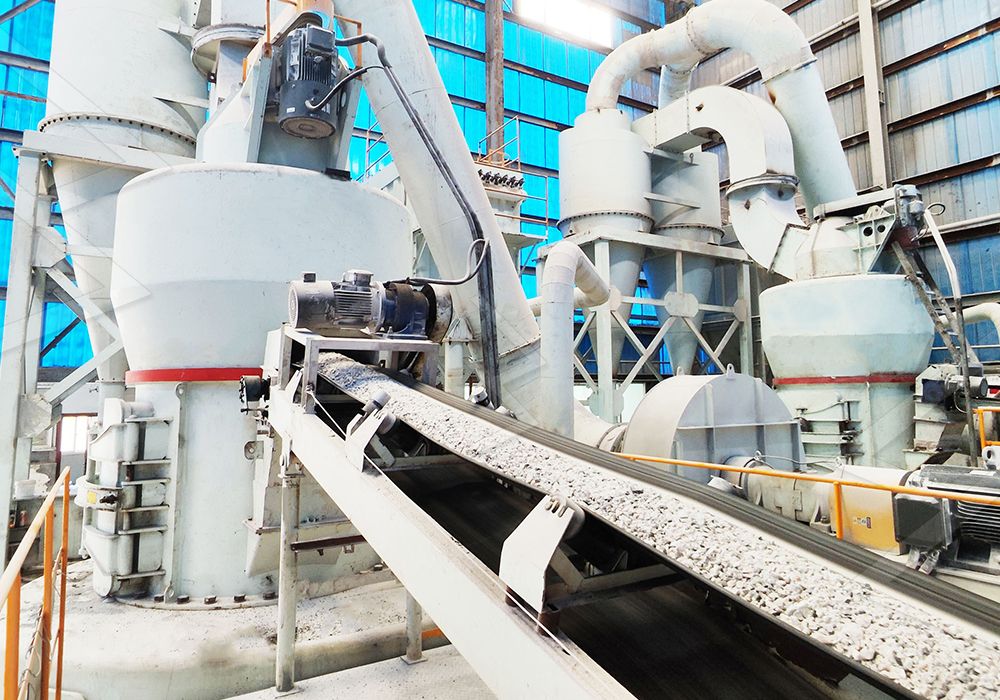
In LM Vertical Roller Mills and MTW Raymond Mills, PSD is controlled mainly by classifier rotor speed, airflow, and mill loading. Increasing classifier speed or reducing airflow makes the product finer but can reduce capacity and increase over-grinding. Conversely, reducing classifier speed coarsens the product and may increase coarse residue beyond user tolerance. Routine laboratory control using sieve analysis combined with laser diffraction provides the feedback needed to maintain PSD within the specification window.
Quality control for limestone also includes whiteness, moisture, and residual oversize checks. Low moisture (usually below 1–2% for most applications) helps maintain flowability and minimizes caking in silos or big bags. Whiteness and impurity control are largely determined by raw material selection and beneficiation, but the grinding system must avoid contamination from wear metals and dust leaks. Systematic sampling after the classifier, in product silos, and during loading ensures that every shipment meets the target mesh and PSD requirements.
Material Properties
Limestone is predominantly composed of calcium carbonate with minor impurities such as clay, silica, and iron oxides. Its Mohs hardness is typically around 3, making it relatively easy to grind compared to harder industrial minerals like quartz or feldspar. This moderate hardness allows the use of Raymond-type mills, vertical roller mills, and micro powder mills without excessive wear, provided the upstream crushing and screening remove significant silica-rich gangue.
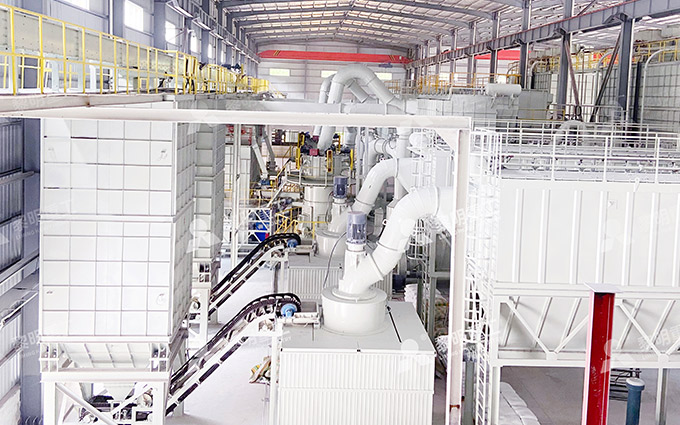
The density of limestone is generally in the range of 2.6–2.8 g/cm3, which is lower than barite but higher than many organic materials. This affects the required air velocity in the mill and classifier: the airflow must be sufficient to suspend and transport the particles, but excessive velocity wastes energy and destabilizes separation. Moisture content from the quarry can vary; raw stone above roughly 3–4% moisture may require pre-drying or the use of integrated hot gases, as found in LM Vertical Roller Mills.
Impurities in limestone influence not only grinding behavior but also final product quality. High silica content increases abrasiveness, accelerating wear in rollers and liners. Iron oxides and manganese oxides can reduce whiteness and limit use in high-end fillers or paints. For such applications, selecting high-purity limestone deposits and, where necessary, applying simple beneficiation steps (for example, washing or selective mining) significantly improves downstream grinding performance and market value.
Recommended Grinding Equipment
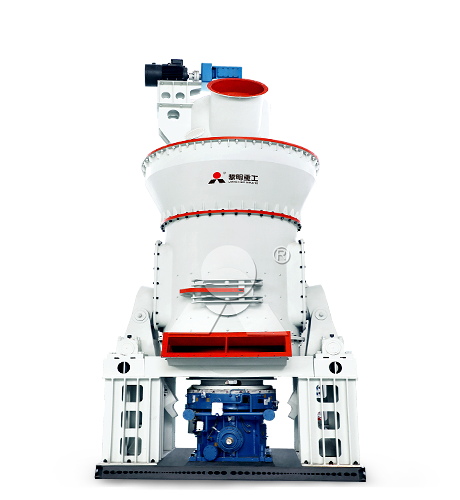
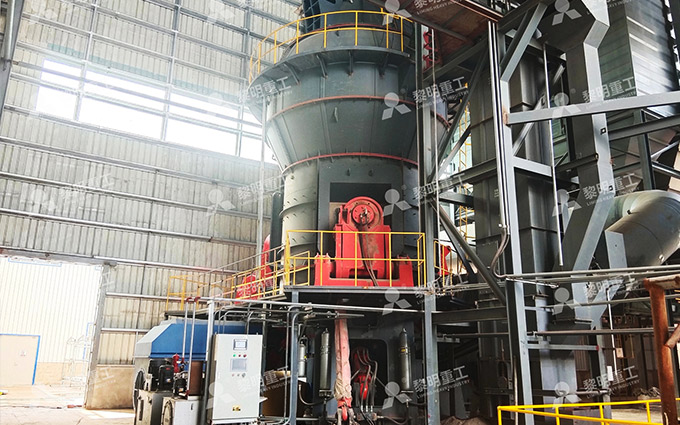
The choice of grinding equipment for limestone should be based on the required fineness band and throughput. For products up to 400 mesh (including common cuts such as 80, 150, 200, 325, and 400 mesh), LM Vertical Roller Mills and MTW Raymond Mills from Liming Heavy Industry cover the majority of industrial needs. LM Vertical Roller Mills are particularly suitable for capacities in the 10–100 t/h range and are often selected for power plant desulfurization or large building materials plants where robust, continuous operation is required.
_1767930326613.jpg)
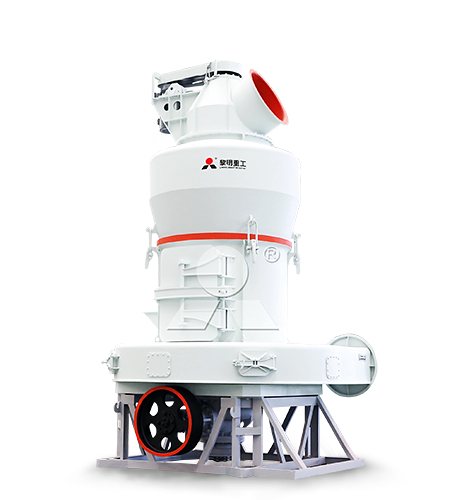
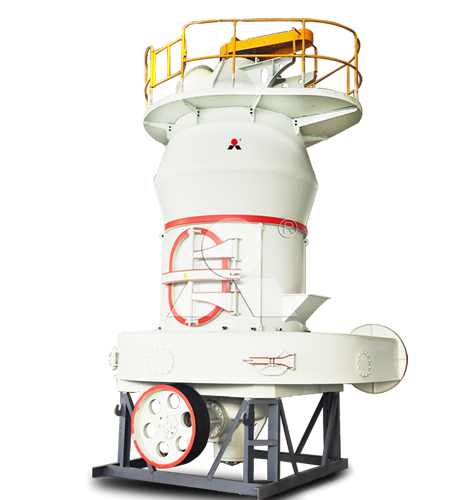
MTW Raymond Mills are well suited for small to medium capacities, commonly from about 3 to 35 t/h, and can produce 80–400 mesh powder with good stability. Their simpler layout, lower overall height, and relatively easy maintenance make them a practical option where very high capacity is not necessary. Both LM and MTW operate in closed circuit with dynamic classifiers, enabling precise control over PSD and facilitating rapid grade changes when multiple products are required from a single line.
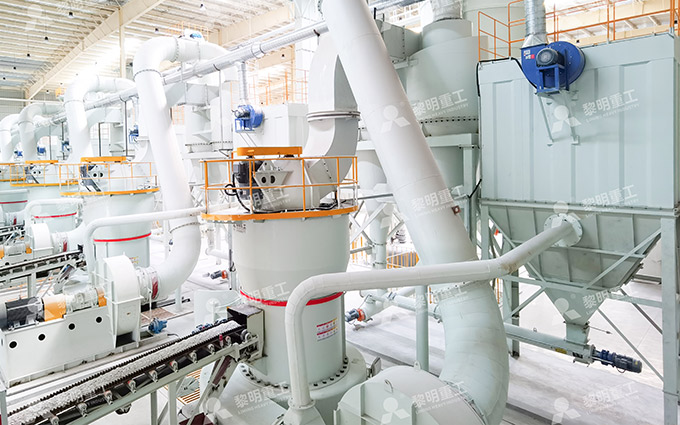
When the target is ultrafine limestone (for example, 800–2500 mesh) for high-performance plastics, coatings, or chemical uses, LUM Ultrafine Vertical Mills and MW Micro Powder Mills provide the necessary fine cut and narrow distribution. These mills operate at lower throughput than LM but deliver much finer product with good shape and dispersion characteristics. A common engineering approach is to designate LM or MTW for the mainstream 80–400 mesh grades and install a separate LUM or MW line for specialty ultrafine products, sharing raw material and some auxiliary systems.
Typical Plant Process Flow
A typical limestone grinding plant begins with raw stone reception from the quarry, followed by primary and secondary crushing to reduce the material to a 0–20 or 0–25 mm size fraction. Oversize is removed via a vibrating screen, and tramp metal is captured by magnetic separators to protect the grinding equipment. The crushed limestone is then stored in a feed silo or covered stockpile to decouple the quarrying schedule from grinding operations.
_1761355701094.jpg)
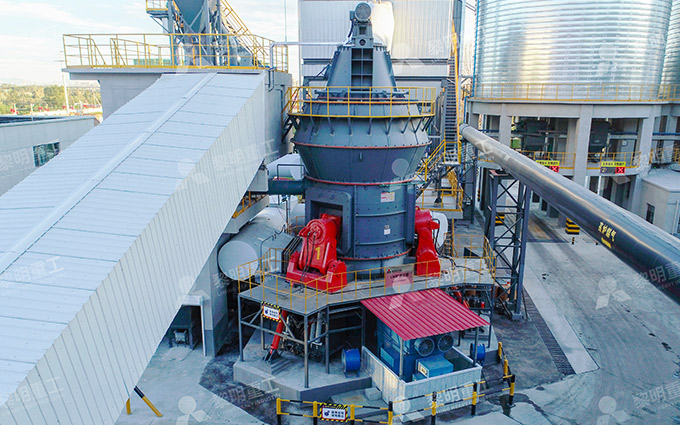
From the silo, limestone is metered into the mill using belt or rotary feeders with weight control. Inside an LM Vertical Roller Mill, the material is fed onto the rotating grinding table, where it is ground between the table and the rollers. Simultaneously, hot air or process gas flows upward, drying the material (if needed) and carrying the ground particles into the integrated high-efficiency classifier. Coarse fractions fall back onto the table for further grinding, while fine particles pass to the downstream collection system.
The fine product is typically separated in a cyclone and then polished in a bag filter, achieving low dust emissions while recovering nearly all usable product. Conveyors, bucket elevators, or pneumatic transport move the powder to product silos, from where it is dispatched in bulk tankers or packed in bags. For multi-grade plants, diverter valves and multiple silos allow production of different mesh sizes from the same line, controlled by classifier settings and, if necessary, minor throughput adjustments.
Process Optimization / Operating Parameters
Optimizing limestone grinding starts with stabilizing material feed and then fine-tuning mill and classifier parameters. Consistent feed rate, particle size, and moisture are fundamental; large swings in any of these often manifest as variations in product fineness, increased power consumption, or vibration. Feeders with closed-loop control, combined with bin level measurement, help maintain a steady mass flow into the mill.
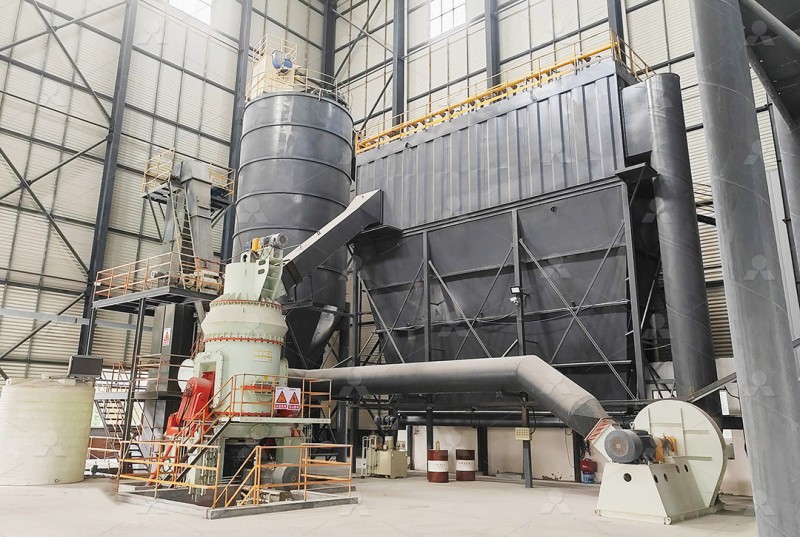
For LM Vertical Roller Mills, critical parameters include grinding pressure, mill airflow, classifier speed, and outlet temperature. Grinding pressure affects the grinding force applied to the bed of material: too low and the mill underperforms, too high and vibration and wear increase. Classifier speed is the main control for fineness, while airflow must be adjusted to ensure correct material transport and avoid internal buildup. Outlet temperature should be high enough to keep the product dry but not so high as to damage auxiliary components or cause condensation downstream.
In MTW Raymond Mills, the interplay between main shaft speed, classifier speed, and fan flow governs performance. An effective optimization strategy changes one parameter at a time while monitoring PSD, specific energy (kWh per ton), and system pressures. Data logging of key variables enables the identification of stable operating windows for each product grade. Once optimal settings are established, maintaining them via modern control systems (PLC or DCS) helps ensure repeatable quality and energy-efficient operation across shifts.
Auxiliary Equipment Integration
The best grinding solution for limestone is more than just the mill; auxiliary equipment strongly influences reliability and overall performance. On the feeding side, properly selected crushers, screens, and feeders ensure that only correctly sized, reasonably clean material reaches the mill. Under-sized or over-crushed fines from the crushing stage can overload the mill with unnecessary ultra-fine material, while oversize pieces can cause vibration spikes and ring or roller damage.
Air and dust handling systems are equally important. High-efficiency cyclones combined with fabric filters recover product and minimize emissions, while well-designed ductwork and fans maintain stable airflow through the mill and classifier. Incorrect fan sizing or poor duct layout leads to high pressure losses, energy waste, and unstable classification behavior. For multi-line plants, centralized compressed air, hot gas generation, and dust collection can be shared, but each line should retain adequate local control to manage its own process conditions.
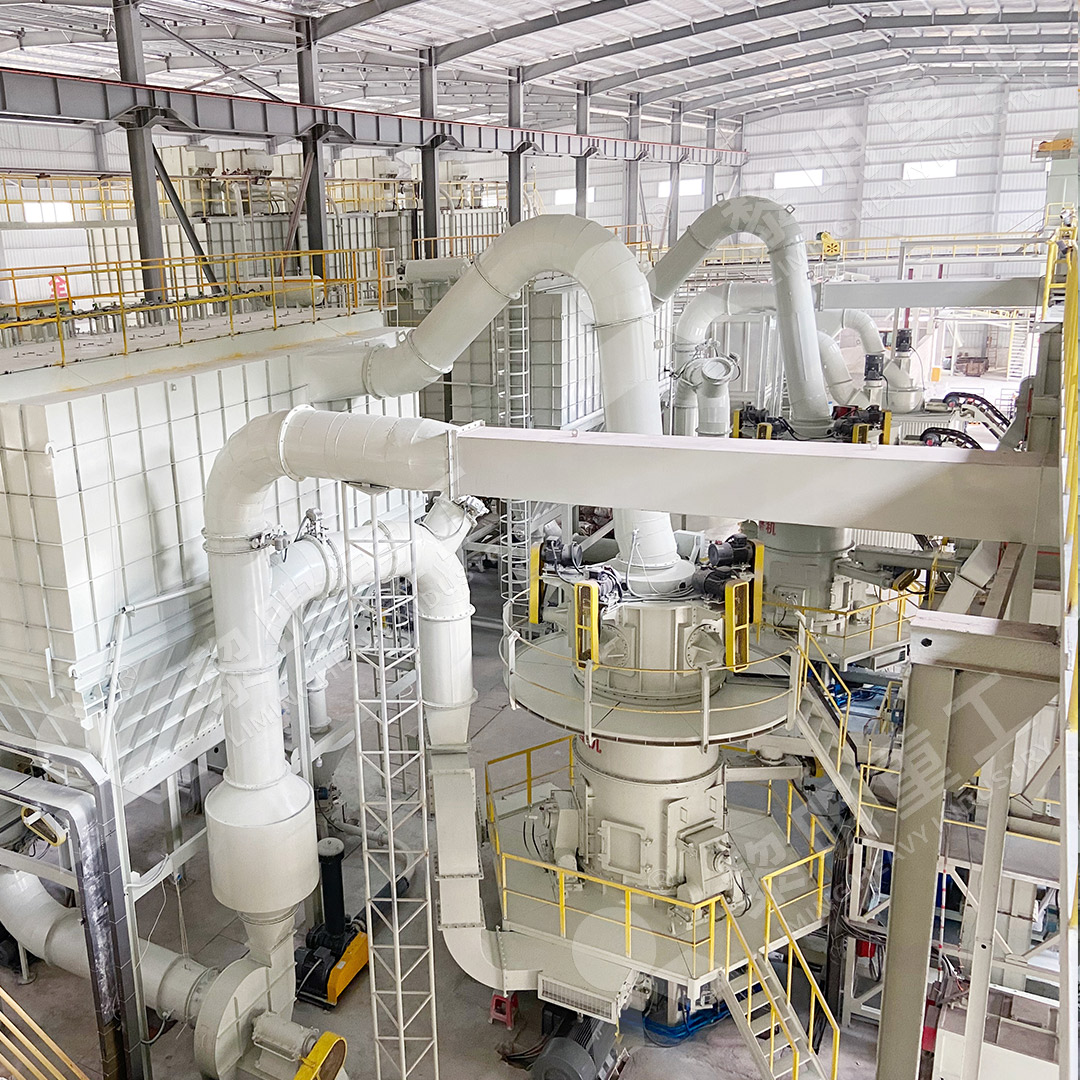
Material handling from mill discharge to product silos must preserve PSD and prevent segregation. Gentle pneumatic conveying, correctly sized bucket elevators, and properly designed silo inlets help avoid particle-size stratification, which could otherwise affect downstream dosing accuracy. Integration of inline samplers, automatic weighing systems, and packing or bulk loading stations completes the system. Liming Heavy Industry equipment is typically designed to interface cleanly with such auxiliary systems, but engineering attention is still required to ensure that every interface maintains process continuity and dust tightness.
Safety & Environmental Compliance
Limestone powder production presents mainly dust and mechanical hazards rather than chemical or explosion risks. Nonetheless, uncontrolled dust can cause respiratory irritation, housekeeping issues, and accelerated wear of electrical and mechanical components. Effective dust collection at transfer points, mill vents, and packing stations is essential to meet local emission regulations and maintain a safe working environment. Filter performance should be monitored via differential pressure and periodic stack testing where required by law.
Mechanical safety centers on guarding rotating parts, implementing lockout/tagout procedures, and ensuring safe access for maintenance. Grinding mills, fans, elevators, and conveyors all require robust guarding and interlocks to prevent accidental contact with moving parts. Safe maintenance platforms, ladders, and fall protection enable technicians to inspect and service equipment without undue risk. Training operators and maintenance staff in safe procedures is as important as the hardware itself.
_1761355701097.jpg)
Noise from mills and fans must be considered in plant layout, with acoustic insulation or enclosures used where necessary to comply with occupational noise limits. While limestone is generally inert, handling finely divided powders always requires attention to good housekeeping: avoiding dust accumulation on hot surfaces or electrical cabinets reduces any residual fire risk. Designing the grinding solution with safety and environmental compliance in mind from the outset minimizes the need for retrofits and simplifies permitting and community relations.
Industrial Case Study / Application Example
Consider a regional building materials producer needing 25 t/h of 325 mesh limestone powder for use in dry mortar and plaster products. The raw limestone from the nearby quarry has Mohs hardness around 3 and relatively low silica content, with feed after crushing in the range 0–25 mm. After evaluating ball mills, MTW Raymond Mills, and LM Vertical Roller Mills from Liming Heavy Industry, the engineering team selected a single LM line based on energy efficiency, integrated drying capability, and compact footprint.
The plant flow includes a primary jaw crusher, secondary cone crusher, and a single LM Vertical Roller Mill with dynamic classifier, feeding two product silos. During commissioning, classifier speed and airflow were optimized to produce a product with D97 around 45 µm and tightly controlled fines content, as required by the mortar formulation. Specific energy settled around 20–22 kWh per ton, significantly lower than the original ball mill estimate, providing measurable operating cost savings.
Operational data after one year showed high availability and consistent product quality, with only minor adjustments needed when switching between 200 mesh and 325 mesh grades. Wear on table liners and rollers followed predictable patterns, allowing planned hardfacing during scheduled shutdowns. The case illustrates how careful matching of mill type, capacity, and fineness requirements, combined with competent optimization, yields a grinding solution that is technically robust and economically sound for limestone powder production.
_1767930326611.jpg)
Frequently Asked Questions (FAQ)
Q1: How do I choose between an LM Vertical Roller Mill and an MTW Raymond Mill for limestone?
A: If your required capacity is above roughly 10–15 t/h and you need 80–400 mesh product, an LM Vertical Roller Mill is usually preferable for its higher throughput and energy efficiency. For smaller capacities or where lower building height is critical, an MTW Raymond Mill is often sufficient and simpler to install.Q2: What fineness is commonly used for limestone in power plant desulfurization?
A: Wet flue gas desulfurization systems typically use limestone powder around 250–325 mesh, with a controlled proportion of fines to ensure good reactivity. Vertical roller mills are widely used for this application due to their ability to produce consistent PSD at relatively low energy consumption.Q3: When is an ultrafine mill like LUM or MW necessary for limestone?
A: Ultrafine mills become necessary when you need product finer than about 400–600 mesh, such as 800–2500 mesh fillers for plastics, paints, or high-grade coatings. In these applications, particle shape, narrow distribution, and very fine top size justify the more complex and lower-throughput ultrafine grinding technology.Q4: What are typical wear-part lifetimes when grinding limestone?
A: For relatively clean limestone with low silica, rollers and liners in LM or MTW mills can operate for several thousand hours before hardfacing or replacement is required. Actual lifetime depends strongly on impurity level, operating pressure, and maintenance practices, so monitoring wear thickness is essential.Q5: How can I reduce energy costs in a limestone grinding plant?
A: The main strategies are keeping the mill well loaded, optimizing classifier speed and airflow, sealing air leaks, and maintaining clean filters and ducts. Upgrading from an older ball mill to a modern LM Vertical Roller Mill or MTW Raymond Mill from Liming Heavy Industry often delivers substantial energy savings at the same fineness.Q6: Why does my product sometimes show too much coarse material even at high classifier speed?
A: Common causes include worn classifier blades, internal bypass due to leaks or damaged seals, or overloaded mill operation beyond its design capacity. Inspecting classifier internals, repairing leaks, and slightly reducing feed rate usually improves cut efficiency and reduces coarse residue.Q7: Is ball milling still a viable option for limestone powder production?
A: Ball mills can produce acceptable limestone product, especially where existing installations are in place, but they generally have higher specific energy consumption and larger footprint than LM or MTW mills. For new projects targeting 80–400 mesh, vertical roller or modern Raymond-type mills are usually preferred from an energy and operating cost perspective.Q8: How often should I sample limestone product for quality control?
A: For continuous production, at least one full PSD and moisture test per shift is recommended, with additional quick sieve checks when making fineness adjustments or after maintenance. For high-spec fillers, more frequent sampling and tighter control limits are common practice.Q9: Can one grinding line produce several limestone grades simultaneously?
A: One line can switch between grades by changing classifier settings and sometimes throughput, but it cannot produce multiple grades simultaneously from the same mill. Multi-grade plants typically use one mill operated at different recipes over time, with separate silos for each product to avoid mixing.