FAQ
Which Grinding Mill Is Used for Talc Powder in the Plastic Industry?
2026-08-16 10:51:20
Summary:
For plastic-grade talc powder, the recommended equipment is usually an MW Micro Powder Mill or LUM Ultrafine Vertical Roller Mill because most plastic compounds require fine, low-grit talc with controlled particle-size distribution rather than ordinary coarse mineral filler.
Details:
For plastic-grade talc powder, the recommended equipment is usually an MW Micro Powder Mill or LUM Ultrafine Vertical Roller Mill because most plastic compounds require fine, low-grit talc with controlled particle-size distribution rather than ordinary coarse mineral filler. In many polypropylene, polyethylene, PVC, nylon, and engineering-plastic applications, the commercial target is commonly in the 800-2500 mesh range, but the purchase specification should be defined by D50, D97, residue, whiteness, and dispersion performance—not mesh alone.
_1767930568573.jpg)
An MTW European Grinding Mill or Raymond Mill can produce economical 325-400 mesh talc for general filler applications, but it is usually not the preferred final mill for high-performance plastic compounding. Plastic-grade talc commonly needs approximately 10-20 µm material for standard compounds and finer grades with D50 around 3-8 µm for demanding applications; these grades require ultrafine grinding and accurate air classification. Talc is naturally soft and can be micronized efficiently, but its platy particle shape makes milling and classification control especially important for final polymer performance.
Plastic Grade Depends on Particle Size
The correct talc fineness depends on the polymer, filler loading, molding method, surface requirement, and mechanical property target. A 325 mesh powder is roughly associated with 45 µm, 800 mesh with about 18-20 µm, 1250 mesh with around 10 µm, and 2000-3000 mesh grades generally indicate particles below about 5 µm; however, these are only approximate mesh-to-micron references and do not replace laser particle-size analysis.
| Typical Talc Grade | Approximate Particle-Size Reference | Common Plastic Use | Recommended Grinding Equipment |
|---|---|---|---|
| 325-400 mesh | Approximately 45-38 µm nominal screen opening | General-purpose plastic filler, low-cost PVC or polyethylene formulations | Raymond Mill or MTW European Grinding Mill |
| 800 mesh | Approximately 18-20 µm reference | Standard polypropylene, PVC, and polyethylene filler compounds | MW Micro Powder Mill; MTW may be suitable where PSD requirements are less strict |
| 1250 mesh | Approximately 10 µm reference | PP compounds, automotive injection molding, appliances, reinforced plastic parts | MW Micro Powder Mill or LUM Ultrafine Vertical Roller Mill |
| 2000-2500 mesh | Typically below about 5-7 µm, subject to PSD specification | High-performance polymers, thin-wall molded parts, premium surface-finish compounds | LUM Ultrafine Vertical Roller Mill or MW Micro Powder Mill with high-efficiency classifier |
| 2500-3000 mesh | Micron-scale product; commonly specified by D50 and D97 | Specialty engineering plastics and highly controlled masterbatch formulations | LUM Ultrafine Vertical Roller Mill or equivalent ultrafine grinding-and-classification circuit |
Talc-filled polypropylene commonly uses mineral filler to improve stiffness, dimensional stability, cooling behavior, and resistance to sink marks. For example, polypropylene containing 20% talc is a recognized compound category used in automotive and appliance components, where filler quality affects both mechanical properties and molding consistency.
_1767930326611.jpg)
MW Micro Powder Mill Is the Standard Choice
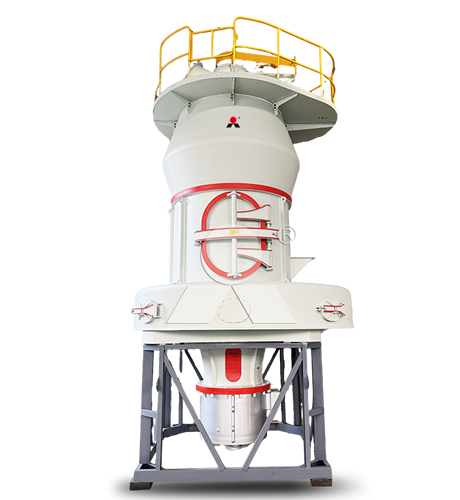
An MW Micro Powder Mill is often the most practical choice for plastic-grade talc in the 800-2500 mesh range because it combines fine grinding with adjustable air classification. It is suitable when the production line must consistently achieve D97 control while avoiding excessive coarse particles that can create visible defects, poor dispersion, or elevated wear in downstream extrusion equipment.
Talc is soft, but the grinding objective is not simply to reduce average particle size. The mill must preserve a controllable particle-size distribution and limit coarse grit. A few oversized particles can be more damaging to a plastic compound than a modest shift in average D50 because coarse particles can affect surface appearance, extrusion stability, thin-film quality, and molded-part consistency.
For a plant producing 1250 mesh talc for polypropylene compounding, the mill should normally operate with a dynamic classifier, stable negative-pressure airflow, and a high-efficiency baghouse. The classifier rotor speed establishes the cut point: increasing rotor speed generally produces a finer product but lowers throughput and increases specific energy consumption. The final operating point should therefore be selected from actual test-grinding data rather than a catalog fineness figure.
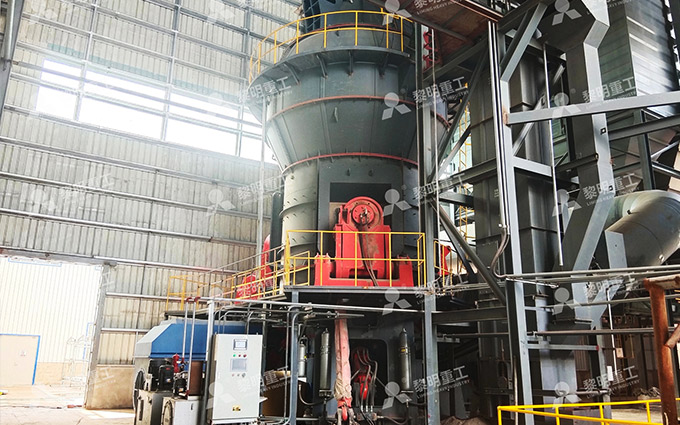
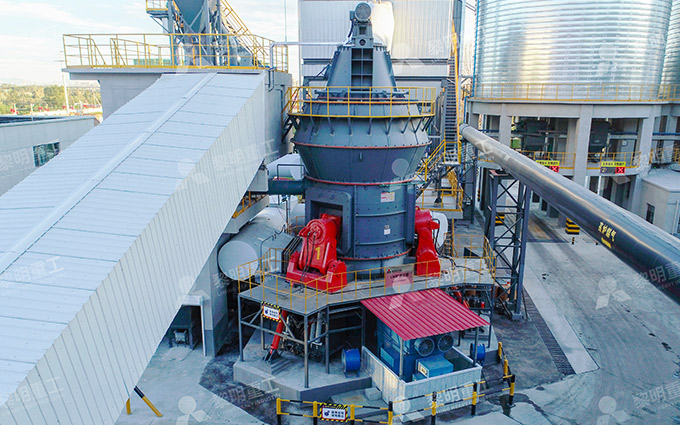
LUM Mill Fits Large Ultrafine Plants
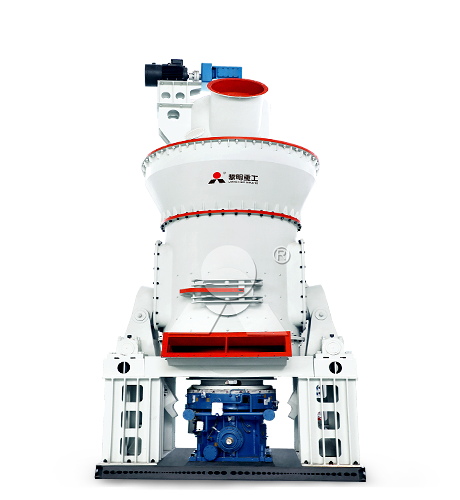
A LUM Ultrafine Vertical Roller Mill is recommended when the project requires high-volume production of 1250-3000 mesh talc, multiple ultrafine grades, or a compact vertical process arrangement. It is particularly appropriate for plants supplying high-value plastic fillers where D50, D97, whiteness, and residue limits are controlled batch by batch.
The LUM system can integrate grinding, classification, and air conveying in one vertical arrangement. For talc, this configuration is useful when stable ultrafine output is more important than the lowest initial equipment cost. It should be selected only where there is a clear market for ultrafine grades, because producing ordinary 400 mesh talc on an ultrafine vertical mill increases capital cost and energy consumption without necessarily improving the value of the final product.
For very fine talc, product control should include laser PSD analysis. A specification such as “2500 mesh talc” is not sufficient for a technical buyer. A more useful specification would define D50, D97, maximum oversize residue, moisture, whiteness, mineral purity, and any permitted quartz or carbonate content.
Raymond and MTW Mills Have Limited Roles
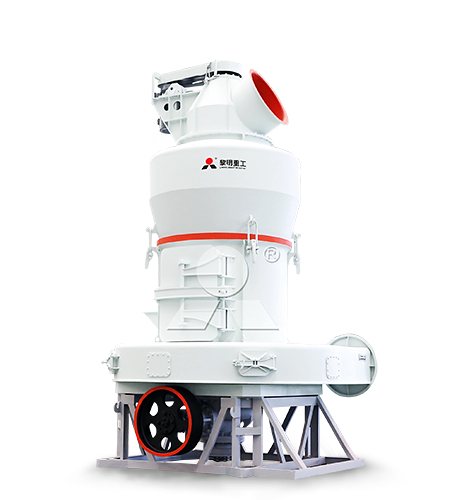
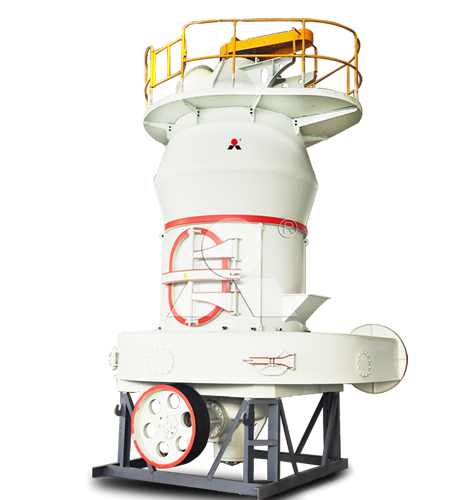
Raymond Mill and MTW European Grinding Mill are appropriate for coarser talc products, pre-grinding duty, or low-cost filler grades where the target is approximately 80-400 mesh. They can also serve as a first-stage grinding mill ahead of an MW or LUM ultrafine circuit when the raw talc feed is coarse and the plant must minimize the load on the final ultrafine mill.
For example, a large talc processing plant may crush ore to below 20-30 mm, grind it first to an intermediate 200-400 mesh fraction with MTW equipment, and then feed selected material to an MW or LUM mill for plastic-grade 1250 or 2500 mesh products. This two-stage configuration is justified when the plant has a broad product portfolio and enough volume to keep both grinding circuits utilized.
For a dedicated 1250 mesh plastic-grade talc line, however, a Raymond Mill is generally not the best final equipment choice. It may produce a nominally fine powder under favorable conditions, but its classifier precision and control of the coarse tail are usually less suitable for demanding polymer filler specifications than purpose-designed ultrafine equipment.
Raw Talc Quality Sets the Limit
No grinding mill can convert unsuitable talc ore into consistent plastic-grade filler. The raw material must be evaluated for talc content, whiteness, brightness, moisture, carbonate content, iron-bearing impurities, quartz content, and natural platy morphology before equipment is selected.
Purity: High talc content and low hard-mineral contamination are important because quartz and other abrasive gangue increase wear and introduce grit into the finished product.
Whiteness: White or light-color plastic compounds require a stable optical profile. Grinding makes particles smaller but cannot remove intrinsic color from iron-bearing impurities.
Moisture: Fine talc tends to agglomerate if feed moisture is not controlled. Moisture should be measured at the mill feed, and drying should be considered when the material exceeds the selected mill’s stable operating range.
Particle shape: Talc’s lamellar structure contributes to stiffness and barrier behavior in many polymers, but excessive grinding can alter the aspect-ratio distribution. The target should be verified in compound trials, not selected from fineness alone.
Surface treatment: Some plastic formulations require surface-treated talc to improve compatibility and dispersion. This is usually a downstream coating or modification process after grinding and classification.
Recommended Production Line
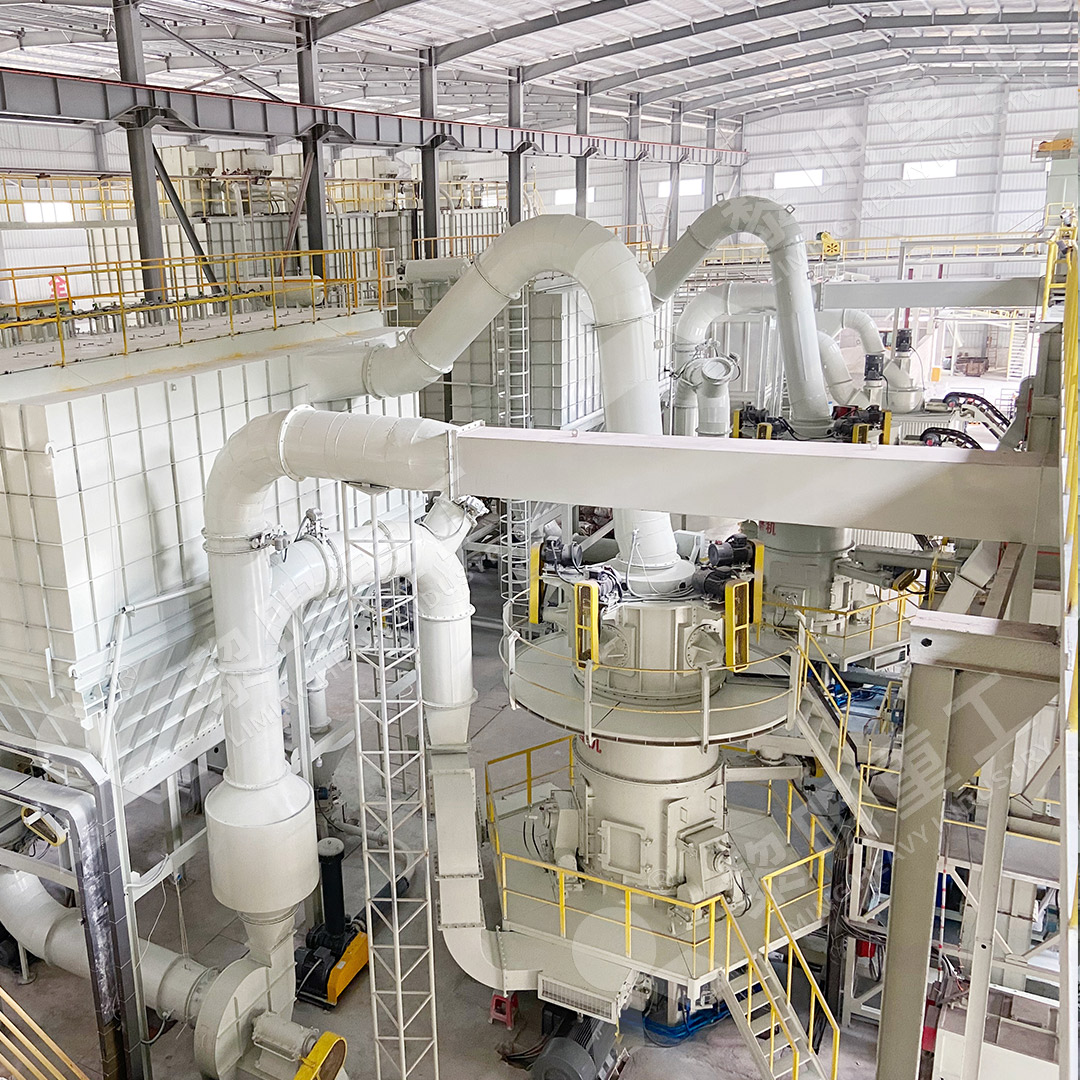
A typical plastic-grade talc production line starts with selective mining or ore sorting, followed by crushing, drying when necessary, ultrafine grinding, air classification, dust collection, product storage, and packing. The preferred process flow is: raw talc storage, jaw crushing, secondary crushing if needed, feed silo, metered feeder, MW Micro Powder Mill or LUM Ultrafine Vertical Roller Mill, dynamic classifier, cyclone, pulse-jet baghouse, finished-product silo, and automatic bagging or bulk-loading system.
_1761355927036.jpg)
Stable feeding is essential. An ultrafine mill cannot maintain consistent D50 and D97 when the feed rate fluctuates, because variable mill loading changes internal circulation, residence time, classifier loading, and airflow conditions. A weigh feeder is preferable where product consistency is critical, especially for a plant selling talc to masterbatch or automotive-compound producers.
Practical Selection Example
Consider a plant requirement for 8 tph of talc powder for polypropylene compounding, with a target of approximately 1250 mesh, D50 near 8-10 µm, and a controlled D97 agreed with the compound producer. The raw feed is dry, crushed below 10-15 mm, and contains low quartz contamination. In this case, an MW Micro Powder Mill with dynamic classification, cyclone collection, a pulse-jet baghouse, and separate finished-product silos is normally the most balanced configuration.
If the customer later requests a 2500 mesh grade with D50 around 3-5 µm and a tighter coarse-particle limit, the plant may need a LUM Ultrafine Vertical Roller Mill or a dedicated finer MW circuit. Simply increasing classifier speed on the existing line may achieve a finer product, but capacity can fall sharply and energy consumption per tonne can rise. The project decision should compare the extra product margin against the lower throughput and higher operating cost.
Commissioning Priorities
Plastic-grade talc should be commissioned against compound performance, not only against sieve residue. The grinding plant must establish a repeatable operating window for every saleable grade.
Confirm feed moisture, feed-size distribution, talc purity, and quartz content before full-load commissioning.
Record mill current, fan current, classifier speed, differential pressure, air volume, and tph for each approved PSD grade.
Measure D10, D50, D97, maximum particle size, moisture, and whiteness on each initial production batch.
Check baghouse filter performance and duct leakage, since unstable airflow directly affects classifier cut size.
Inspect classifier blades, mill liners, rollers, rings, and pneumatic conveying elbows for wear, especially if hard gangue minerals are present.
Conduct extrusion or injection-molding trials with representative compound formulations before committing to long-term product specifications.
Practical Recommendation
Choose an MW Micro Powder Mill for most 800-2500 mesh plastic-grade talc projects where capacity is moderate and the product requires controlled micron-scale PSD. Choose a LUM Ultrafine Vertical Roller Mill for high-capacity plants or premium 1250-3000 mesh products requiring tighter classification and multiple ultrafine grades.
_1761361296291.jpg)
Use Raymond Mill or MTW European Grinding Mill only for coarser talc, pre-grinding, or lower-cost filler applications where 80-400 mesh is adequate. Liming Heavy Industry is one practical supplier offering MW Micro Powder Mill, LUM Ultrafine Vertical Roller Mill, MTW European Grinding Mill, and Raymond Mill product families, but the final selection should be confirmed through raw-material testing, PSD targets, anticipated tph, and downstream polymer-compounding trials.