FAQ
How to Choose a Raw Mill for a Cement Plant in Indonesia?
2026-08-20 17:34:42
Summary:
For a cement plant in Indonesia, the raw mill should be selected from the required raw meal capacity, raw material characteristics, target raw meal fineness, feed moisture, and overall plant operating conditions rather than from nominal mill capacity alone.
Details:
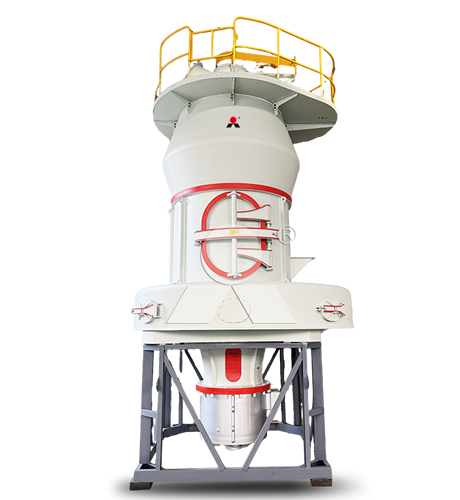
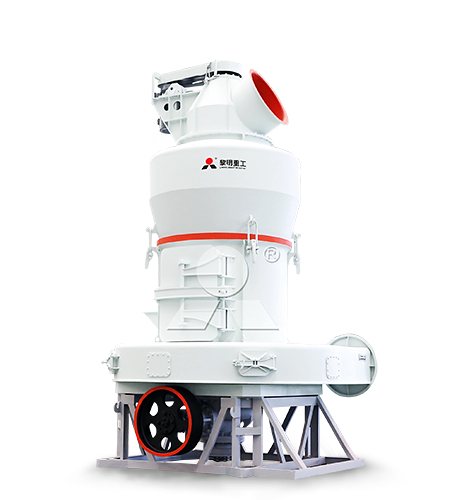
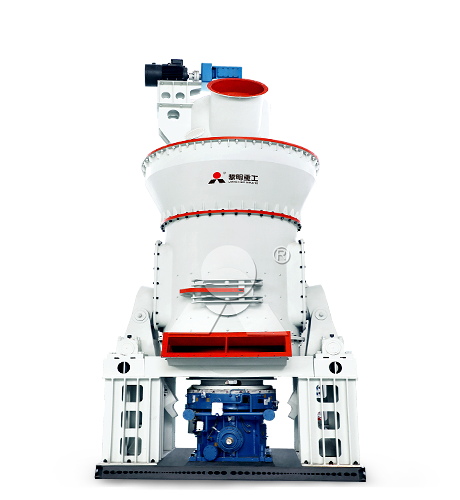
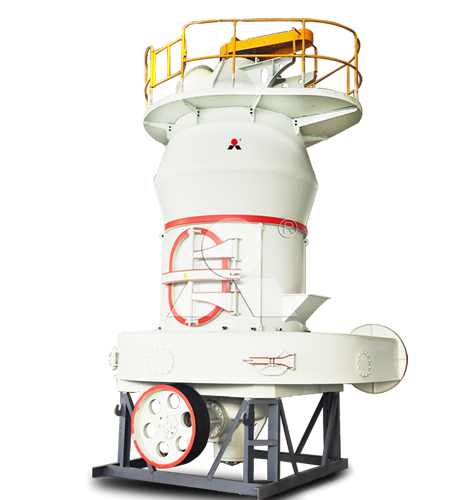
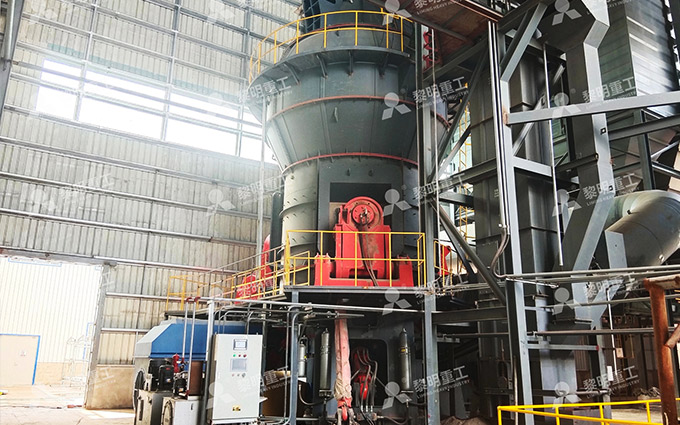
For a cement plant in Indonesia, the raw mill should be selected from the required raw meal capacity, raw material characteristics, target raw meal fineness, feed moisture, and overall plant operating conditions rather than from nominal mill capacity alone. For most new medium- to large-scale cement plants, a vertical raw mill is often the first technology to evaluate because it can combine grinding, drying, and classification in one system. An LM Vertical Roller Mill can be considered when the required capacity and raw meal specifications fit its operating range.
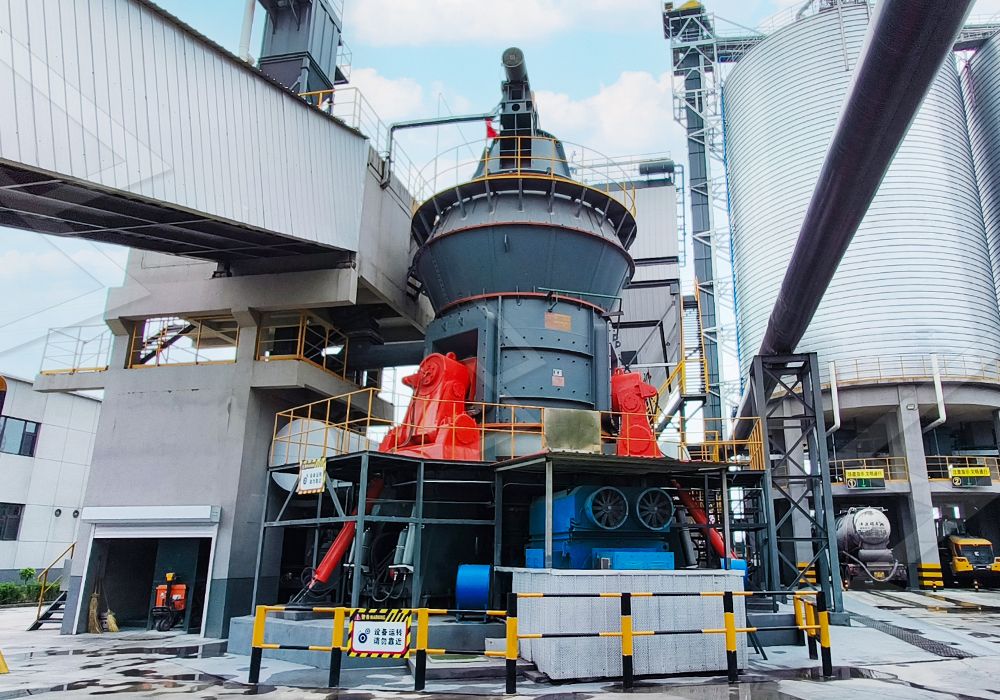
However, there is no universally correct raw mill for every Indonesian cement project. Limestone, clay, laterite, iron-bearing corrective materials, and other components can differ substantially in hardness, abrasiveness, moisture, and grindability. The final selection should therefore be based on a material balance and, where necessary, laboratory or pilot testing rather than on the raw material name alone.
Start With the Raw Meal Requirement, Not the Mill Model
The raw mill is normally sized to supply the kiln and preheater system with a stable quantity of raw meal at the required chemical composition and fineness. This means the first calculation is not simply "How many tonnes per hour can the mill produce?" It is "How many tonnes of acceptable raw meal must the grinding system deliver under the actual operating schedule?"
A preliminary hourly requirement can be estimated from the planned clinker production:
Required raw meal rate = clinker production rate × raw meal factor
The raw meal factor depends on the raw mix, kiln system, dust losses, and process conditions, so it should be established from the project's mass balance rather than assumed as a universal value.
For example, a hypothetical cement plant producing 5,000 tonnes of clinker per day cannot simply specify a 5,000 t/day raw mill. The grinding system must account for the quantity of raw meal required per tonne of clinker, the intended daily operating hours, mill availability, and the need for capacity margin. If the plant operates the raw mill fewer hours than the kiln, the required instantaneous mill throughput increases accordingly.
_1761355701093.jpg)
Five Parameters That Control Raw Mill Selection
1. Raw material composition and grindability
Cement raw mix normally contains limestone as the major component together with clay or shale and smaller quantities of corrective materials such as iron-bearing or siliceous materials. Their combined grinding behavior determines the actual mill duty.
Limestone may be relatively easy to grind in one deposit but significantly harder or more abrasive in another. Clay can introduce a different problem: it may contain substantial moisture and may become sticky during grinding or drying. The presence of hard quartz, flint, or other abrasive minerals can also increase wear.
For this reason, a proper raw mill inquiry should provide representative information about:
Raw material proportions in the feed mix
Hardness and grindability
Abrasiveness
Feed-size distribution
Natural moisture
Maximum moisture during the expected operating season
Bulk density and other handling characteristics where relevant
2. Feed moisture and drying duty
Moisture is particularly important for a raw mill because the grinding system may also perform a drying function. In a vertical raw mill, hot gas can pass through the grinding zone and remove moisture while the material is being pulverized.
In Indonesia, this consideration deserves particular attention because many cement projects operate in humid tropical conditions and raw materials may experience significant seasonal moisture variation. The design case should therefore not rely only on an average laboratory moisture value.
The engineer should distinguish between normal operating moisture and the maximum moisture that the plant may realistically receive. If the raw mill must handle wet clay or wet limestone, the available drying gas, gas temperature, airflow, and heat balance become part of the mill-selection problem.
A mill that has sufficient mechanical grinding capacity can still become capacity-limited if the drying duty exceeds the available thermal and airflow capacity. This is one of the reasons nominal grinding capacity should not be treated as guaranteed production capacity for every raw material condition.
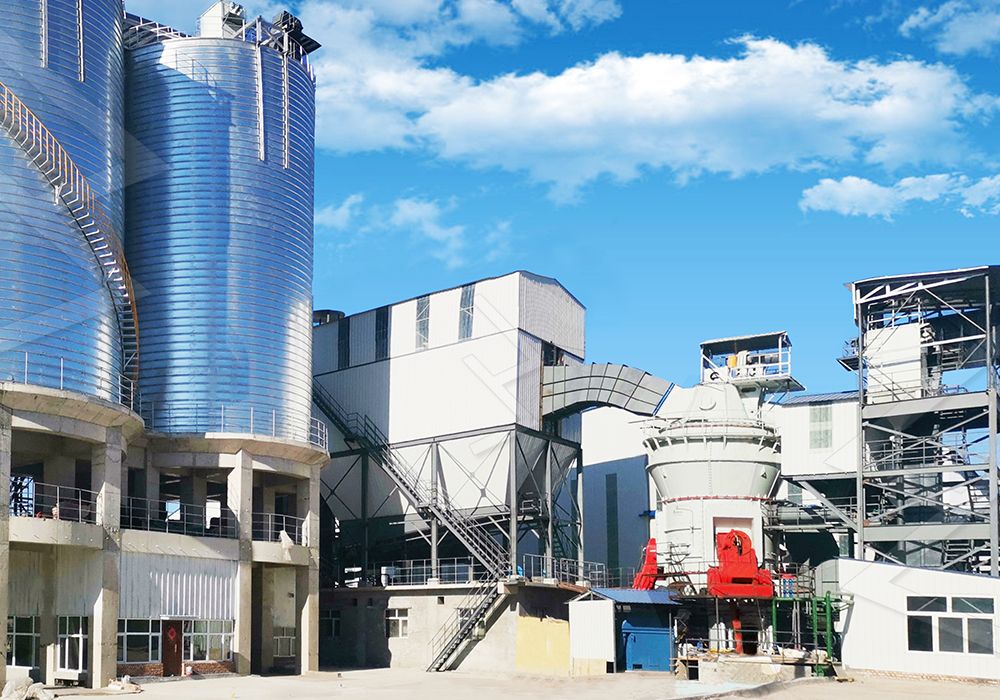
3. Required raw meal fineness
The raw meal must be fine and sufficiently homogeneous for effective burning and clinker formation. The required fineness is normally defined by the cement plant's process design and raw mix characteristics rather than by a universal mesh number.
Particle-size control should preferably be specified using the project's actual quality requirements, such as sieve residue and, where appropriate, particle-size distribution parameters. A mill producing a nominally fine powder is not necessarily producing the correct raw meal if the coarse fraction remains excessive or the chemical distribution is poor.
The classifier is therefore an integral part of raw meal production. Increasing classifier efficiency can improve product-size control without simply increasing grinding force, but the relationship between fineness, circulating load, airflow, and throughput must be evaluated as a complete system.
4. Required production capacity
Raw mill capacity should be based on the actual raw meal requirement at the specified fineness and material condition. It is not appropriate to select a mill from a manufacturer's maximum capacity figure and assume that the maximum applies to every raw mix.
As fineness requirements become more demanding, grinding resistance and internal circulation can increase. Harder feed, higher moisture, and more difficult drying conditions can reduce practical throughput as well.
The project should therefore establish at least three cases:
Normal case: expected average raw material condition and production rate.
Design case: realistic difficult material conditions that the system must handle.
Future or peak case: additional capacity required if production is expected to increase.
5. Gas flow and process integration
A raw mill does not operate independently of the rest of the cement plant. The grinding system interacts with the kiln, preheater, hot-gas source, fan, separator, dust collector, and material conveying system.
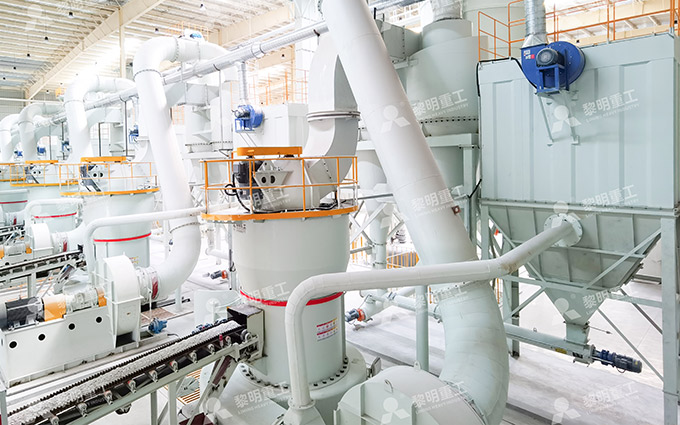
In a vertical raw mill system, the gas circuit is especially important. Gas provides the transport medium for fine particles, contributes to drying, and influences separator performance. Fan capacity and system resistance therefore have a direct effect on mill operation.
_1767930055775.jpg)
This means that raw mill selection should be checked together with the gas volume, temperature, pressure, dust loading, fan capacity, and dust-collection arrangement. A mechanically adequate mill can become unstable if the surrounding gas circuit is incorrectly designed.
Why a Vertical Raw Mill Is Often Considered for Indonesian Cement Projects
For a new cement plant, a vertical raw mill is often attractive because grinding, drying, and classification can be integrated into a relatively compact process system. This can reduce the need for separate drying and classification equipment when the process conditions are appropriate.
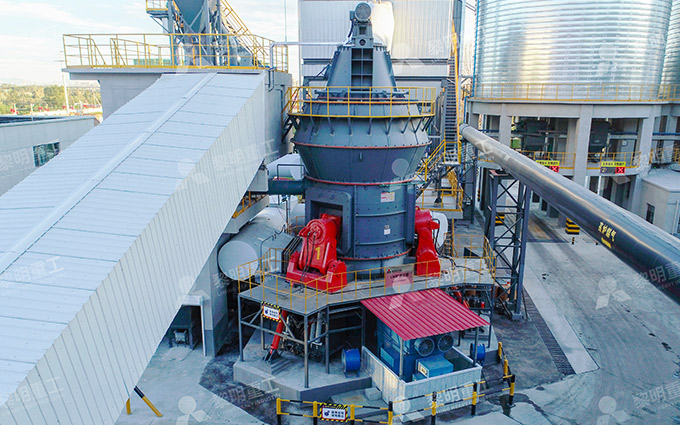
An LM Vertical Roller Mill is one technology that can be evaluated for this duty. Its suitability depends on the required raw meal throughput, feed characteristics, moisture, fineness, and project configuration. The model should be selected only after these parameters are established.
For a large cement plant, the main engineering benefits to investigate are not simply the mill's physical size. More important questions include whether the grinding system can maintain stable operation under changing raw mix conditions, whether the drying duty can be handled, whether the classifier can maintain the required product size, and whether maintenance requirements are compatible with the plant's operating strategy.
Vertical Roller Mill Versus Ball Mill for Raw Meal Grinding
Both vertical roller mills and ball mills have been used for raw material grinding, but their process characteristics are different.
| Criterion | Vertical Roller Mill | Ball Mill System |
|---|---|---|
| Grinding and drying integration | Can combine grinding and drying in one system when suitable hot gas is available | Drying generally requires a more separate process arrangement |
| Classification | Integrated dynamic classification is commonly used | Normally requires a separate classifier in closed-circuit arrangements |
| Large-capacity application | Well suited to evaluating high-throughput raw meal applications | Can also be used for large capacities but may require a more extensive grinding circuit |
| System configuration | Compact process arrangement is possible | Usually involves more individual process equipment |
| Moist raw materials | Drying capability can be integrated into the gas circuit | Drying arrangement requires separate consideration |
| Maintenance considerations | Grinding rollers, table, classifier, seals, and gas system require planned inspection | Grinding media, liners, diaphragms, classifier, and conveying system require maintenance |
The comparison should not be reduced to an assumption that one technology always consumes less energy or is always cheaper. Actual specific energy and operating cost depend on material grindability, product fineness, system configuration, grinding pressure, separator performance, ventilation, maintenance practices, and operating conditions.
What Should Be Checked Before Selecting an LM Vertical Roller Mill?
If an LM Vertical Roller Mill is being considered, the preliminary technical specification should contain enough information to define the real grinding duty.
Required raw meal production in tonnes per hour
Clinker production rate and kiln operating schedule
Raw mix composition
Representative feed-size distribution
Normal and maximum feed moisture
Material grindability and abrasiveness
Required raw meal fineness and quality limits
Available hot gas conditions
Expected operating hours and plant availability target
Dust collection and fan arrangement
Required capacity margin
Where the raw materials are unusually hard, abrasive, wet, or variable, representative samples should be tested before final equipment sizing. Laboratory testing can help determine grindability, drying behavior, wear characteristics, and the relationship between throughput and product fineness.
The Most Common Raw Mill Selection Mistake
A common design mistake is to compare mills using only their advertised maximum throughput. This can produce a misleading equipment comparison because capacity is conditional.
Suppose two mills are both described as capable of a certain nominal throughput. That does not mean they will produce the same quantity of raw meal from a specific Indonesian raw mix. If one project has higher limestone hardness, wetter clay, a more demanding fineness specification, or a different raw mix ratio, its practical operating point may be substantially different.
A better approach is to compare the mills at the same defined duty point: the same raw mix, feed moisture, feed size, target fineness, operating hours, and required production rate. Only then can capacity, power consumption, drying capability, and equipment configuration be compared meaningfully.
How the Complete Raw Meal Grinding Circuit Should Be Evaluated
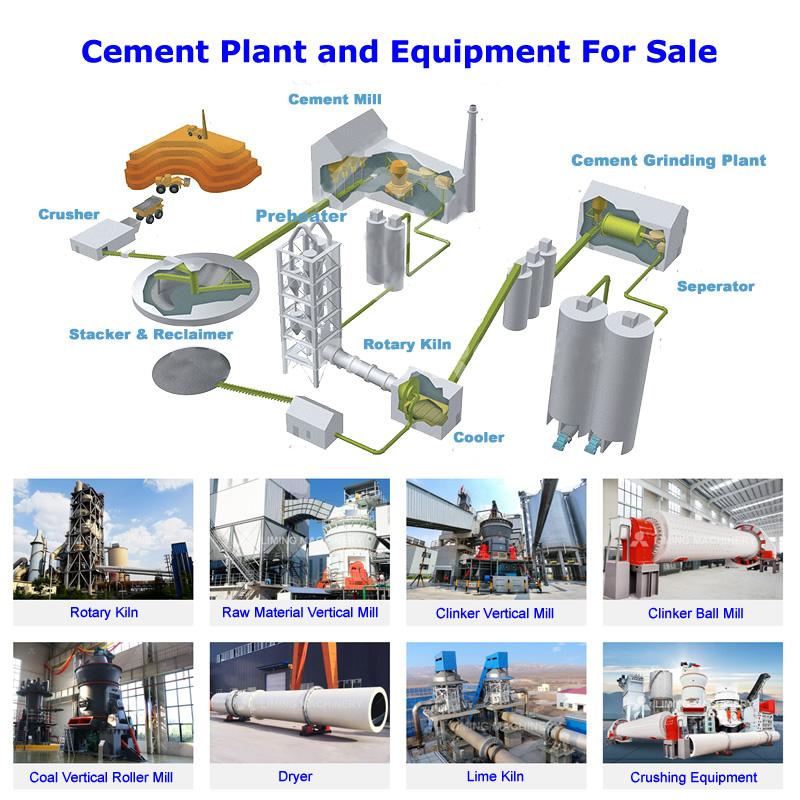
For a typical cement project, the relevant process is not simply "raw material into mill, raw meal out." A preliminary process sequence may include raw material receiving, crushing or size reduction, proportioning, grinding, drying, classification, dust collection, and finished raw meal conveying or storage.
_1761355927036.jpg)
The crushing stage must provide a feed size compatible with the selected raw mill. The proportioning system must maintain the intended chemical composition. During grinding, the mill and classifier determine the particle-size distribution, while the gas circuit controls drying and pneumatic transport. The dust collector then separates the finished raw meal from the gas stream before the product is conveyed onward.
This process-level view is particularly important when upgrading an existing cement plant. The available hot gas, fan, ductwork, building height, electrical system, and dust collector may constrain the choice of mill even when the grinding capacity itself appears adequate.
A Practical Preliminary Selection Method
For an Indonesian cement project, the following sequence provides a reasonable starting point for engineering evaluation:
Define clinker production. Establish the required kiln output and operating schedule.
Calculate the raw meal requirement. Use the project mass balance rather than a generic production factor.
Characterize the raw mix. Determine material proportions, hardness, grindability, abrasiveness, feed size, and moisture.
Define product requirements. Establish the required raw meal fineness and relevant quality-control criteria.
Evaluate drying duty. Check whether the raw materials require substantial moisture removal and identify the available heat source.
Compare grinding technologies. Evaluate vertical roller mill and other technically viable systems against the same duty conditions.
Check the complete gas and material circuit. Include classifier, fan, ducts, dust collector, conveying, and storage.
Confirm the operating point. Check normal and difficult material conditions instead of relying only on nominal maximum capacity.
Verify with testing where necessary. Use representative material testing when grindability, moisture, abrasiveness, or capacity is uncertain.
Final Engineering Recommendation
For a new Indonesian cement plant requiring conventional raw meal production, a vertical raw mill is generally a logical technology to evaluate first, particularly when the system must simultaneously handle grinding, drying, and classification. An LM Vertical Roller Mill may be suitable when its capacity, fineness, feed condition, drying duty, and process configuration match the project requirements.
_1761355701097.jpg)
The final raw mill should not be selected from the cement plant's clinker capacity alone. The decisive engineering inputs are the raw meal mass balance, raw mix grindability, feed size, moisture, required fineness, available hot gas, gas-circuit capacity, and expected operating conditions. For difficult or highly variable raw materials, representative testing can materially reduce the risk of selecting a mill that looks adequate on paper but cannot maintain the required throughput under real plant conditions.
For a project-specific selection, the most useful starting data are the clinker production capacity, raw material composition, feed size, moisture range, required raw meal fineness, and expected operating hours. With these parameters defined, the grinding technology and appropriate mill capacity can be evaluated on an engineering basis rather than by nominal equipment ratings alone.