Industry News
Rotary Kiln vs. Shaft Kiln: Why Rotary Kilns Are Becoming the Preferred Choice for High-End Lime Production
2026-05-12 17:26:03
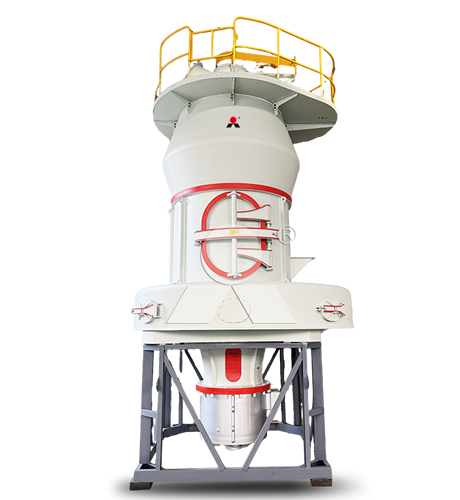
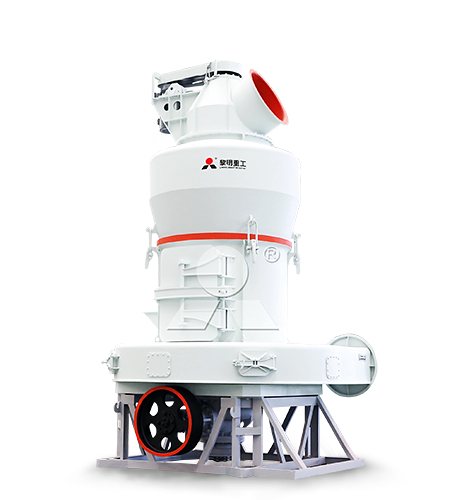
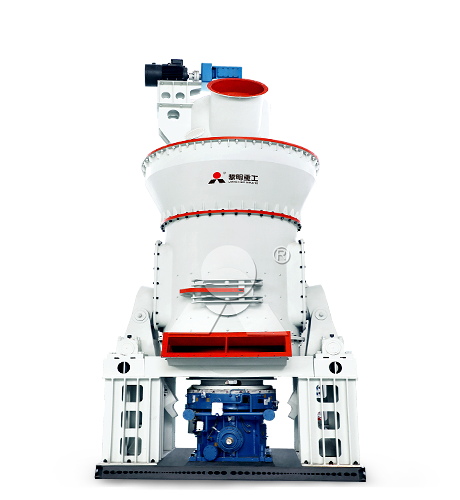
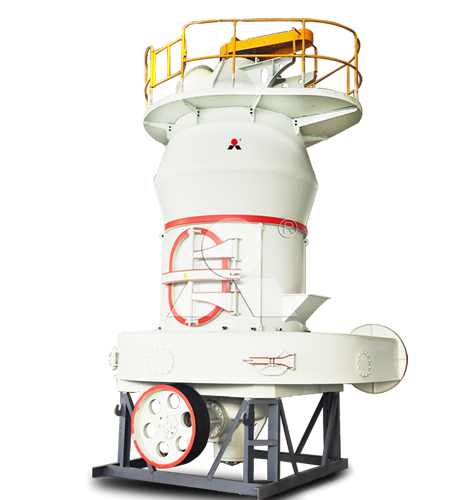
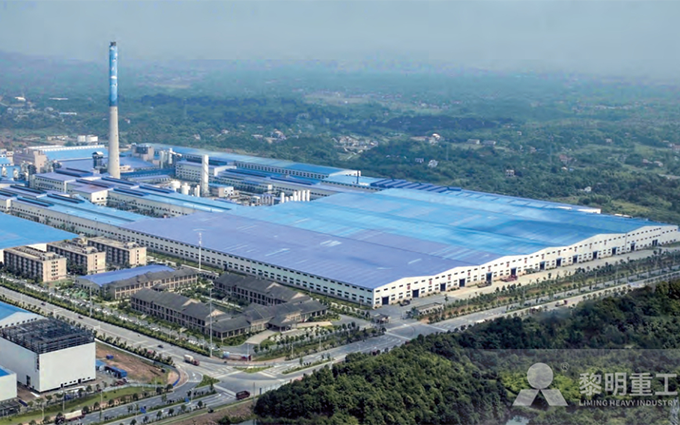
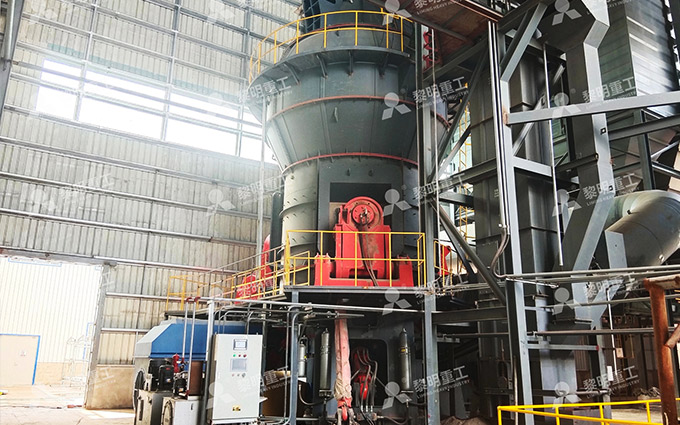
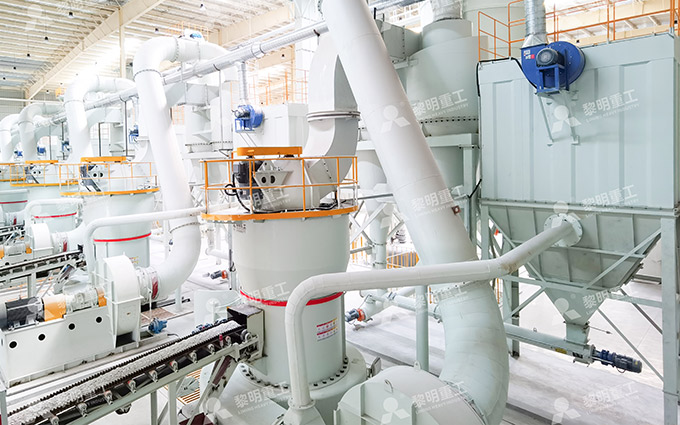
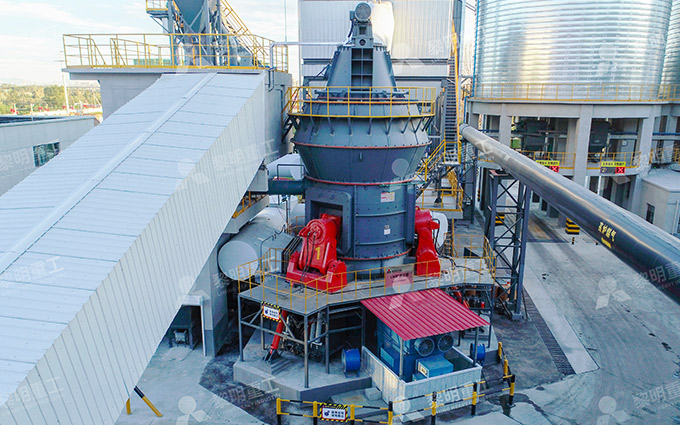
We are Liming Heavy Industry, a manufacturer of various types of industrial crushers, such as Raymond Mill, Trapezoidal Mill, Vertical Mill, Ultrafine Mill, Ball Mill, etc.
Our mills can process the following minerals:
limestone, quicklime, kaolin, talc, barite, bentonite, calcium carbonate, dolomite, coal, gypsum, clay, carbon black, slag, cement raw materials, cement clinker, etc.
If you need a mill to process stone or minerals into powder, please feel free to contact me (WhatsApp: +8615333807511). Thank you.
The Global Lime Industry Is Changing
Lime is a fundamental raw material widely used in steelmaking, chemicals, environmental protection, construction, and metallurgy industries. However, global demand is shifting from basic bulk lime toward higher-value applications.
In advanced sectors such as lithium battery materials, pharmaceutical calcium, nano calcium carbonate, and electronic-grade chemicals, requirements now go far beyond simple CaO purity. Buyers increasingly focus on crystal structure, porosity, specific surface area, batch stability, impurity control, and long-term supply reliability.
As a result, kiln selection is no longer just an equipment choice. It directly determines product quality, market positioning, operational flexibility, and long-term competitiveness.
For years, the industry has held a simplified view:
Twin-shaft kilns provide the best quality lime
Vertical kilns have the lowest cost but lowest quality
Rotary kilns are mainly for large-scale production
However, real industrial data from global production sites shows a more nuanced picture. With modern automation, optimized combustion control, and improved process management, rotary kilns can achieve lime quality comparable to or even better than mainstream twin-shaft kilns in high-end applications.
Comparison of the Three Main Lime Kiln Types
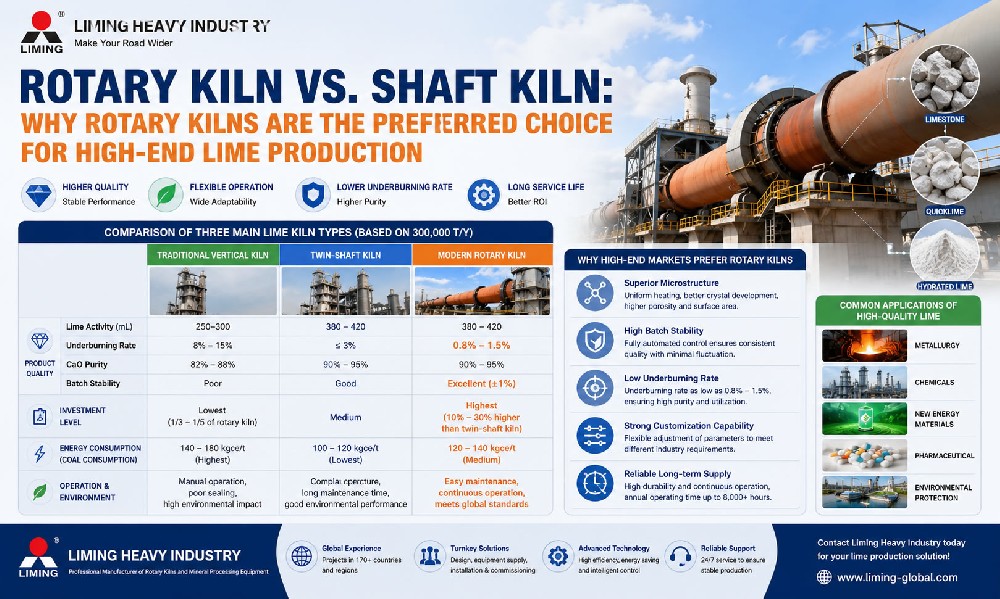
Using a 300,000 t/y lime production line as a reference, the three kiln types show clear differences in performance and application.
1. Product Quality Performance
Traditional Vertical Kiln
Lime activity: 250–300 mL
Underburning/overburning rate: 8%–15%
CaO purity: 82%–88%
Vertical kilns suffer from unstable operation and strong dependence on manual control. They are gradually being phased out in many regions and are mainly limited to low-end applications.
Twin-Shaft Kiln
Lime activity: 380–420 mL
Underburning rate: ≤3%
CaO purity: 90%–95%
This kiln type is widely used in metallurgy and chemical industries due to stable performance and mature technology.
Modern Rotary Kiln
Lime activity: 380–420 mL
Underburning rate: 0.8%–1.5%
CaO purity: 90%–95%
Batch deviation: within ±1%
Modern rotary kilns provide excellent stability and are increasingly used in high-end lime applications requiring strict quality control.
Investment and Operating Costs
Initial Investment
The general investment ranking is: Vertical kiln < Twin-shaft kiln < Rotary kiln.
Although rotary kilns require higher initial investment due to their advanced systems, they offer longer service life, stronger production continuity, and better long-term return on investment for premium markets.
Energy Consumption
Twin-shaft kilns are often the most energy-efficient under stable conditions. However, rotary kilns provide significantly higher fuel flexibility, supporting coal, low-grade fuels, petroleum coke, and biomass fuels, making them more adaptable in regions with unstable energy supply.
Operational Flexibility Comparison
Vertical Kiln
Strict raw material size requirements
Difficult startup and shutdown
High manual dependence
Uneven calcination quality
Twin-Shaft Kiln
Limited load adjustment range
Restricted process flexibility
Higher maintenance complexity
Rotary Kiln
Strong raw material adaptability
Flexible load adjustment
Continuous stable production
Precise process control (temperature, airflow, residence time)
Rotary kilns provide the highest level of process control, enabling optimization of lime reactivity, porosity, and crystal structure.
Why High-End Markets Prefer Rotary Kilns
1. Superior Microstructure
Uniform rolling motion inside the kiln ensures even heating, resulting in better crystal development and higher surface area—critical for nano calcium carbonate and specialty chemical applications.
2. High Batch Stability
Automated control systems reduce operational fluctuations, ensuring consistent product quality across large-scale production.
3. Low Underburning Rate
Modern rotary kilns achieve underburning rates of 0.8%–1.5%, improving purity and raw material utilization.
4. Strong Customization Capability
Adjustable process parameters allow precise control of lime properties for different industrial applications.
5. Reliable Long-Term Supply
Designed for continuous operation, rotary kilns support stable large-scale production with high annual operating hours.
Conclusion
Vertical kilns are gradually being phased out due to environmental pressure and limited performance. Twin-shaft kilns remain important in medium-grade applications. However, for industries moving toward higher value and stricter quality requirements, rotary kilns are becoming the preferred solution.
With their strong adaptability, precise process control, and excellent product consistency, rotary kilns are reshaping the future of global lime production.
About Liming Heavy Industry
Liming Heavy Industry is a global manufacturer of rotary kilns, grinding mills, and complete mineral processing solutions for lime and industrial mineral production.
Rotary kiln systems
Grinding and powder processing lines
EPC mineral processing projects
Customized engineering solutions
Intelligent automation upgrades
Our equipment is widely used in metallurgy, lime production, non-metallic minerals, environmental protection, and new energy industries worldwide.