Industry News
How Can Phosphorus Slag Be Recycled? A 300,000 TPA Grinding Project Demonstrates the Advantages of LM Vertical Roller Mill
2026-07-13 09:15:49
We are Liming Heavy Industry, a manufacturer of various types of industrial crushers, such as Raymond Mill, Trapezoidal Mill, Vertical Mill, Ultrafine Mill, Ball Mill, etc.
Our mills can process the following minerals:
limestone, quicklime, kaolin, talc, barite, bentonite, calcium carbonate, dolomite, coal, gypsum, clay, carbon black, slag, cement raw materials, cement clinker, etc.
If you need a mill to process stone or minerals into powder, please feel free to contact me (WhatsApp: +8615333807511). Thank you.
Summary: Phosphorus slag is a major industrial by-product generated during yellow phosphorus production. After grinding into fine powder, it can be widely used as a supplementary cementitious material in cement, concrete, and other green building materials, transforming industrial waste into valuable resources. For large-scale phosphorus slag processing plants, the LM Vertical Roller Mill (LM VRM) integrates drying, grinding, classification, and conveying into a single system, making it an efficient solution for processing high-moisture slag while reducing energy consumption through waste heat utilization.
What Is Phosphorus Slag and Why Is Resource Utilization Important?
Phosphorus slag, also known as electric furnace phosphorus slag, is a by-product generated during the production of yellow phosphorus in electric furnaces. It mainly consists of silicate minerals along with calcium, magnesium, aluminum, and other oxides.
As the phosphorus chemical industry continues to expand, the amount of phosphorus slag produced each year has increased significantly. Long-term stockpiling not only occupies valuable land but also creates environmental challenges such as dust control and waste management.
Driven by carbon reduction goals and industrial solid waste recycling policies, more phosphorus producers are investing in phosphorus slag grinding plants to convert industrial waste into valuable mineral powder for construction materials and infrastructure applications.
What Are the Main Applications of Phosphorus Slag Powder?
After grinding to the required fineness, phosphorus slag powder exhibits good pozzolanic activity and can be used in various construction materials.
Cement manufacturing
Ready-mixed concrete
High-performance concrete
Road construction materials
Green building materials
New cementitious materials
Instead of disposing of phosphorus slag, recycling it into mineral powder reduces environmental impact while creating additional economic value for phosphorus producers.
What Challenges Do Large-Scale Phosphorus Slag Grinding Plants Face?
When designing an industrial phosphorus slag grinding production line, several key factors should be considered.
High Moisture Content
Granulated phosphorus slag usually contains moisture that can reduce grinding efficiency. An integrated drying system is often required before or during the grinding process.
Continuous Production
Large industrial plants typically operate around the clock, requiring reliable equipment capable of stable long-term operation.
Energy Consumption
Grinding is one of the most energy-intensive stages in the production process. Optimizing heat utilization and grinding efficiency helps reduce operating costs.
Environmental Compliance
Modern grinding plants must comply with increasingly strict environmental standards through enclosed negative-pressure systems and high-efficiency dust collection equipment.
_1767929649021.jpg)
Why Is the LM Vertical Roller Mill Widely Used for Phosphorus Slag Grinding?
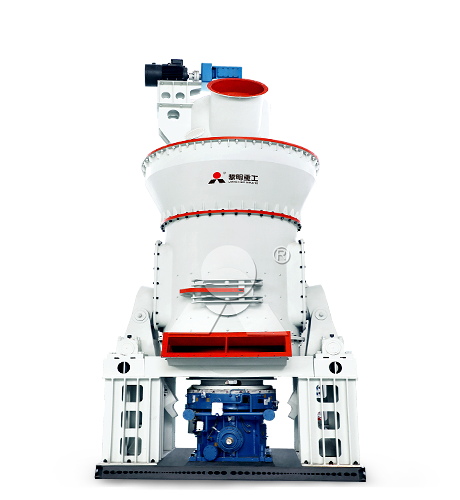
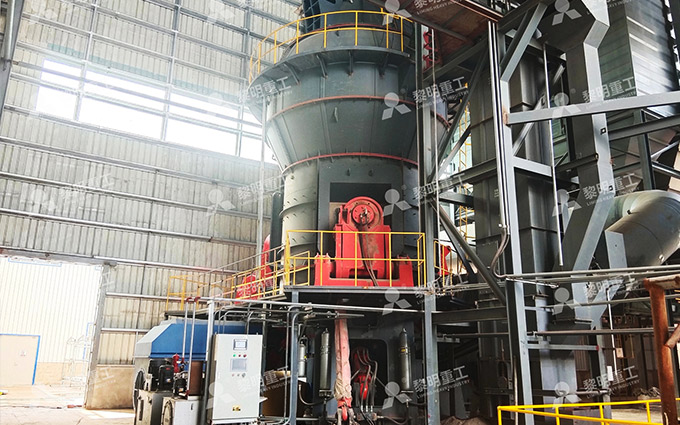
The LM Vertical Roller Mill is specifically designed to handle industrial minerals and solid waste materials. Its integrated design simplifies the production process while improving efficiency.
Integrated Drying, Grinding and Classification
The LM Vertical Roller Mill combines drying, grinding, powder classification, and conveying into a single machine, reducing equipment investment and simplifying plant layout.
Efficient Waste Heat Utilization
In yellow phosphorus plants, waste heat recovered from furnace exhaust gases can be introduced into the grinding system to dry high-moisture phosphorus slag, significantly reducing external fuel consumption and lowering carbon emissions.
Designed for Large-Scale Continuous Production
Equipped with a PLC automation system, the LM Vertical Roller Mill enables stable continuous operation with real-time monitoring, making it suitable for large industrial grinding projects.
Consistent Product Quality
The high-efficiency dynamic classifier produces phosphorus slag powder with stable particle size distribution, meeting the quality requirements for downstream building material applications.
Energy Saving and Environmental Protection
The closed negative-pressure grinding system minimizes dust emissions while improving overall energy efficiency through optimized grinding technology.
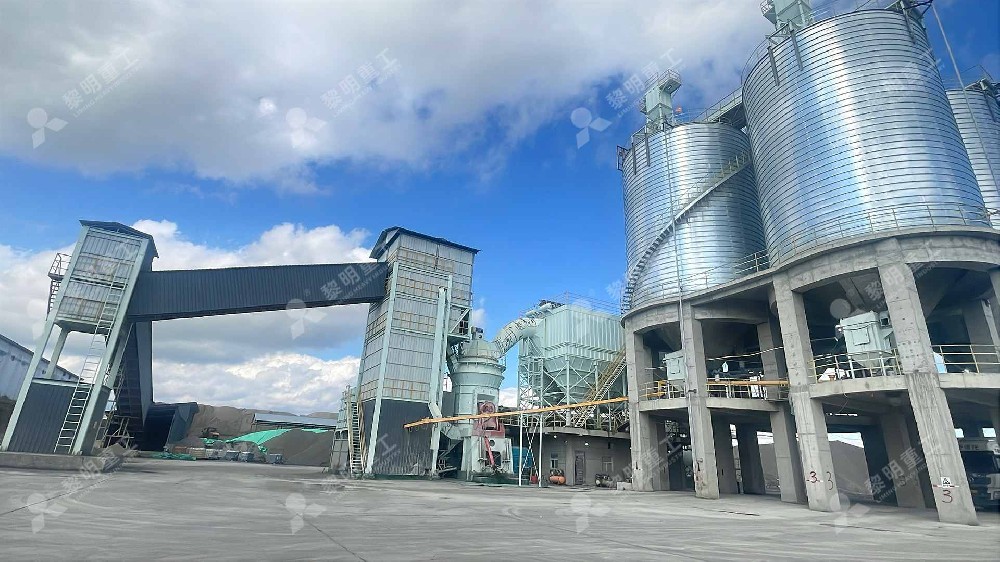
Case Study: A 300,000 TPA Phosphorus Slag Grinding Plant in Southwest China
Southwest China is one of the country's major phosphorus chemical production regions, with abundant phosphate resources and numerous yellow phosphorus producers.
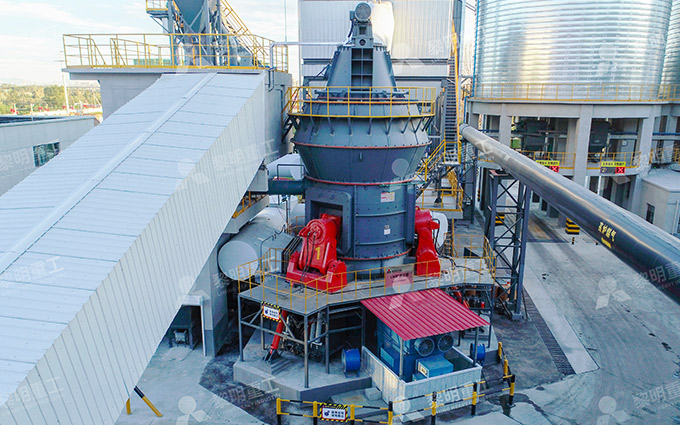
To improve industrial solid waste utilization, a leading phosphorus chemical company constructed a phosphorus slag grinding plant with an annual production capacity of 300,000 tons.
During project planning, several critical objectives were evaluated:
Maximize phosphorus slag recycling
Reduce overall energy consumption
Meet environmental emission standards
Ensure stable finished product quality
After comparing multiple grinding technologies, the company selected the LM Vertical Roller Mill as the core grinding equipment.
The production line integrates waste heat recovery from yellow phosphorus production into the grinding process, creating a closed-loop recycling system:
Yellow Phosphorus Production → Waste Heat Recovery → Phosphorus Slag Collection → Waste Heat Drying → LM Vertical Roller Mill Grinding → Mineral Powder Utilization
This integrated process significantly reduces industrial waste stockpiling while increasing the value of phosphorus slag through resource recycling.
_1761355927036.jpg)
How to Select the Right Phosphorus Slag Grinding Equipment?
Selecting the appropriate grinding solution requires evaluating several production parameters.
Raw material characteristics
Feed particle size
Moisture content
Required production capacity
Target product fineness
End-use application
Availability of waste heat
Environmental requirements
Automation level
Careful evaluation of these factors helps optimize equipment selection, improve production efficiency, and reduce operating costs.
Frequently Asked Questions
Can phosphorus slag be used directly in construction materials?
Generally, phosphorus slag should first be ground into fine powder before being used as a supplementary cementitious material in cement, concrete, and other building materials.
What are the primary applications of phosphorus slag powder?
It is widely used in cement manufacturing, ready-mixed concrete, high-performance concrete, road construction, and various green building materials.
Why is the LM Vertical Roller Mill suitable for phosphorus slag grinding?
Its integrated drying, grinding, classification, and conveying functions simplify the production process, while waste heat utilization helps reduce energy consumption, making it ideal for large-scale phosphorus slag recycling projects.
How can high-moisture phosphorus slag be processed?
Industrial waste heat or hot gas can be introduced into the grinding system to dry the material before or during grinding, improving production efficiency.
What information is needed to design a phosphorus slag grinding plant?
Raw material type
Feed particle size
Moisture content
Production capacity
Required fineness
End-use application
Project location
Availability of waste heat
Conclusion
As industrial waste recycling becomes increasingly important, phosphorus slag is evolving from an industrial by-product into a valuable mineral resource. By establishing a phosphorus slag grinding production line, manufacturers can reduce waste disposal while producing high-quality mineral powder for the construction industry.
For large-scale phosphorus chemical plants, combining the LM Vertical Roller Mill with waste heat recovery technology offers an efficient, energy-saving, and environmentally friendly solution that supports sustainable industrial development and circular resource utilization.