Industry News
Custom Phosphogypsum Powder Production Line for Building Material Applications
2026-07-14 16:05:06
We are Liming Heavy Industry, a manufacturer of various types of industrial crushers, such as Raymond Mill, Trapezoidal Mill, Vertical Mill, Ultrafine Mill, Ball Mill, etc.
Our mills can process the following minerals:
limestone, quicklime, kaolin, talc, barite, bentonite, calcium carbonate, dolomite, coal, gypsum, clay, carbon black, slag, cement raw materials, cement clinker, etc.
If you need a mill to process stone or minerals into powder, please feel free to contact me (WhatsApp: +8615333807511). Thank you.
Phosphogypsum powder production lines are engineered to convert industrial phosphogypsum into stable, consistent, and commercially valuable powder for use in construction materials. A well-designed production line is not simply a combination of grinding equipment; it is an integrated process that balances raw material variability, moisture control, particle size distribution, energy consumption, and final product quality. Customizing the process according to the characteristics of the raw material and the intended building material application is essential for achieving reliable long-term operation.
Phosphogypsum is a by-product generated during phosphoric acid production. Depending on the production process and phosphate ore source, it typically contains calcium sulfate dihydrate (CaSO₄·2H₂O), residual moisture, soluble phosphorus, fluorides, and trace impurities. These characteristics directly influence grinding performance and the suitability of the finished powder for gypsum boards, self-leveling compounds, gypsum blocks, dry-mix mortar, cement additives, and other building materials.
Why a Standard Production Line Is Often Inadequate
Many projects begin with the assumption that phosphogypsum can be processed using the same equipment as natural gypsum. In actual production, this assumption frequently leads to unstable product quality and higher operating costs.
_1767930326613.jpg)
Compared with natural gypsum, phosphogypsum generally exhibits:
Higher initial moisture content, commonly between 10% and 25%
Greater variability in particle size and bulk density
Residual impurities that may influence downstream product performance
Higher tendency to agglomerate during storage and conveying
These characteristics require customized process design rather than a fixed equipment configuration.
Typical Process Flow
Although every project differs, most custom phosphogypsum powder production lines follow a similar workflow.
Raw material receiving and storage
Pre-crushing when oversized lumps are present
Drying or moisture adjustment
Grinding
Air classification
Dust collection
Powder storage
Automatic packaging or bulk loading
Where calcined gypsum products are required, a calcination section is installed before the final grinding or classification stage depending on the product specification.
Understanding the Raw Material Before Equipment Selection
Engineers should evaluate several key material properties before selecting equipment. Practical experience shows that insufficient raw material analysis is one of the leading causes of production instability after commissioning.
| Property | Typical Range | Engineering Importance |
|---|---|---|
| Moisture | 10–25% | Determines drying capacity |
| Feed size | 0–50 mm | Affects crusher selection |
| Purity | 75–95% | Influences downstream applications |
| Free water | Variable | Impacts grinding efficiency |
| Impurity content | Site dependent | Affects product quality |
Laboratory testing should also include particle size distribution, chemical composition, and whiteness when decorative gypsum products are planned.
Selecting the Appropriate Grinding Technology
The grinding system is the core of the production line because it determines particle size distribution, energy consumption, and production stability.
For most building material applications, finished powder ranges between 80 and 325 mesh (180–45 μm). Some specialty products may require finer powders with D97 below 20 μm.
Several grinding technologies are commonly considered:
| Grinding Equipment | Typical Product Size | Suitable Applications |
|---|---|---|
| Raymond Mill | 80–325 mesh | General gypsum powder production |
| Vertical Roller Mill | 80–400 mesh | Large-scale continuous production |
| Ultrafine Grinding Mill | 400–3250 mesh | High-value specialty powders |
| Ball Mill with Classifier | Variable | Certain specialty applications |
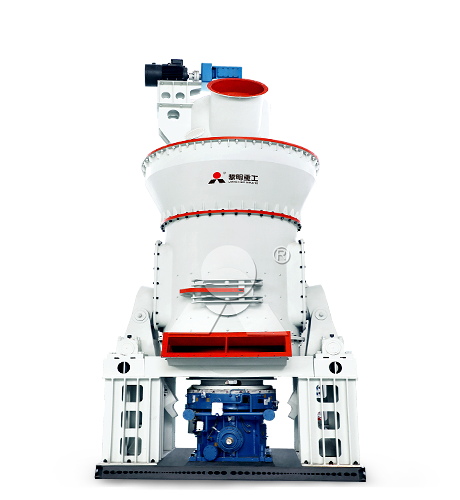
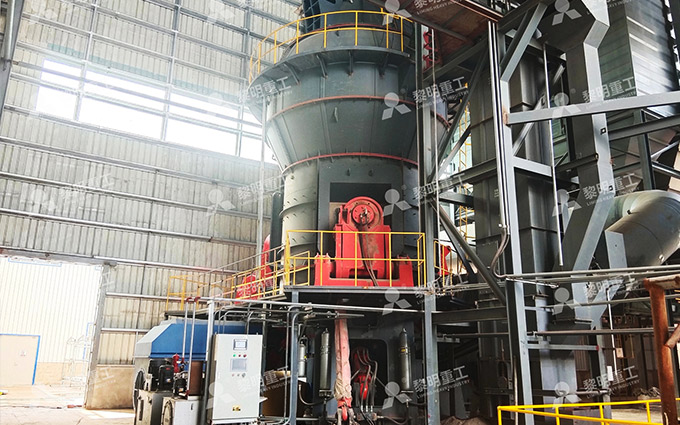
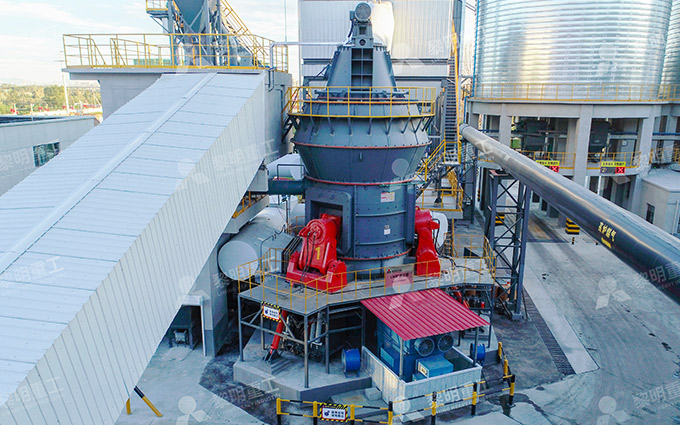
For medium and large production capacities, vertical roller mills generally provide better overall energy efficiency because grinding, drying, and classification can be integrated into a single system. When finer particle size distribution is required, ultrafine grinding equipment becomes a more appropriate solution.
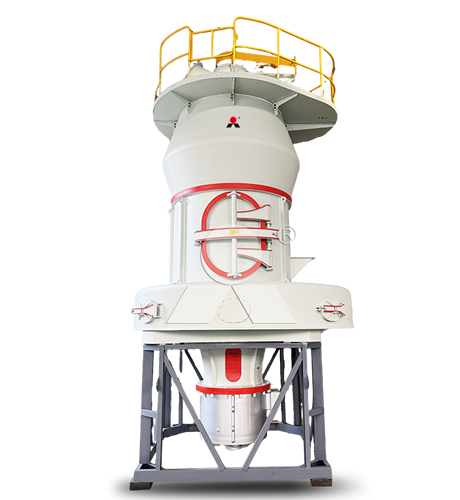
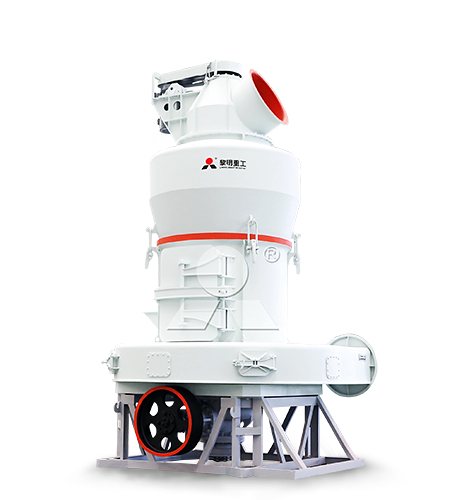
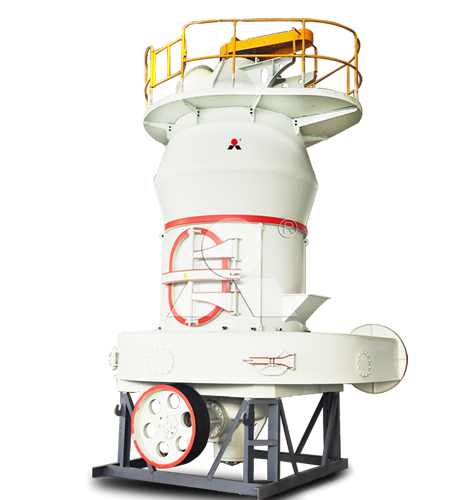
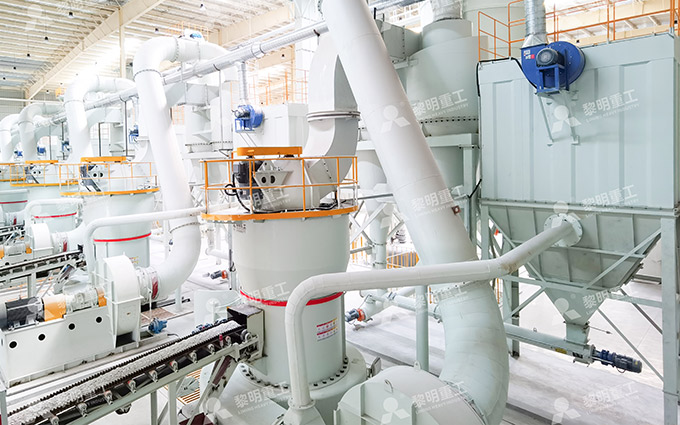
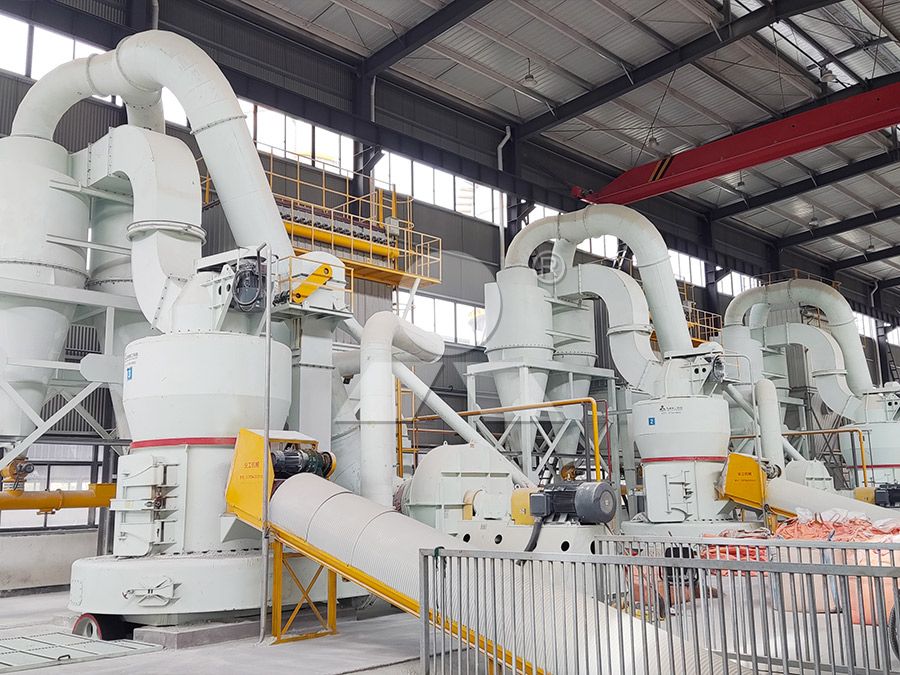
Liming Heavy Industry offers Raymond mills, vertical roller mills, and ultrafine grinding mills that can be configured according to feed characteristics, moisture content, required fineness, and production capacity rather than relying on a single standardized layout.
_1761355701094.jpg)
Moisture Control Has a Greater Impact Than Many Plants Expect
Moisture directly affects grinding efficiency, classifier performance, and filter operation. Engineers often focus on mill capacity while underestimating the influence of feed moisture.
In many installations, reducing feed moisture below approximately 5% before fine grinding significantly improves production stability. Excessive moisture increases material adhesion inside the mill, reduces classifier efficiency, and accelerates wear on conveying equipment.
During commissioning, operators frequently discover that stable feed moisture contributes more to consistent product quality than increasing grinding pressure alone.
Particle Size Distribution Matters More Than Average Fineness
Building material manufacturers rarely evaluate powder solely by average particle size. Particle size distribution strongly influences water demand, workability, setting behavior, and mechanical strength.
For example, two powders may both satisfy a nominal 200-mesh specification while exhibiting significantly different D50 and D90 values. The powder with a narrower particle size distribution generally performs more consistently during downstream mixing and forming processes.
Air classifiers therefore play a critical role in achieving repeatable product quality. Modern frequency-controlled classifiers allow producers to adjust fineness without replacing grinding components.
Energy Consumption and Operating Economy
Energy efficiency should be evaluated over the complete production line rather than only the grinding mill.
Major energy consumers include:
Drying systems
Main grinding mill
Air classifier
Induced draft fan
Dust collection system
Material conveying equipment
Specific grinding energy for phosphogypsum powder production commonly falls within approximately 18–35 kWh/t, depending on feed moisture, target fineness, equipment type, and process configuration.
Variable-frequency drives, optimized airflow, and efficient process control can substantially reduce long-term operating costs.
Quality Control Throughout the Production Line
Consistent product quality requires continuous monitoring rather than relying solely on final product inspection.
| Production Stage | Recommended Control Item |
|---|---|
| Raw material receiving | Moisture and chemical composition |
| Drying | Outlet moisture |
| Grinding | Mill current and vibration |
| Classification | Particle size distribution |
| Finished product | Mesh, D50, whiteness, moisture |
Online particle size analysis can further improve production consistency for high-value building material applications.
A Practical Engineering Observation
One production issue encountered in several phosphogypsum processing plants is unstable feed moisture following seasonal rainfall. Although the grinding mill itself may be operating normally, throughput decreases and the finished powder becomes coarser because wet material partially blocks the classifier circulation.
Rather than increasing grinding pressure, improving raw material storage and stabilizing the drying process usually restores normal production with lower overall energy consumption.
Environmental Performance
Modern phosphogypsum powder production lines are expected to meet increasingly strict environmental requirements. High-efficiency pulse jet dust collectors are commonly used to maintain low dust emissions, while enclosed conveying systems minimize material loss and improve workplace cleanliness.
Waste heat recovery from upstream industrial processes can sometimes be integrated into the drying system, reducing fuel consumption and improving overall plant efficiency.
Checklist for Planning a Custom Production Line
Determine annual or hourly production capacity.
Analyze phosphogypsum moisture and chemical composition.
Define required particle size distribution rather than only mesh size.
Confirm whether calcination is required.
Select grinding equipment according to capacity and fineness.
Evaluate energy consumption for the complete process.
Design adequate dust collection and environmental protection systems.
Reserve space for future production expansion where practical.
Frequently Asked Questions
Can phosphogypsum be processed without drying?
If the moisture content is sufficiently low, direct grinding may be possible. However, many industrial phosphogypsum materials require drying to achieve stable mill operation.
What fineness is commonly required for building materials?
Most applications require finished powder between 80 and 325 mesh, although specialty products may require significantly finer particle sizes.
Is a vertical roller mill suitable for phosphogypsum?
Yes. For medium and large production capacities, vertical roller mills can simultaneously perform grinding, drying, and classification, making them suitable for many phosphogypsum processing projects.
What is the most important factor when designing the production line?
Raw material characterization is the foundation of successful plant design. Moisture, impurity content, particle size distribution, and required product specifications should all be evaluated before equipment selection.
Can one production line manufacture different powder grades?
Yes. With adjustable classifier settings and appropriate process control, many production lines can produce multiple fineness grades while maintaining stable product quality.
Conclusion
A custom phosphogypsum powder production line should be designed around the characteristics of the raw material and the performance requirements of the final building material rather than relying on a standard equipment arrangement. Careful integration of drying, grinding, classification, dust collection, and process control enables stable production, lower operating costs, and consistent powder quality. Selecting suitable grinding technology, supported by detailed laboratory analysis and practical engineering experience, provides the foundation for efficient long-term operation and reliable utilization of phosphogypsum as a valuable construction material resource.