Calcium Carbonate Knowledge Hub
10 TPH Calcium Carbonate Plant
2026-09-04 17:23:23
We are Liming Heavy Industry, a manufacturer of various types of industrial crushers, such as Raymond Mill, Trapezoidal Mill, Vertical Mill, Ultrafine Mill, Ball Mill, etc.
Our mills can process the following minerals:
limestone, quicklime, kaolin, talc, barite, bentonite, calcium carbonate, dolomite, coal, gypsum, clay, carbon black, slag, cement raw materials, cement clinker, etc.
If you need a mill to process stone or minerals into powder, please feel free to contact me (WhatsApp: +8615333807511). Thank you.
A 10 TPH calcium carbonate plant is a GCC production system designed to deliver 10 tonnes per hour of qualified finished powder at a defined particle-size distribution. It is not a single fixed equipment size: a plant that produces 10 TPH at D97 45 μm may not achieve 10 TPH at D97 10 μm, and it will usually produce substantially less at D97 5 μm.
For suppliers serving PVC, PP, PE, masterbatch, rubber, sealants, adhesives, coatings, paper, and construction-material markets, the right 10 TPH plant is specified by product quality first. Define the target D50, D97, coarse residue, whiteness, moisture, coating requirement, and annual operating plan before selecting the mill, classifier, filter, and packaging system.
What “10 TPH” Should Mean
TPH should refer to net saleable finished product, measured after grinding, classification, collection, and—if included in the process—surface treatment. It should not mean raw stone fed to the crusher, material entering the mill, or internal circulating load in the closed circuit.
A complete capacity statement should include:
Material type: calcite, marble, limestone, or chalk.
Feed chemistry, whiteness, hardness, abrasiveness, and moisture.
Maximum feed size after crushing.
Finished-product PSD, especially D50 and D97.
Maximum coarse residue and agreed test method.
Uncoated or coated GCC requirement.
Guaranteed net output of 10 t/h.
Specific energy basis in kWh per tonne of qualified product.
Annual operating hours, availability target, and guaranteed product yield.
For example, this is a meaningful capacity requirement:
Produce 10 t/h of uncoated GCC from local calcite, with D50 6–8 μm, D97 maximum 25 μm, defined coarse-residue limit, minimum whiteness requirement, moisture below the agreed limit, and output measured at the finished-product silo.
By contrast, “10 TPH calcium carbonate mill” is too broad for reliable equipment selection or supplier comparison.
Recommended Process Layout
For a 10 TPH fine-GCC project, a closed-circuit dry grinding plant is commonly used. The system crushes and meters calcium carbonate into a grinding mill, classifies the ground powder, collects qualified fines, and returns oversize particles for additional grinding.
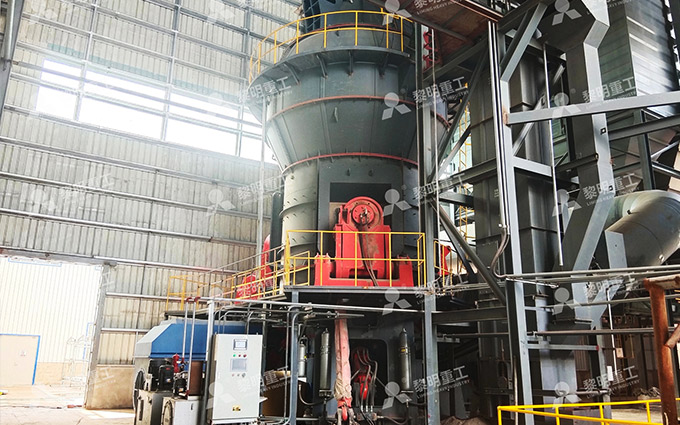
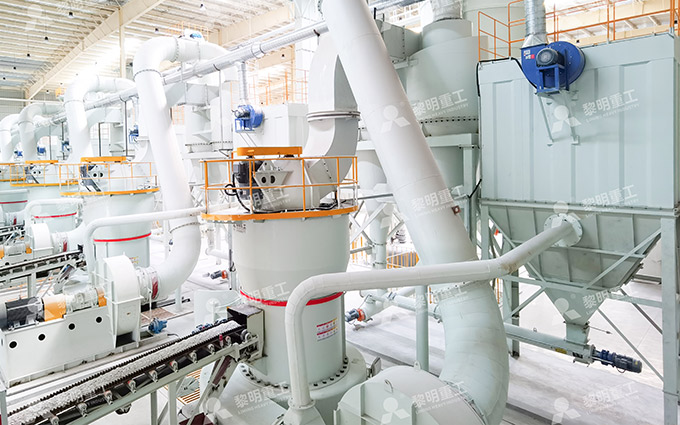
Ball-mill-plus-air-classifier systems are often considered for this production scale because grinding and classification can be optimized separately. A typical system includes a ball mill, air classifier, cyclone collector, dust collector, fan and conveying system, and central controls. The final technology should be selected according to the target fineness, product mix, space, power cost, raw-material behavior, and coating plan.
Typical 10 TPH process flow
Raw-material receiving and storage: Calcite, marble, limestone, or chalk is delivered, inspected, and stored under conditions that limit contamination and moisture pickup.
Crushing and screening: Stone is reduced to a consistent mill-feed size; oversize and tramp metal are removed.
Buffer silo and dosing: A controlled feeder provides steady material flow to the grinding circuit.
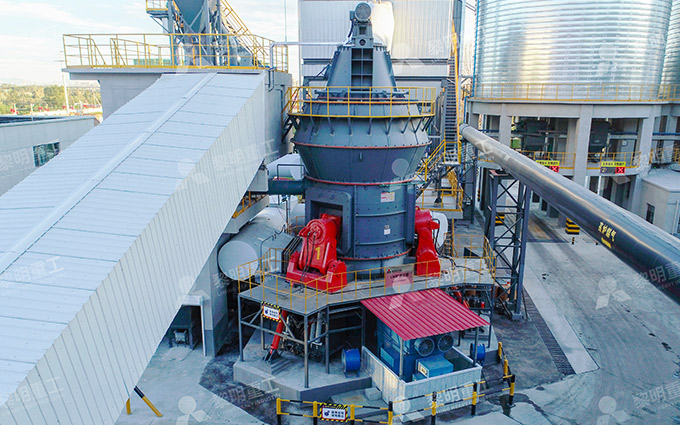
Grinding: A ball mill, vertical roller mill, or ring-roller mill reduces material to fine GCC.
Dynamic air classification: Fine powder is accepted as product while coarse particles return to the mill.
Collection and filtration: Cyclones and pulse-jet bag filters recover product and maintain air balance.
Optional coating: Selected grades pass to a surface-treatment system before storage.
Product storage and packing: Finished GCC is stored in silos and packed into bags, jumbo bags, or loaded into bulk tankers.
Equipment for a 10 TPH Plant
| Plant section | Typical equipment | Selection objective |
|---|---|---|
| Raw-material handling | Receiving hopper, apron or belt feeder, belt conveyor, stockpile equipment | Maintain consistent feed and prevent contamination |
| Crushing | Jaw crusher, hammer crusher, impact crusher, screen, magnetic separator | Produce stable feed size suited to the selected grinding mill |
| Feed control | Day bin, weigh feeder, screw feeder, rotary valve | Stabilize mill load and reduce PSD variation |
| Grinding circuit | Ball mill, ring-roller mill, or vertical roller mill | Provide required capacity at the target fineness |
| Classification | Dynamic turbine classifier; multi-wheel classifier for finer or higher-load duty | Control D97 and reject coarse particles efficiently |
| Powder collection | Cyclone, pulse-jet bag filter, induced-draft fan, rotary airlock | Recover powder, control dust, and maintain stable process airflow |
| Optional coating | Stearic-acid melting tank, dosing unit, high-speed coating mixer, cooler | Make coated GCC for polymers, rubber, sealants, and adhesives |
| Finished-product handling | Product silos, screw conveyors, pneumatic conveyors, bagging and bulk-loading equipment | Protect powder quality and provide efficient dispatch |
Select the Grinding Circuit by Product Grade
The same 10 TPH commercial target can require very different equipment depending on particle size. Fine and ultrafine grinding increase specific energy demand and reduce net throughput. A supplier should therefore guarantee 10 t/h at the actual grade, not only demonstrate that the selected mill can process 10 t/h of coarse feed.
| Product range | Typical market direction | Possible circuit approach | Main design concern |
|---|---|---|---|
| Coarser GCC, approximately D97 45–75 μm | Construction products, putty, selected general fillers | Pendulum mill or simpler grinding/classification circuit | High throughput and stable feed handling |
| Fine GCC, approximately D97 15–45 μm | General plastics, PVC, rubber, paints, selected paper fillers | Ball mill + classifier, vertical roller mill, or ring-roller mill | PSD consistency and coarse-tail control |
| Ultrafine GCC, approximately D97 5–15 μm | Premium PVC, PP/PE masterbatch, coatings, sealants, adhesives | High-efficiency ball mill + dynamic classifier or dedicated ultrafine mill circuit | Classifier efficiency, higher energy demand, lower net throughput |
| Very fine specialty GCC, below approximately D97 5 μm | Specialty formulations and high-value filler applications | Advanced classifier circuit, stirred mill, or another specialty solution | Commercial justification, PSD control, wear, and power consumption |
Supplier-published reference configurations for ball-mill GCC plants show that product D97 targets and specific power vary across the fine range; one published configuration indicates 45–50 kWh/t at D97 10 μm for a representative 30,000 t/y line. This figure is not a plant guarantee for every 10 TPH project because raw-material hardness, mill scale, classifier efficiency, feed moisture, and site conditions can materially change actual consumption.
Classifier and Air System Matter
At 10 TPH, the classifier and collection system are often the difference between stable production and a plant that misses its quality target. The classifier determines whether particles are accepted as finished GCC or returned for additional grinding. The fan, ducts, cyclone, bag filter, and rotary valve determine whether the classifier sees the stable airflow needed to make that separation.
For standard fine GCC, one dynamic classifier may be sufficient. For a finer target or a broad multi-grade product portfolio, a higher-capacity or multi-stage classification arrangement may be needed. Supplier guidance for ball-mill systems notes the use of multi-stage classification for products below D97 5 μm.
Specify the classifier using:
Required D50 and D97 or D98.
Maximum permissible coarse residue.
Net finished-product capacity of 10 t/h.
Expected mill discharge rate and circulating load.
Raw-material density, hardness, moisture, and particle shape.
Required grade-change speed and automation level.
Wear-protection requirement for silica-bearing or abrasive feed.
Moisture, Feed Quality, and Capacity
Raw-material moisture has a direct effect on 10 TPH plant performance. Wet feed can agglomerate, coat internal mill surfaces, reduce grinding efficiency, disturb classifier separation, and cause powder buildup in chutes, filters, and conveyors. Feed moisture must be measured at the quarry, receiving point, and mill feed—not assumed from a dry-season sample.
One supplier operating guide states that feed moisture above 1.5% can substantially reduce capacity in an ultrafine calcium carbonate grinding circuit by causing paste-like buildup and classifier blinding. The exact moisture limit varies by mill type, product fineness, airflow temperature, and plant design, but the broader design principle is clear: do not size a 10 TPH dry grinding line without a defined moisture range and a plan for wet-season operation.
Possible solutions include covered raw-material storage, blending bins, upstream drying, heated process air where suitable, stricter quarry selection, and operating procedures that reduce wet-feed entry into the ultrafine circuit.
Power Requirement and Energy Planning
Installed power and operating energy depend on the target fineness and equipment configuration. The grinding mill is usually the largest electrical load, but the classifier, induced-draft fan, bag filter, conveyors, elevators, compressors, coating system, and packing line also contribute to total consumption.
Published supplier guidance for a 10 t/h GCC ball-mill-plus-classifier plant gives a broad reference range of approximately 450–650 kW installed power and 80–120 kWh/t operating consumption across a 45–5 μm product range. Treat this as an early planning range only. A credible project estimate must be based on test results and a complete load list for the selected process boundary.
| Energy item | Why it must be included | Planning implication |
|---|---|---|
| Grinding mill drive | Usually the largest load | Rises sharply as the target powder becomes finer |
| Classifier drive | Controls fine cut and coarse rejection | Higher wheel speed can improve fineness but add power demand |
| Induced-draft fan | Maintains pneumatic transport and classification airflow | Must overcome system pressure losses efficiently |
| Dust collection | Supports product recovery and stable air balance | Filter pressure drop affects fan energy and process stability |
| Conveying and packing | Moves and dispatches finished GCC | Can be significant in bagged multi-grade production |
| Coating system | Heats, doses, mixes, cools, and conveys coated powder | Adds thermal and electrical loads for coated GCC grades |
Plant Footprint and Product Handling
A 10 TPH GCC plant needs adequate space not only for the mill but also for feed storage, crusher access, classifiers, filters, ducting, product silos, packing, maintenance, truck movement, electrical rooms, and future expansion. A compact layout can reduce conveyors and building cost, but it should not eliminate maintenance clearance, dust-collector access, lifting routes, or cleanout points.
Finished-product storage must be matched to dispatch requirements. A plant selling mostly in bulk may need multiple silo compartments and tanker loading. A bagged-product operation needs packing machines, palletizing space, warehouse capacity, dust control, batch traceability, and suitable traffic flow. For coated ultrafine GCC, use sealed transfer and appropriately vented silos to limit moisture uptake and preserve powder flow.
Quality-Control Plan
A 10 TPH plant should use regular production sampling, not only periodic final-product inspection. The laboratory must be able to provide process feedback quickly enough to correct classifier, feed, or coating settings before large off-spec inventories accumulate.
| Sampling point | Core checks | Purpose |
|---|---|---|
| Incoming stone | CaCO3 content, whiteness, silica, iron, moisture, visual defects | Confirm feedstock suitability and quarry consistency |
| Crushed mill feed | Top size, size consistency, moisture, tramp metal | Protect grinding performance and equipment |
| Classifier product | D10, D50, D97, sieve residue, moisture, bulk density | Confirm qualified GCC before silo storage |
| Coated powder | PSD, moisture, coating level, hydrophobicity, flowability | Verify polymer-grade product consistency |
| Packed or bulk product | Lot number, net weight, contamination, packaging integrity | Maintain dispatch quality and traceability |
Common 10 TPH Project Mistakes
Assuming every fine grade can run at 10 TPH
Capacity changes with fineness. Define 10 t/h at the specific D50/D97 product grade required by the sales plan, then include a realistic reserve margin for the finest and most profitable grades.
Selecting from a catalog capacity without a test
Catalog figures are often based on a particular mineral, moisture level, and product size. Conduct trials with representative feedstock or require a detailed, binding guarantee based on documented raw-material properties.
Underestimating the classifier and filter
The classifier, fan, cyclone, and bag filter must be designed for the mill discharge and circulating load—not just for 10 t/h fresh feed. Under-sizing this section can create unstable PSD, product loss, dust leakage, and lower net output.
Ignoring raw-material moisture
Moisture can reduce capacity, cause caking, and destabilize classification. Include a moisture-management plan in the process design, especially where rain, high humidity, or variable quarry conditions are expected.
Designing packaging after the mill is selected
Bagging, jumbo-bag filling, or bulk loading can become the production bottleneck if it is not sized for the actual dispatch plan. Specify finished-product storage and loading capacity alongside the grinding circuit.
FAQ
Can a 10 TPH plant produce ultrafine calcium carbonate?
Yes, but the answer depends on the required ultrafine PSD. A plant may achieve 10 t/h for a moderate fine grade and a lower output for D97 5–10 μm powder. Select a high-efficiency grinding and classification circuit, then require a net production guarantee at the exact target D97.
What mill is suitable for a 10 TPH GCC plant?
A ball mill plus dynamic air classifier is often considered for a 10 TPH fine-GCC project, especially where multiple grades or ultrafine products are planned. Ring-roller and vertical roller mills may also be suitable depending on fineness, footprint, feed moisture, and operating economics. The correct choice follows raw-material testing and product specification.
How much electricity does a 10 TPH calcium carbonate plant use?
It varies widely with fineness and equipment scope. As a preliminary reference, published supplier data indicate roughly 450–650 kW total installed power and 80–120 kWh/t operating consumption for a 10 t/h ball-mill-and-classifier GCC plant across a broad 45–5 μm range. Obtain a detailed load list and performance guarantee for the actual product grade before making an investment decision.
Should a 10 TPH plant include a coating system?
Include coating equipment if the sales plan targets coated GCC for PVC, PP, PE, rubber, sealants, adhesives, or masterbatch. For uncoated applications such as selected coatings, construction products, or paper-related fillers, a coating section may not be necessary. The decision should follow the target market and expected margin, not only equipment cost.
Bottom Line
A 10 TPH calcium carbonate plant should be designed as a complete, product-specific GCC system. The central engineering question is: 10 tonnes per hour of which powder, made from which mineral, under which operating conditions?
Define D50, D97, whiteness, moisture, coating status, packaging format, and annual product mix first. Then size the grinding circuit, classifier, air system, dust collector, silos, coating section, and dispatch equipment around the guaranteed net output. This approach provides a more dependable basis for supplying fine and ultrafine calcium carbonate to industrial customers.