Calcium Carbonate Knowledge Hub
Ultrafine Calcium Carbonate Production Line
2026-09-04 17:22:42
We are Liming Heavy Industry, a manufacturer of various types of industrial crushers, such as Raymond Mill, Trapezoidal Mill, Vertical Mill, Ultrafine Mill, Ball Mill, etc.
Our mills can process the following minerals:
limestone, quicklime, kaolin, talc, barite, bentonite, calcium carbonate, dolomite, coal, gypsum, clay, carbon black, slag, cement raw materials, cement clinker, etc.
If you need a mill to process stone or minerals into powder, please feel free to contact me (WhatsApp: +8615333807511). Thank you.
An ultrafine calcium carbonate production line is designed to manufacture high-value ground calcium carbonate (GCC) with tightly controlled particle-size distribution, commonly in the approximate D97 5–10 μm range and, in some systems, finer. It combines feed preparation, ultrafine grinding, high-efficiency air classification, powder collection, optional surface modification, storage, and packaging into one controlled process.
For suppliers serving PVC, PP, PE, masterbatch, rubber, sealants, adhesives, coatings, and selected paper applications, the key requirement is not simply making “very fine powder.” The line must consistently deliver the target D50 and D97, low coarse residue, high whiteness, controlled moisture, reliable coating performance, and economically viable output using the actual calcite, marble, or limestone feedstock.
What Makes an Ultrafine Line Different?
A standard GCC line can produce a broad range of ground calcium carbonate grades. An ultrafine line is more demanding because reducing particle size increases surface area, raises sensitivity to feed variation, and makes separation, collection, conveying, coating, and quality control more critical.
At ultrafine sizes, a small amount of oversize material can affect downstream processing. In PVC extrusion and masterbatch, coarse particles may contribute to poor dispersion, screen-pack pressure variation, surface defects, or reduced visual quality. In coatings, sealants, and adhesives, the PSD can influence rheology, smoothness, gloss, viscosity, and filler packing.
Dry grinding and classification references for GCC show that achievable energy demand varies significantly with target fineness and grinding technology. For example, published GCC plant data show higher energy requirements as a product is refined from D97 8 μm to D97 5 μm, illustrating why capacity must always be defined at the required PSD rather than inferred from a coarse-grade rating.
Typical Ultrafine GCC Process Flow
Most ultrafine calcium carbonate plants use a dry closed-circuit process. Material that reaches the required fineness exits as product, while particles above the classifier cut point return for additional grinding. This avoids excessive grinding of qualified powder and helps maintain a controlled coarse tail.
Raw-material selection: Choose consistent calcite, marble, chalk, or limestone with suitable CaCO3 content, whiteness, low moisture, and controlled impurity levels.
Cleaning and beneficiation: Remove soil, weathered material, visible dark stone, tramp metal, silica-rich contamination, and other unwanted impurities where needed.
Crushing and screening: Reduce stone to a stable mill-feed size and remove oversize particles.
Buffer storage and dosing: Use a feed silo and controlled feeder to maintain steady material flow.
Ultrafine grinding: Reduce the mineral through ball milling, ring-roller grinding, vertical roller milling, stirred-media milling, or another selected technology.
Air classification: Separate qualified ultrafine GCC from coarse particles for return to the grinding stage.
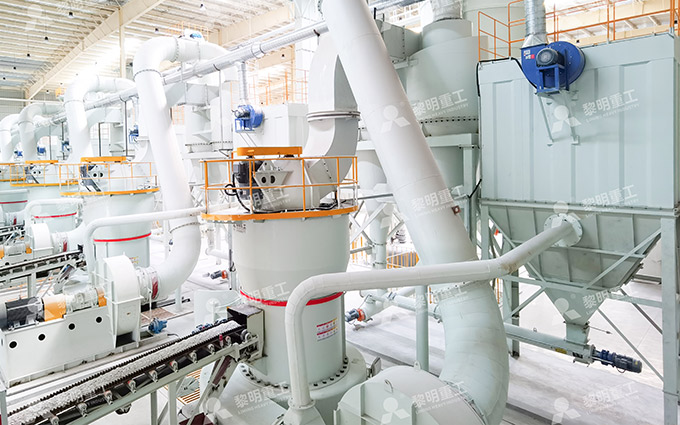
Powder collection: Recover finished product through cyclones, pulse-jet bag filters, and sealed discharge equipment.
Optional surface modification: Apply a coating agent when producing polymer-grade coated GCC.
Storage and dispatch: Transfer powder to silos, valve bags, open-mouth bags, jumbo bags, or bulk tanker loading.
Core Equipment Configuration
Ultrafine GCC requires a balanced system rather than an oversized mill alone. The classifier, fan, collection equipment, and powder-handling section must be sized for the same target product and internal circulation rate as the grinding unit.
| Process section | Typical equipment | Primary purpose | Critical design issue |
|---|---|---|---|
| Feed preparation | Hoppers, crushers, screens, feeders, magnetic separators | Provide clean and consistent mill feed | Oversized or wet feed reduces ultrafine grinding efficiency |
| Grinding | Ball mill, ring-roller mill, vertical roller mill, stirred media mill | Reduce GCC to the target fine range | Capacity falls as the required PSD becomes finer |
| Classification | Dynamic air classifier or multi-wheel classifier | Control D50, D97, and coarse-particle rejection | Classifier efficiency strongly affects yield and energy consumption |
| Collection | Cyclone, bag filter, fan, rotary airlock | Separate powder from process air | Air balance and filter pressure affect PSD stability |
| Surface treatment | Coating mixer, stearic-acid melting and dosing system, cooling equipment | Produce coated GCC for organic polymer systems | Finer powder has greater surface area and requires accurate dosing |
| Finished-product handling | Silos, screw conveyors, pneumatic transfer, bagging, bulk loading | Store and dispatch consistent product | Ultrafine powder can aerate, bridge, and create dust leakage |
Grinding and Classification Options
The selected grinding system should reflect the required product portfolio. A plant making D97 15–20 μm GCC for general plastics has a different operating profile from a line designed around D97 5 μm coated GCC for premium masterbatch or cable-compound applications.
| Grinding system | Typical ultrafine GCC role | Potential strength | Selection focus |
|---|---|---|---|
| Ball mill + dynamic air classifier | Large-scale dry GCC production | Separate grinding and classification support flexible PSD adjustment | Media charge, classifier efficiency, circulating load, and energy optimization |
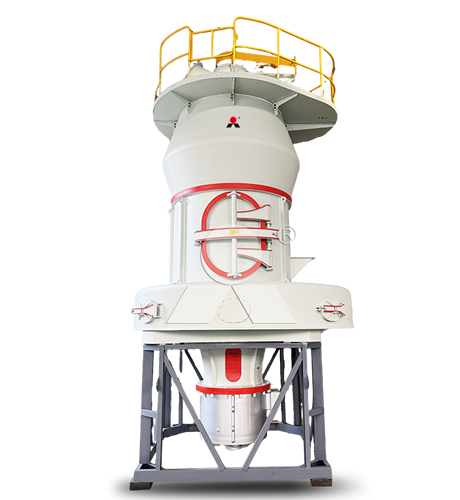
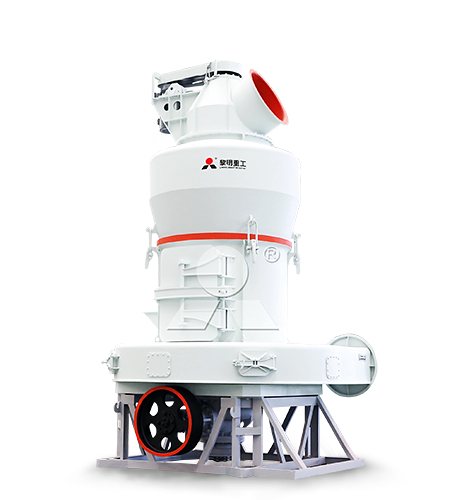
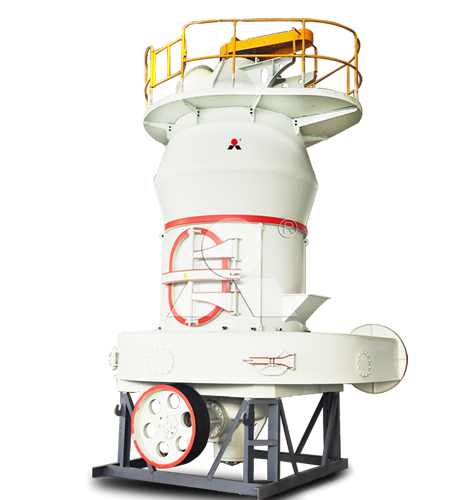
| Ring-roller micro powder mill | Fine and ultrafine dry powders | Integrated compact configuration and flexible grade production | Feed moisture, wear condition, airflow, and classifier setting |
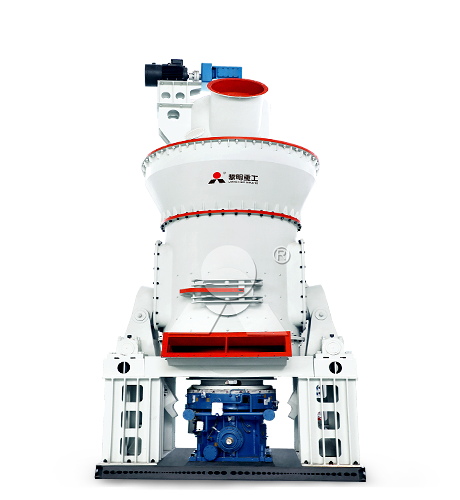
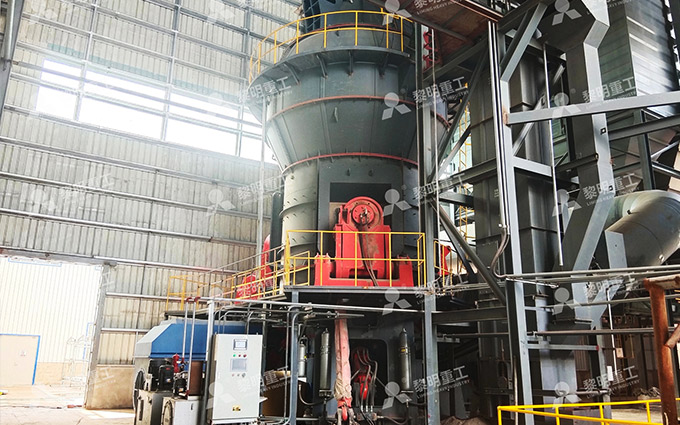
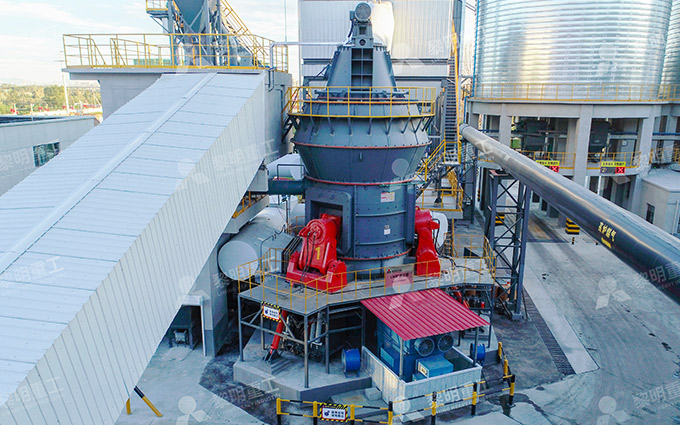
| Vertical roller mill | Continuous fine grinding with integrated classification | Potentially compact high-throughput layout | Guaranteed output at target D97 and stable internal air circulation |
| Stirred media mill | Specialty very-fine GCC production | Can support very fine particle-size targets | Grinding-media wear, slurry or dry processing route, and downstream handling |
| Jet mill | Specialty ultrafine grades at lower volume | Very fine reduction without conventional grinding media | Energy use and commercial justification for the target market |
For high-volume dry GCC production, ball mill and air-classifier circuits remain a common option because grinding and classification can be optimized separately. Some equipment references describe ball-mill systems producing approximately 1–10 μm calcium carbonate after crushing and controlled classification. This is a starting point for discussion, not a universal performance guarantee; raw mineral characteristics and required output remain decisive.
Specify PSD, Not Mesh Alone
Mesh can be used as a broad commercial reference, but it is not a complete ultrafine GCC specification. At fine particle sizes, sieve openings are less representative of actual powder performance, and particle shape makes direct mesh-to-micron conversion unreliable.
Use laser-diffraction particle-size parameters with a defined sample-preparation and test method:
| Parameter | Meaning | Use in ultrafine GCC control |
|---|---|---|
| D10 | 10% of particles are below the reported size | Shows the fine end and helps indicate surface-area behavior |
| D50 | 50% of particles are below the reported size | Defines median particle size |
| D90 | 90% of particles are below the reported size | Indicates the approach to the coarse part of the distribution |
| D97 or D98 | 97% or 98% of particles are below the reported size | Controls the coarse tail and helps protect downstream product quality |
| Specific surface area | Particle surface available per mass of powder | Relevant to coating demand, rheology, and dispersion |
For example, an ultrafine coated GCC specification for PP masterbatch may state a D50 target, D97 maximum, moisture maximum, whiteness minimum, and coating-performance requirement. It should also state the testing method and sampling procedure. This provides a meaningful basis for equipment acceptance and customer quality approval.
Surface Modification for Coated GCC
Surface treatment is commonly required when ultrafine GCC will be used in hydrophobic polymer systems. Coating can improve dispersion, reduce agglomeration, increase hydrophobicity, and improve compatibility with PVC, PP, PE, rubber, sealants, and adhesives.
Stearic acid is widely used in dry coating systems. Published technical work on dry-process coating describes direct melting and spray application of stearic acid to GCC powder, while commercial coating-process descriptions commonly use low-moisture powder, molten additive dosing, and high-intensity mixing.
The coating section should be designed around the actual powder surface area and customer formulation. As particles become finer, the surface area rises and coating dosage becomes more sensitive. Under-treatment can lead to poor polymer compatibility; over-treatment or uneven treatment can alter powder flow, odor, processing behavior, or final compound properties.
Key coating controls
Incoming powder moisture and temperature.
Stearic-acid quality, melt condition, and dosing accuracy.
Powder feed stability and mixer residence time.
Mixing intensity and temperature profile.
Cooling and sealed conveying after treatment.
Finished-product PSD, moisture, bulk density, and hydrophobicity testing.
Application validation in the intended polymer or rubber formulation.
Raw Material and Safety Requirements
Ultrafine production starts with consistent mineral feed. Test calcite, marble, limestone, or chalk for CaCO3 content, whiteness, brightness, moisture, silica, iron, hardness, abrasiveness, and grindability. Fine grinding magnifies the effect of raw-material variation because it increases energy demand, wear, and sensitivity to contamination.
Silica-bearing impurities should be evaluated before line design. They can accelerate wear in grinding and classifier components, lower product whiteness, and create respirable crystalline silica exposure risks during crushing, transfer, grinding, and housekeeping. In the United States, OSHA sets a permissible exposure limit of 50 μg/m³ as an 8-hour time-weighted average for respirable crystalline silica.
Practical controls include enclosed conveyors and transfer points, local exhaust ventilation, correctly sized bag filters, sealed powder-discharge devices, planned cleaning methods that avoid dry sweeping, maintenance access that limits dust release, exposure assessment, and appropriate worker-protection measures. Local legal requirements should govern the final design and operating procedures.
How to Size an Ultrafine Production Line
Size the plant around its finest and highest-volume commercial grades. A grinding system that produces 10 t/h at D97 20 μm may produce substantially less at D97 5 μm. If the business plan includes several grades, calculate annual operating hours for each grade rather than averaging them into one assumed throughput.
Send the following information to equipment suppliers before requesting a final proposal:
Representative raw-material sample and laboratory analysis.
Required product grades with D10, D50, D97/D98, residue, whiteness, and moisture criteria.
Coated or uncoated product requirements and the intended end-use markets.
Net hourly capacity for each grade and annual tonnage by grade.
Feed size, feed moisture, and variation expected from the quarry or supplier.
Available power supply, electricity price, site altitude, temperature, humidity, and footprint.
Environmental, dust-emission, worker-safety, and noise requirements.
Packaging and dispatch format: bags, jumbo bags, or bulk tanker.
Automation, laboratory, spare-parts, commissioning, and maintenance-support expectations.
Require a written guarantee for net output, PSD, moisture, energy basis, and product quality using representative feedstock. Also define the equipment boundary clearly: crushing, milling, classification, collection, coating, storage, packing, electrical supply, and installation are often quoted separately.
Common Ultrafine Line Problems
Output falls when making the finest grade
This is often a normal consequence of finer grinding, but excessive loss can indicate poor classifier efficiency, worn grinding media or rollers, unstable airflow, high feed moisture, incorrect feed rate, or inadequate installed power. Track net tonnes per hour and kWh per tonne of qualified product at each PSD target.
D97 is too high or varies between shifts
Check classifier-wheel speed, air volume, fan condition, bag-filter differential pressure, feed stability, coarse-return rate, classifier wear, and sample-preparation consistency. Do not adjust only one setting without confirming the full air-and-material balance.
Coated GCC performs poorly in polymers
Investigate powder moisture, coating-agent dosage, melt temperature, mixing intensity, residence time, PSD, and the compatibility of the selected coating chemistry with the target resin. Test the finished GCC in the customer’s PVC, PP, PE, rubber, sealant, or adhesive formulation.
Dust leakage or poor powder flow
Review duct sealing, bag-filter condition, hopper discharge, rotary-valve performance, silo venting, powder-conveying velocity, and grade-change procedures. Ultrafine GCC is highly aerated and can accumulate in filters, ducts, and conveying equipment if the system is not designed for its actual flow behavior.
FAQ
What is the best grinding system for ultrafine calcium carbonate?
The best system depends on the required PSD, capacity, raw mineral, coating requirement, and local operating economics. Ball mill plus dynamic air classifier circuits are common for large-scale dry GCC; ring-roller and vertical roller mills can be suitable for integrated fine and ultrafine production; stirred mills and jet mills may fit specialty grades. Confirm performance with representative feedstock testing.
Can a dry GCC line produce D97 5 μm calcium carbonate?
Yes. Certain dry grinding and high-efficiency classification systems are designed for this range, but performance depends on feed characteristics, classifier efficiency, installed power, circulation load, airflow stability, and required net throughput. Published GCC plant data include D97 5 μm reference points for dry grinding and classifying systems.
Is coating necessary for ultrafine calcium carbonate?
Not always. Uncoated ultrafine GCC can be appropriate for selected coatings, construction products, paper-related applications, and other uses. Coating is commonly required where improved compatibility with hydrophobic polymers, rubber, sealants, or adhesives is needed.
What is the most important quality metric?
There is no single metric. For ultrafine GCC, the most useful quality set includes D50, D97 or D98, coarse residue, whiteness, moisture, chemical purity, bulk density, and coating performance where applicable. The required values depend on the end-use formulation.
Bottom Line
An ultrafine calcium carbonate production line is a high-control GCC system in which grinding, classification, collection, coating, and powder handling must work together. The plant should be selected around the actual commercial powder specification, especially D50, D97, coarse-tail control, whiteness, moisture, coating status, and required output.
For the strongest project outcome, test the real mineral feed, define quality acceptance criteria with downstream customers, compare complete plant proposals on the same product and capacity basis, and require performance guarantees at the finest target grade. This creates a more reliable foundation for supplying ultrafine GCC to demanding plastics, PVC, rubber, sealant, adhesive, coating, and paper markets.