Calcium Carbonate Knowledge Hub
What Is Ground Calcium Carbonate (GCC)?
2026-09-04 16:04:35
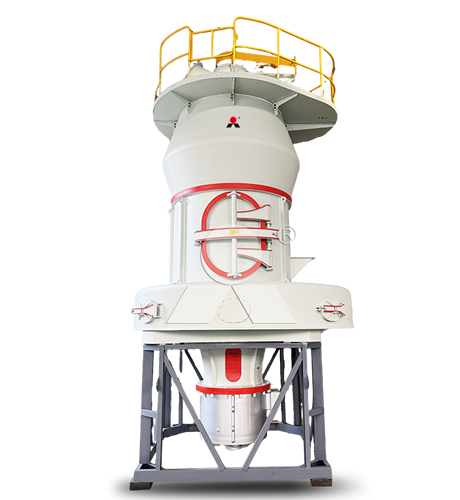
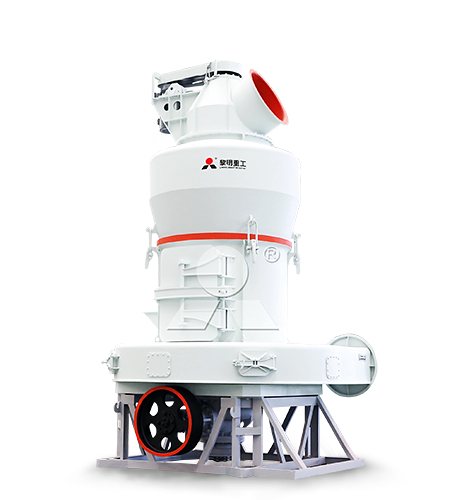
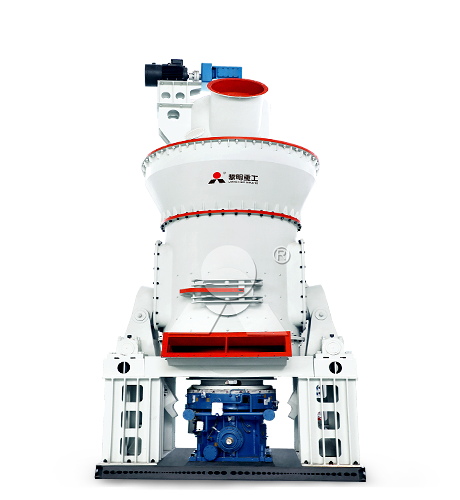
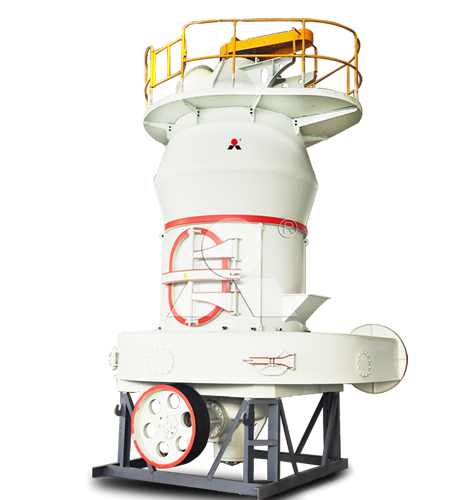
We are Liming Heavy Industry, a manufacturer of various types of industrial crushers, such as Raymond Mill, Trapezoidal Mill, Vertical Mill, Ultrafine Mill, Ball Mill, etc.
Our mills can process the following minerals:
limestone, quicklime, kaolin, talc, barite, bentonite, calcium carbonate, dolomite, coal, gypsum, clay, carbon black, slag, cement raw materials, cement clinker, etc.
If you need a mill to process stone or minerals into powder, please feel free to contact me (WhatsApp: +8615333807511). Thank you.
Ground calcium carbonate (GCC) is a natural calcium carbonate material made by mechanically crushing, grinding, and classifying high-calcium limestone, marble, chalk, or calcite into controlled powder grades. Its main chemical component is calcium carbonate, CaCO3.
GCC is one of the world’s most widely used industrial mineral fillers. It is used in plastics, PVC, paper, paint, coatings, rubber, adhesives, sealants, construction materials, agriculture, and environmental applications. Unlike precipitated calcium carbonate (PCC), GCC is not created through chemical precipitation; it is produced directly from naturally occurring carbonate rock.
GCC at a Glance
| Item | Description |
|---|---|
| Full name | Ground calcium carbonate |
| Abbreviation | GCC |
| Main chemical formula | CaCO3 |
| Raw materials | Limestone, calcite, marble, chalk, and other suitable natural carbonate sources |
| Production method | Mechanical crushing, grinding, air classification, and optional surface coating |
| Common forms | Uncoated powder, coated powder, ultrafine powder, slurry, granules |
| Major uses | Plastics, PVC, paper, paint, coatings, rubber, sealants, adhesives, and construction materials |
| Key advantage | Cost-effective natural mineral filler with adjustable particle size and broad industrial applicability |
How Is GCC Different from Calcium Carbonate?
Calcium carbonate is the broad chemical name for CaCO3. It can occur naturally as calcite, aragonite, limestone, marble, chalk, shells, and other carbonate materials. It can also be manufactured through chemical processes.
GCC is one specific commercial category of calcium carbonate. It is called “ground” calcium carbonate because it is produced by mechanically reducing natural carbonate rock into powder. In other words:
Calcium carbonate: The general chemical compound and material category.
Ground calcium carbonate: Natural calcium carbonate processed by physical grinding.
Precipitated calcium carbonate: Calcium carbonate manufactured by chemical precipitation.
GCC generally retains the mineral characteristics of its original raw material. Therefore, the quality of the limestone, marble, chalk, or calcite deposit strongly affects the final powder’s purity, whiteness, hardness, density, grindability, and end-use performance.
What Raw Materials Are Used for GCC?
GCC can be produced from several natural calcium carbonate sources. The most suitable source depends on the required product quality and final application.
| Raw Material | Typical Characteristics | Potential GCC Applications |
|---|---|---|
| High-calcium limestone | Widely available; may offer high CaCO3 content and consistent quarry supply | Construction fillers, PVC, plastics, paper, paint, rubber, agriculture, environmental treatment |
| Calcite | Often high purity, high whiteness, and relatively low hardness | Fine and ultrafine powders for PVC, masterbatch, coatings, paper, sealants, and artificial stone |
| Marble | Recrystallized carbonate rock; selected white deposits may provide high brightness | Premium fillers, artificial stone, paint, paper, white plastic products |
| Chalk | Soft, fine-grained natural limestone | Selected filler, coating, agricultural, and specialty applications |
Not every carbonate rock is suitable for high-quality GCC. Producers evaluate CaCO3 content, whiteness, SiO2, Fe2O3, MgO, moisture, acid-insoluble residue, mineralogy, and grinding behavior before selecting a raw material source.
How Is Ground Calcium Carbonate Produced?
GCC production is a physical mineral-processing route. The goal is to transform natural carbonate rock into a powder with controlled particle size, particle-size distribution, moisture, whiteness, and surface characteristics.
A typical GCC production line includes the following stages:
Raw-material selection: High-quality limestone, calcite, marble, or chalk is selected based on chemical composition and optical properties.
Quarrying and transport: Rock is mined or quarried, then delivered to the processing plant.
Crushing: Large rocks are reduced to a suitable size for grinding equipment.
Pre-grinding or drying: Depending on feed size and moisture, the material may be dried, screened, or reduced further before fine grinding.
Fine grinding: Mills reduce the material to the target powder fineness.
Air classification: A classifier separates fine particles from coarse particles to control the final particle-size distribution.
Optional surface coating: Some products are treated with stearic acid or another modifier to improve compatibility with polymers or rubber.
Collection and packaging: Finished powder is collected by dust-control systems, stored in silos, and packed into bags, big bags, or bulk tankers.
Commercial GCC is commonly produced through mechanical grinding and classification of high-purity limestone or marble to controlled particle-size distributions. Industrial GCC operations may use ball mills, roller mills, impact mills, and air classifiers, depending on target fineness and capacity.
GCC Grinding Methods
Different grinding systems are used according to feed size, feed moisture, desired fineness, required capacity, energy consumption, wear protection, and final application.
Dry Grinding
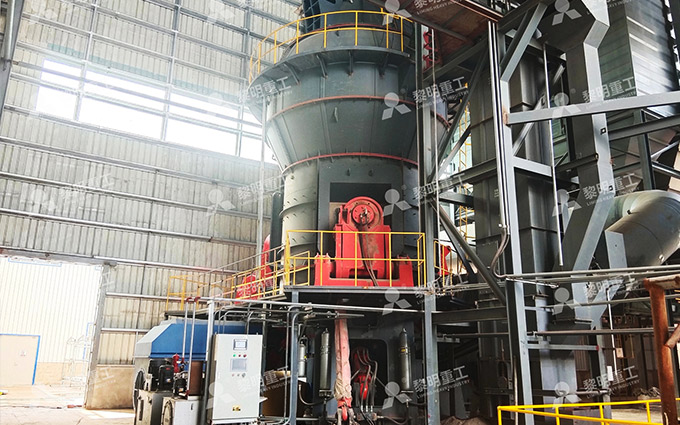
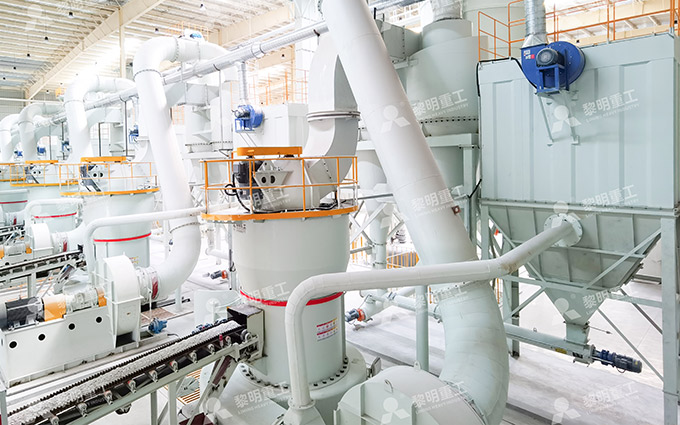
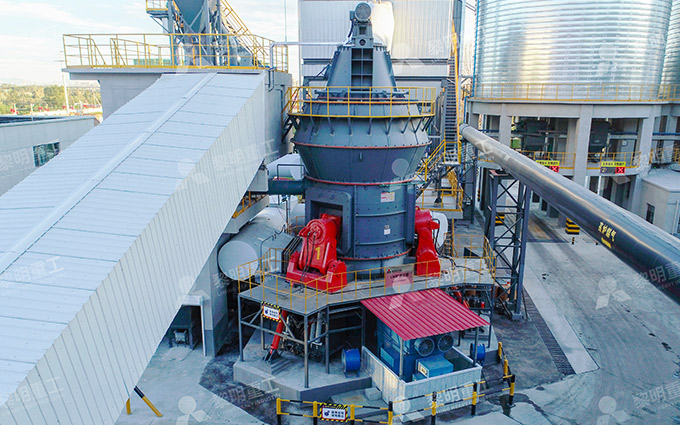
Dry grinding is widely used for standard and ultrafine GCC powders. The process may use Raymond mills, vertical roller mills, ring roller mills, ball mills with air classifiers, or other dry grinding systems.
Dry processing is often selected for plastics, PVC, rubber, coatings, sealants, construction materials, and general industrial filler grades because it supports efficient powder handling, flexible classification, and optional surface coating.
Wet Grinding
Wet grinding is commonly used where calcium carbonate slurry is required, especially in paper and coating applications. The raw mineral is ground in water to create a controlled slurry. Wet processes can produce very fine particles and may support specific rheological or coating-performance requirements.
Wet GCC production requires additional control of slurry solids, dispersants, viscosity, storage stability, microbial protection where necessary, and transportation conditions.
What Is Coated GCC?
Coated GCC is ground calcium carbonate whose particle surface has been treated with a surface modifier. Stearic acid is widely used for this purpose in plastic and rubber applications.
Natural calcium carbonate surfaces are hydrophilic, while many polymers are hydrophobic. Without suitable surface treatment, calcium carbonate may disperse poorly in the polymer matrix. Surface coating can improve compatibility, reduce moisture sensitivity, help powder flow, and support more stable compounding behavior.
Coated GCC is commonly used in:
PVC pipes, profiles, flooring, and cable compounds.
Polyethylene and polypropylene masterbatch.
Plastic film and sheet.
Woven bags and raffia products.
Rubber compounds.
Silicone, acrylic, and PVC sealants.
Construction adhesives and filler-rich polymer formulations.
The quality of coated GCC depends on more than the coating agent. It also depends on coating level, coating uniformity, mineral purity, particle size, moisture, surface area, dispersion, resin type, and the actual processing conditions used by the customer.
Key Properties of GCC
GCC specifications differ widely by grade and market. A calcium carbonate powder used in dry-mix mortar does not require the same properties as an ultrafine coated product for PVC cable compounds or a wet-ground slurry for paper coating.
| Property | Why It Matters |
|---|---|
| CaCO3 content | Indicates mineral purity and the level of non-carbonate material |
| Whiteness and brightness | Important for paper, paint, coatings, white PVC, masterbatch, and artificial stone |
| Particle size | Affects surface finish, dispersion, viscosity, mechanical properties, and filler loading |
| Particle-size distribution | Controls consistency, processing behavior, and final-product performance |
| Moisture content | Important for plastic compounding, storage, powder flow, and coating stability |
| Bulk density | Affects packaging, silo sizing, conveying, dosing, and transport economics |
| Oil absorption | Relevant for paint, coatings, sealants, adhesives, inks, and rubber formulations |
| Surface treatment | Important for dispersion and compatibility in hydrophobic polymer systems |
| Silica and iron content | Can affect equipment wear, whiteness, surface appearance, and application suitability |
What Is the Difference Between GCC and PCC?
GCC and PCC have the same basic chemical formula, CaCO3, but they differ in source and production method.
| Feature | Ground Calcium Carbonate (GCC) | Precipitated Calcium Carbonate (PCC) |
|---|---|---|
| Raw material | Natural limestone, marble, chalk, or calcite | Usually limestone-derived quicklime, water, and carbon dioxide |
| Production process | Mechanical crushing, grinding, classification, and optional coating | Chemical calcination, hydration, carbonation, separation, drying, and classification |
| Particle control | Controlled mainly by mineral source, grinding, and air classification | Controlled by chemical reaction conditions and precipitation parameters |
| Particle morphology | Reflects natural mineral structure and grinding behavior | Can be engineered into specific crystal forms and particle shapes |
| Cost position | Often more cost-effective for high-volume filler use | Often higher due to chemical processing and engineered particle control |
| Typical applications | Plastics, PVC, paper, paint, rubber, sealants, adhesives, construction materials | Specialty paper, high-performance coatings, technical polymers, pharmaceutical and qualified food-related applications |
GCC is formed directly from mechanically grinding limestone rock into powder, whereas PCC is chemically produced and precipitated as powder.
Major Applications of GCC
Plastics and PVC
GCC is widely used in PVC pipes, fittings, profiles, cable compounds, flooring, film, sheet, masterbatch, woven bags, and injection-molded plastic products. It can reduce formulation cost and contribute to stiffness, dimensional stability, surface quality, and process control.
Fine coated GCC is often selected for applications where polymer compatibility and dispersion are important. In plastic compounds, the correct grade depends on resin type, filler loading, extrusion conditions, mechanical requirements, color, and final-product appearance.
Paper and Paperboard
GCC is used as a filler and coating pigment in paper and paperboard. It can support brightness, opacity, smoothness, printability, and bulk. Wet-ground GCC slurry is commonly used in paper coating systems where fine particles and controlled rheology are required.
Paints and Coatings
In paint and coatings, GCC functions as an extender pigment. It can help control formulation cost and influence viscosity, film build, surface texture, sheen, sanding properties, and storage behavior. Fine high-whiteness grades are used in architectural coatings, industrial coatings, putty, printing inks, and related products.
Rubber
GCC is used in rubber mats, footwear, hoses, gaskets, sheets, cable compounds, and molded rubber products. It can influence compound cost, hardness, stiffness, processing behavior, and finished-product appearance.
Adhesives and Sealants
Fine GCC is used in silicone sealants, acrylic sealants, PVC sealants, construction adhesives, caulking compounds, and other filler-rich formulations. Particle size, moisture, oil absorption, surface treatment, and consistency are important for viscosity, extrusion, curing, and final appearance.
Construction Materials
GCC can be used in wall putty, dry-mix mortar, tile adhesive, gypsum products, artificial stone, decorative building materials, and building coatings. Coarser calcium carbonate materials may also be used in agricultural, environmental, and construction-related applications where high powder fineness is not required.
Benefits of Ground Calcium Carbonate
Natural mineral source: GCC is derived from abundant carbonate resources such as limestone, marble, and calcite.
Cost efficiency: It can reduce the cost of many polymer, coating, rubber, adhesive, and construction formulations.
Particle-size flexibility: It can be processed into a wide range of coarse, fine, ultrafine, and slurry grades.
High whiteness potential: Selected calcite and marble deposits can provide strong optical properties for white products.
Relatively low hardness: Calcite-based GCC is generally less abrasive than hard silicate fillers.
Functional performance: It can influence stiffness, viscosity, surface finish, opacity, dimensional stability, and processability.
Surface-modification options: Coated GCC can be tailored for hydrophobic polymers, rubber, adhesives, and sealants.
Broad supply availability: Limestone is widespread and supports large-scale industrial production in many regions.
How to Choose a GCC Grade
The right GCC grade should be selected based on the final product, not just the powder mesh size. A buyer should evaluate the technical requirements of the actual production process and formulation.
| Application | Important GCC Selection Factors |
|---|---|
| PVC and plastic masterbatch | Particle size, surface coating, moisture, dispersion, whiteness, impurity level |
| Paper filler and coating | Brightness, particle-size distribution, slurry rheology, mineral purity, optical performance |
| Paint and coatings | Whiteness, fineness, oil absorption, particle shape, dispersion, surface finish |
| Rubber | Particle size, loading behavior, impurity control, hardness contribution, compound compatibility |
| Sealants and adhesives | Fine particle size, low moisture, oil absorption, coating, extrusion behavior, batch consistency |
| Wall putty and dry mortar | Particle-size grade, flowability, whiteness target, cost, binder compatibility |
Before approving a new supplier or grade, conduct trials in the actual product formulation. A technical data sheet can identify a potential fit, but only production testing confirms performance in a specific resin, coating system, paper process, rubber compound, adhesive, or sealant.
Frequently Asked Questions
What does GCC stand for?
GCC stands for ground calcium carbonate. It is natural calcium carbonate produced by mechanically grinding limestone, marble, calcite, chalk, or another suitable carbonate raw material.
Is GCC natural or synthetic?
GCC is natural calcium carbonate that has been physically processed. It begins as naturally occurring carbonate rock and is crushed, ground, classified, and sometimes surface-treated. It is not chemically precipitated.
What is GCC used for?
GCC is used in plastics, PVC, paper, paint, coatings, rubber, adhesives, sealants, wall putty, dry-mix mortar, artificial stone, agriculture, and environmental applications.
What is the difference between GCC and PCC?
GCC is made by grinding natural calcium carbonate minerals. PCC is made through a chemical precipitation process. GCC is often preferred for cost-effective, high-volume filler applications, while PCC is used where more controlled particle morphology is needed.
Is coated GCC better than uncoated GCC?
Neither is universally better. Coated GCC is often preferred for hydrophobic polymer, rubber, adhesive, and sealant systems because coating can improve compatibility and dispersion. Uncoated GCC is commonly used in paper, paint, water-based products, construction materials, and applications where surface treatment is not required.
What is the main raw material for GCC?
High-calcium limestone is the most common raw material for GCC. High-purity calcite, white marble, and chalk are also used where their properties match the desired product specification.
Conclusion
Ground calcium carbonate, or GCC, is a natural industrial mineral made by mechanically processing limestone, calcite, marble, chalk, or other suitable calcium carbonate sources. It is produced through crushing, grinding, classification, and, when required, surface coating.
GCC is widely used because it offers a practical balance of availability, cost efficiency, whiteness, controlled particle size, low hardness, and formulation flexibility. The best GCC grade depends on the raw material, processing technology, particle characteristics, surface treatment, and the performance requirements of the final product.