Calcium Carbonate Knowledge Hub
What Is Coated GCC?
2026-09-04 16:08:13
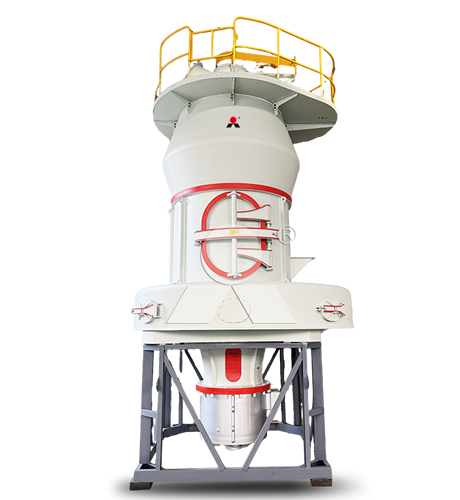
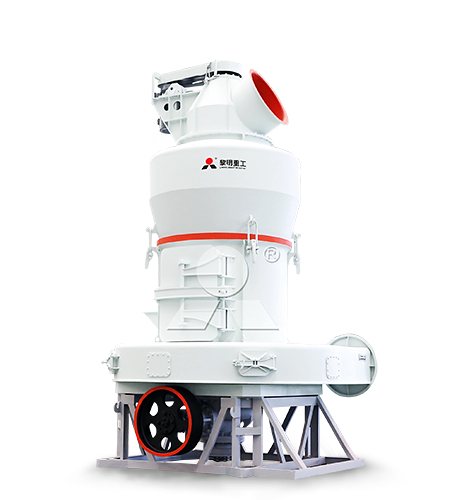
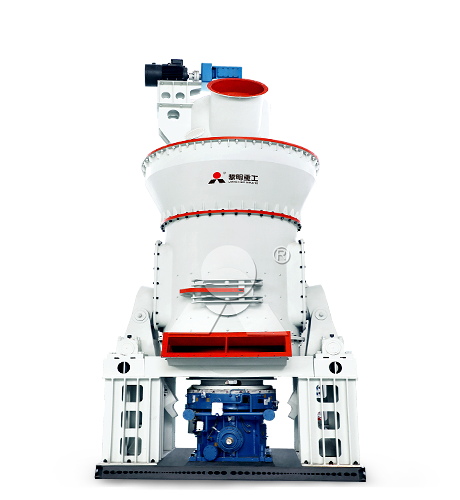
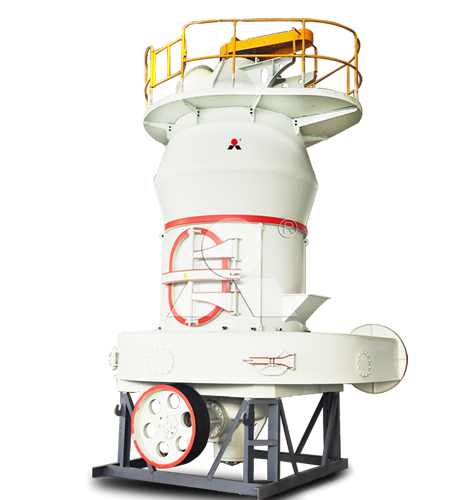
We are Liming Heavy Industry, a manufacturer of various types of industrial crushers, such as Raymond Mill, Trapezoidal Mill, Vertical Mill, Ultrafine Mill, Ball Mill, etc.
Our mills can process the following minerals:
limestone, quicklime, kaolin, talc, barite, bentonite, calcium carbonate, dolomite, coal, gypsum, clay, carbon black, slag, cement raw materials, cement clinker, etc.
If you need a mill to process stone or minerals into powder, please feel free to contact me (WhatsApp: +8615333807511). Thank you.
Coated GCC is ground calcium carbonate (GCC) whose particle surfaces have been treated with a surface modifier. It is also called coated calcium carbonate, treated GCC, activated calcium carbonate, or surface-modified calcium carbonate.
Most coated GCC is made from high-purity limestone, calcite, marble, or chalk that has been crushed, ground, classified, dried, and then treated with stearic acid or another modifier. The purpose of coating is to make the naturally hydrophilic calcium carbonate surface more compatible with hydrophobic polymer systems such as PVC, polyethylene, polypropylene, rubber, adhesives, and sealants.
Stearic acid is the most widely used surface-treatment agent for calcium carbonate. It can lower surface energy, reduce hydrophilicity, improve powder dispersion in polymer matrices, and reduce moisture pickup during storage and handling.
Coated GCC at a Glance
| Item | Description |
|---|---|
| Full name | Coated ground calcium carbonate |
| Abbreviation | Coated GCC |
| Main chemical composition | Primarily calcium carbonate, CaCO3 |
| Base material | Ground calcium carbonate from limestone, calcite, marble, chalk, or another natural carbonate source |
| Common coating agent | Stearic acid; other fatty acids, fatty-acid salts, coupling agents, or specialty modifiers may also be used |
| Main purpose | Improve dispersion and compatibility in hydrophobic polymers, rubber, adhesives, and sealants |
| Typical form | Fine or ultrafine, hydrophobic dry powder |
| Main applications | PVC, plastic masterbatch, PE, PP, rubber, cable compounds, films, flooring, adhesives, and sealants |
What Does “Coated” Mean?
“Coated” means that a thin layer of a modifier has been distributed over the surface of calcium carbonate particles. The coating does not change the mineral core from calcium carbonate into a different bulk chemical material. The main material remains CaCO3, but its surface behavior changes.
Uncoated calcium carbonate is naturally hydrophilic. Its surface has an affinity for water and polar substances. Many polymers, however, are hydrophobic and nonpolar. When untreated calcium carbonate is mixed directly into a hydrophobic resin, it may not disperse efficiently and can form agglomerates.
A surface modifier helps bridge this compatibility gap. In a well-coated product, particles are less likely to strongly attract each other, are easier to wet with the polymer, and can distribute more uniformly during compounding.
Why Is GCC Coated?
Coated GCC is mainly used to improve the interaction between calcium carbonate and organic materials. This is particularly important in filled polymer compounds, where poor filler dispersion can reduce surface quality, create defects, increase viscosity, and cause inconsistent mechanical performance.
| Coating Function | Practical Effect |
|---|---|
| Reduce surface hydrophilicity | Makes GCC more compatible with hydrophobic polymer systems |
| Improve dispersion | Helps reduce particle agglomeration and supports more uniform filler distribution |
| Reduce moisture pickup | Can improve storage stability and reduce moisture-related processing issues |
| Improve powder flow | Can support feeding, conveying, dosing, and compound consistency |
| Reduce interparticle friction | May help processing in extruders, mixers, and compounding systems |
| Support polymer wet-out | Helps resin contact and surround individual filler particles more effectively |
| Improve final-product consistency | Can support stable surface appearance, extrusion behavior, and mechanical-property balance |
Research on stearic-acid-coated calcium carbonate reports that the surface treatment lowers surface tension and can improve the behavior of calcium carbonate in polymer-related systems. Product performance, however, depends on the full formulation, resin type, filler loading, particle size, coating quality, processing equipment, and additives—not on coating alone.
Coated GCC vs Uncoated GCC
| Feature | Coated GCC | Uncoated GCC |
|---|---|---|
| Particle surface | Treated with stearic acid or another modifier | Natural mineral surface without added treatment |
| Surface behavior | More hydrophobic and lower in surface energy | More hydrophilic and more polar |
| Polymer compatibility | Generally better for PVC, PE, PP, rubber, adhesives, and sealants | May be suitable for water-based systems, paper, paint, construction products, and selected polymers |
| Moisture sensitivity | Usually lower when coating is uniform and effective | More likely to absorb or retain surface moisture |
| Dispersion in hydrophobic systems | Often easier to disperse when matched with the formulation | Can require stronger mixing, dispersants, or formulation adjustment |
| Typical applications | PVC, masterbatch, film, cable compounds, rubber, sealants, adhesives | Paper, water-based paint, wall putty, dry mortar, agricultural and general mineral filler uses |
| Cost | Usually higher because of the coating process and modifier | Usually lower because no surface-treatment stage is required |
Coated GCC is not automatically better in every application. In water-based paint, paper, cement, dry-mix mortar, wall putty, or other hydrophilic systems, uncoated calcium carbonate may be more appropriate. The right choice depends on the chemistry of the finished product.
What Is Stearic Acid Coating?
Stearic acid is a long-chain fatty acid commonly used to coat calcium carbonate. It is favored because it is effective, widely available, and compatible with many polymer and rubber formulations.
During treatment, the polar portion of the stearic acid molecule interacts with the calcium carbonate surface, while the long hydrocarbon chain is oriented outward. This creates a more hydrophobic outer surface, making the mineral powder more compatible with nonpolar or low-polarity polymer systems.
The result is not a thick shell around each particle. It is a very thin surface layer. The objective is to create enough coverage for improved particle separation and polymer compatibility without adding unnecessary coating cost or creating excess free fatty acid in the final compound.
Benefits of Stearic Acid Treatment
Improves dispersion in PVC, PE, PP, rubber, and many sealant systems.
Reduces powder agglomeration during storage and compounding.
Reduces surface moisture affinity.
May improve powder flow and feeding behavior.
Can reduce compound viscosity in suitable formulations.
Supports a smoother surface appearance in properly designed products.
Can improve processing consistency at high filler loadings.
Stearic acid coating is commonly associated with better dispersion in polymer matrices and lower moisture pickup than an uncoated grade. The actual benefit must be verified through trials because the outcome changes with resin polarity, additive package, processing temperature, filler loading, and particle-size distribution.
Other Surface Modifiers for GCC
Stearic acid is the most common modifier, but it is not the only option. Depending on the polymer system and performance requirement, producers may use other surface-treatment materials.
| Modifier Category | Potential Purpose | Typical Consideration |
|---|---|---|
| Fatty acids | Create a more hydrophobic surface and improve powder flow | Stearic acid is the most common example |
| Fatty-acid salts | Support surface modification and compatibility in selected systems | Selection depends on temperature, moisture, and polymer formulation |
| Titanate coupling agents | Improve interaction between mineral surfaces and certain polymers | Often considered for more demanding polymer compounds |
| Aluminate coupling agents | Modify mineral-surface behavior and polymer compatibility | Requires compatibility testing with the full formulation |
| Polymer-based modifiers | Create specialized particle surfaces for selected composite applications | Can offer tailored performance but may add cost and process complexity |
| Silane-related treatments | Used in selected mineral-polymer systems | Not universally appropriate for calcium carbonate or all resin types |
Surface-modification methods should be chosen according to the polymer matrix, application temperature, filler loading, mechanical requirements, processing equipment, cost target, and regulatory requirements. A modifier that works well in one PVC compound may not be appropriate for a water-based coating, food-contact application, silicone sealant, or polypropylene compound.
How Is Coated GCC Produced?
Coated GCC production begins with a suitable uncoated GCC powder. The powder is typically fine or ultrafine, dry, and free from excessive contamination. The coating process then applies the modifier under controlled temperature and mixing conditions.
A typical process flow is:
High-quality calcium carbonate raw material → crushing → grinding → air classification → drying → heated mixing with modifier → cooling → final classification or screening → storage and packaging
1. Prepare High-Quality GCC
The starting GCC must meet the required purity, whiteness, particle size, and moisture specification. Surface coating cannot correct low-quality raw material. If the powder contains excessive silica, iron, moisture, coarse particles, or agglomerates, the final coated product may still perform poorly.
2. Control Moisture
Low moisture is important before coating. Excess moisture can interfere with modifier distribution, create agglomeration, reduce hydrophobicity, and affect storage stability. A practical coating process may dry GCC to a low moisture level before treatment.
One industrial coating-process description specifies reducing GCC moisture below 1% before applying stearic acid in a high-speed mixing system. The appropriate moisture target depends on the powder grade, coating technology, modifier, and final application.
3. Heat and Mix the Powder
The GCC powder is heated to a temperature suitable for the selected modifier. Stearic acid is introduced in a controlled dosage, often as a molten liquid or finely dispersed solid. High-speed mixing creates turbulence that distributes the modifier across the calcium carbonate surface.
Key process variables include powder temperature, modifier temperature, dosage, feed rate, mixer speed, residence time, and the initial moisture content of the GCC.
4. Cool and Stabilize the Coated Powder
After coating, the powder may be cooled to prevent caking, improve flow, and prepare it for storage. The finished product can be passed through a screen or classifier to remove agglomerates before it is transferred to a silo or packed.
5. Test the Finished Coated GCC
Quality control may include particle-size distribution, moisture, coating level, activation degree, hydrophobicity, oil absorption, bulk density, whiteness, powder flow, dispersion performance, and application testing in the target polymer or sealant system.
What Is Coating Activation Degree?
In calcium carbonate processing, activation degree is a practical indicator of how effectively the powder surface has been modified. Test methods vary by producer, but the objective is generally to assess whether the powder has become sufficiently hydrophobic after coating.
A common qualitative method observes how the treated powder behaves on water. Properly coated calcium carbonate tends to resist wetting and may float or remain at the surface for a defined period, while uncoated calcium carbonate wets and sinks more easily. This is a simple process-control indicator, not a complete substitute for quantitative application testing.
For important customer approvals, producers should confirm coating performance through the actual end-use formulation. For example, a PVC producer may measure torque, fusion behavior, extrusion pressure, surface finish, impact properties, and dispersion. A sealant producer may measure viscosity, extrusion rate, sag resistance, adhesion, and storage stability.
Coated GCC Applications
PVC Compounds
Coated GCC is widely used in PVC pipes, fittings, profiles, flooring, cable compounds, sheets, and other vinyl products. Surface treatment can improve dispersion in PVC resin and help maintain stable processing at practical filler loadings.
The correct coated GCC grade depends on PVC formulation design, particle size, coating level, lubricant package, stabilizer system, impact modifier, pigment content, extrusion equipment, and required mechanical properties.
Plastic Masterbatch
Masterbatch producers use coated GCC in polyethylene and polypropylene systems. The objective is to disperse the mineral filler efficiently in the carrier resin and then allow the masterbatch to distribute consistently in the final product.
Important factors include particle-size distribution, coating consistency, moisture, bulk density, melt-flow compatibility, film thickness, filler loading, and the expected balance between cost and mechanical properties.
Films and Sheets
Coated GCC may be used in plastic films, sheets, packaging materials, and related products. Fine particles and good dispersion are especially important because oversized particles or agglomerates can create surface defects, weak points, gel-like marks, or poor visual appearance in thin products.
Wire and Cable Compounds
Wire and cable compounds may use coated GCC as a filler in PVC or other polymer-based insulation and sheathing systems. Low moisture, particle-size control, uniform coating, electrical-property requirements, and consistent extrusion behavior are key considerations.
Rubber Products
Coated GCC can be used in rubber compounds for footwear, mats, hoses, gaskets, sheets, and molded products. The coating may improve filler distribution and processability, but the complete rubber formulation still determines hardness, tensile properties, elongation, abrasion resistance, and cure behavior.
Adhesives and Sealants
Fine coated GCC is commonly used in silicone sealants, acrylic sealants, PVC sealants, caulking compounds, and construction adhesives. It can contribute to rheology, body, viscosity control, extrusion behavior, and cost efficiency.
For sealants, the selected powder should be evaluated for particle size, moisture, oil absorption, surface treatment, bulk density, color, storage stability, and compatibility with the curing system. A filler grade that works in PVC may not automatically work in a moisture-curing silicone sealant or a polyurethane adhesive.
How to Choose Coated GCC
Choosing coated GCC requires more than comparing CaCO3 content or mesh. The selected grade must match the polymer or formulation system.
| Parameter | Why It Matters |
|---|---|
| Particle-size distribution | Controls dispersion, surface smoothness, viscosity, mechanical properties, and processing behavior. |
| Surface-treatment type | Must be compatible with PVC, PE, PP, rubber, adhesive, or sealant chemistry. |
| Coating level | Too little coating may not improve compatibility; excessive coating can increase cost or affect formulation behavior. |
| Moisture content | Critical for polymer processing, powder flow, storage stability, and hydrophobicity. |
| CaCO3 purity | Supports consistency, whiteness, low contamination, and reduced equipment wear. |
| Whiteness and color | Important for white PVC, film, flooring, masterbatch, sealants, and light-colored products. |
| Oil absorption | Affects viscosity and binder demand in sealants, rubber, coatings, and adhesive formulations. |
| Bulk density | Influences silo capacity, conveying, volumetric dosing, packaging, and transport. |
| Application trial | Confirms actual compound performance before full-scale approval. |
Common Problems With Coated GCC
Insufficient Coating
Insufficient modifier coverage can leave the powder too hydrophilic. This may result in poor polymer wetting, high moisture sensitivity, agglomeration, inconsistent extrusion, and weak dispersion.
Excess Coating
Too much modifier can increase production cost and may affect odor, thermal behavior, compound viscosity, migration, or surface properties. The optimal level must be determined for the specific powder grade and application.
High Moisture
High moisture can reduce coating efficiency and create handling problems. It may cause clumping, poor powder flow, unstable feeding, voids, or defects in moisture-sensitive polymer systems.
Wrong Particle Size
Even a well-coated powder may perform poorly if the particle-size distribution does not match the product. Coarse particles can reduce smoothness and create defects; excessively fine powder can increase viscosity and binder demand.
Incompatible Modifier
A modifier should be selected for the intended resin or formulation. A treatment designed for polypropylene may not deliver the same performance in PVC, silicone, polyurethane, acrylic, water-based coatings, or food-contact materials.
Frequently Asked Questions
What is coated GCC?
Coated GCC is ground calcium carbonate whose particle surfaces are treated with a modifier, most commonly stearic acid. The coating improves compatibility and dispersion in hydrophobic polymers, rubber, adhesives, and sealants.
What is the difference between coated and uncoated calcium carbonate?
Coated calcium carbonate has a modified, more hydrophobic surface and is usually better suited to hydrophobic polymer systems. Uncoated calcium carbonate retains its natural hydrophilic surface and is often used in paper, water-based products, paint, wall putty, mortar, and other applications where coating is not needed.
Why is stearic acid used to coat GCC?
Stearic acid helps make the calcium carbonate surface more hydrophobic. This can improve dispersion, reduce moisture pickup, improve powder flow, and support compatibility with polymers such as PVC, PE, PP, and rubber.
Is coated GCC waterproof?
Coated GCC is more water-repellent than uncoated GCC, but it should not be described as completely waterproof. The actual water resistance depends on coating type, coating coverage, powder properties, storage condition, and the final compound formulation.
Is coated GCC better for PVC?
Coated GCC is often preferred for PVC because its modified surface can improve compatibility and dispersion in the resin. However, the best choice depends on particle size, coating quality, PVC formula, filler loading, additives, processing equipment, and required product properties.
Can coated GCC be used in paint?
It can be used in selected paint or coating systems, but uncoated GCC is often more suitable for water-based formulations. The appropriate grade depends on binder chemistry, dispersant, pigment-volume concentration, rheology, and target surface properties.
Conclusion
Coated GCC is a surface-modified form of ground calcium carbonate designed for improved performance in hydrophobic formulations. It is typically made by treating fine or ultrafine GCC with stearic acid or another modifier under controlled drying, heating, and mixing conditions.
Its main advantages are improved polymer compatibility, better filler dispersion, reduced moisture sensitivity, smoother handling, and more stable processing. The best coated GCC grade depends on the complete application requirement—including particle size, purity, whiteness, coating type, coating level, moisture, oil absorption, resin system, filler loading, and production process.