Calcium Carbonate Knowledge Hub
What Is High-Purity GCC?
2026-09-04 16:09:00
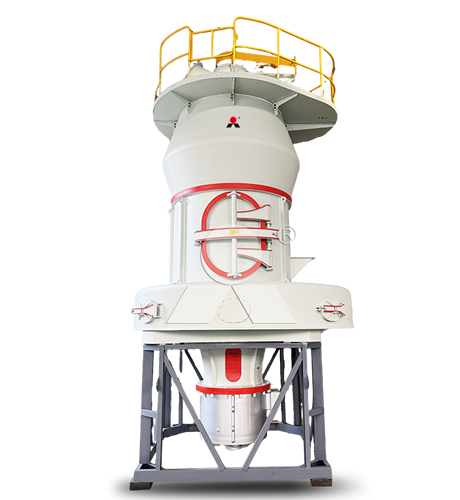
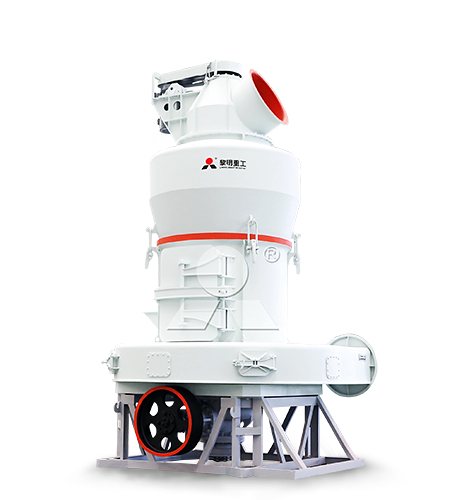
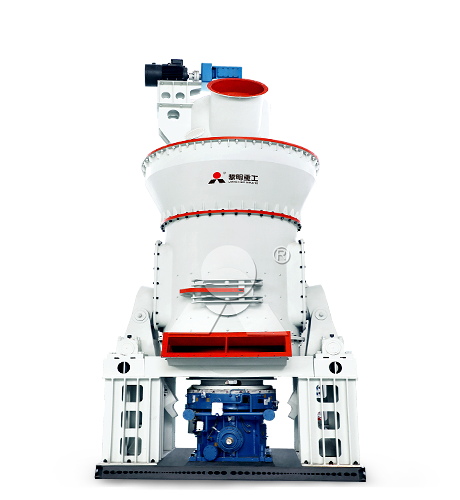
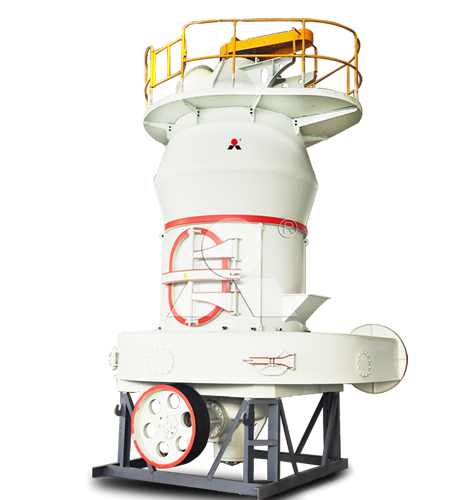
We are Liming Heavy Industry, a manufacturer of various types of industrial crushers, such as Raymond Mill, Trapezoidal Mill, Vertical Mill, Ultrafine Mill, Ball Mill, etc.
Our mills can process the following minerals:
limestone, quicklime, kaolin, talc, barite, bentonite, calcium carbonate, dolomite, coal, gypsum, clay, carbon black, slag, cement raw materials, cement clinker, etc.
If you need a mill to process stone or minerals into powder, please feel free to contact me (WhatsApp: +8615333807511). Thank you.
High-purity GCC is ground calcium carbonate made from carefully selected natural carbonate rock with a high calcium carbonate content and low levels of unwanted impurities. GCC stands for ground calcium carbonate. It is produced by crushing, grinding, classifying, and sometimes surface-treating high-quality limestone, calcite, marble, or chalk.
High-purity GCC is used when a standard calcium carbonate filler is not sufficient. It is selected for applications that require reliable whiteness, low abrasion, stable chemistry, controlled particle size, consistent processing, or strict impurity limits—such as premium PVC, plastic masterbatch, paint, coatings, paper, rubber, adhesives, sealants, artificial stone, glass, and selected chemical applications.
There is no single universal percentage that defines “high-purity GCC.” The term must be supported by a complete specification. As a reference for raw limestone, the British Geological Survey classifies high-purity limestone as containing 97–98.5% CaCO3 and very-high-purity limestone as containing more than 98.5% CaCO3, while also considering MgO, SiO2, and Fe2O3 as key quality criteria.
High-Purity GCC at a Glance
| Item | Description |
|---|---|
| Full name | High-purity ground calcium carbonate |
| Abbreviation | High-purity GCC |
| Main component | Calcium carbonate, CaCO3 |
| Source materials | High-calcium limestone, high-purity calcite, white marble, or selected chalk deposits |
| Production method | Selective mining, crushing, grinding, classification, impurity control, and optional surface coating |
| Primary requirement | High CaCO3 assay combined with low silica, iron, magnesium, clay, and other specified impurities |
| Common form | Fine powder, ultrafine powder, coated powder, granules, or slurry |
| Typical applications | Premium PVC, paint, coatings, paper, plastics, sealants, adhesives, rubber, glass, artificial stone, and selected chemical uses |
What Does “High Purity” Mean?
For GCC, purity usually starts with the calcium carbonate content, expressed as CaCO3 assay. A high result indicates that the material contains more calcium carbonate and fewer non-carbonate minerals.
But high purity is not simply a single number. A usable high-purity GCC specification usually combines:
High CaCO3 content: The desired level depends on the market and application.
Low SiO2: Helps reduce abrasiveness and non-carbonate residue.
Low Fe2O3: Helps preserve whiteness and reduce yellow, gray, brown, or reddish color bias.
Low MgO: Helps control dolomite or magnesium-bearing mineral content when high-calcium material is required.
Low acid-insoluble residue: Helps indicate low levels of silica, sand, clay, and other insoluble contaminants.
Low clay and organic matter: Supports whiteness, stable moisture behavior, and consistent powder processing.
Stable mineralogy: Ensures reliable product performance from batch to batch.
A high-purity GCC product can have a high CaCO3 value but still be unsuitable for a demanding application if it has excessive silica, iron, moisture, coarse particles, poor whiteness, variable mineralogy, or inadequate surface treatment.
High-Purity GCC vs Standard GCC
| Feature | High-Purity GCC | Standard GCC |
|---|---|---|
| Raw material | Carefully selected high-calcium limestone, calcite, marble, or chalk | Suitable natural carbonate source with broader acceptable variation |
| CaCO3 content | Typically higher and more consistently controlled | May vary depending on deposit and intended use |
| Silica and acid-insoluble matter | Lower limits are commonly required | May be acceptable at higher levels for less demanding applications |
| Iron content | Lower iron is often required for high whiteness | May have broader color tolerance |
| Magnesium content | Often tightly controlled where high-calcium chemistry is required | May tolerate more dolomitic material in suitable applications |
| Whiteness and brightness | Usually higher and more tightly controlled | Depends on market; may be adequate for general fillers or construction use |
| Quality control | More frequent testing, selective quarry management, and tighter batch consistency | Standard quality controls matched to the intended application |
| Typical applications | Premium white products, optical-quality fillers, low-abrasion systems, chemical and specialty uses | General plastics, rubber, paint, construction materials, agriculture, and lower-cost formulations |
| Cost position | Usually higher due to raw-material selection and tighter processing control | Often lower for high-volume general applications |
Why High Purity Matters
High-purity GCC can improve performance, appearance, and production stability. The importance of purity depends on the final product, but the main benefits are related to optical quality, abrasion control, formulation consistency, chemical behavior, and compliance requirements.
Improved Whiteness and Color Consistency
Iron-bearing minerals, clay, organic matter, and dark inclusions can reduce whiteness. High-purity GCC typically uses raw materials with low iron and low discoloration risk. This is important for white PVC profiles, cable compounds, paint, coatings, paper, artificial stone, sealants, masterbatch, and consumer products.
High CaCO3 content alone does not guarantee high whiteness, but controlling impurities makes it easier to achieve stable brightness, high L* values, and low yellowing tendency.
Lower Abrasion and Equipment Wear
Silica, especially quartz, is harder than calcite. A calcium carbonate grade with elevated SiO2 can increase wear in crushers, mills, classifiers, pneumatic conveying lines, mixers, extruders, pumps, dies, and other processing equipment.
Low-silica high-purity GCC can therefore be valuable in high-throughput plastic compounding, paint production, paper coating, sealant manufacturing, and other operations where equipment life and smooth surface quality matter.
More Predictable Processing
Stable chemistry and mineralogy help maintain more consistent processing behavior. In polymers, this can support predictable torque, melt flow, extrusion pressure, dispersion, and surface finish. In paints and sealants, it can support repeatable viscosity, rheology, color, and application behavior.
Higher Value in Sensitive Applications
High-purity GCC is often needed where small changes in impurity level can affect final-product quality. Examples include high-brightness paper, white masterbatch, thin films, high-gloss coatings, transparent or light-colored sealants, artificial stone, glass, and selected chemical processes.
Improved Chemical Reliability
For acid neutralization, water treatment, agriculture, and chemical manufacturing, high CaCO3 content can improve the predictability of neutralizing value and reaction behavior. Non-carbonate impurities reduce the effective calcium carbonate content and can create unwanted solids or process variability.
Common Impurities in GCC
Natural calcium carbonate deposits are geological materials, so they may contain other minerals. High-purity GCC is made by selecting and controlling raw materials to minimize these components.
| Impurity or Variable | How It May Affect GCC |
|---|---|
| Silica, SiO2 | Increases abrasiveness, may reduce whiteness, and can raise acid-insoluble residue |
| Iron oxides, Fe2O3 | Can create yellow, gray, brown, or reddish tones and reduce brightness |
| Magnesium oxide, MgO | May indicate dolomite or magnesium-bearing minerals rather than high-calcium material |
| Alumina and clay minerals | Can affect whiteness, moisture retention, flow, rheology, and powder consistency |
| Acid-insoluble residue | Can indicate silica, sand, clay, and other non-carbonate contaminants |
| Organic matter | Can darken the material, affect odor, and reduce optical or thermal stability |
| Moisture | Can affect grinding, coating, storage, powder flow, extrusion, and dispersion |
| Tramp metal or process contamination | Can create visible specks, discoloration, and equipment or formulation problems |
Low iron, silica, and magnesium levels are often specified for high-purity calcium carbonate intended for demanding chemical or industrial use. For example, one commercial high-purity limestone product reports 98.5% average CaCO3 and highlights low aluminum, magnesium, silica, and iron for glass-making, chemical, acid-neutralization, construction, and environmental applications.
How Is High-Purity GCC Produced?
High-purity GCC production begins with high-purity raw material. Grinding alone cannot remove most chemical impurities. The process must control the material from quarry to finished powder.
1. Geological Exploration and Deposit Selection
Producers identify deposits with suitable calcium carbonate content, whiteness, mineralogy, and impurity profile. Drilling, geological mapping, laboratory sampling, and chemical analysis help define high-quality zones.
2. Selective Quarrying
Different benches or layers in one quarry can have different purity and color. Selective mining separates high-purity material from lower-grade rock, clay seams, silica-rich zones, iron-stained material, and dolomitic zones.
3. Stockpile Management and Blending
Separate stockpiles help prevent contamination. Controlled blending may be used to maintain stable CaCO3 content, whiteness, and impurity levels in the mill feed.
4. Crushing and Fine Grinding
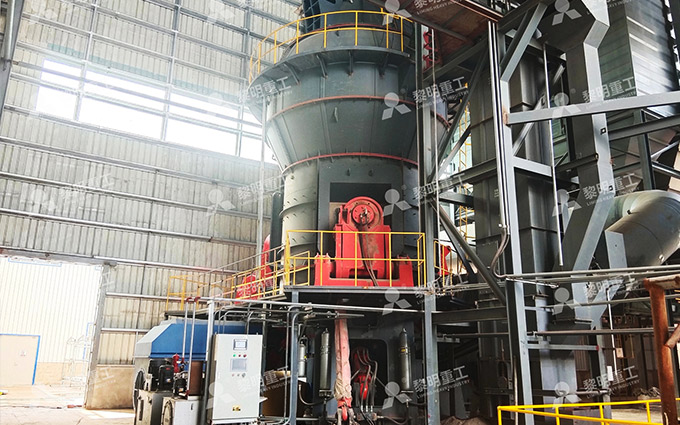
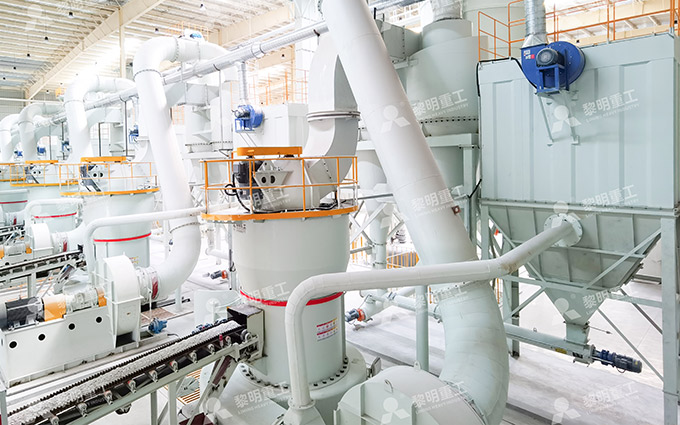
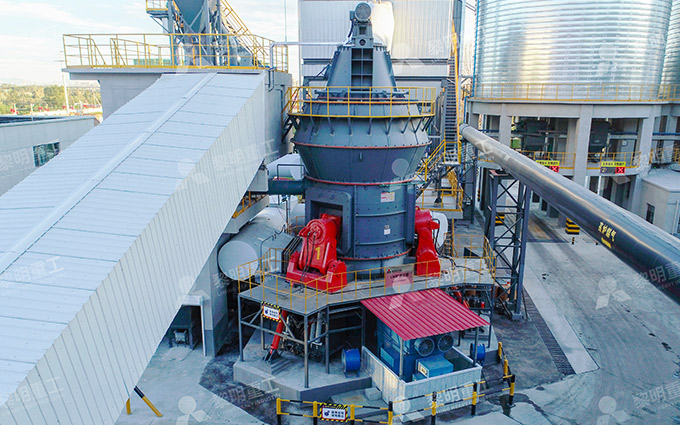
The selected material is crushed and ground into the required particle size. Depending on the product, a producer may use a ball mill with air classifier, vertical roller mill, ring roller mill, Raymond mill, or wet stirred-media mill.
5. Classification and Removal of Coarse Material
Air classification or wet classification controls the particle-size distribution. Oversized material is returned for regrinding, while qualified powder moves to collection and storage.
6. Beneficiation When Needed
For some deposits, additional beneficiation may be used to reduce contaminants. Depending on mineralogy and economic value, possible methods include screening, washing, classification, magnetic separation, flotation, optical sorting, or selective separation.
Beneficiation is not always required for high-purity GCC. The most economical route is usually to start with naturally clean, high-calcium raw material. Additional processing is justified only when it produces a product grade with enough added value to cover the extra capital and operating cost.
7. Optional Surface Treatment
High-purity GCC may be coated with stearic acid or another modifier for PVC, plastics, rubber, adhesives, and sealants. Coating changes the particle surface but does not replace the need for high-purity raw mineral.
High-Purity GCC Applications
Premium Plastics and PVC
High-purity GCC is used in white PVC profiles, cable compounds, vinyl flooring, SPC flooring, plastic masterbatch, films, sheets, and injection-molded products. Low iron supports color control, while low silica can reduce abrasion and help prevent surface defects.
For hydrophobic resins, high-purity coated GCC may provide improved dispersion and more consistent processing. The final selection should be based on particle size, surface treatment, moisture, resin type, filler loading, and product-performance testing.
Paints and Coatings
High-purity GCC can be used in white and light-colored coatings, architectural paints, industrial coatings, primers, putty, printing inks, and specialty coatings. High whiteness, low yellowing tendency, controlled particle size, and low abrasive contamination are important for surface appearance and formulation stability.
Paper and Paperboard
Paper and paperboard applications may require high-purity GCC for brightness, opacity, smoothness, printability, and consistent coating performance. Fine or wet-ground GCC can be used as a filler or coating pigment, depending on paper grade and production process.
Adhesives and Sealants
Fine high-purity GCC is widely used in silicone sealants, acrylic sealants, PVC sealants, construction adhesives, and caulking compounds. The mineral filler can support rheology, body, extrusion behavior, and cost efficiency while maintaining a clean appearance.
For these applications, purity should be evaluated together with moisture, oil absorption, particle size, surface treatment, bulk density, and compatibility with the curing system.
Rubber and Elastomers
High-purity GCC may be used in light-colored rubber goods, cable compounds, footwear, hoses, gaskets, sheets, and molded products. Low silica can help reduce equipment wear, while high whiteness supports color-sensitive rubber formulations.
Artificial Stone and Decorative Materials
Artificial stone, engineered stone, decorative panels, white mortar, wall putty, gypsum products, and other construction materials may use high-purity GCC when color consistency and surface appearance are important.
Glass, Chemical, and Environmental Uses
High-purity limestone and GCC can be used in glass, ceramics, chemical processing, acid neutralization, water treatment, and environmental applications. In these uses, low iron, silica, magnesium, and other impurities can be important because they affect color, melting behavior, chemical reactivity, residue formation, or product quality.
High-Purity GCC vs Food-Grade or Pharmaceutical-Grade Calcium Carbonate
High-purity GCC should not automatically be assumed to be food grade or pharmaceutical grade. These are different classifications.
| Category | Main Focus | What Must Be Verified |
|---|---|---|
| High-purity industrial GCC | High CaCO3 content, low mineral impurities, whiteness, and consistent technical performance | Chemical analysis, particle size, moisture, optical properties, impurity limits, application performance |
| Food-grade calcium carbonate | Identity, purity, contaminant limits, food-safety compliance, and permitted use | Applicable food standard, heavy metals, microbiological controls where relevant, regulatory documentation |
| Pharmaceutical-grade calcium carbonate | Pharmacopoeia compliance, identity, assay, contaminants, manufacturing controls, and traceability | USP, BP, Ph. Eur., or other required standard; batch-specific certificate of analysis and compliance documentation |
| Feed-grade calcium carbonate | Animal-nutrition suitability and feed-safety compliance | Applicable feed standards, trace contaminants, nutritional parameters, and local regulatory requirements |
Industrial GCC may be very pure from a mineral perspective and still not meet the documentation, contaminant, manufacturing, traceability, or regulatory requirements for food, pharmaceutical, cosmetic, or feed applications.
How to Specify High-Purity GCC
Instead of requesting “high purity” alone, buyers should define measurable requirements in a technical specification.
| Specification Item | Why It Matters |
|---|---|
| CaCO3 assay | Defines the required calcium carbonate content. |
| SiO2 limit | Controls abrasiveness, acid-insoluble residue, and non-carbonate contamination. |
| Fe2O3 limit | Controls discoloration risk and supports high whiteness. |
| MgO limit | Controls magnesium-bearing minerals and dolomite content. |
| Acid-insoluble residue | Indicates silica, clay, sand, and other insoluble impurities. |
| Whiteness and brightness | Important for visually sensitive products; specify the measurement method. |
| Particle-size distribution | Define D10, D50, D90/D97, residue, and test method. |
| Moisture content | Important for coating, powder flow, storage, polymer compounding, and dispersion. |
| Surface treatment | Specify coating type and coating level when used in hydrophobic polymers. |
| Trace metals and compliance | Required for regulated food, pharmaceutical, cosmetic, feed, or specialized chemical uses. |
A technical data sheet is useful for screening suppliers, but application trials remain essential. A grade that meets chemical specifications may still behave differently in a specific PVC extrusion line, paper coating system, paint formulation, rubber compound, adhesive, or sealant.
Frequently Asked Questions
What is high-purity GCC?
High-purity GCC is ground calcium carbonate made from selected natural carbonate rock with high CaCO3 content and low levels of silica, iron, magnesium, clay, and other impurities. It is produced with tighter raw-material and process control than general-purpose GCC.
What CaCO3 percentage is considered high purity?
There is no single universal definition for commercial GCC. As a raw-limestone reference, high-purity limestone is often defined as 97–98.5% CaCO3, while very-high-purity limestone is above 98.5%. The required level for finished GCC depends on the application and the limits set for other impurities.
Why is low silica important in high-purity GCC?
Silica can increase abrasiveness, contribute to acid-insoluble residue, reduce whiteness, and cause more wear in grinding and downstream processing equipment. Low silica is especially valuable in high-quality plastics, coatings, paper, sealants, and chemical applications.
Is high-purity GCC always white?
High purity often supports high whiteness, but the two are not identical. Whiteness also depends on iron content, organic matter, mineral inclusions, particle size, processing cleanliness, and measurement method.
Is high-purity GCC food grade?
Not automatically. Food-grade and pharmaceutical-grade calcium carbonate require separate regulatory compliance, contaminant testing, manufacturing controls, and documentation. High mineral purity alone is not sufficient.
What is high-purity GCC used for?
It is used in premium PVC, masterbatch, paint, coatings, paper, rubber, adhesives, sealants, artificial stone, glass, chemical processing, water treatment, and other applications requiring high whiteness, low impurities, consistent performance, or low abrasion.
Conclusion
High-purity GCC is a carefully controlled form of ground calcium carbonate made from high-quality natural limestone, calcite, marble, or chalk. Its value comes from a combination of high CaCO3 content, low impurity levels, stable whiteness, controlled particle size, and dependable batch consistency.
For industrial buyers, “high purity” should never be treated as a marketing label alone. The correct high-purity GCC grade must be defined by CaCO3 assay, silica, iron, magnesium, acid-insoluble residue, whiteness, particle-size distribution, moisture, surface treatment, and proven performance in the final application.