Calcium Carbonate Knowledge Hub
20 TPH Calcium Carbonate Plant
2026-09-04 17:24:01
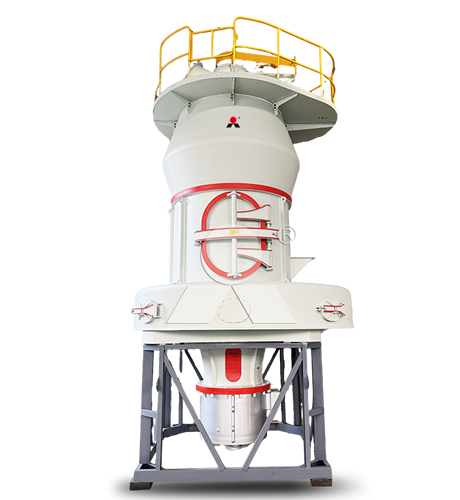
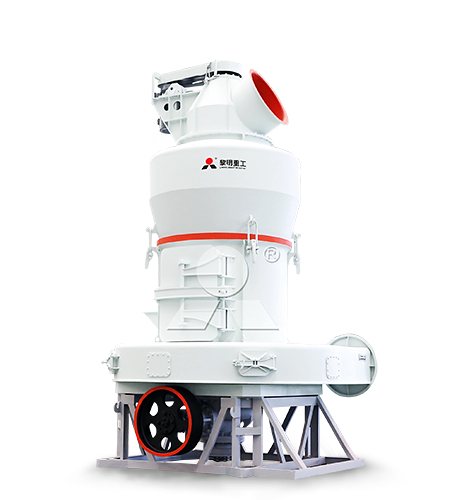
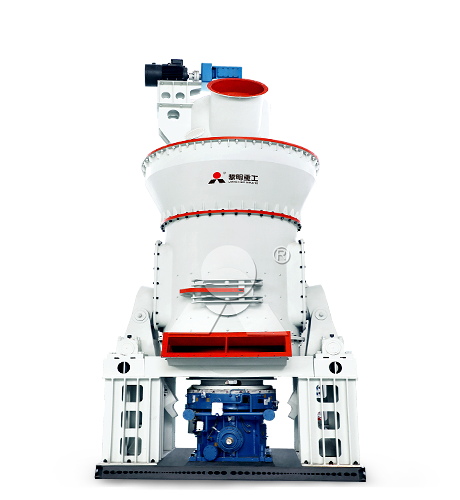
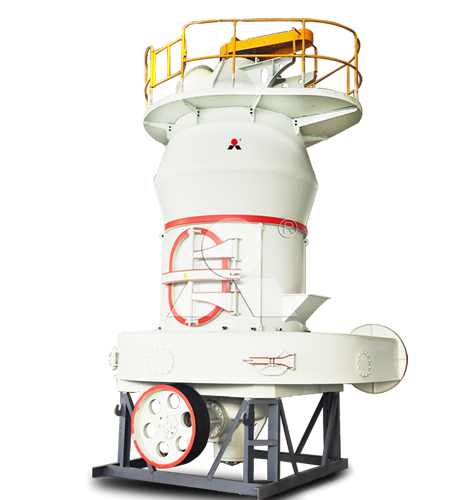
We are Liming Heavy Industry, a manufacturer of various types of industrial crushers, such as Raymond Mill, Trapezoidal Mill, Vertical Mill, Ultrafine Mill, Ball Mill, etc.
Our mills can process the following minerals:
limestone, quicklime, kaolin, talc, barite, bentonite, calcium carbonate, dolomite, coal, gypsum, clay, carbon black, slag, cement raw materials, cement clinker, etc.
If you need a mill to process stone or minerals into powder, please feel free to contact me (WhatsApp: +8615333807511). Thank you.
A 20 TPH calcium carbonate plant is a GCC processing line designed to produce 20 tonnes per hour of finished, specification-compliant powder. 20 TPH should mean qualified calcium carbonate measured after grinding, air classification, powder collection, and any required coating—not crusher feed, mill feed, or internal circulating material.
At this production scale, the main engineering question is not simply “which mill can handle 20 TPH?” It is “can the complete plant deliver 20 TPH of the required D50/D97 grade, from the actual calcite or limestone feed, with stable quality, manageable energy use, and reliable dispatch capacity?” This distinction is critical for GCC supplied to PVC, PP, PE, masterbatch, rubber, sealants, adhesives, coatings, paper, and construction-material customers.
Define the 20 TPH Requirement
A capacity target without a particle-size specification is incomplete. Grinding capacity changes significantly as calcium carbonate becomes finer. A line capable of 20 TPH at a coarse construction grade may produce less at D97 20 μm, and less again at D97 10 μm or D97 5 μm.
Before requesting equipment quotations, prepare a product specification that includes:
Raw material: calcite, marble, limestone, or chalk.
CaCO3 content, whiteness, silica, iron, hardness, abrasiveness, and moisture.
Maximum feed size after crushing.
Target D10, D50, and D97 or D98.
Maximum coarse residue and agreed testing method.
Minimum whiteness or brightness.
Maximum moisture and bulk-density range.
Uncoated or coated GCC requirement.
Guaranteed net output of 20 t/h at the stated quality.
Annual operating hours, annual tonnage, and expected grade mix.
Specific energy target in kWh per tonne of qualified powder.
A useful specification might state:
Produce 20 t/h of coated GCC from local calcite for rigid PVC and PP masterbatch, with D50 4–6 μm, D97 maximum 20 μm, defined residue limit, minimum whiteness, controlled moisture, defined stearic-acid surface treatment, and output measured at the finished-product silo.
This allows suppliers to size the complete circuit. “20 TPH calcium carbonate mill” does not.
Recommended Process Configuration
For fine GCC at 20 TPH, a closed-circuit dry grinding and classification system is usually the practical starting point. Crushed calcium carbonate is fed to the mill, then air classification separates qualified fine powder from coarse material. Fine product is collected in cyclones and bag filters, while coarse material returns for regrinding.
Published equipment ranges show that ball-mill-plus-classifier lines are commonly considered for approximately 2–30 t/h in the 325–3,000 mesh range, while simple Raymond-type systems are more often positioned for coarser 80–400 mesh products. These are broad supplier ranges rather than guarantees: the actual 20 TPH result depends on feed properties, target PSD, classifier performance, and full system design.
Typical 20 TPH process flow
Stone receiving and stockpile management: Receive calcite, marble, limestone, or chalk; segregate by quality and protect material from excessive moisture.
Crushing and screening: Reduce stone to the mill’s required feed size and reject oversize or contaminated material.
Magnetic separation and feed buffering: Remove tramp metal and use a day bin or buffer silo to stabilize mill feed.
Controlled dosing: Use a weigh feeder, belt feeder, screw feeder, or rotary valve to maintain a consistent mass flow.
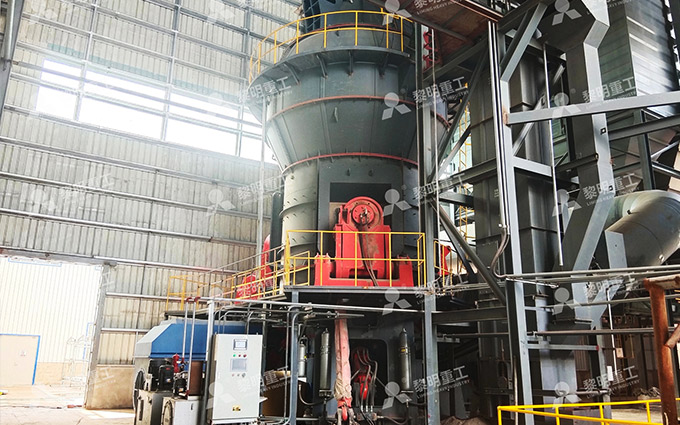
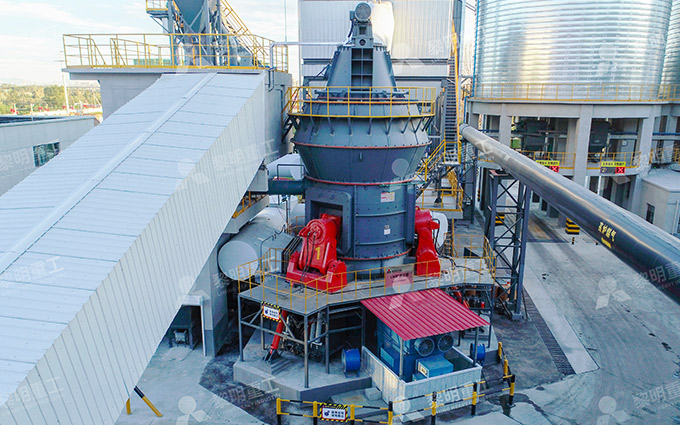
Grinding: Reduce calcium carbonate with a ball mill, vertical roller mill, or ring-roller ultrafine mill.
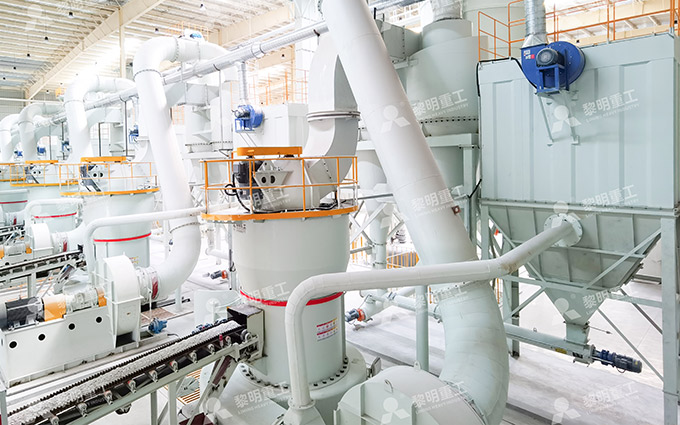
Dynamic air classification: Separate fine product from oversize material and return coarse particles to the grinding stage.
Powder collection: Use cyclone separation and pulse-jet bag filtration to recover GCC and keep system airflow stable.
Optional coating: Treat selected product with stearic acid or another approved modifier for polymer applications.
Storage, packing, and loading: Transfer powder to silos, bags, FIBCs, or bulk tankers.
Core Equipment for 20 TPH
| Plant area | Typical equipment | 20 TPH design priority |
|---|---|---|
| Raw material handling | Receiving hopper, apron feeder, belt conveyors, stockpile equipment | Maintain a continuous supply of consistent, dry mineral feed |
| Crushing and sizing | Jaw crusher, hammer or impact crusher, screen, metal detector, magnetic separator | Protect the mill and establish a stable maximum feed size |
| Feed control | Day bin, weigh feeder, screw feeder, rotary airlock | Stabilize mill loading and maintain PSD consistency |
| Grinding circuit | Ball mill, vertical roller mill, or ring-roller mill | Achieve 20 TPH at the exact D97 requirement |
| Classification | Dynamic turbine classifier or multi-wheel classifier | Handle fresh feed plus circulating load while controlling coarse tail |
| Air and collection system | Induced-draft fan, cyclones, pulse-jet bag filter, rotary valves, ducting | Maintain stable classification airflow and high powder-recovery efficiency |
| Coating section | Stearic-acid melting unit, dosing equipment, high-speed mixer, cooler | Provide consistent treatment for coated polymer-grade GCC |
| Finished-product handling | Multiple silos, screw or pneumatic conveyors, baggers, FIBC fillers, bulk loading | Prevent bottlenecks, cross-contamination, and dispatch delays |
Select the Mill by Fineness
The selected mill must be evaluated at the target particle-size distribution. At 20 TPH, capacity and fineness are inseparable. The same grinding circuit may deliver high tonnage at a coarse grade but require more mill power, more classifier capacity, and more internal circulation for ultrafine powder.
| Indicative finished grade | Typical end-use direction | Possible circuit | Main requirement |
|---|---|---|---|
| Approximately D97 45–75 μm | Putty, dry-mix, construction filler, selected low-cost products | Pendulum or Raymond-type milling with suitable collection | High throughput, simple operation, feed consistency |
| Approximately D97 20–45 μm | General PVC, rubber, paints, paper filler, basic masterbatch | Vertical roller mill, ring-roller mill, or ball mill + classifier | Stable PSD, practical energy consumption, reliable dust collection |
| Approximately D97 8–20 μm | Higher-value PVC, PP/PE masterbatch, rubber, sealants, coatings | Ball mill + high-efficiency dynamic classifier or ultrafine roller system | Fine cut accuracy, classifier efficiency, controlled coarse tail |
| Approximately D97 5–8 μm | Premium ultrafine and coated GCC applications | High-efficiency or multi-wheel classifier circuit with suitable grinding capacity | Lower net output, high circulation, energy management, strict quality control |
Supplier data for a calcium carbonate-specific air classifier indicate a stated D97 operating range from about 8 μm to 200 μm. This illustrates why classifier selection must follow the target PSD: a plant designed for D97 30 μm does not automatically have the classification precision or capacity required for D97 8–10 μm production.
Why Classifier Capacity Is Critical
A 20 TPH plant does not necessarily send only 20 t/h through the classifier. In a closed circuit, the classifier processes new feed plus the coarse fraction that returns from classification. This internal circulating load can be much higher than net finished-product output, especially at finer cut points.
For this reason, do not size a classifier only from the target finished-product rate. Request a complete material balance that states:
Fresh feed rate to the grinding circuit.
Mill discharge rate.
Classifier feed rate.
Fine-product yield.
Coarse-return rate and circulating-load ratio.
Required airflow and fan duty.
Expected pressure losses through ducts, cyclone, filter, and discharge equipment.
At higher capacities, a multi-wheel dynamic classifier may be appropriate when a single classifier wheel would become a bottleneck. The best design depends on the final cut point, powder density, acceptable PSD width, feed properties, and required grade-change flexibility.
Power and Utilities Planning
Electrical planning for a 20 TPH calcium carbonate plant must cover the entire line. The grinding mill is usually the largest load, but classification, induced-draft fans, dust collection, crushing, conveying, compressed air, coating equipment, packing, and lighting also contribute to installed power and energy consumption.
Published supplier equipment tables for ultrafine calcium carbonate ball-mill systems list ball-mill drive ratings from approximately 220 to 800 kW and classifier drive ratings from approximately 192 to 764 kW across different mill sizes and configurations. These values demonstrate the importance of full electrical design, but they should not be used as a direct 20 TPH power estimate because model selection, particle size, raw material, fan duty, and classification arrangement vary widely.
| Utility or operating item | Why it matters at 20 TPH | Design question |
|---|---|---|
| Electricity | Grinding and airflow create the largest operating costs | What is kWh/t at each saleable product grade? |
| Compressed air | Required for pulse-jet filters, valves, and some packing systems | Can the compressor maintain pressure during peak cleaning cycles? |
| Process air | Controls pneumatic transport and classifier performance | Are fan duty, ducting, and filter area sized for the circulating load? |
| Thermal energy | May be needed for wet feed or coating-agent melting | Is drying or heating necessary during wet-season operation? |
| Water | May be used for dust suppression, washing, or cooling depending on the design | How will water use avoid increasing feed moisture in a dry process? |
Raw Material, Moisture, and Wear
At 20 TPH, consistent raw material becomes more important because feed variation can quickly create a large volume of off-spec powder. Test and monitor CaCO3 content, whiteness, moisture, silica, iron, hardness, abrasiveness, and feed-size distribution.
Moisture can reduce grinding capacity, increase agglomeration, disrupt classification, and cause powder buildup in bins, chutes, filters, and conveyors. Establish the maximum allowable feed moisture for the selected mill and include covered storage, feed blending, upstream drying, or conditioned process air where local weather and quarry conditions require it.
Silica and other abrasive contaminants accelerate wear on grinding media, liners, rollers, classifier wheels, and ductwork. For high-whiteness or premium polymer grades, also consider contamination from wear materials. Include wear-part life, replacement access, spare-parts availability, and metal-contamination control in the technical evaluation.
Coated GCC at 20 TPH
If the plant will supply coated calcium carbonate for PVC, PP, PE, rubber, sealants, or adhesives, the coating section must be sized for the same net output as the grinding plant. It should not be treated as a small downstream add-on.
The coated-GCC section typically includes low-moisture powder feed, accurate stearic-acid melting and dosing, intensive mixing, temperature control, cooling, collection, storage, and packing. The coating system must maintain uniform treatment while handling a continuous 20 TPH powder flow or the planned coated-product portion of it.
Because ultrafine GCC has greater surface area, it requires closer control of additive dosage and mixing conditions than coarser grades. Validate coating performance not only through laboratory hydrophobicity or activation tests, but also in the customer’s actual PVC compound, masterbatch, rubber, sealant, or adhesive formulation.
Layout and Dispatch Requirements
A 20 TPH plant needs enough space for raw-stone handling, crushing, day bins, mill and classifier installation, filter access, ducting, maintenance clearance, finished-product silos, bagging, bulk loading, truck circulation, electrical rooms, and expansion. The plant should be laid out to minimize unnecessary conveying while retaining access for changing grinding media, inspecting classifier components, maintaining filter bags, and cleaning grade-change areas.
At 20 TPH, dispatch can become the bottleneck. If the plant runs two shifts or continuously, it may generate hundreds of tonnes per day. Product-silo capacity, bagging speed, FIBC filling, pallet and warehouse handling, bulk-tanker loading, truck scheduling, and lot traceability must all be matched to the production plan.
Quality-Control System
A 20 TPH GCC plant should receive fast laboratory feedback so operators can correct process conditions before significant off-spec inventory accumulates. Sampling should cover raw material, crushed feed, classifier product, coated product when applicable, and dispatch stock.
| Control point | Key test | Production purpose |
|---|---|---|
| Raw stone | CaCO3, whiteness, silica, iron, moisture, visual contamination | Confirm suitability and manage quarry variability |
| Mill feed | Top size, moisture, feed stability, tramp metal | Protect grinding and classification performance |
| Finished uncoated GCC | D10, D50, D97, residue, moisture, bulk density, whiteness | Verify customer specification before silo release |
| Finished coated GCC | PSD, moisture, coating level, hydrophobicity, flowability, dispersion | Verify polymer-grade surface-treatment consistency |
| Packed or bulk load | Net weight, lot identification, packaging integrity, contamination | Maintain traceable, consistent customer deliveries |
Common 20 TPH Design Errors
Assuming 20 TPH applies to every grade
Fine and ultrafine grades reduce net output. Define the 20 TPH guarantee at the specific product PSD and raw-material condition that matter commercially.
Using fresh-feed rate to size the classifier
The classifier processes fresh feed plus coarse recirculation. Design against the full material balance and expected circulating load, especially for D97 8–15 μm products.
Underestimating storage and loading capacity
A 20 TPH grinding line can outpace packing or tanker loading if finished-product silos and dispatch equipment are not sized for daily production. Plan logistics at the same time as the process circuit.
Comparing only the main-mill price
Compare full scope: crushing, feeding, grinding, classifier, fan, cyclone, bag filter, ducts, coating, silos, packing, electrical controls, installation, spares, commissioning, and performance guarantee.
Ignoring raw-material variability
Quarry changes in moisture, hardness, silica, or whiteness can reduce capacity and create off-spec inventory. Establish feedstock control, stockpile segregation, and laboratory release procedures before commissioning.
FAQ
What grinding system is suitable for a 20 TPH calcium carbonate plant?
For fine GCC, a ball mill with a high-efficiency dynamic classifier is a common starting configuration at this scale. A vertical roller mill or ring-roller mill may also be suitable depending on target PSD, raw-material moisture, footprint, power cost, and desired grade flexibility. Select the final circuit through representative sample testing and a guaranteed net output at the specified D97.
Can a 20 TPH plant make ultrafine calcium carbonate?
Yes, but “20 TPH” must be tied to the required ultrafine PSD. A plant may produce 20 TPH at D97 15–20 μm but less at D97 5–8 μm. The classifier, internal circulating load, installed grinding power, and collection system must be sized for the actual fine-product target.
How much power does a 20 TPH GCC plant need?
There is no single valid figure. Power depends on mill type, fineness, raw-material hardness, classifier configuration, fan duty, coating section, and plant boundary. Develop a complete electrical load list and compare projected kWh per tonne of qualified GCC at each planned product grade. Published equipment tables show that mill and classifier drives can each be several hundred kilowatts in ultrafine GCC systems.
Should the plant use one classifier or several?
One dynamic classifier may be sufficient for moderate fineness and appropriate throughput. For finer products, tighter PSD requirements, or large internal circulation rates, a multi-wheel or multi-stage classification arrangement may be more suitable. Base the choice on a supplier material balance and trial results using the actual feedstock.
Bottom Line
A 20 TPH calcium carbonate plant must be designed as a complete GCC system, not as a 20 TPH mill purchase. The plant should guarantee 20 tonnes per hour of qualified product at a defined D50/D97, with stated raw-material properties, moisture range, product quality, coating status, and operating conditions.
For the most reliable project, size the grinder, classifier, fan, dust collector, silos, coating line, and dispatch equipment around the full product mix and internal circulating load. This approach creates a stronger foundation for consistent calcium carbonate supply to PVC, plastics, rubber, sealants, adhesives, coatings, paper, and construction-material markets.