Calcium Carbonate Knowledge Hub
30 TPH Calcium Carbonate Plant
2026-09-04 17:24:49
We are Liming Heavy Industry, a manufacturer of various types of industrial crushers, such as Raymond Mill, Trapezoidal Mill, Vertical Mill, Ultrafine Mill, Ball Mill, etc.
Our mills can process the following minerals:
limestone, quicklime, kaolin, talc, barite, bentonite, calcium carbonate, dolomite, coal, gypsum, clay, carbon black, slag, cement raw materials, cement clinker, etc.
If you need a mill to process stone or minerals into powder, please feel free to contact me (WhatsApp: +8615333807511). Thank you.
A 30 TPH calcium carbonate plant should be specified as a complete GCC system capable of producing 30 tonnes per hour of qualified finished powder at an agreed particle-size distribution. It should not be defined by crusher feed, mill feed, or a catalog mill rating. At this scale, the grinding circuit, air classifier, dust-collection system, product silos, coating section, and dispatch facilities must all support the same net finished-product rate.
The required fineness is decisive. A plant may produce 30 TPH of a relatively coarse calcium carbonate grade, but it will normally produce less at D97 15 μm, D97 10 μm, or D97 5 μm. For PVC, PP, PE, masterbatch, rubber, sealants, adhesives, coatings, paper, and construction applications, design the project around the saleable product specification rather than a generic “30 TPH mill” request.
Define the Capacity Correctly
For a 30 TPH GCC project, define capacity at the finished-product silo or loading point, after classification and collection. If the line includes surface modification, state clearly whether the 30 TPH target applies to uncoated GCC, coated GCC, or a combined product mix.
A complete technical requirement should include:
Raw material: calcite, marble, limestone, or chalk.
CaCO3 content, whiteness, silica, iron, moisture, hardness, and abrasiveness.
Maximum feed size after crushing.
Target D10, D50, D90, and D97 or D98.
Maximum coarse residue and agreed PSD test method.
Minimum whiteness or brightness.
Maximum product moisture and bulk-density range.
Uncoated or coated GCC requirement.
Guaranteed net output of 30 t/h at the stated quality.
Annual product mix, planned operating hours, and annual tonnage.
Specific energy target expressed as kWh per tonne of qualified product.
For example:
Produce 30 t/h of uncoated GCC from calcite, with D50 8–10 μm, D97 maximum 35 μm, stated coarse-residue limit, defined whiteness requirement, controlled moisture, and output measured at the finished-product silo under continuous operation.
This is a plant-design basis. “30 TPH calcium carbonate plant” alone is not.
What Process Configuration Fits 30 TPH?
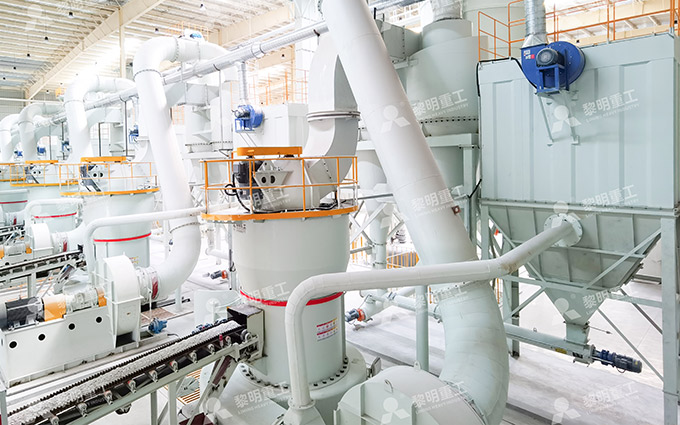
A closed-circuit dry grinding and air-classification plant is a common configuration for 30 TPH GCC production. Crushed calcium carbonate is metered into the grinding system. The mill reduces particle size, the classifier separates fine product from coarse material, and the coarse fraction returns for regrinding. Cyclones and bag filters collect the accepted powder and maintain system airflow.
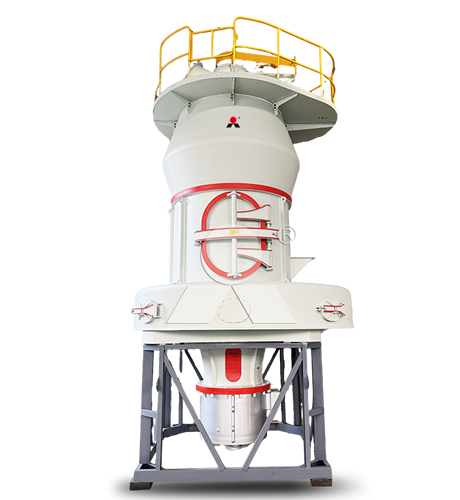
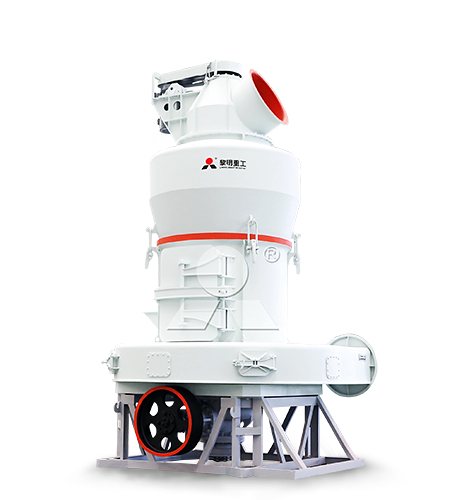
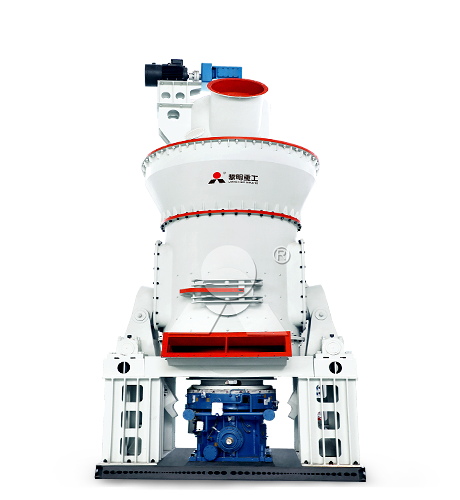
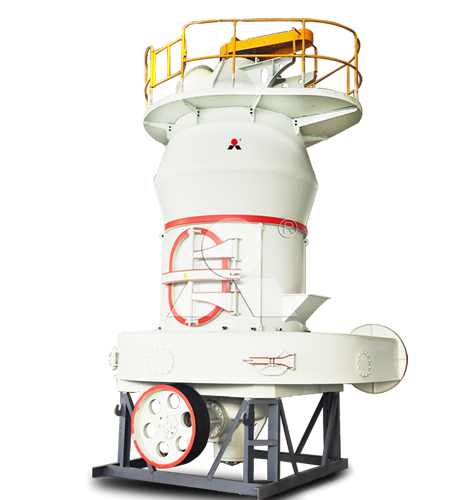
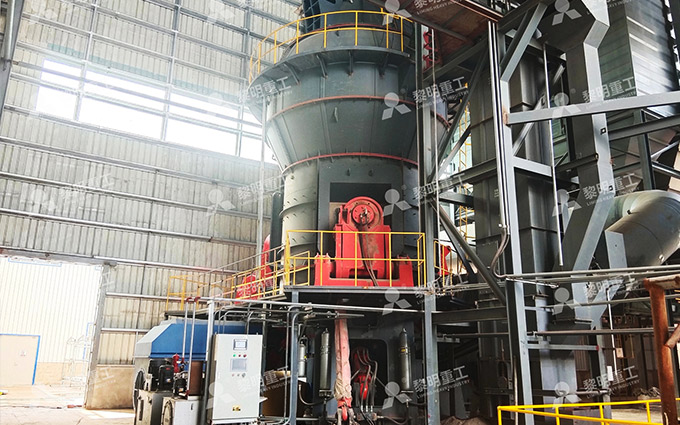
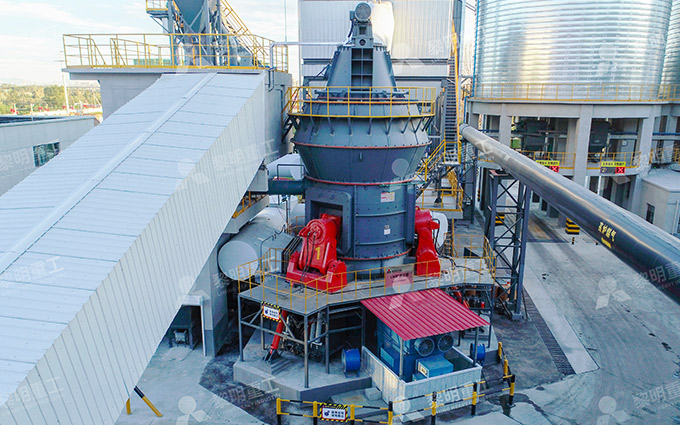
For large-scale conventional and ultrafine GCC, a horizontal continuous ball mill paired with a high-efficiency external air classifier is widely used because it keeps grinding and classification as separately controllable process stages. In this configuration, oversize material returns to the ball mill in a closed loop. Vertical roller mills and high-capacity ring-roller systems can also be evaluated where their guaranteed performance, footprint, energy demand, and maintenance profile fit the target product range.
Typical 30 TPH process flow
Raw-material receiving: Receive and segregate calcite, marble, limestone, or chalk based on quality, whiteness, and moisture.
Crushing and screening: Reduce stone to consistent mill feed and reject oversize material.
Metal removal and buffer storage: Use magnetic separation and a day bin to protect downstream equipment and stabilize the feed.
Controlled dosing: Feed the grinding circuit with a weigh feeder, belt feeder, screw feeder, or rotary valve.
Fine grinding: Process material in the selected mill system.
Dynamic air classification: Separate qualified powder from coarse material for return to the mill.
Collection and filtration: Recover GCC through cyclones and pulse-jet bag filters.
Optional surface modification: Route specified grades through a coating system for polymer applications.
Storage and dispatch: Send finished GCC to separate product silos, bagging lines, FIBC stations, or bulk-tanker loading.
Core Equipment at This Scale
| Plant section | Typical equipment | 30 TPH engineering priority |
|---|---|---|
| Raw material handling | Receiving hopper, apron feeder, belt conveyors, stockpile and reclaim equipment | Continuous supply of uniform, low-moisture feed |
| Crushing and sizing | Jaw crusher, impact or hammer crusher, screen, magnetic separator, metal detector | Stable maximum feed size and protection against tramp metal |
| Feed control | Buffer silo, weigh feeder, screw feeder, rotary airlock | Stable mill loading, traceable production, and repeatable PSD |
| Grinding | Continuous ball mill, vertical roller mill, or high-capacity ring-roller mill | Net 30 TPH at the required D97—not only a coarse-grade catalog value |
| Classification | High-efficiency turbine classifier; multi-wheel or multiple classifiers where required | Process the full circulating load while controlling the coarse tail |
| Air and collection | Induced-draft fan, cyclones, pulse-jet baghouse, ducts, rotary valves | Stable airflow, high recovery, safe dust control, and low leakage |
| Coating section | Stearic-acid melting and dosing, coating mixer, cooling equipment, finished-product collector | Uniform surface treatment at the required coated-product throughput |
| Dispatch section | Multiple silos, conveyors, baggers, FIBC fillers, tanker-loading equipment | Prevent packaging or logistics from becoming the production bottleneck |
Fineness Determines Real Output
At 30 TPH, it is especially important to distinguish between mill throughput and qualified product throughput. The finer the required calcium carbonate, the more grinding energy and classification work are needed. This usually increases internal circulation and lowers net product output.
| Indicative product range | Typical market direction | Possible process approach | Key planning issue |
|---|---|---|---|
| Approximately D97 45–75 μm | Putty, dry-mix mortar, construction filler, lower-cost products | Pendulum/Raymond-type mill or simpler grinding circuit | High capacity and dependable feed preparation |
| Approximately D97 20–45 μm | General PVC, paint, rubber, paper filler, basic plastics | Ball mill + classifier, vertical roller mill, or ring-roller system | PSD stability, power use, and collection efficiency |
| Approximately D97 10–20 μm | Higher-value plastics, PVC, masterbatch, sealants, and coatings | High-efficiency ball-mill-and-classifier circuit or dedicated ultrafine mill | Precise top-cut control and classification capacity |
| Approximately D97 5–10 μm | Premium ultrafine and coated GCC grades | High-efficiency multi-wheel classification with suitable grinding power | Lower net output, high circulating load, increased energy and wear |
Published ball-mill-and-classifier data illustrate this relationship. In one supplier equipment series, the largest listed configuration produces approximately 11 t/h at D97 15 μm, 8 t/h at D97 10 μm, and 3.6 t/h at D97 5 μm. Therefore, a genuine 30 TPH ultrafine project may require multiple parallel grinding-classification trains, a much larger custom circuit, or a product strategy focused on coarser grades. Never extrapolate 30 TPH at D97 5–10 μm from a 30 TPH rating at a coarser product.
Single Line or Parallel Trains?
At 30 TPH, the plant may use one large grinding-and-classification train or two or more parallel trains. The right choice depends on product range, required availability, maintenance philosophy, electrical infrastructure, building constraints, and tolerance for production interruption.
| Configuration | Potential benefit | Trade-off |
|---|---|---|
| One large train | Potentially lower equipment duplication and simpler centralized control | A major mill or classifier outage can stop most production |
| Two parallel trains | Improved redundancy, easier maintenance planning, and potential multi-grade flexibility | More duplicated auxiliaries, controls, and installation scope |
| Separate coarse and ultrafine trains | Prevents high-volume coarse grades from competing with premium fine grades | Requires higher capital expenditure and more complex material handling |
For a plant that sells both construction-grade and premium polymer-grade GCC, separating coarse and ultrafine production can protect product quality and simplify scheduling. It also reduces the risk that frequent grade changes create cross-contamination or waste production time in the high-value ultrafine circuit.
Classifier, Fan, and Baghouse Sizing
The classifier must be sized for more than 30 TPH fresh feed. In a closed circuit, it handles the mill discharge and recirculating coarse fraction. At fine cut points, the classifier feed can be significantly higher than the saleable finished-product rate.
Request a supplier material and air balance showing:
Fresh feed to the mill.
Total mill discharge.
Classifier feed rate.
Fine-product yield.
Coarse-return rate and circulating-load ratio.
Classifier wheel speed range and installed drive power.
Process-air volume, fan static pressure, and fan operating point.
Cyclone and baghouse collection capacity.
Expected bag-filter differential pressure and compressed-air demand.
For D97 10 μm and finer products, a high-efficiency turbine classifier is normally required. Supplier selection guidance states that a basic classification system can serve products below 800 mesh, while 800–2,500 mesh ultrafine powder requires high-precision turbine classification. Actual requirements should be verified with sample testing and an agreed PSD method.
Energy Planning and Utilities
At 30 TPH, energy cost becomes a major factor in profitability. The correct comparison is kWh per tonne of qualified product at each planned product grade, not only mill motor size. Total consumption includes grinding, classification, fan duty, dust collection, crushing, conveying, compressed air, coating, packaging, and auxiliaries.
Published equipment tables for a calcium carbonate ball-mill-and-classifier series show classifier drive power increasing from 192 kW to 764 kW across larger configurations. This demonstrates how much power can be required for fine classification, but it is not a direct sizing value for a 30 TPH plant. The project’s actual load list must be developed from the raw material, target PSD, circuit design, and site conditions.
| Utility | Why it matters | 30 TPH design check |
|---|---|---|
| Electrical supply | Grinding and high-volume airflow are major loads | Can the grid, transformer, and MCC support start-up and full-load demand? |
| Compressed air | Supports pulse-jet filters, valves, and packing equipment | Can pressure remain stable during bag-cleaning cycles? |
| Process air | Supports classification, pneumatic transport, and collection | Are fan curve, duct losses, and filter area matched to real circulation? |
| Thermal energy | May be needed for wet feed management or coating-agent melting | What is the wet-season drying or heating strategy? |
| Water and drainage | May be used for dust suppression or site services | How will water avoid adding moisture to dry-process feed? |
Raw Material and Quality Control
A 30 TPH plant can produce hundreds of tonnes of powder each day. Small raw-material variations can therefore create substantial off-spec inventory. Control calcite or limestone feed for CaCO3 content, whiteness, silica, iron, moisture, hardness, abrasiveness, and feed-size distribution.
Silica-rich contamination can increase wear and cause product-quality variation. Iron-bearing contamination can reduce whiteness. Moisture can reduce mill output, increase agglomeration, disturb classification, and cause buildup in silos, filters, and conveyors. Use source segregation, covered storage, feed blending where needed, and laboratory release procedures.
| Sampling point | Primary tests | Purpose |
|---|---|---|
| Incoming stone | CaCO3, whiteness, silica, iron, moisture, visual quality | Manage quarry variability and protect grade positioning |
| Crushed feed | Top size, moisture, size consistency, tramp metal | Protect the grinding and classification circuit |
| Finished uncoated GCC | D10, D50, D97, residue, moisture, bulk density, whiteness | Confirm product specification before silo release |
| Coated GCC | PSD, moisture, treatment level, hydrophobicity, flowability, dispersion | Verify polymer-grade performance |
| Dispatch product | Net weight, lot traceability, packaging integrity, contamination | Maintain reliable customer deliveries |
Storage, Packing, and Dispatch
At 30 TPH, packing and logistics must be designed as part of the process plant. A line operating 16 hours per day can generate about 480 tonnes per day before accounting for downtime, product changes, or maintenance. If dispatch cannot keep pace, finished-product silos fill, the grinding circuit must stop, and the plant loses productive time.
Plan separate silos for major product grades, reserve capacity for laboratory release, and clear routing between coated and uncoated products. Match packing capacity to the sales model:
Bulk customers require sufficient silo compartments, tanker loading capacity, and truck scheduling.
Bagged customers require high-speed packing, dust control, pallet handling, warehouse space, and traceability.
FIBC customers require stable bulk-density control, accurate filling, safe lifting, and storage protection.
Common 30 TPH Project Errors
Using a coarse-grade capacity to justify ultrafine output
Do not assume a 30 TPH line can make 30 TPH at every fineness. Define capacity at the required D97, and require supplier guarantees using representative calcium carbonate feedstock.
Underestimating the internal circulating load
The classifier, fan, filters, ducts, and coarse-return system process much more than fresh feed in a fine closed circuit. Ask for a complete material balance before approving equipment sizes.
Using one circuit for incompatible product grades
High-volume coarse construction grades and premium ultrafine coated GCC can conflict in scheduling, cleanliness, and product quality. Consider separate trains or dedicated silos when the product mix justifies them.
Neglecting dispatch capacity
A 30 TPH grinding plant can become constrained by bagging, silo space, or tanker loading. Design daily dispatch capacity and warehouse logistics around the same operating schedule as the production circuit.
Comparing offers by mill price alone
Compare full scope: crushing, feed handling, grinding, classifiers, fan, cyclones, baghouse, controls, coating, storage, packing, electrical system, installation, spare parts, commissioning, and performance guarantees.
FAQ
Can a 30 TPH calcium carbonate plant produce ultrafine GCC?
It can, but the answer depends on the requested PSD. Published equipment data show a substantial reduction in capacity as products become finer: one large ball-mill-and-classifier configuration is listed at approximately 11 t/h for D97 15 μm, 8 t/h for D97 10 μm, and 3.6 t/h for D97 5 μm. A true 30 TPH ultrafine line may therefore need multiple parallel circuits or a larger customized system.
What mill is suitable for a 30 TPH GCC plant?
For fine GCC, a continuous ball mill with a high-efficiency external air classifier is a common option. Vertical roller and ring-roller systems may also be suitable depending on feed moisture, target PSD, available space, energy economics, and product flexibility. Select the final configuration through raw-material testing and a binding guarantee at the desired D97.
How many classifiers are needed for 30 TPH?
It depends on the target fineness, mill discharge rate, and circulating load. A coarse or moderate-fineness line may use one suitably sized dynamic classifier. Fine or ultrafine production may require a multi-wheel classifier, multiple classifiers, or parallel grinding-classification trains. The supplier should provide the complete material and air balance.
Should a 30 TPH plant include a coating system?
Include a coating system when the business plan targets coated GCC for PVC, PP, PE, masterbatch, rubber, sealants, or adhesives. Ensure that its dosing, mixing, cooling, collection, and storage capacities match the planned coated-product volume. Uncoated products should have separate routing and storage to avoid cross-contamination.
Bottom Line
A 30 TPH calcium carbonate plant is a high-throughput GCC project in which real capacity depends on target fineness, feedstock quality, classifier efficiency, circulating load, energy availability, and dispatch capacity. It should be engineered as a complete production and logistics system—not purchased as a “30 TPH mill.”
Define the finished product first: D50, D97, residue, whiteness, moisture, coating status, and annual grade mix. Then size the crushing, grinding, classification, air, collection, storage, coating, and loading sections around a guaranteed 30 tonnes per hour of qualified product. That process gives GCC producers a stronger basis for consistent supply to industrial mineral customers.