Calcium Carbonate Knowledge Hub
50 TPH Calcium Carbonate Plant
2026-09-04 17:25:27
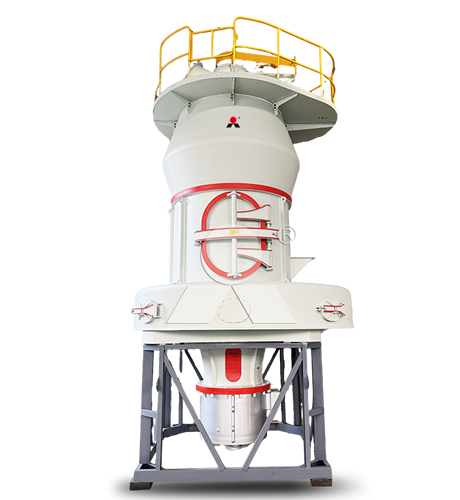
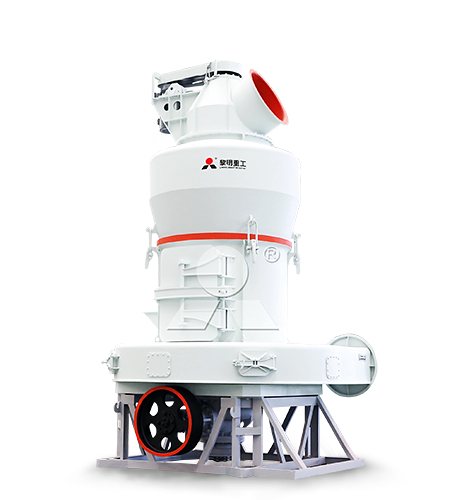
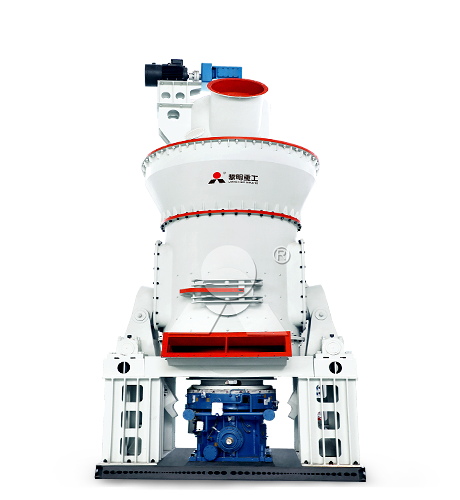
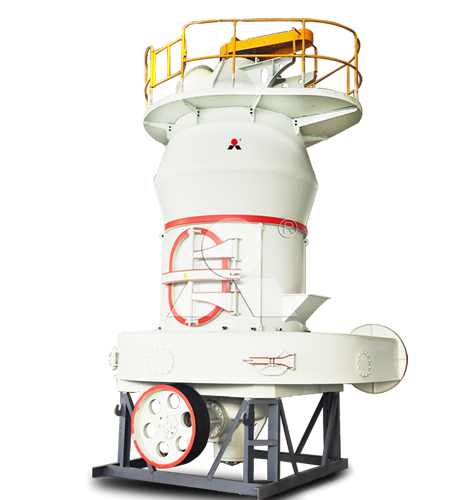
We are Liming Heavy Industry, a manufacturer of various types of industrial crushers, such as Raymond Mill, Trapezoidal Mill, Vertical Mill, Ultrafine Mill, Ball Mill, etc.
Our mills can process the following minerals:
limestone, quicklime, kaolin, talc, barite, bentonite, calcium carbonate, dolomite, coal, gypsum, clay, carbon black, slag, cement raw materials, cement clinker, etc.
If you need a mill to process stone or minerals into powder, please feel free to contact me (WhatsApp: +8615333807511). Thank you.
A 50 TPH calcium carbonate plant is a high-throughput GCC operation engineered to deliver 50 tonnes per hour of qualified finished powder at a defined particle-size distribution. At this scale, the plant cannot be designed around a mill nameplate alone: the crushing system, feed preparation, grinding circuit, classifier, fan, baghouse, product silos, coating section, and dispatch capacity all need to support the same net product rate.
The most important qualification is fineness. A 50 TPH plant may be achievable for medium-fine calcium carbonate, but a D97 10 μm or D97 5 μm product generally requires far more grinding and classification capacity than a D97 45 μm product. For PVC, PP, PE, masterbatch, rubber, sealants, adhesives, coatings, paper, and construction markets, specify the saleable powder first and then engineer the capacity around it.
What 50 TPH Must Specify
For project engineering and supplier guarantees, 50 TPH should mean net finished GCC measured at the product silo, packing line, or bulk loading point after air classification and dust collection. If the project includes coated GCC, state whether 50 TPH applies to uncoated output, coated output, or the blended annual product plan.
A complete specification should state:
Raw material: calcite, marble, limestone, chalk, or a defined blend.
CaCO3 content, whiteness, silica, iron, moisture, hardness, abrasiveness, and feed variability.
Maximum feed size after crushing and screening.
Target D10, D50, D90, and D97 or D98.
Maximum sieve residue and the agreed test method.
Minimum whiteness or brightness.
Maximum moisture, bulk-density range, and flowability requirement.
Uncoated or coated GCC requirement, including coating chemistry where relevant.
Guaranteed net output of 50 t/h at the stated product quality.
Annual tonnes by product grade, planned operating hours, and availability target.
Specific energy target in kWh per tonne of qualified product.
A useful requirement could be:
Produce 50 t/h of uncoated GCC from selected limestone, with D50 12–15 μm, D97 maximum 45 μm, defined coarse-residue limit, minimum whiteness requirement, controlled moisture, and output measured at the finished-product silo.
If the real target is 50 t/h at D97 8–10 μm, the process configuration may need multiple parallel ultrafine grinding and classification trains rather than one conventional line.
Recommended Process Layout
A 50 TPH dry GCC plant normally uses closed-circuit grinding and air classification. Crushed calcium carbonate is fed continuously to the mill system. The mill produces a mixed particle-size stream, the classifier accepts qualified fines, and oversize material returns for further grinding. Cyclones and bag filters recover the finished powder and maintain the airflow required for stable classification.
Typical 50 TPH process flow
Quarry or raw-material receiving: Receive and segregate calcite, marble, limestone, or chalk based on chemistry, whiteness, moisture, and impurity profile.
Primary and secondary crushing: Reduce stone to a consistent feed size required by the selected grinding system.
Screening and metal removal: Remove oversize particles and tramp metal before the mill feed bin.
Buffer storage and dosing: Use day bins, weigh feeders, belt feeders, and controlled discharge to stabilize the grinding load.
Grinding: Process material through one large mill or multiple parallel mills.
Dynamic air classification: Separate qualified GCC from coarse material for return to the grinding circuit.
Collection and filtration: Recover powder through cyclones and pulse-jet baghouses while maintaining stable process air.
Optional coating: Treat polymer-grade products with stearic acid or another approved surface modifier.
Silo storage and loading: Route qualified product to separate silos for bulk tankers, bagging, or FIBC filling.
Ball-mill-and-air-classifier systems remain a common approach for large-volume GCC because they can produce a range of particle sizes and handle high throughputs. However, the design must be based on a material balance and guaranteed output at the requested PSD, not merely on a general statement that ball mills can handle high volume.
Equipment Configuration
| Plant section | Typical equipment | 50 TPH engineering objective |
|---|---|---|
| Raw-material handling | Receiving hopper, apron feeder, belt conveyors, stockpile/reclaim system | Maintain continuous feed with quarry-grade segregation |
| Crushing and screening | Jaw crusher, impact or hammer crusher, vibrating screen, magnetic separator | Deliver consistent top size and protect downstream equipment |
| Feed buffering | Day bins, weigh feeders, screw feeders, rotary valves | Keep mill loading stable and maintain traceable production rates |
| Grinding | Large ball mill, vertical roller mill, high-capacity pendulum mill, or parallel milling trains | Achieve 50 t/h at the specified D97 and product quality |
| Classification | High-efficiency turbine classifier, multi-wheel classifier, or parallel classifier trains | Process circulating load while keeping coarse residue within specification |
| Air and collection | Induced-draft fans, cyclones, pulse-jet baghouses, ducts, rotary airlocks | Maintain air balance, high recovery, and dust-control performance |
| Coating | Stearic-acid storage and melting, dosing, high-intensity mixer, cooler, collector | Provide uniform treatment at the planned coated-product rate |
| Product dispatch | Multiple finished-product silos, bulk loaders, bagging lines, FIBC fillers | Prevent storage and logistics from limiting production availability |
Capacity Depends on Fineness
A 50 TPH plant should be designed around the product grades that will drive annual revenue, not around its coarsest powder. Finer products require more size reduction, greater classifier precision, higher circulating load, and more energy. The net tonnage available at each grade can differ significantly even when the same mill is used.
| Indicative GCC grade | Typical application direction | Likely plant approach | Main capacity issue |
|---|---|---|---|
| Approximately D97 45–75 μm | Dry-mix mortar, putty, construction filler, selected low-cost uses | High-capacity pendulum or roller system; conventional closed circuit where needed | Feed preparation and high-volume material handling |
| Approximately D97 20–45 μm | General PVC, rubber, paints, paper filler, standard plastics | Large ball-mill/classifier circuit or vertical roller system | PSD stability, airflow management, and practical energy cost |
| Approximately D97 10–20 μm | Higher-value PVC, PP/PE masterbatch, coatings, sealants, and adhesives | High-efficiency ball mill + dynamic classifier; potentially parallel trains | Classifier capacity, coarse-tail control, and increased circulation |
| Approximately D97 5–10 μm | Premium ultrafine coated GCC | Multiple ultrafine milling/classification circuits or a custom high-capacity solution | High specific energy, wear, lower per-train throughput, strict quality control |
Supplier-published ball-mill-and-classifier capacity tables illustrate the difference between coarse and ultrafine production. In one listed series, the largest configuration produces about 11 t/h at D97 15 μm, 8 t/h at D97 10 μm, and 3.6 t/h at D97 5 μm. This does not define every supplier’s capability, but it demonstrates why a 50 TPH D97 5–10 μm project requires careful circuit sizing and may need several parallel production trains.
One Large Line or Parallel Trains?
At 50 TPH, the decision between a single large train and multiple parallel trains has a major effect on availability, maintenance, grade flexibility, capital cost, and operating risk.
| Configuration | Potential advantages | Trade-offs |
|---|---|---|
| Single large grinding-classification train | Potentially fewer duplicated auxiliaries, centralized controls, and a simpler process route | A major outage can stop most production; less flexibility for simultaneous grades |
| Two parallel trains | Higher availability, easier maintenance scheduling, possible simultaneous grade production | More duplicated controls, filters, conveying, and installation scope |
| Three or more modular trains | Strong redundancy and flexibility for multi-grade sales | More complex material routing, operations, and spare-parts management |
| Separate standard and ultrafine circuits | Protects premium product quality and reduces grade-change contamination | Higher capital investment and more extensive site layout |
For a plant selling both high-volume construction grades and premium coated ultrafine GCC, separate circuits can be commercially sensible. Coarse products can be made at high tonnage without consuming the operating time or contaminating the fine-product circuit used for higher-margin grades.
Classifier and Air-System Sizing
At 50 TPH, the classifier must process more than 50 t/h because a closed circuit includes the coarse fraction returning for regrinding. The required classifier feed rate can be several times the net product rate, especially for fine and ultrafine cuts.
Ask the supplier for a complete material and air balance showing:
Fresh feed rate to each grinding train.
Total mill discharge rate.
Classifier feed rate and expected circulating-load ratio.
Fine-product yield and coarse-return rate.
Classifier wheel configuration, speed range, and installed power.
Process-air volume, fan static pressure, and operating curve.
Cyclone efficiency and baghouse filtration area.
Filter differential-pressure range and compressed-air demand.
Dust-emission guarantee and dust-recovery arrangement.
Supplier references for calcium carbonate classifiers show a stated processing range of 1–50 t/h for a centrifugal classifier model. That figure should be treated as a preliminary screening range only. The usable capacity at a specific D97 depends on feed PSD, powder density, classifier cut point, circulating load, and the required separation efficiency.
Automation and Process Control
A 50 TPH plant should use integrated automation rather than manual adjustment of individual machines. As production rate increases, small changes in feed rate, classifier speed, airflow, or filter pressure can quickly generate large volumes of off-spec product.
For large-tonnage calcium carbonate production, automatic control commonly includes loss-in-weight feeding, variable-frequency classifier control, blower airflow control, mill-load monitoring, and return-material circulation monitoring. These controls should be integrated with product-quality data, especially D50, D97, moisture, and coarse residue.
A practical control philosophy includes:
Automatic, continuous feed-rate control to stabilize mill loading.
Variable-frequency drives for classifier wheels and process fans.
Mill power, vibration, bearing-temperature, and lubrication monitoring.
Bag-filter differential-pressure alarms and cleaning-cycle monitoring.
Airflow and pressure monitoring across key points in the system.
Product-silo level control and interlocks to prevent overfilling.
Batch and lot traceability from raw stone to packed product.
Laboratory PSD feedback linked to approved operating setpoints.
Power, Utilities, and Operating Cost
The main economic measure is not installed motor power alone but total kWh per tonne of qualified product. Grinding is usually the largest energy user, followed by classifier drives, induced-draft fans, dust collection, crushing, conveying, compressors, coating equipment, and packing.
At 50 TPH, evaluate operating cost by grade. A coarse GCC grade may have a low specific energy requirement and high output, while a premium D97 5–10 μm grade may consume substantially more energy and lower net production. Product pricing and margin must justify the additional power, wear, coating agent, quality control, and production time.
| Cost driver | Why it is important | Project evaluation question |
|---|---|---|
| Grinding energy | Usually the largest variable electrical cost | What is kWh/t for each qualified GCC grade? |
| Classifier and fan power | Increases with finer cuts and larger airflow volume | Is the air system operating near an efficient fan point? |
| Wear parts | Feed impurities can increase media, liner, roller, and classifier wear | What is expected wear cost per tonne and planned replacement downtime? |
| Coating agent | Required for treated GCC used in many polymer applications | What coating level is needed for the actual PSD and resin market? |
| Dust collection | Supports recovery, compliance, and airflow stability | What filter area, compressed-air demand, and replacement schedule are required? |
| Logistics | Large plants can be limited by storage and dispatch | Can silos, bagging, and bulk loading clear daily production reliably? |
Storage and Dispatch at 50 TPH
A 50 TPH line operating 16 hours per day can produce about 800 tonnes daily before downtime and grade changes. Finished-product storage and dispatch must therefore be planned as production-critical infrastructure.
Use separate silos for major grades, especially where coated and uncoated GCC are both produced. Design enough silo capacity for laboratory release, truck scheduling delays, and temporary market interruptions. For bulk customers, ensure adequate tanker-loading capacity and dust-free loading. For bagged products, match bagging lines, pallet handling, warehouse space, and forklift traffic to the actual daily production plan.
Common 50 TPH Project Errors
Claiming 50 TPH without defining fineness
50 TPH at D97 45 μm and 50 TPH at D97 5 μm are fundamentally different projects. Require a net capacity guarantee at the exact D50/D97 and feedstock conditions.
Undersizing classification and dust collection
The classifier, fan, cyclone, and baghouse handle internal circulation as well as new feed. Design them from a full material and air balance, not only from the finished-product target.
Using a single train without considering downtime
A single large train can be efficient, but a major mill, classifier, or filter outage can halt production. Evaluate availability requirements, maintenance plans, and the business cost of downtime before choosing the configuration.
Leaving storage and packing until the end
At 50 TPH, production can exceed dispatch capacity quickly. Include silos, bulk loading, bagging, FIBC filling, warehouse movement, and truck scheduling in the initial plant design.
Not separating product families
Frequent switching between coarse, ultrafine, coated, and uncoated grades can cause contamination, cleaning loss, and schedule inefficiency. Use separate product routing or dedicated circuits where the product mix and margins justify it.
FAQ
Can one 50 TPH plant produce ultrafine calcium carbonate?
It can, but the achievable net output depends on the PSD. Supplier capacity data for one ball-mill-and-classifier series list approximately 8 t/h at D97 10 μm and 3.6 t/h at D97 5 μm for its largest configuration. A genuine 50 TPH ultrafine GCC project may therefore require multiple parallel trains or a custom large-scale grinding and classification solution.
What grinding system is suitable for a 50 TPH GCC plant?
For medium-fine high-volume GCC, a large ball mill with an external classifier, vertical roller mill, or other high-capacity roller system can be evaluated. For ultrafine GCC, high-efficiency dynamic classification and potentially parallel milling trains are usually required. Choose based on target PSD, raw material, available footprint, power economics, annual grade mix, and guaranteed net output.
How many product silos are needed?
The answer depends on the product portfolio and delivery model. At minimum, provide separate silos for major product families and prevent coated/uncoated cross-contamination. Additional capacity should cover laboratory release, daily dispatch variation, maintenance, and the ability to keep producing while one product is being loaded.
What automation is needed at 50 TPH?
Use integrated PLC or DCS control for feed rate, mill loading, classifier speed, fan airflow, pressure, bag-filter cleaning, silo levels, alarms, and interlocks. Automation should work with laboratory PSD feedback so operators can maintain D50 and D97 targets instead of reacting only after off-spec product is produced.
Bottom Line
A 50 TPH calcium carbonate plant is a high-volume GCC production and logistics system. Its real capacity is defined by the product quality: particle-size distribution, coarse-tail limit, whiteness, moisture, coating requirement, raw-material properties, and net output at the finished-product silo.
For a sound investment decision, define the grade mix first, test representative raw materials, create a complete material and air balance, compare one-train and parallel-train configurations, and require guarantees for net output, PSD, energy basis, dust collection, and availability. This provides a reliable foundation for supplying calcium carbonate at industrial scale.